The Overlooked Frontier: Why Marketers Are Losing Billions Post-Click Despite Tight Budgets

A groundbreaking new report from Unbounce and Ascend2 reveals a critical disconnect in modern paid media strategies: while marketers face unprecedented budget constraints, a significant majority continue to overlook the crucial post-click experience, a primary determinant of return on investment (ROI). The research, titled "The State of Paid Media ROI 2026," surveyed 304 U.S. paid media professionals and unearthed a startling paradox: marketers understand the value of optimizing destination pages but consistently underinvest in them, prioritizing upstream activities like targeting, creative, and AI that, while important, often fail to convert without a robust post-click strategy. This oversight is not merely inefficient; it represents a substantial drain on marketing budgets already stretched thin, hindering the potential for true campaign success and leaving billions in potential revenue on the table.
The Post-Click Paradox: A Deep Dive into Misaligned Investments
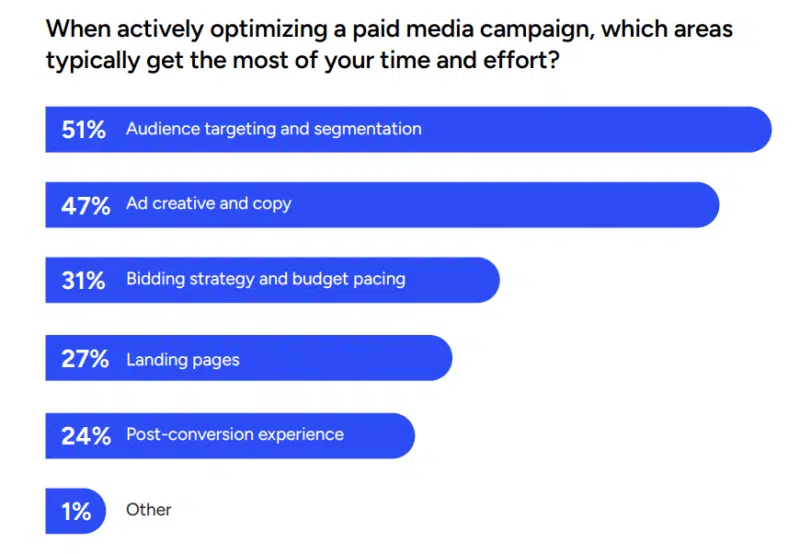
The report’s central finding is stark: nine out of ten marketers (90%) acknowledge that budget constraints are severely impacting their paid media programs. Yet, in a counterintuitive move, many are neglecting the very area that could significantly amplify their existing spend. While a substantial 40% of marketers identify optimizing destination pages as one of the most effective strategies to maximize paid media ROI, only a paltry 31% have actually invested in landing page improvements over the past six months. This gap between belief and action is alarming. Instead, capital continues to flow predominantly into areas perceived as more immediate or easier to implement: audience research (40%), AI tools (39%), and ad creative (38%). This pattern suggests that the pressure of limited resources isn’t just forcing marketers to spend less; it’s inadvertently pushing them towards what might be considered "vanity metrics" or superficial optimizations within advertising platforms, while the more resource-intensive, yet fundamentally impactful, work of post-click conversion is left behind. Industry analysts frequently point out that the cost of acquiring a click has steadily risen over the past decade across various platforms, making the efficiency of each subsequent user interaction paramount. Failing to optimize the destination page after a costly click is akin to spending a fortune on a race car only to forget to put fuel in the tank.
Budget Pressures and the Shift Upstream: A Historical Perspective
The ubiquity of budget limitations is undeniable, with 90% of marketers reporting constraints in paid media budgets or resources. This widespread pressure has had a cascading effect, with testing and experimentation being the most severely impacted areas. Audience targeting, ad creative, and reporting have also taken a hit, while nearly half of respondents indicated that landing page creation or message matching suffered when resources tightened. This trend is not entirely new; historically, marketing departments have often faced pressure to demonstrate immediate results, leading to a focus on the most visible aspects of a campaign. However, the current economic climate, characterized by rising inflation and global uncertainties, has intensified this pressure, pushing marketers further towards perceived "quick wins."
The evolution of digital marketing platforms has also played a role. Over the last five to seven years, advertising platforms like Google Ads and Meta have introduced increasingly sophisticated targeting and creative optimization tools, often powered by AI. These tools promise easier, faster ways to improve campaign performance within the platform environment. This ease of use can create a false sense of security, leading marketers to believe that optimizing the ad itself is sufficient, diverting attention and resources from the critical, but often more complex, task of refining the user’s experience after they click. Consequently, investment decisions reflect this upstream bias, with audience research, AI tools, and ad creative attracting the largest share of new spending, while landing pages lag significantly despite their acknowledged importance.
The Allure of Quick Wins: AI, Targeting, and Creative
The report’s findings regarding AI usage further illustrate this skewed prioritization. A substantial 86% of marketers reported leveraging AI in their paid media efforts, and nearly three-quarters (75%) believe it has improved their ROI. However, the application of AI remains largely confined to the upper funnel: reporting, audience targeting, platform-specific tools, and ad copy generation. A mere 19% of marketers currently use AI for landing page creation or optimization. This is particularly noteworthy given that marketers who exceeded their ROI targets were approximately twice as likely to employ AI in these post-click areas. This suggests a significant missed opportunity, as AI’s potential to personalize and optimize landing page experiences, conduct rapid A/B testing, and dynamically adapt content based on user behavior remains largely untapped by the majority.
The attraction to "upstream" elements like targeting and creative is understandable. Crafting compelling ad copy or identifying the perfect audience segment can feel like a direct path to higher click-through rates (CTRs) and, by extension, better ROI. AI, in particular, offers the promise of automating and enhancing these processes, making it an appealing area for investment, especially when resources are scarce. However, without a corresponding investment in the post-click journey, these meticulously targeted and creatively engaging ads often lead to disappointing conversion rates, effectively wasting the initial investment.
The Unseen Chasm: Where Paid Traffic Goes Astray
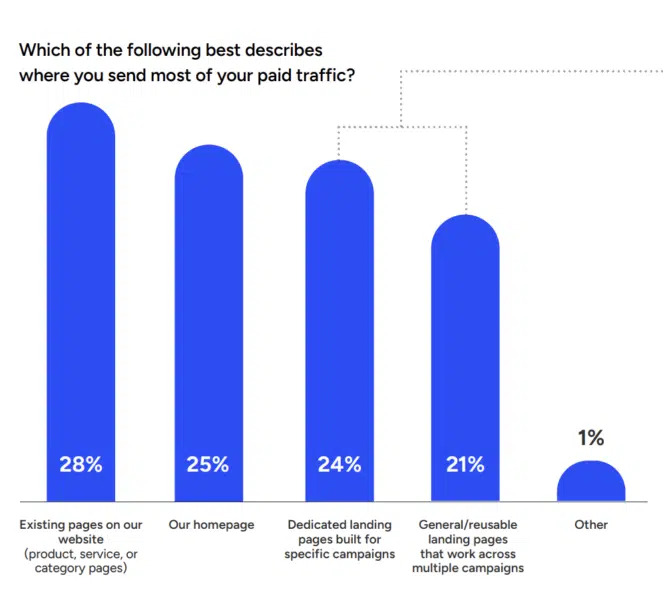
One of the most revealing insights from the Unbounce/Ascend2 report is the widespread practice of misdirecting paid traffic. More than half of respondents admit to sending paid traffic to general website pages rather than campaign-specific landing pages. Specifically, 28% primarily direct visitors to existing product or category pages, and another 25% send them to the homepage. A mere 24% primarily utilize dedicated landing pages custom-built for individual campaigns. This practice represents a fundamental breakdown in the customer journey and a severe undermining of initial targeting efforts.
Consider the implications: a user clicks on an ad specifically promoting a new product feature or a limited-time offer. If they are then directed to a generic homepage, they are forced to navigate to find the information they were promised, creating friction and increasing the likelihood of abandonment. This "contextual mismatch" is a critical conversion killer. For campaigns focused on direct sales, 40% of marketers send traffic to general product or category pages instead of optimized conversion-focused destinations. Even more surprisingly, over one-quarter of marketers running lead-generation campaigns still direct prospects to their homepage, forcing them to search for lead forms or relevant content.
The consequences of this strategy are tangible and negative. The report indicates that nearly two-thirds of marketers who primarily send paid traffic to their homepage report not exceeding their ROI goals. Conversely, marketers who are outperforming their targets are significantly less reliant on homepages and far more likely to employ reusable or campaign-specific landing pages. This data strongly suggests that the click itself is not the problem; it’s the experience after the click that dictates conversion success and, ultimately, ROI. The investment in precise targeting and captivating creative becomes largely moot if the destination page fails to deliver on the ad’s promise with clarity, relevance, and a clear call to action.
The ROI Imperative: Learning from Top Performers

Despite the widespread misallocation of resources, the report offers a clear blueprint for success by highlighting the practices of top-performing teams. Marketers who consistently exceeded their ROI targets demonstrated a more balanced and integrated approach to investment. Rather than concentrating resources solely on upstream activities, these high achievers invested more evenly across audience research, AI, attribution, testing, and landing pages. This holistic investment strategy stands in stark contrast to the general trend, suggesting that true ROI maximization comes from strengthening the entire customer journey, not just optimizing isolated segments.
These top performers understand that the customer journey is a continuum. They recognize that a powerful ad needs a powerful follow-through. For instance, while the average marketer uses AI primarily for ad copy, top performers are leveraging it to dynamically test landing page variations, personalize content for different audience segments, and streamline the creation of high-converting pages. This integrated use of technology ensures that the initial investment in attracting a click is fully leveraged to secure a conversion. They also prioritize robust attribution models, allowing them to accurately measure the impact of each stage of the funnel, including the often-overlooked post-click experience, thereby justifying further investment in these critical areas.
Operational Hurdles: The Root Cause of Neglect
The report delves into why marketers, despite knowing the value of post-click optimization, fail to prioritize it. The issue isn’t a lack of strategic understanding but rather operational constraints. The biggest obstacles preventing greater use and optimization of landing pages include:
- Team Capacity: Insufficient personnel to design, develop, and manage multiple landing pages.
- Design and Development Resources: Lack of in-house or outsourced talent with the necessary skills to create high-quality, conversion-optimized pages.
- Expertise: A shortage of specialists in Conversion Rate Optimization (CRO) and UX design focused on post-click experiences.
- Maintenance: The ongoing effort required to update, test, and iterate on landing pages.
- Software Budgets: Limited funds for dedicated landing page platforms, A/B testing tools, and analytics.
These practical challenges underscore a broader organizational problem: many marketing teams are structured and resourced for ad delivery, not for comprehensive conversion optimization. The skills and tools required for effective post-click optimization often reside outside the traditional paid media team, leading to friction, delays, and ultimately, neglect. This suggests a need for greater cross-functional collaboration between paid media, web development, design, and analytics teams to truly unlock the potential of the post-click phase.
Industry Reactions and Expert Commentary
The findings of "The State of Paid Media ROI 2026" have resonated across the marketing technology landscape. Dr. Elena Rodriguez, a prominent digital marketing strategist, commented, "This report validates what many of us have observed anecdotally for years. Marketers are caught in a cycle of optimizing for the click, rather than the conversion. It’s a fundamental misallocation of resources that stems from both perceived ease and genuine operational bottlenecks." She added, "The emphasis on AI for targeting and creative is understandable, but the real game-changer will be when AI is fully integrated into personalizing and optimizing the post-click journey, moving beyond just getting users to the door, but inviting them inside and making them feel at home."
Similarly, Marcus Thorne, a senior paid media manager at a global agency, reflected on the operational challenges: "It’s not that we don’t know landing pages are crucial. It’s that building and maintaining truly effective ones requires significant time, specific design skills, and continuous testing, which are often the first things cut when budgets tighten. The platforms make it so easy to tweak ads, but the post-click environment often feels like a separate, more arduous project." These sentiments highlight the systemic issues that require not just a change in mindset, but also in organizational structure and resource allocation.
Strategic Implications and the Path Forward
The implications of this report are far-reaching for the digital marketing industry. The continued neglect of the post-click experience represents a significant inefficiency that, in a competitive and cost-sensitive environment, is unsustainable.

- Financial Waste: Every dollar spent on an ad that leads to a poor post-click experience is partially wasted. Improving conversion rates through optimized landing pages can dramatically increase the ROI of existing ad spend without requiring larger budgets.
- Competitive Disadvantage: Brands that master the entire customer journey, from ad impression to conversion, will inevitably outperform competitors who focus solely on the initial click.
- Underutilization of AI: While AI is revolutionizing targeting and creative, its full potential for personalized and optimized conversion experiences remains largely untapped, representing a significant missed opportunity for efficiency gains.
- Need for Holistic Strategy: The report reinforces the need for marketers to view paid media not as a series of disconnected optimizations but as an end-to-end system. Success requires a strategic approach that allocates resources across the entire funnel, including the often-neglected post-click phase.
- Investment in CRO and UX: Organizations must prioritize investing in conversion rate optimization (CRO) expertise, user experience (UX) design, and the necessary software tools to build, test, and iterate on high-performing landing pages. This may involve training existing staff, hiring specialists, or partnering with agencies with proven CRO capabilities.
- Cross-Functional Collaboration: Breaking down silos between advertising, web development, and design teams is essential. A cohesive strategy requires collaboration to ensure message match, user flow, and technical performance are optimized across the entire user journey.
In conclusion, "The State of Paid Media ROI 2026" serves as a crucial wake-up call for marketers worldwide. While the allure of advanced targeting, compelling creative, and powerful AI tools in the pre-click phase is undeniable, the true battle for ROI is won or lost after the click. Overcoming the prevalent operational constraints and shifting investment priorities to embrace a holistic, end-to-end approach to the customer journey, with a strong emphasis on post-click optimization, is not merely a best practice—it is an imperative for survival and success in the evolving landscape of digital advertising. The path to maximizing paid media ROI is clear: focus on converting the clicks you’ve already paid for.
Related posts: