The Battle for AI Dominance: How Commerce Agents Are Reshaping the Online Retail Landscape


The landscape of digital retail is undergoing a tectonic shift, moving beyond the era of static search bars and keyword-heavy optimization toward a future defined by autonomous AI intermediaries. As ecommerce companies scramble to secure their footing in an increasingly automated ecosystem, the competition has pivoted from simply winning the shopper to owning the AI interface through which that shopper makes decisions. This evolution marks the transition from "Search Engine Optimization" (SEO) to "Agentic Commerce," where software agents act on behalf of both consumers and merchants to bridge the gap between intent and transaction.
The Evolution of the Digital Shopping Proxy
For the better part of two decades, the primary objective for ecommerce marketers was to dominate Search Engine Results Pages (SERPs). The search engine acted as a vital proxy—a digital middleman—that mediated the relationship between a brand and a prospective buyer. If a company could rank for "best hiking tent," they captured the traffic. However, as Generative AI matures, this dynamic is changing. We are moving away from a world where consumers scroll through a list of blue links toward a world where they ask a conversational interface to solve a problem.
The current trend represents the next layer of this evolution. It is no longer just about visibility in a search result; it is about embedding the brand’s intelligence directly into the shopping experience. This move toward "Agentic Commerce" effectively cuts out the traditional intermediary, allowing the merchant to regain control of the customer experience by deploying their own proprietary AI agents.
Anthropic’s Strategic Blueprint for Commerce
On September 2, 2026, AI research and deployment company Anthropic released a pivotal technical framework titled "Building Commerce Agents with Claude." This release was not merely a software update; it was a strategic blueprint designed to provide developers with the necessary guardrails, software patterns, and implementation strategies to build retail-ready AI agents.
Anthropic’s framework outlines two distinct categories of agents that are poised to redefine the internal and external operations of an ecommerce enterprise.
The Consumer-Facing Shopping Agent
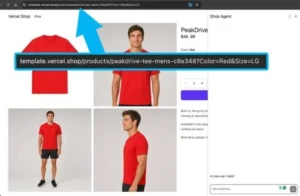
The first category, the shopping agent, serves as a high-functioning digital concierge. Unlike traditional chatbots that rely on pre-programmed decision trees, these agents leverage Large Language Models (LLMs) to understand nuanced requests. For instance, a shopper might express a complex need: "I am taking my two children on a weekend camping trip to the mountains; please find me a tent, a stove, and appropriate sleeping bags that fit our budget and are compatible with current weather conditions."
The agent processes this request by scanning the retailer’s product catalog, cross-referencing compatibility, filtering by price, and reviewing the shopper’s historical preferences. Beyond the sale, these agents are designed to handle post-purchase logistics—tracking shipments, initiating returns, and managing refund inquiries. Anthropic reports that early adopters of this specific model have seen a 35% increase in Average Order Value (AOV) and a 60% improvement in conversion rates, signaling that consumers are increasingly comfortable delegating complex purchasing decisions to AI.
The Internal Merchant Agent
The second category, the merchant agent, operates behind the scenes, acting as a force multiplier for ecommerce management teams. These agents are tasked with operational optimization, such as inventory management and pricing strategy. An ecommerce manager can query the system to identify underperforming stock that needs to be cleared to optimize warehouse space and liquidity. The agent performs real-time data analysis, tracks sales velocity across various channels, and suggests dynamic price adjustments.
Crucially, Anthropic’s framework emphasizes "human-in-the-loop" guardrails. While the agent can draft marketing campaigns or suggest markdown strategies, the architecture requires human authorization for significant financial or operational changes, ensuring that AI-driven efficiency does not bypass corporate oversight.
The 2026 Shift: Consumer Sentiment and AI Adoption
The timing of Anthropic’s release aligns with a broader shift in consumer behavior observed during the 2026 holiday shopping season. According to a comprehensive survey commissioned by Bain & Company in August 2026, there is a clear trend toward the adoption of AI-native shopping habits.
The data indicates that 24% of online buyers now plan to initiate their holiday shopping journey directly on AI platforms like Claude, ChatGPT, or Gemini, representing a substantial increase from the 17% reported in 2025. Simultaneously, 60% of consumers intend to start their journey on branded retail websites—up from 51% the previous year.
These findings suggest a dual-pronged future for ecommerce. We are seeing a divergence where consumers use external "super-agents" to discover products across the web, while simultaneously using dedicated, brand-specific agents to navigate the intricacies of a single retailer’s ecosystem. The challenge for merchants is to remain relevant in both environments.
The Two Models of Agentic Commerce
Industry experts and market analysts have categorized the current competitive landscape into two distinct models.
Model One: The External Platform Aggregator
In this model, the relationship with the shopper is owned by an external AI platform. Companies like OpenAI, with their "Instant Checkout with Stripe" and "Agentic Commerce Protocol," are building ecosystems where the transaction occurs entirely within the AI interface. The merchant becomes a participant in a larger, platform-controlled marketplace. This is a continuation of the "walled garden" approach seen in early social commerce, where the platform controls the user interface and, by extension, the customer data.
Model Two: The Merchant-Owned Agent
In this model, the retailer retains the interface. By utilizing blueprints like Anthropic’s, merchants can offer conversational discovery while maintaining full ownership of their product catalog, customer data, and brand identity. This approach is gaining traction among major retailers who are wary of ceding control of their customer relationship to third-party AI giants. Google’s "Universal Commerce Protocol," developed in collaboration with retail heavyweights like Walmart, Target, and Wayfair, represents a hybrid effort to bridge these two worlds, attempting to connect AI experiences with existing retail infrastructure.
Implications for the Future of Retail
The race to "own" the AI agent is effectively a race to own the customer relationship in a post-search world. As these technologies become standard, the competitive advantage will likely shift toward retailers who possess robust, first-party data.
The ability of an AI agent to provide personalized, high-value recommendations depends entirely on the depth of the data it can access. Retailers that have invested in loyalty programs, email marketing, and sophisticated on-site tracking will be the best equipped to power these agents. Conversely, those that rely on third-party platforms may find themselves marginalized as "commoditized providers" within an AI’s recommended list.
A Look Toward 2027 and Beyond
As we move past the 2026 holiday season, the industry is bracing for a period of rapid consolidation. The "Agentic Commerce Stack"—the collection of APIs, protocols, and LLMs required to make these systems function—is being assembled in real-time.
For the merchant, the implication is clear: building an AI agent is no longer a "nice-to-have" innovation; it is a necessity for maintaining a direct line to the consumer. Whether through external platforms or internal custom-built solutions, the retail industry is transitioning into an era where the conversation is the checkout. As these agents become more autonomous and more capable of managing complex tasks, the retailers who can provide the most seamless, intelligent, and brand-aligned experiences will likely dominate the next decade of digital commerce. The winners will not be the ones with the most search keywords, but those with the most capable, integrated, and reliable AI agents.