The Definitive Guide to Navigating B2B Procurement Platforms and Marketplaces

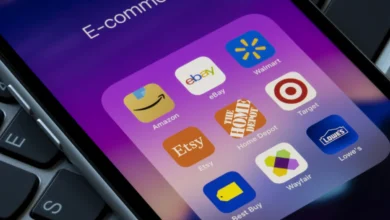
A B2B procurement platform is defined as software or an online marketplace that a business uses to request, approve, order, and pay for goods and services from other businesses. However, the term has become a catch-all that creates significant confusion in the modern enterprise software market. It describes two fundamentally different tools: internal procure-to-pay (P2P) software designed for operational workflows (such as Procurify, Precoro, Coupa, or SAP Ariba) and external B2B buying marketplaces (such as Amazon Business, Alibaba.com, or Faire) where companies browse multiple suppliers simultaneously.
Failure to distinguish between these categories often leads to costly misallocations of capital. A mid-sized company with fewer than 20 employees might inadvertently enter a sales cycle for an enterprise-grade procurement suite costing upwards of $50,000 annually, when their actual needs—such as basic purchase order tracking and standardized approval workflows—could be efficiently met by utilizing built-in features in accounting software like QuickBooks Online Plus or a free Amazon Business account.
The Evolution of Procurement Technology
The procurement landscape has shifted significantly over the last decade. Historically, procurement was a manual, paper-heavy process involving physical purchase orders (POs), printed invoices, and departmental silos. The rise of cloud-based P2P software in the early 2010s sought to digitize this process, aiming to provide "spend visibility"—a metric that allows finance teams to track where money is going in real-time.
By the mid-2020s, the market reached a point of bifurcation. On one side, companies sought "Source-to-Pay" (S2P) suites to manage the entire lifecycle from supplier vetting to payment. On the other side, the consumerization of B2B buying led to the rise of massive marketplaces that mimic the B2C experience, offering instant product availability and price comparison.
Distinguishing P2P Software from B2B Marketplaces
To understand which tool a business requires, one must evaluate the primary objective of the purchase.
Procure-to-Pay (P2P) and Source-to-Pay (S2P) software are internal workflow engines. They act as the "gatekeeper" of company capital. When an employee needs to make a purchase, the software ensures that the request is routed through the correct manager, verified against a budget, and eventually matched with an invoice to ensure the company is not overpaying for items it never received. Providers like Procurify and Precoro focus on the SMB (Small and Medium Business) market, while Zip, Coupa, and SAP Ariba cater to the complex, high-volume requirements of the mid-market and enterprise sectors.
Conversely, B2B marketplaces are storefronts. They function as a centralized hub for finding products and suppliers. Amazon Business, for example, provides a familiar interface for office and operating supplies while adding "business-only" pricing tiers. Alibaba.com serves a different purpose, connecting Western buyers with overseas manufacturers, often incorporating "Trade Assurance" to mitigate the risks of international shipping and quality control. Faire, a third model, targets independent retailers, offering them flexible net-60 payment terms to manage inventory cash flow.
The Mechanism of the Three-Way Match
For finance and operations teams, the primary value proposition of P2P software is the "three-way match." This is a rigorous accounting control process that compares three documents: the Purchase Order (the intent to buy), the Goods Receipt (proof that the item arrived), and the Vendor Invoice (the request for payment).
In a manual environment, these documents often exist in different silos—the PO in an email, the receipt in a warehouse log, and the invoice in an accounting folder. If a company orders ten units, receives five, but is billed for six, the three-way match automatically flags the discrepancy. This prevents "invoice leakage," where companies pay for undelivered goods or erroneous quantities. Most industry analysts, including those from APQC, suggest that automating this process is the single most effective way to reduce the cost per purchase order, which can range from $14 to $54 depending on the manual labor involved.
Punch-Out Catalogs: Bridging the Divide
The tension between marketplaces and P2P software is resolved through a technology known as "punch-out catalogs." A punch-out allows a user to remain inside their internal procurement software while navigating an external vendor’s website.
The workflow operates as follows:
- The user initiates a request within their internal P2P software.
- The software "punches out" to the supplier’s website (e.g., Amazon Business).
- The user shops and adds items to the cart, but instead of checking out with a credit card, the cart data is sent back to the P2P system.
- The system automatically creates a requisition, routes it for approval, and generates a formal PO.
This integration relies on standardized protocols like cXML (the modern standard for Coupa and JAGGAER) or OCI (primarily used in SAP environments). For a business, this creates the best of both worlds: the convenience of a vast marketplace catalog combined with the stringent internal controls of a P2P platform.
Economic Implications and ROI Analysis
Investing in procurement software is rarely about saving money on the products themselves; it is about saving money on the process. Based on benchmarks from Ardent Partners, a firm can realize significant ROI by reducing the administrative hours spent on invoice reconciliation.
For a company processing 200 invoices per month, the transition to automated P2P software can yield substantial savings. If manual processing costs $30 per invoice, the annual cost is $72,000. By reducing that cost through automation, even after accounting for a software subscription of roughly $10,000–$15,000, the company can net significant annual savings. However, for a small business processing only 20 invoices per month, the cost of the software often outweighs the administrative savings, making a manual or spreadsheet-based approach more fiscally responsible.
Strategic Selection Criteria
When selecting a procurement platform, organizations must avoid the common trap of "feature bloat." Many enterprises are sold on advanced AI capabilities—such as automated intake agents or predictive spend analysis—before they have established the basics of consistent PO approvals.
A robust selection checklist should include:
- Integrations: Does the software sync seamlessly with the existing ERP or accounting system (e.g., NetSuite, Sage Intacct, or Xero)?
- User Experience: If the procurement team finds the interface difficult to navigate, adoption rates will plummet, leading to "maverick spend" (employees bypassing the system to use personal credit cards).
- Supplier Onboarding: How difficult is it to migrate existing vendors onto the new platform? If the system forces suppliers to pay high transaction fees, they may simply refuse to work with you.
- Pricing Transparency: Does the vendor offer a clear, tiered subscription model, or are they hiding behind a "quote-only" wall?
The Reality of Implementation
Implementation timelines vary based on complexity. For an SMB, deploying a P2P tool like Precoro typically takes four to eight weeks. In contrast, an enterprise-wide rollout of an S2P suite like SAP Ariba can take six to twelve months, involving extensive data cleansing, change management training, and custom API development.
The most frequent point of failure is not technical—it is human. If employees find the system cumbersome, they will find ways around it. Therefore, the most successful implementations are those that prioritize ease of use for the end-user over administrative convenience for the procurement department.
Summary of Market Offerings
As of late 2026, the market remains highly stratified. Platforms like Procurify, Precoro, and ProcurementExpress.com serve as the standard for SMBs, offering transparent, per-user or per-tier pricing. Mid-market and enterprise players like Zip and Coupa operate on custom quotes, often requiring a dedicated procurement manager to oversee the deployment. Finally, marketplaces like Amazon Business and Alibaba.com remain the gold standard for immediate access to goods, provided the buyer is willing to accept that these platforms are designed for shopping, not for comprehensive enterprise spend control.
Ultimately, businesses should conduct an internal audit of their current purchasing volume and complexity before committing to a platform. For many, a combination of a lean marketplace approach and simple, integrated accounting workflows remains the most effective strategy for maintaining agility and fiscal discipline.
Related posts: