Senator Bernie Sanders Introduces The Ban Flock Act to Eradicate Automatic License Plate Readers Amid Growing Mass Surveillance Concerns

In an aggressive legislative push against the rapid expansion of domestic surveillance, Senator Bernie Sanders (I-Vt.) has introduced a sweeping measure aimed at dismantling the infrastructure of automated license plate readers (ALPRs) across the United States. Titled The Ban Flock Act, the newly proposed legislation seeks to prohibit all federal agencies from utilizing ALPR technology, while simultaneously imposing severe financial penalties on state and local governments that refuse to sever ties with the systems. The bill is co-sponsored in Congress by Representative Alexandria Ocasio-Cortez (D-N.Y.) and Senator Jeff Merkley (D-Ore.), signaling a unified front among progressive lawmakers eager to curb the unchecked proliferation of artificial intelligence in public spaces.
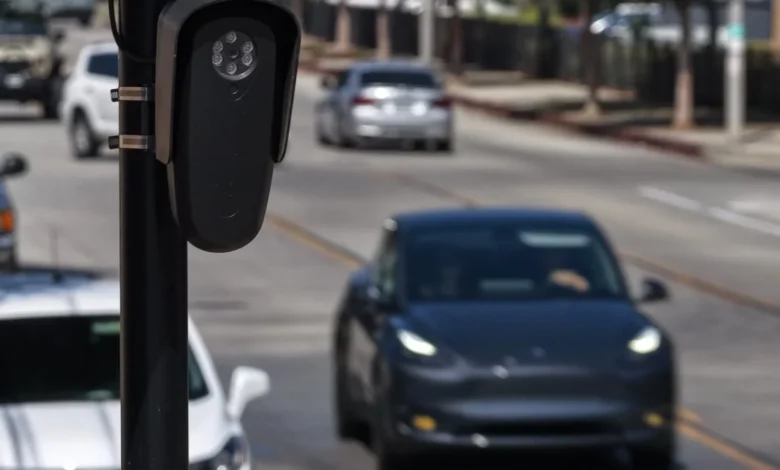
The legislative maneuver targets Flock Safety, a prominent private surveillance company that has rapidly become the dominant force in the American ALPR market. Flock’s network of high-resolution cameras captures, processes, and catalogs license plates along with detailed vehicular metadata, creating a persistent, searchable archive of public movement. According to data cited by Senator Sanders, Flock currently stands as the largest vendor of automated license plate reading systems in the United States, operating a sprawling network of more than 120,000 cameras nationwide. This vast surveillance apparatus reportedly logs approximately 20 billion vehicle sightings every month, aggregating immense tranches of data that track the daily routines of millions of unsuspecting citizens.
At the core of the proposed legislation is a direct challenge to the normalization of corporate-backed public surveillance. By leveraging the power of the federal purse strings, The Ban Flock Act would bar non-compliant state and local municipalities from accessing federal grants and funding streams if they continue to deploy or maintain ALPR systems. Furthermore, the bill introduces a critical legal recourse for everyday Americans, granting citizens the statutory right to sue the federal government in the event that their constitutional privacy rights are violated through the deployment of automated license plate readers.
The Mechanics of Mass Tracking: How Flock Cameras Operate
To understand the urgency driving The Ban Flock Act, privacy advocates and cybersecurity researchers point to the sheer volume and granularity of data collected by modern ALPR devices. Unlike traditional traffic cameras designed merely to catch speeding motorists or red-light violators, systems manufactured by Flock and similar vendors are engineered to continuously photograph every passing vehicle, regardless of whether its occupants are under criminal suspicion. These devices capture time-stamped images, vehicle makes, models, colors, bumper stickers, and unique roof racks, synthesizing these attributes into searchable digital profiles.
Recent technical audits and security analyses have laid bare the staggering scale of data retention inherent in these systems. Security researchers and hackers who managed to examine a decommissioned roadside Flock camera discovered that its local logs retained roughly three weeks of continuous activity. Within that compressed timeframe, a single camera had captured more than 50,000 distinct vehicles and produced an astonishing 1.6 million individual images. This immense localized data harvest is routinely funneled into centralized cloud databases, where it can be queried by law enforcement agencies, analyzed through machine learning algorithms, and shared across jurisdictional lines with minimal judicial oversight.
Critics argue that this relentless recording transforms public roadways into virtual checkpoints. Movements are no longer ephemeral; instead, they are permanently archived, allowing automated systems to map out sensitive personal habits. Senator Sanders emphasized this dystopian reality during the rollout of the bill, noting that the technology can effortlessly chronicle when an individual visits a medical clinic, drops children off at educational facilities, attends a place of worship, or participates in lawful political gatherings.
A Growing Record of Controversy and Scope Creep
The introduction of The Ban Flock Act arrives at a time of mounting public scrutiny and bipartisan apprehension regarding the secondary uses of law enforcement databases. While pitched to local communities primarily as a tool to combat property crime and recover stolen vehicles, the practical application of ALPR networks has rapidly expanded far beyond its original scope, resulting in troubling instances of civil liberties violations and data misuse.
Over the past several years, investigative journalism and public records requests have exposed numerous controversial applications of ALPR data networks:
Immigration Enforcement Partnerships: Reports have surfaced indicating that state and local law enforcement agencies have shared real-time and historical ALPR data with federal immigration authorities, effectively weaponizing local traffic monitoring networks to aid in federal immigration enforcement operations. This cross-agency data sharing has raised severe Fourth Amendment concerns, as residents in sanctuary cities or welcoming states find their movements tracked and accessible to agencies traditionally shielded from local sanctuary ordinances.
Surveillance of Political Activism: Documentation obtained by civil rights groups reveals that police departments have utilized automated license plate reader data to monitor, map, and investigate activists engaged in constitutionally protected speech. This has included tracking participants supporting Palestinian rights movements and various civil rights demonstrations, chilling free expression and raising the specter of political profiling.
Reproductive Healthcare Tracking: In the wake of the Supreme Court decision overturning Roe v. Wade, privacy advocates expressed alarm over the potential exploitation of location tracking data. Investigative findings subsequently confirmed at least one alarming instance where a law enforcement officer utilized nationwide license plate reader databases to track a woman crossing state lines, reportedly in search of abortion care.
These incidents underscore what digital rights organizations have warned about for years: "scope creep," the phenomenon wherein surveillance tools acquired for narrow, emergency purposes gradually expand to encompass broad, invasive monitoring of the general population.
Legislative Reactions and the Battle Over Oversight
The unveiling of The Ban Flock Act has ignited a fierce national debate involving civil liberties organizations, municipal leaders, technology companies, and federal policymakers. Proponents of the legislation argue that the current regulatory landscape is entirely inadequate to protect citizens from the sweeping commercialization of public space.
"At a time of growing concern about the unchecked power of artificial intelligence, Flock is eviscerating the very notion of privacy by installing tens of thousands of cameras in communities across America without their consent," Senator Sanders declared during his legislative address. He reiterated a stark warning regarding the omnipresent nature of the infrastructure: "Flock is always watching."
Co-sponsors of the bill have echoed these sentiments, pointing out that the unchecked expansion of private-public surveillance partnerships creates an end-run around traditional constitutional safeguards. Because many of these cameras are purchased, installed, and maintained either by private homeowners associations, commercial entities, or through municipal contracts with private corporations, they often bypass the rigorous public debate, city council votes, and transparency requirements typically associated with government-operated surveillance programs.
Conversely, proponents of ALPR technology—including various law enforcement associations and private security firms—maintain that automated license plate readers remain indispensable tools for modern policing. Industry stakeholders argue that the technology significantly reduces violent crime, assists in Amber Alerts for missing children, aids in locating fleeing suspects, and provides objective evidence that can expedite criminal investigations. They contend that robust internal policies, data retention limits, and strict auditing protocols are sufficient to prevent abuse, making a blanket federal ban unnecessary and detrimental to public safety efforts.
Implications for Municipalities and the Future of AI Regulation
If passed, The Ban Flock Act would fundamentally alter the security landscape for thousands of American cities and towns that have integrated ALPR technology into their daily municipal operations. Local governments would face a stark ultimatum: either deactivate and remove their automated license plate reader systems, or forfeit crucial federal funding streams tied to transportation, infrastructure, and community development.
Furthermore, the inclusion of a private right of action represents a significant escalation in legislative enforcement. By empowering citizens to directly sue the federal government over rights violations stemming from ALPR usage, the bill introduces a powerful deterrent against unauthorized or overreaching surveillance practices. Legal scholars suggest that this provision could establish a vital precedent for future legislative efforts seeking to regulate emerging artificial intelligence and biometric data collection tools.
As Congress prepares to debate The Ban Flock Act, the legislative battle lines are drawn. The outcome of this fight will extend far beyond license plates and traffic monitoring, serving as a critical litmus test for how the United States intends to balance technological innovation and public safety against the fundamental right to privacy in an increasingly digitized world.