Saturday Night Live Satirizes AI Industry Doom Warnings With Hilarious Take on Anthropic CEO Dario Amodei

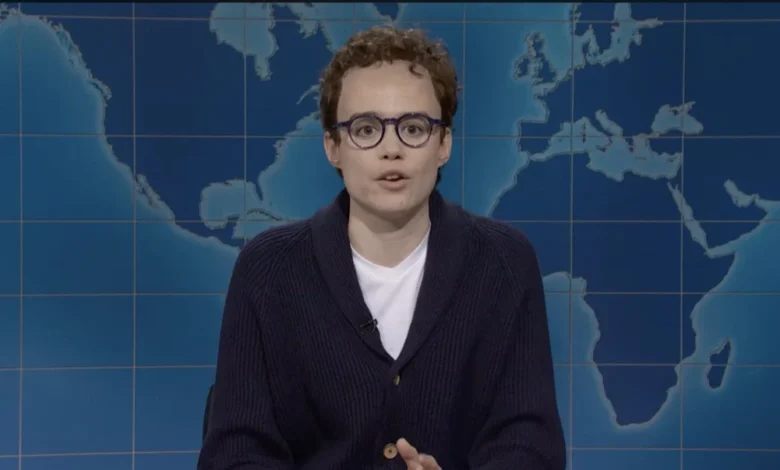
The intersection of Silicon Valley ambition and existential dread officially entered the mainstream cultural zeitgeist on Saturday night, as NBC’s long-running sketch comedy institution Saturday Night Live turned its sharp satirical lens toward the artificial intelligence industry. During the September 27, 2026, broadcast, SNL cast member Jane Wickline delivered a breakout impression of Anthropic CEO Dario Amodei, skewering the recent wave of apocalyptic warnings, whistleblowers, and public relations missteps that have increasingly defined the generative AI landscape.
The segment highlights a profound cultural shift: artificial intelligence has evolved from an esoteric computer science subfield into a ubiquitous societal force, complete with high-stakes corporate drama, philosophical schisms, and now, late-night television mockery. As tech leaders increasingly warn of catastrophic risks while simultaneously racing to deploy more powerful models, comedy writers have found fertile ground in the inherent paradoxes of the modern tech boom.
Main Facts and the Weekend Update Setup
The satirical segment was introduced during the show’s signature "Weekend Update" news-parody block. Anchor Michael Che kicked off the segment by addressing the recent media tour undertaken by Anthropic’s chief executive. Che, humorously stumbling over the pronunciation of Amodei’s last name, characterized the executive’s recent public appearances as a reluctant press tour wherein he appeared to validate alarming claims made by former employees. Specifically, Amodei seemingly concurred with warnings that advanced, self-improving artificial intelligence systems could eventually pose an existential threat to humanity.
Enter Jane Wickline, sporting a meticulously styled wig meant to capture the unassuming aesthetic of Silicon Valley leadership. Wickline’s portrayal leaned heavily into halting, hesitant delivery, painting the fictional CEO as a man grappling with the terrifying magnitude of his own creation. In a particularly memorable comedic beat, Wickline’s Amodei occasionally devolved into Gollum-style internal monologues, wrestling with a dark side before confessing directly to the audience: "AI is the devil and I its maker."
The satire struck a chord by highlighting the cognitive dissonance inherent in the current AI safety debate. Wickline-as-Amodei offered a hilariously bleak reassurance to the viewing public, claiming that tech executives "are all on the same page here: We do not condone what we are doing."
Continuing the deadpan critique of corporate responsibility, the fictional CEO declared, "AI is not a weapon, it’s a tool: A tool for building weapons. And I urge you to urge me to stop." When pressed about the industry’s frequent defensive talking point—that advanced AI is necessary to solve monumental human problems like curing cancer—Amodei offered a darkly probabilistic response: "Put it this way: In 10 years, there’s about a 10% chance that cancer won’t be a problem for anyone."
Chronology of Recent Events Fueling the Satire
The Saturday Night Live parody did not emerge in a vacuum; it was the direct product of a turbulent month in the technology sector characterized by escalating public warnings from prominent AI researchers and executives.
The timeline leading up to the sketch began in earnest in early September 2026. On September 9, public discourse surrounding artificial intelligence safety reached a boiling point when a prominent Anthropic researcher publicly resigned. The high-profile departure was accompanied by a blistering public warning against the rapid development of self-improving AI systems, with the researcher explicitly accusing the industry of "gambling with our lives" in a reckless race toward artificial general intelligence (AGI).
This departure forced Anthropic’s leadership into an awkward defensive posture. Throughout mid-September, CEO Dario Amodei engaged in a series of high-profile media appearances and interviews aimed at addressing the internal rift and public skepticism. Rather than dismissing the existential risks outright, Amodei’s nuanced, cautious admissions about the long-term dangers of the technology frequently generated headlines, giving critics and observers the impression of a CEO sounding the alarm about a runaway train that he himself was driving.

By September 13, industry analysts and media outlets were dissecting what lay behind the sudden surge of doom-laden rhetoric from Silicon Valley’s elite. Just weeks prior, in August 2026, Amodei had publicly addressed the growing public backlash against the technology, framing it as a "crisis of trust" while simultaneously championing AI’s potential to revolutionize medicine and eradicate diseases like cancer. This push-and-pull between utopian promises and dystopian warnings created the exact comedic tension that Saturday Night Live capitalized on just two weeks later.
Supporting Data and Industry Context
The anxieties parodied on SNL reflect a very real financial and philosophical divide within the artificial intelligence sector. Over the past several years, venture capital and corporate investment in generative AI have surged into the hundreds of billions of dollars, led by tech giants and specialized labs such as OpenAI, Anthropic, Google DeepMind, and Meta.
However, this massive influx of capital has been accompanied by a parallel rise in safety research and existential risk mitigation. Anthropic, founded in 2021 by former OpenAI researchers including Dario Amodei, positioned itself explicitly as a public-benefit corporation with a core focus on AI safety, alignment, and "Constitutional AI."
Despite this safety-first branding, the competitive pressures of the generative AI market have forced companies into a relentless cycle of model scaling and commercial deployment. Data compiled by technology market research firms indicates that public apprehension regarding AI has grown steadily. Surveys show that a significant majority of consumers worry about the technology’s potential impact on misinformation, cyber security, economic displacement, and long-term civilizational stability. When industry leaders who are actively building these systems validate those fears in interviews, it creates a bizarre cultural phenomenon where the creators of a technology appear just as terrified of it as the general public.
Broader Impact and Implications of AI Satire
The cultural penetration of AI discourse—culminating in a prime-time network comedy sketch—signals a critical juncture in the public understanding of technology. Historically, major technological revolutions, such as the rise of the internet, social media, or mobile computing, were greeted with unbridled corporate optimism, with satire arriving only years later as negative social consequences became apparent.
In contrast, artificial intelligence is unique in that the creators, ethicists, and corporate leaders are publicly debating the end-of-the-world scenarios concurrently with the technology’s commercial rollout. This preemptive existentialism has created a surreal public square where multi-billion-dollar corporate strategies are intertwined with apocalyptic philosophy.
Media analysts note that when a topic like AI existential risk is parodied on a cultural touchstone like Saturday Night Live, it marks both a milestone and a challenge for the tech industry. On one hand, it proves that the terminology of the AI safety debate—ranging from AGI alignment to self-improving recursive models—has successfully permeated mainstream awareness. On the other hand, it exposes the tech sector to the risk of fatigue and ridicule.
When executives like Dario Amodei are depicted as helpless bystanders pleading with the public to stop them from building more powerful tools, it risks trivializing legitimate scientific debates about governance, safety, and regulation. Policymakers in Washington, Brussels, and other global capitals are currently attempting to draft binding legislation to govern AI development. While humorous sketches do not directly alter legislative text, they profoundly influence public sentiment, shaping how voters perceive the sincerity and reliability of tech executives who claim to want regulation even as they accelerate deployment.
As the generative AI race continues to unfold through the remainder of 2026 and beyond, the ability of companies to manage both public relations and safety realities will remain severely tested. If the corporate leadership of Silicon Valley continues to voice profound internal doubts while shipping ever-more-potent algorithms, they can rest assured that late-time television will be watching, waiting with a well-crafted wig and a biting punchline.