The Comprehensive Guide to Choosing and Maintaining a Standing Desk in the Modern Workspace

The shift toward hybrid and remote work environments has fundamentally transformed the home office, turning the standing desk from a niche ergonomic novelty into a staple of professional infrastructure. As employees spend more time at their workstations, the demand for furniture that promotes movement has surged. However, the decision to invest in a standing desk requires more than simply choosing an aesthetically pleasing model; it demands a nuanced understanding of physiological impact, mechanical reliability, and proper ergonomic integration.

The Physiological Reality of Standing Workstations
Recent epidemiological research has complicated the narrative surrounding standing desks. While early industry marketing suggested that standing for the majority of the workday could counteract the sedentary risks associated with office life, contemporary studies present a more balanced view. According to a recent analysis published in the International Journal of Epidemiology, while standing desks can mitigate certain risks by reducing total sitting time, prolonged standing is not a panacea. In fact, excessive standing can contribute to an increased risk of cardiovascular issues, including deep vein thrombosis and orthostatic hypotension.
Anne-Kristina Arnold, a senior lecturer in the Department of Biomedical Physiology and Kinesiology at Simon Fraser University, emphasizes that the benefits of standing are highly individualized. "To say standing workstations are good for everybody in every situation all the time is never going to flow," Arnold explains. "There are so many variables—body size, fitness levels, footwear, and the specific nature of the tasks being performed—that it is difficult to issue a blanket recommendation."

The current consensus among experts is that static posture is the primary enemy of productivity and health. Whether sitting or standing, the body requires periodic movement. Industry experts suggest a "20-8-2" rule: 20 minutes of sitting, eight minutes of standing, and two minutes of movement. If a user does not have a motorized desk, the guidance remains to stand or walk every 15 to 20 minutes. Ultimately, the standing desk is a tool to facilitate variety, not a replacement for physical activity.
Mechanical Considerations: Electric vs. Manual Systems
When selecting a desk, the primary mechanical divide lies between electric motorization and manual adjustment. Electric standing desks, which utilize integrated motors to transition heights at the push of a button, represent the gold standard for convenience. For users who intend to switch positions multiple times throughout a standard eight-hour workday, electric desks are essential.

Conversely, manual desks—which often rely on hand cranks or pneumatic cylinders—are generally more affordable and reliable due to the lack of complex electronics. These are best suited for users who expect to keep the desk at a set height for long periods, adjusting it only occasionally. For the high-frequency user, the initial capital expenditure of an electric desk is typically offset by the ease of use, which directly correlates to how often the user actually transitions between positions.
Ergonomics and Setup Protocol
The efficacy of a standing desk is entirely dependent on proper configuration. The fundamental ergonomic principles that apply to traditional seating remain non-negotiable for standing. When standing, the desk surface should be adjusted so that the user’s elbows form a 90-degree angle while typing. The monitor must be positioned at eye level, with the top third of the screen meeting the user’s gaze.

For laptop users, the inclusion of an external monitor stand or a dedicated laptop riser is essential to prevent "tech neck"—the strain caused by looking down at a screen. Before finalizing the desk height, users must ensure their office chair is correctly adjusted to the floor, providing adequate lumbar support for the periods they choose to sit. Furthermore, cable management is not merely an aesthetic preference; it is a safety necessity. As a desk rises, any tension in power or data cables can result in hardware damage or the accidental displacement of peripherals.
Long-Term Testing and Reliability Standards
Professional reviews conducted over multi-year periods indicate that the "intangibles"—building materials, motor noise, and warranty coverage—are what truly define a desk’s value. A standing desk is a significant investment, often expected to last for years across multiple living arrangements.

Key metrics for evaluating quality include:
- Motor Durability: The ability of the motor to maintain consistent speed and noise levels under load.
- Structural Integrity: Resistance to lateral "wobble" at maximum height, which is a common failure point in entry-level models.
- Collision Detection: The sensitivity of the sensors that stop the desk from hitting obstacles.
- Serviceability: The length of the warranty and the manufacturer’s reputation for providing replacement parts rather than requiring a full unit replacement.
Market Analysis: Notable Contenders
The current market offers a wide spectrum of options, ranging from budget-conscious models to high-end executive furniture.
-front-Reviewer-Photo-SOURCE-Julian-Chokkattu-(no-border).jpg)
- Entry-Level and Compact: The Luxor Compact Electric Standing Desk ($200) offers a no-frills, space-efficient solution for students and small-apartment dwellers, prioritizing a whisper-quiet motor and a stable weight capacity of 154 pounds.
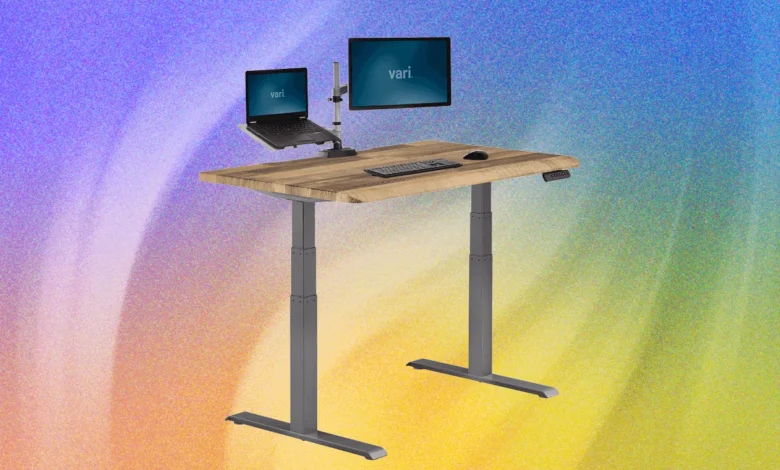
- Mid-Range Performance: The Boulies Magvida ($760) and the Vari Solid Wood Electric Standing Desk ($829) represent the "sweet spot" for many professionals. The Boulies utilizes a unique magnetic organization system, while the Vari offers a premium feel through FSC-certified lumber and a "ComfortEdge" design that reduces wrist strain.
- Premium and Executive: At the high end, the Room & Board Lincoln Desk ($5,399) serves as a benchmark for aesthetic integration. Designed in collaboration with Gensler, this desk offers a luxury finish that obscures its standing functionality, making it suitable for high-end corporate environments.
The Pitfalls of High-End "Smart" Features
A recurring trend in the standing desk industry is the integration of "smart" technology, such as AI-driven habit tracking, integrated power strips, and touchscreen control panels. While these features are marketed as productivity enhancers, real-world testing often reveals that they can be distractions. For instance, the Autonomous Desk Pro ($600) features a "Desk AI" that tracks environmental conditions like air quality and noise. In practice, unless the desk is paired with an air purifier or climate control system, these alerts often provide information that the user cannot act upon, adding complexity without significant utility.
Similarly, the Corsair Platform:6 ($1,400) faced significant criticism due to structural failures in its rail system after only a few months of standard use. This underscores a critical lesson for consumers: flashy hardware features, such as integrated rails or complex lighting, often introduce new points of failure that can undermine the primary function of the desk.
-(no-border)-SOURCE-Julian-Chokkattu.jpg)
Essential Accessories for Optimization
To complete a professional workstation, users should consider targeted accessories that enhance functionality:
- Power Management: Clamp-on power strips, such as the Branch Clamp-on Power ($89), eliminate the need for long cables trailing to the floor, reducing the risk of snags during height adjustments.
- Task Lighting: The BenQ ScreenBar Pro ($139) provides automated, space-saving illumination that adjusts based on ambient light, without taking up valuable desk surface.
- Ergonomic Support: High-quality desk mats, like those from Harber London ($239), protect the surface while providing a tactile, professional experience. For those standing for extended periods, a memory foam footrest, such as the Secretlab Premium Footrest ($89), is highly recommended to reduce lower-body fatigue.
Conclusion: A Strategic Investment
The decision to transition to a standing desk is a strategic health and productivity move, provided it is approached with a clear understanding of one’s own physical requirements and the mechanical limitations of the hardware. The most successful setups are those that prioritize structural stability, quiet motorization, and clean cable management over gimmicky software features. As the workplace continues to evolve, the standing desk will remain a vital component of the ergonomic office, serving as a platform for movement in an increasingly stationary world. By focusing on durability and proper configuration, users can ensure their workspace supports their long-term health rather than merely serving as a trendy addition to the home office.
Related posts: