In the rapidly evolving landscape of digital advertising, the necessity for a robust, data-driven foundation has never been more critical. As artificial intelligence continues to reshape how consumers discover products and services, businesses are increasingly challenged to prove the efficacy of their marketing spend. Today, Google announced a comprehensive set of upgrades to its measurement ecosystem, providing advertisers with the technical infrastructure required to navigate the AI era while ensuring that first-party data remains at the center of their growth strategies.
A Strategic Shift: From Reporting to Performance
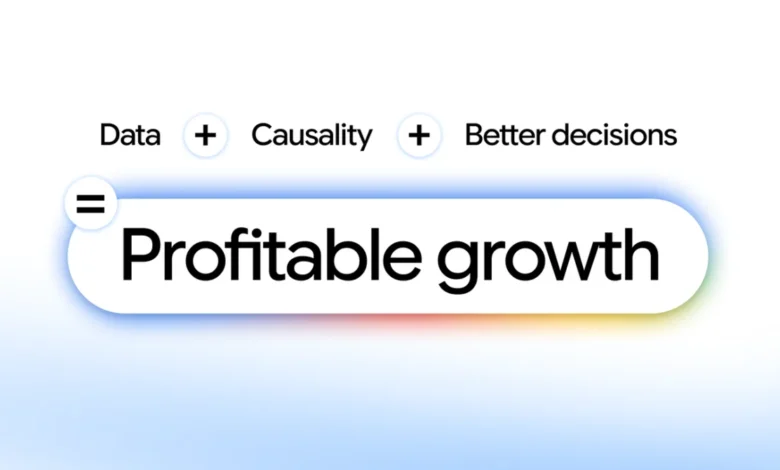
The latest product updates represent the culmination of a year-long initiative aimed at redefining the role of measurement. Since early 2026, Google has articulated a vision for transforming measurement from a static, retrospective "report card" into a dynamic, forward-looking engine for performance. This transition is built upon three core pillars: data integrity, causal analysis, and AI-driven optimization.
The urgency for these updates stems from the declining reliability of traditional third-party cookies and the increasing fragmentation of user journeys across multiple platforms. Advertisers are now seeking unified, privacy-centric methods to track the value of their investments. By integrating advanced machine learning with streamlined data management, Google is attempting to provide a cohesive solution that bridges the gap between siloed platforms and actionable business outcomes.
Unifying First-Party Data for AI Optimization
At the heart of the new announcement is the effort to simplify data management. A strong data foundation is the prerequisite for effective AI, yet many organizations continue to struggle with disparate, siloed data sets that hinder performance.
To address this, Google is deepening the integration of its Data Manager tool with Google Analytics (GA) and Display & Video 360 (DV360). This integration is designed to allow businesses to manage and activate their first-party data across the entire Google marketing ecosystem seamlessly. The data supporting this move is significant: internal Google analysis suggests that advertisers who successfully connect their offline and app data to the Data Manager environment experience an average 26% increase in incremental Return on Ad Spend (ROAS).

Furthermore, the expansion of "enhanced conversions" into GA and DV360 marks a critical step toward better ad relevance. By securely matching customer-provided data with Google’s signals, advertisers can fill gaps in measurement caused by browser and device limitations. Data from the company indicates that those utilizing enhanced conversions realize an average 11% increase in Search conversions compared to standard conversion imports, highlighting the tangible financial benefit of investing in data infrastructure.
The Universal Data Manager API
A pivotal development for technical teams is the transition of the Data Manager API to a universal standard. By aligning with the IAB Tech Lab’s Event and Conversions API (ECAPI) framework, Google is providing a standardized, secure pipeline for advertisers to manage audiences and measurement across various platforms.
This move toward standardization reduces the technical burden on developers and marketing teams. Additionally, the introduction of built-in diagnostics within Data Manager serves as a proactive safeguard. These diagnostic tools automatically identify and flag data quality issues—such as incorrect tag firing or broken pipelines—before they can negatively impact campaign performance. This shift from reactive troubleshooting to automated oversight is expected to save marketing teams hundreds of hours annually while preserving the integrity of AI bidding models.
Quantifying the "Data Strength" Dividend
Perhaps the most notable addition for marketing managers is the new Data Strength Uplift Metric within Google Ads. This metric is designed to provide immediate feedback on how a business’s first-party data strategy is contributing to its bottom line. By calculating the additional conversions recovered through advanced data setups, the metric offers a transparent view of the ROI associated with technical investments.
The impact is substantial: businesses that have implemented the Google tag gateway have reported, on average, a 14% conversion uplift. When focusing specifically on Demand Gen campaigns, this figure climbs to over 20%. These metrics serve as a vital proof point for CMOs looking to justify the cost of data-engineering projects to their executive boards, transforming technical "best practices" into visible financial growth.
Advancements in Meridian: The Future of Marketing Mix Modeling
Beyond real-time bidding and performance tracking, Google is significantly upgrading Meridian, its open-source Marketing Mix Model (MMM). For many enterprises, MMMs are the "source of truth" for long-term strategic planning, but they are often hampered by slow processing times and the difficulty of incorporating real-world causality.

The new agentic capabilities within Meridian are designed to solve these bottlenecks. By leveraging AI agents, the platform can now audit data quality, suggest corrections for common modeling errors, and guide analysts through the model-building process in real time. These features are intended to reduce the time-to-insight, allowing brands to adjust their marketing mix more rapidly in response to shifting market conditions.
Moreover, the inclusion of brand signals—such as Branded Google Query Volume—allows for a more holistic view of the consumer journey. This enables marketers to bridge the long-standing divide between upper-funnel brand building and lower-funnel performance marketing. By quantifying how video and TV campaigns drive long-term search interest and eventual sales, Meridian provides a more accurate picture of the total business value of marketing.
Global Availability of GeoX
The general availability of GeoX, now fully integrated into the Meridian suite, marks a major milestone in causal measurement. GeoX allows advertisers to run independent, geography-based incrementality experiments across any advertising platform, not just those owned by Google.
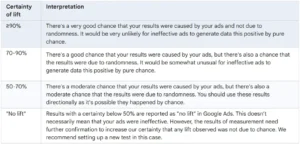
By incorporating these causal results directly into an MMM, advertisers can calibrate their models with real-world evidence. This hybrid approach—combining the broad, historical view of an MMM with the precise, experimental proof of a geo-test—is considered the gold standard in modern marketing analytics. It provides a robust defense against the inherent biases found in purely observational data, ensuring that marketing budgets are allocated to channels that actually drive incremental demand.
Implications and Industry Outlook
The rollout of these tools comes at a time when the advertising industry is under intense pressure to reconcile the need for privacy with the demand for performance. By providing tools that are "privacy-first" yet highly effective, Google is positioning its platform as the primary environment for sustainable, long-term growth.
Industry analysts suggest that these moves are not merely product updates but a strategic recalibration of the advertising ecosystem. As the "AI era" matures, the competitive advantage will shift from those who simply have the most data to those who have the cleanest, most accurately modeled data. The ability to automatically identify data issues, measure the incremental lift of that data, and incorporate causal proofs into planning models provides a significant advantage for sophisticated advertisers.

However, the burden of implementation remains. While Google is simplifying the interfaces and providing automated guidance, the onus is on businesses to treat their data as a strategic asset. The shift toward "agentic" measurement tools suggests that the future of marketing will be a partnership between human strategy and AI-driven execution.
Looking Ahead: Rethink 2026
As the industry continues to digest these changes, the upcoming "Rethink 2026" event is expected to serve as the definitive forum for these new capabilities. The conference will focus on helping businesses operationalize these measurement strategies, ensuring that the promise of AI-driven growth is met with the practical reality of execution.
Ultimately, the goal of these advancements is to provide clarity in an increasingly opaque digital world. By empowering marketers to prove the financial return on every dollar spent—whether through the immediate feedback of the Data Strength Uplift Metric or the deep, strategic insights of an upgraded Meridian model—Google is providing a framework for businesses to navigate uncertainty with confidence. As organizations transition into the next phase of the digital economy, those that adopt these proactive measurement practices will likely be the ones to define the next era of profitable, sustainable growth.