Bridging Conviction and Constraint: The 2026 State of Supply Chain Sustainability Report Reveals Critical Gaps in Global Corporate Climate Strategies

Global corporate leadership continues to project an unwavering public stance on climate strategy, asserting that long-term sustainability remains a core business priority despite mounting external pressures and competing economic demands. However, beneath this veneer of high-level corporate commitment lies a complex web of structural vulnerabilities, geopolitical hurdles, and operational disconnects. These insights form the cornerstone of the 2026 State of Supply Chain Sustainability Report, recently published by the Massachusetts Institute of Technology (MIT) Sustainable Supply Chain Lab.
Drawing from an extensive global survey of 1,810 supply chain professionals spanning 91 countries, the comprehensive study offers a nuanced look at the state of corporate environmental responsibility. The findings expose an enterprise landscape caught in a tense tug-of-war between profound ideological conviction and punishing operational constraints, mapping out an environment where ambition frequently outpaces accountability infrastructure.
Record Highs in Ambition Meet Stiff Operational Resistance
According to the 2026 report—which marks seven years of tracking industry trends by the MIT Sustainable Supply Chain Lab—83 percent of surveyed supply chain professionals rate sustainability as either important or very important to long-term business success. This figure represents the highest level of commitment recorded in the report’s history, signaling that corporate awareness of climate risks has permeated mainstream executive thinking.
Yet, this ideological commitment is increasingly divorced from organizational capacity. Following recent U.S. policy shifts that deprioritize environmental regulations and climate targets, 59 percent of respondents report a hardening of corporate resolve, with leaders striving to fill the regulatory vacuum through voluntary action. Paradoxically, however, these same organizations find themselves forced to compromise those very commitments.
Tariff uncertainty has emerged as a primary wrecking ball for sustainability timelines. Sixty-eight percent of respondents note that shifting and unpredictable tariff structures have compelled their organizations to delay, scale back, or completely abandon established sustainability strategies. Compounding this friction, nearly one-third of surveyed organizations report that tariff-related supply chain disruptions have directly increased their operational emissions, forcing companies into carbon-heavy workarounds just to keep goods moving.
"Commitment is strong, measurement is expanding, and AI is accelerating," notes Sreedevi Rajagopalan, director of the MIT Sustainable Supply Chain Lab and lead author of the report. "What comes next is harder: converting commitment into accountability, operational integration into strategic decision-making, and incremental decarbonization into genuine transition."
Geopolitical Instability and the Decay of Strategic Assumptions
The friction between climate ambitions and global realities extends far beyond trade tariffs. More than eight in ten respondents across North America, Europe, and Asia agree that ongoing geopolitical conflict is systematically eroding the effectiveness of their organization’s climate action initiatives.
Historically, corporate decarbonization blueprints were constructed on foundational assumptions of stable global trade, predictable economic partnerships, and relative geopolitical peace. With those foundational pillars fracturing across multiple continents, companies are discovering that their climate roadmaps lack the resilience required for an era of persistent global friction.
This external volatility has laid bare a profound internal vulnerability: governance deficits. Among companies with publicly stated sustainability goals, only 51 percent have established formal cross-functional sustainability teams. This specific governance structure is historically recognized as the most effective mechanism for embedding environmental considerations into daily operational decisions. Furthermore, just 33 percent of organizations elevate sustainability oversight to the board level, indicating a systemic lag in top-tier corporate governance.
The operational penalty for poor governance structures is stark. Organizations equipped with formal cross-functional teams report that sustainability is "frequently or always" integrated into business decisions 57 percent of the time. Conversely, where environmental responsibility is siloed within a single corporate function, that integration rate plummets to just 13 percent—a striking 44-point governance gap that highlights the tangible return on structural investment.
Where Sustainability Takes Root—and Where It Fails
An analysis of operational integration reveals that sustainability is embedding most deeply where companies make immediate, tactical choices. Environmental metrics heavily influence daily operations in:
- Transportation and logistics (39 percent)
- Procurement (35 percent)
- Warehousing (34 percent)
- Product design (33 percent)
However, this integration thins out dramatically in decisions that lock in long-term emissions profiles: capital investments, long-term network design, and comprehensive supply chain risk planning. This disparity indicates that modern corporations are becoming increasingly proficient at operating existing supply chains more sustainably, but they are failing to design inherently sustainable supply chains for the future.
The Artificial Intelligence Paradox
Artificial intelligence is frequently touted as the ultimate silver bullet for corporate sustainability, but the MIT report reveals a more complicated reality. Among North American organizations, 78 percent report current utilization of AI in sustainability initiatives, and 87 percent of those adopters claim a positive impact on their environmental goals. At a micro-level, the benefits appear clear: 86 percent of users have reduced material waste, 81 percent have reduced energy consumption, and 63 percent leverage AI to estimate missing supplier emissions data.
However, a closer look at mature, agentic AI users reveals an unexpected ecological toll. Only 53 percent of these advanced users report a net reduction in total greenhouse gas emissions, while 29 percent actually report an increase. This counterintuitive finding suggests that efficiency gains driven by automation do not automatically translate into lower net environmental impacts.
This tension is acutely visible within modern warehousing environments. Among advanced and fully automated warehouses utilizing AI, 78 percent report higher energy consumption since implementing automated systems, and 76 percent report higher waste generation. Crucially, only 24 percent of these facilities employ AI-driven real-time monitoring to track their environmental consequences. As a result, many organizations remain unaware that their digital and physical footprints are expanding until long after new technologies have been fully integrated.
Regional Divides in Freight Decarbonization
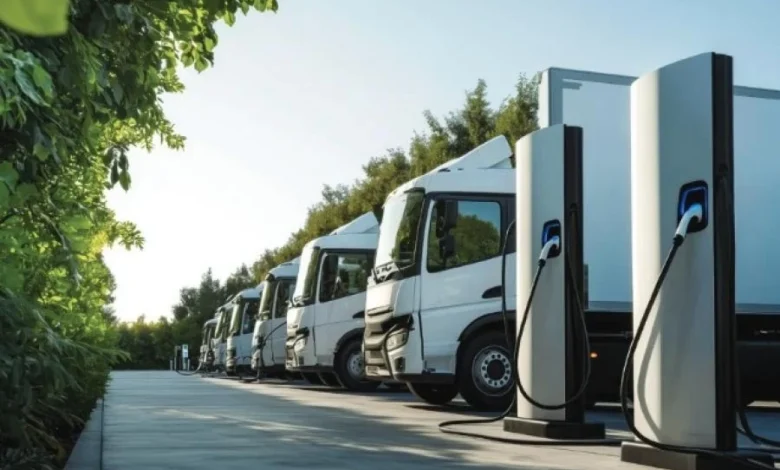
In the realm of freight transportation, nearly every logistics company is actively pursuing emissions reductions through route optimization, load consolidation, and driver-behavior training programs. Yet, the heavy-duty reality remains stubborn: 43 percent of commercial fleets still operate mostly or entirely on conventional diesel, and a mere 8 percent have completed a full transition to low-emission energy sources.
A sharp regional divergence explains why capital-intensive transitions frequently stall. In Europe, 84 percent of freight companies report that recent policy shifts have positively influenced their decarbonization strategies, driven by robust regulatory frameworks. In stark contrast, only 44 percent of North American companies report the same. Without clear, consistent policy signals, the capital expenditures required to transition to zero-emission fleets remain deferred. Consequently, battery-electric commercial vehicles have reached scale in 60 percent of European companies, compared to just 36 percent in North America.
A Beacon of Progress: Scope 3 Collaboration
Amid the myriad challenges highlighted in the research, the report identifies a major bright spot in the management of Scope 3, or indirect, supply chain emissions. Recognizing that upstream and downstream emissions cannot be tackled in isolation, corporate participation in joint supplier engagement and decarbonization programs surged from 31 percent to 58 percent in a single year.
Furthermore, formal partnerships designed to manage shared suppliers’ emissions more than doubled, jumping from 23 percent to 55 percent. Most notably, the percentage of companies attempting to tackle Scope 3 emissions entirely alone collapsed from 18 percent down to just 6 percent. Supported by organizations such as the C.H. Robinson Foundation, Breakthrough, CO2 AI, and Dassault Systèmes, this shift demonstrates a growing industry consensus that supply chain sustainability requires unprecedented levels of cross-industry collaboration.
Implications for the Future of Global Commerce
The overarching pattern illuminated by the 2026 State of Supply Chain Sustainability Report is clear: corporate intent and ethical commitment are no longer the primary bottlenecks holding back global climate action. Instead, the true hurdles lie in governance structures, accountability frameworks, technology infrastructure, and measurement capabilities.
Businesses that successfully bridge the external gap—building robust resilience against geopolitical and trade disruptions—while closing the internal gap by hard-wiring accountability into their organizational charts, will be best positioned to survive the coming decades. For those that fail to align their governance with their public ambitions, the report serves as a sobering reminder: ambition without institutional accountability moves the environmental needle very little.