Sprout Social Unveils Advanced Agentic AI Workflows and Multi-Platform Integrations at Q3 Breaking Ground Innovation Event

Sprout Social, a leading provider of cloud-based social media management software, hosted its quarterly virtual innovation showcase, Breaking Ground, presenting a comprehensive suite of product updates designed to minimize manual labor and maximize data utility for digital marketing teams. Centered around the third quarter of 2026, the 30-minute broadcast placed significant emphasis on the practical application of Trellis, Sprout Social’s proprietary agentic artificial intelligence engine. Alongside these AI advancements, the platform rolled out deep integrations spanning emerging social networks, enhanced analytics reporting, and streamlined influencer marketing workflows, reflecting the rapidly evolving demands of enterprise social media management.
The quarterly Breaking Ground series has evolved into an essential touchpoint for social media professionals seeking to understand how technological shifts translate into everyday operational efficiencies. As social media ecosystems expand in complexity—with organizations routinely managing multiple networks, paid advertising campaigns, and influencer networks simultaneously—the administrative burden on social media managers has grown exponentially. Industry data consistently indicates that marketing professionals spend a disproportionate amount of their working hours pulling raw metrics, reconciling disparate spreadsheets, and formatting reports for executive stakeholders, leaving limited time for strategic execution and creative ideation.
Addressing Operational Fatigue Through Agentic AI
To combat this widespread industry pain point, Sprout Social’s latest update highlights the core capabilities of Trellis, an agentic AI system embedded natively across all accounts and subscription tiers without requiring additional financial upgrades. Unlike traditional generative AI tools that simply draft text in isolation, agentic AI frameworks are designed to execute complex, multi-step workflows autonomously, effectively functioning as digital assistants capable of reasoning through data-heavy tasks.

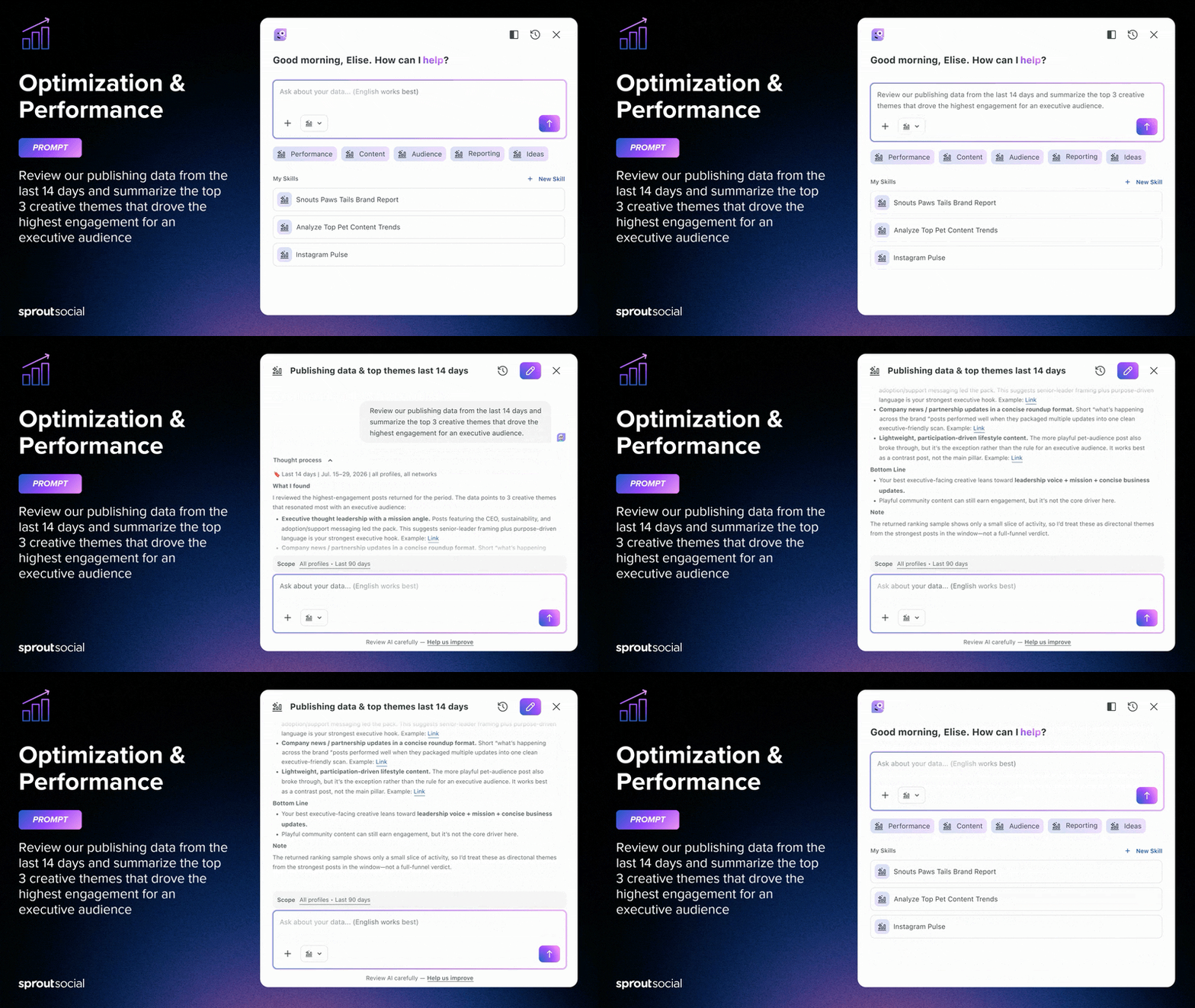
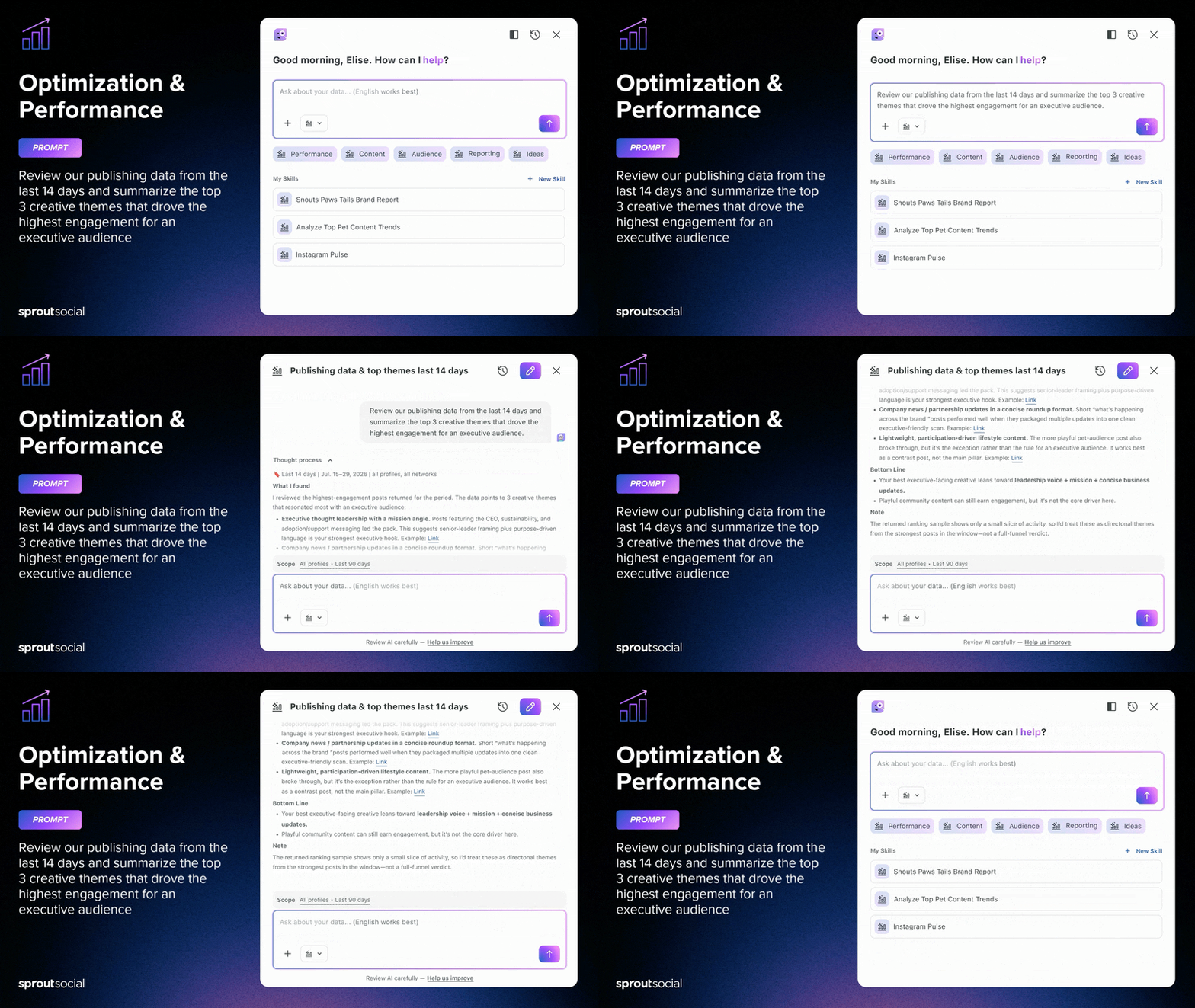
During the Q3 session, product leads demonstrated five distinct workflows intended to offload tedious responsibilities from human operators. A focal point of the presentation was a prompt engineered to resolve one of the most persistent hurdles in corporate communication: converting disparate performance metrics into a cohesive executive summary. Historically, answering fundamental inquiries regarding campaign performance required cross-referencing numerous native analytics dashboards, aggregating click-through rates, impressions, and engagement metrics into custom spreadsheets.
By leveraging Trellis, users can now input natural language prompts, such as instructing the system to review publishing data from a specific 14-day window and synthesize the top three creative themes driving maximum engagement tailored for executive leadership. The AI evaluates the underlying performance numbers, identifies the correlating posts, and drafts an executive-ready overview. While human oversight remains essential for providing situational context and strategic judgment, the technology drastically reduces the preliminary research phase from hours to minutes.
Expanding Platform Interoperability Across Major Networks
In tandem with its AI developments, Sprout Social introduced significant architectural updates designed to unify fragmented digital ecosystems. The proliferation of specialized content formats and distinct publishing channels has historically forced social media managers to constantly pivot between native platform applications and centralized management tools. The Q3 release directly addresses this friction by integrating new network functionalities natively into existing Sprout workflows.
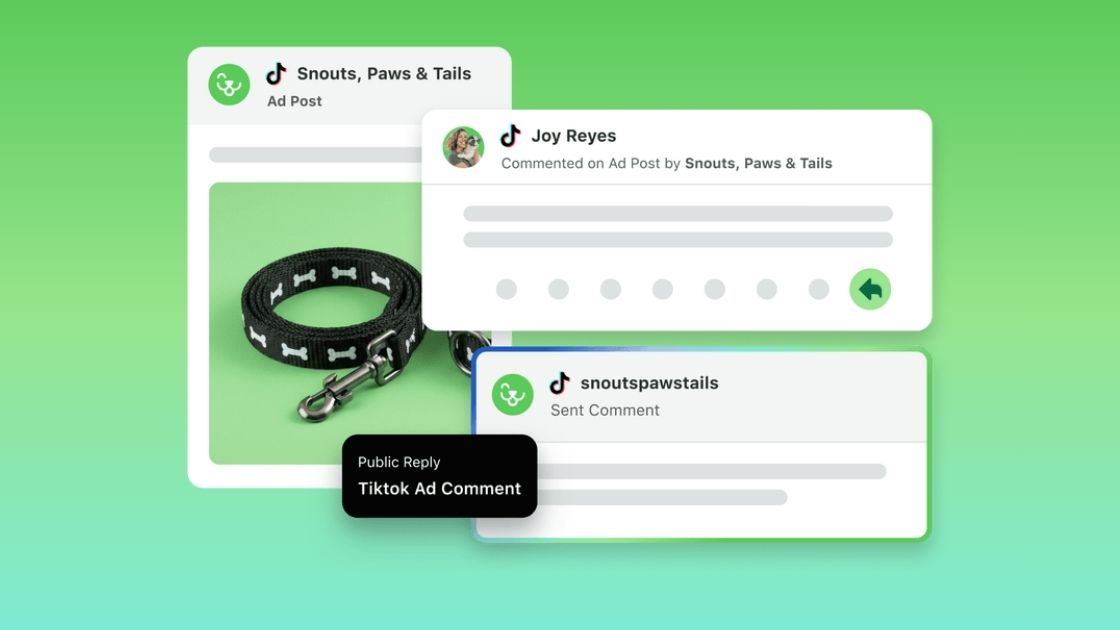
Among the most notable additions is support for TikTok ad comments and paid performance reporting. Paid promotional campaigns on TikTok frequently generate high volumes of engagement that require active moderation, yet these interactions often remained siloed from organic community management workflows. Under the updated architecture, comments originating from TikTok ad accounts now route directly into the centralized Sprout Engagement inbox alongside organic messages, ensuring that community management teams maintain a unified view of all audience interactions. Furthermore, paid performance reporting has been streamlined to consolidate reach, conversions, cost-per-acquisition (CPA), and overall spend directly alongside organic metrics, eliminating the traditional requirement of reconciling separate financial logs from ad managers with organic analytics tools.
The platform has also broadened its video-first capabilities through the integration of Snapchat publishing. With Snapchat reporting more than 971 million monthly active users globally, maintaining an active presence on the platform is increasingly critical for brands targeting younger demographics. Sprout users can now connect a Public Profile to compose, schedule, and tailor Spotlights and Stories directly within the primary publishing window, aligning Snapchat workflows with those of established channels like Instagram and X.
Optimizing Instagram Workflows and Influencer Marketing
Instagram-centric updates deployed in August further minimize the necessity for teams to navigate away from the Sprout interface. Responding to the structural importance of audio in modern video discovery, Sprout integrated Instagram’s Commercial Music library and Original Audio search directly into the Compose window. Social media managers can now preview audio tracks, adjust volume parameters, and attach sounds to Reels without leaving the platform. Additionally, the introduction of native liking capabilities within the Engagement inbox allows teams to acknowledge direct messages, story mentions, and post comments with a like directly from Sprout, provided the user has reconnected their Instagram Business or Creator profile. Collaborator post limits have also been expanded to match Instagram’s native threshold of up to five tagged partner profiles per post.
Concurrently, Sprout Social’s Influencer Marketing module received substantial upgrades aimed at mitigating friction points in creator relationship management. Vetting creator content for brand safety remains a labor-intensive undertaking for legal and marketing departments. The newly introduced Audio and Visual Brand Safety feature utilizes advanced automated analysis to evaluate video, image, and audio assets against customized brand guidelines, flagging potential infractions with exact timestamps rather than relying solely on text captions.
To streamline creator acquisition, incoming direct messages and mentions from creators already logged within the Sprout Influencer Marketing database are now aggregated into a single shared list, enriched with AI-generated summaries detailing the creator’s specific niche and partnership objectives. Financial administration—traditionally a major bottleneck in influencer campaigns involving cross-border transactions—has been addressed via a native integration with Lumanu. This partnership enables teams to track campaign spending, monitor digital wallet balances, and execute payouts directly within the campaign workflow, with Lumanu assuming the role of master vendor to manage complex global tax compliance obligations.
Enhancing Listening Intelligence and Reporting Precision
Early detection of emerging industry conversations and public sentiment shifts remains a primary objective for enterprise brand intelligence teams. Sprout Social has bolstered its predictive capabilities by incorporating Bluesky engagement data into NewsWhip, the company’s predictive media intelligence product. By folding Bluesky interactions—frequently driven by journalists, academics, and industry experts—into article-level predictive scoring within Spike, brands can surface rising narratives significantly faster.
Additionally, the integration of an AI Query Builder into Sprout’s Social Listening tool removes technical barriers associated with constructing complex boolean search queries. Users can define parameters in conversational, plain language, allowing the AI to automatically structure the Listening topic query and accelerating the transition from setup to analytical insight.
Reporting enhancements round out the Q3 product release, addressing structural inefficiencies in data organization and presentation. Tag groups have been optimized for large-scale maintenance, while the Tag Performance Report now includes extended support for Threads and Bluesky. Furthermore, the introduction of a Team Member filter on the Assignee Performance table simplifies case management reviews, enabling managers to benchmark individual performance metrics against team averages with a single click. Finally, SproutLink—the platform’s link-in-bio solution—has been upgraded to support up to 50 custom buttons, individualized clickable icons for major social networks, linkable header images, and flexible grid toggles, transforming a single static link into a dynamic, multi-destination landing page.
Industry Implications of Agentic Social Software

The rapid deployment of agentic AI features and unified multi-network architectures by major software providers like Sprout Social signals a broader structural maturation within the digital marketing technology sector. As generative AI moves past the initial novelty phase of text generation, enterprise buyers increasingly demand practical, workflow-integrated solutions capable of measurable time savings and reduced administrative overhead.
Industry analysts suggest that platforms successfully bridging the gap between raw data collection and autonomous analytical synthesis will capture a larger share of enterprise technology budgets. By embedding AI-driven executive summarization, automated brand safety vetting, and centralized paid-and-organic reporting into existing operational software, vendors are positioning their tools not merely as publishing utilities, but as indispensable strategic command centers.
Organizations adopting these advanced workflows are expected to reallocate internal resources away from manual data assembly and toward higher-value initiatives, such as creative campaign conceptualization, deeper audience engagement, and long-term influencer relationship building. Comprehensive details, video replays, and documentation for the Q3 feature set remain accessible via Sprout Social’s official resource portals and Breaking Ground event archives.
Related posts: