Securing the WordPress Ecosystem: How attachmentAV Addresses the Silent Threat of Malicious File Uploads

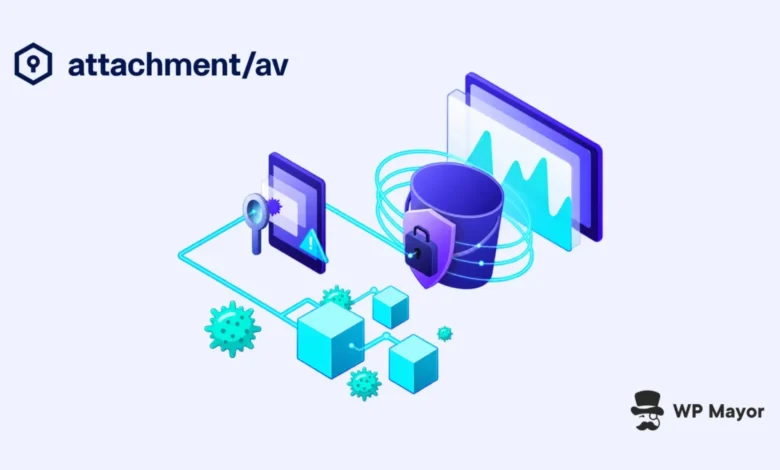
For years, the standard architecture of a WordPress website has relied on the implicit trust of user-submitted content. From corporate careers pages collecting CVs to e-commerce platforms accepting project briefs and collaborative blogs allowing contributor access to the Media Library, the file upload field is a functional necessity. However, this convenience creates a significant security vulnerability: the potential for malicious actors to introduce viruses, ransomware, and trojans directly into a server’s environment. As cyberattacks against content management systems continue to rise, tools like attachmentAV have emerged to provide a critical layer of defense at the point of ingestion, effectively closing a door that has long been left ajar.
The evolution of WordPress security has traditionally focused on perimeter defense—firewalls, brute-force protection, and core file integrity monitoring. While these measures are vital, they often fail to address the "in-bound" risk profile. A file uploaded through a contact form is frequently treated as a trusted asset until it is opened by a staff member, at which point the damage—ranging from credential theft to full network compromise—may have already occurred. In the 30-day period leading up to September 29, 2026, internal data from attachmentAV revealed the scale of this threat, with the platform scanning 1.9 terabytes of data and identifying 402 distinct malicious infections. These statistics underscore a sobering reality: malicious actors are actively weaponizing common form fields to bypass traditional security layers.

The mechanics of the attachmentAV solution represent a shift toward real-time, zero-trust security. By integrating directly with widely used plugins such as Contact Form 7, WPForms, Gravity Forms, Formidable Forms, Forminator, and WordPress File Upload, the service intercepts files at the exact moment they are uploaded. Rather than relying on a local, resource-heavy scanning engine that could degrade server performance, the plugin utilizes an API-based architecture. When a user submits a file, the plugin routes it to the attachmentAV infrastructure, where it is scanned by the Sophos engine. As an official Sophos OEM partner, the service ensures that users benefit from continuously updated virus signatures and zero-day threat intelligence. If a file is flagged as malicious, the plugin automatically rejects the entire submission, deletes the file from the server, and triggers a notification.
The implications for this technology are significant, particularly for organizations that must navigate complex compliance frameworks like GDPR or ISO 27001. Because the service is based in Germany and operates under strict data processing agreements, it provides the documentation necessary for enterprise security questionnaires. By encrypting files both in transit and at rest, and ensuring that data is purged immediately after processing, the platform addresses the administrative burden of security compliance, allowing agencies and developers to provide verifiable safety protocols to their clients.
The chronological adoption of such tools mirrors the broader trend of "shift-left" security in web development—the practice of implementing security checks as early as possible in the software development lifecycle. In the context of WordPress, this means moving away from reactive post-infection cleanup to proactive, automated prevention. Historically, cleaning up an infected WordPress site has been a costly, manual process involving forensic analysis, site restoration, and the potential loss of search engine rankings if the site is blacklisted for serving malware. By blocking threats at the upload stage, administrators avoid the "reputation tax" associated with hosting malicious code, which can have long-term consequences for organic search visibility.

From an operational standpoint, the deployment of attachmentAV is designed to be seamless for the end-user. The administrative burden on developers is minimal; there are no complex server-side antivirus databases to maintain or update. This "managed service" approach is particularly advantageous for agencies that manage dozens or hundreds of client sites. Under traditional models, managing security patches across multiple environments often leads to configuration drift. By centralizing the threat detection engine, agencies can ensure a uniform security standard across their entire portfolio without the need for individual maintenance overhead.
The broader security landscape suggests that these measures are becoming essential rather than optional. Recent trends in cybercrime show a shift toward "living off the land" techniques, where attackers use legitimate website functions—like file uploads—to distribute malware. This is often done to turn a site into a temporary distribution hub for phishing campaigns or to gain a foothold in an internal corporate network. When an infected file is saved to a shared drive or synced to a CRM, the infection spreads from the website to the entire business infrastructure. Therefore, the "Media Library" protection offered by the plugin serves as a critical checkpoint, especially for organizations with multiple contributors who may be accessing the dashboard from various, potentially unsecure, devices.
Official commentary from industry analysts suggests that while WordPress core remains secure, the "plugin economy" remains a double-edged sword. Every third-party addition increases the attack surface of a site. By providing a specialized tool that secures the interaction between the user and the server, the developers of attachmentAV have created a symbiotic relationship with the existing WordPress ecosystem. It does not replace the need for a firewall; rather, it complements it by addressing the specific, high-risk vector of file uploads that firewalls often overlook.

The economic argument for such tools is also clear. For a subscription cost that is effectively less than five euros per month for a single site, the return on investment is measured in the avoidance of incident response costs. In the event of a successful malware injection, the cost of professional remediation often runs into thousands of dollars, not to mention the intangible costs of lost business productivity and damaged brand trust. For organizations that handle sensitive data, such as medical offices, law firms, or human resources departments, the adoption of an automated, real-time scanning solution is increasingly viewed as a standard duty of care.
Looking ahead, the integration of AI and machine learning into these scanning engines is expected to further enhance the detection of polymorphic malware—viruses that change their code to evade signature-based detection. As the threat landscape matures, the requirement for real-time API-based scanning will likely become the industry standard for any professional WordPress installation. For now, the combination of Sophos’s robust detection capabilities and the frictionless deployment of the attachmentAV plugin offers a pragmatic, effective, and scalable solution for site owners looking to harden their defenses.
In conclusion, the necessity for robust file-upload security in the WordPress ecosystem has never been more pronounced. By addressing the fundamental gap between user submission and server storage, attachmentAV provides a sophisticated, automated defense mechanism that aligns with modern security best practices. Whether for the individual blogger managing a small site or the digital agency overseeing complex enterprise portfolios, the shift toward proactive, API-driven threat detection is a logical evolution. It allows site administrators to fulfill their responsibility to protect users, maintain compliance, and preserve the integrity of their digital assets, all while maintaining the functionality that makes WordPress the world’s most popular content management system. As cyber threats become more sophisticated, the tools that can seamlessly integrate into existing workflows while providing high-level protection will be the ones that define the future of web security.