Navigating the Digital Renaissance: WordPress, AI, and the Lessons of the Dot-com Era

The evolution of the internet has been defined by distinct technological inflection points, each reshaping the landscape of software development and digital commerce. From the early, fragmented days of the World Wide Web to the rise of content management systems like WordPress, the industry has seen constant flux. Today, the rapid ascent of Artificial Intelligence (AI) represents perhaps the most significant shift since the inception of the internet itself. As developers and businesses race to integrate AI into their workflows, industry veterans are drawing critical parallels between the current AI investment frenzy and the volatile boom-and-bust cycle of the late 1990s.
The history of the web is punctuated by periods of intense speculation, most notably the dot-com bubble that reached its zenith in 2000. During that era, venture capital flowed into virtually any venture with an ".com" suffix, often ignoring fundamental business metrics like return on investment (ROI) or sustainable market demand. The subsequent market crash in the early 2000s served as a sobering correction, wiping out billions in equity and forcing a pivot toward more pragmatic, utility-driven digital business models.
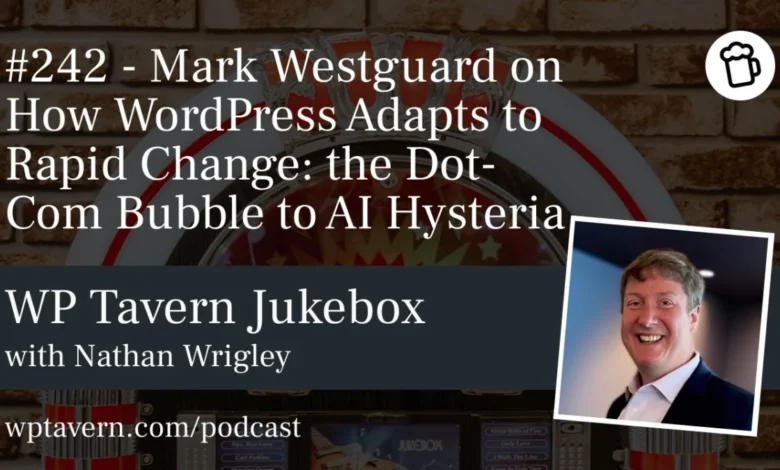
Mark Westguard, a veteran of the web industry with over 30 years of experience and the founder of the WordPress form plugin WS Form, suggests that the current AI climate shares several DNA markers with that period of history. While AI offers unprecedented capabilities for coding efficiency, the sheer volume of new products hitting the market creates a "noise" that mirrors the speculative hysteria of the early internet.
The Evolution of Development Accessibility
To understand the impact of AI, one must first look at the trajectory of software development. Three decades ago, coding was a highly specialized craft, often requiring knowledge of low-level machine code or complex, proprietary languages. The maturation of HTML, CSS, and later, the emergence of CMS platforms like WordPress, democratized web building. Page builders and themes allowed non-developers to construct functional websites without writing a single line of code.
AI represents the latest, and perhaps most disruptive, layer of this abstraction. By using natural language prompts, users can now generate code, design layouts, and troubleshoot complex technical issues in seconds. This shift has dramatically lowered the barrier to entry, enabling a "creator economy" where the ability to build software is no longer gated by years of formal training.
However, this ease of production introduces a new set of challenges. As the barrier to entry drops, the market faces potential oversaturation. Developers are now capable of shipping dozens of plugins or applications in the time it once took to build one. This rapid proliferation leads to a fragmented ecosystem where quality control, long-term support, and security maintenance become secondary to the speed of initial deployment.
Market Saturation and the Sustainability Gap
Data from various software repositories indicates a sharp increase in plugin and app submissions since the mainstream adoption of large language models (LLMs). While this demonstrates a surge in productivity, it raises questions about market capacity. For a product to be sustainable, it requires not only initial development but a robust framework for marketing, customer support, and continuous updates.
In the WordPress ecosystem, competition was already fierce prior to the AI surge. Established businesses, such as those providing form builders or e-commerce solutions, operate on models that emphasize reliability and long-term support. These products often serve as the "infrastructure" of a website—if they fail, the business consequences for the user are immediate and severe.
Industry experts note a growing concern regarding the "maintenance debt" created by AI-generated software. If a developer builds 15 different tools in a year, the ability to provide adequate support for each one becomes mathematically impossible without significant scaling. Consequently, while the creation of software has become cheaper and faster, the cost of ownership and the necessity for trusted, supported software remain constant.
The Security and Regulatory Specter
Beyond the economic concerns, the integration of AI into the software supply chain presents unique security risks. When code is generated by an AI, it may contain patterns or vulnerabilities that the developer does not fully understand or notice during a cursory review. This "black box" nature of AI-generated code could lead to systemic security weaknesses if not properly audited.
Historically, major technological shifts—such as the transition to cloud computing—have eventually invited government and regulatory scrutiny once the impact on critical infrastructure became clear. If AI-driven tools were to compromise financial systems or, as hypothesized in tech circles, disrupt physical infrastructure like smart appliances, a reactionary regulatory "clampdown" could become inevitable.
Currently, the market remains in a largely unregulated, free-market phase. Companies are heavily incentivized to prioritize speed and "AI-first" marketing to stay ahead of competitors. Yet, if the history of the dot-com era is any guide, the market will eventually demand a transition from "hype-based" value to "utility-based" value.
The Case for a WordPress Renaissance
Despite the allure of AI, there remains a persistent demand for traditional, stable CMS platforms. WordPress, with its massive, proven ecosystem, serves as a cornerstone for millions of businesses. Many non-technical users, who constitute the bulk of the internet’s user base, prioritize stability and human-backed support over the bleeding edge of experimental technology.
The "trust factor" remains a significant barrier for AI. In critical business applications—such as data collection, payment processing, or customer management—users are statistically more likely to favor established, supported software over experimental AI-generated alternatives. This suggests that the future of the web may not be a complete takeover by AI, but rather a hybrid model where AI serves as an internal tool for developers, while the end-user experience remains anchored in stable, human-curated software.
Looking Toward 2027 and Beyond
The current AI landscape is characterized by massive capital expenditure on server infrastructure and training models. As these costs mount, the industry will eventually face a "monetization reckoning." Just as early internet companies had to pivot from mere existence to profitability, AI platforms will eventually need to justify their massive operational expenses through sustainable revenue models.
For developers and product owners, the strategic imperative is clear: use AI to enhance efficiency and maintain a competitive edge, but do not mistake efficiency for a business model. Building a lasting product requires addressing real-world pain points, providing consistent support, and ensuring security—tasks that remain fundamentally human responsibilities.
As the industry moves toward 2027, the likely outcome is not the collapse of either traditional CMS platforms or the AI revolution, but rather a period of stabilization. The hype will likely subside, the number of low-utility "one-hit wonder" plugins will be winnowed out by the market, and the focus will return to the core value that the internet was built to provide: reliable access to information and robust tools for commerce.
The lesson from the dot-com era is that while technology cycles are inevitable and often frantic, the underlying requirement for trust, utility, and support remains the true north for any successful digital enterprise. In the era of AI, those who successfully navigate this transition will be the ones who treat AI as a powerful assistant, not a replacement for the rigorous demands of professional software development.