Navigating the 2026 Holiday Economy: How Social Media is Rewriting Retail Playbooks Amid Tariffs and Shifting Consumer Habits

The modern retail calendar has long been defined by a steady, predictable march toward the winter holidays. Traditionally, decorations emerged after Halloween, retail advertising ramped up in November, and consumers braced themselves for the Black Friday rush. However, the intersection of digital media, macroeconomic pressures, and evolving consumer behavior has permanently fractured this timeline. According to recent data from the Q3 2026 Sprout Social Pulse Survey—which gathered insights from 2,286 consumers across the United States, the United Kingdom, and Australia between August 11 and August 18, 2026—social media platforms have firmly established themselves as the epicenter of the contemporary holiday shopping journey.
As retailers grapple with the dual challenges of tightening household budgets and looming tariff-driven price increases, the role of social networks has expanded far beyond simple inspiration. Today, platforms like TikTok, Instagram, and Facebook operate as unified digital storefronts where consumers discover products, evaluate peer reviews, execute transactions, and demand real-time customer service. Understanding these complex shifts is no longer optional for brands aiming to capture market share during the most critical quarter of the fiscal year; it is an absolute operational necessity.

The Chronology and Disconnect of Early Holiday Marketing
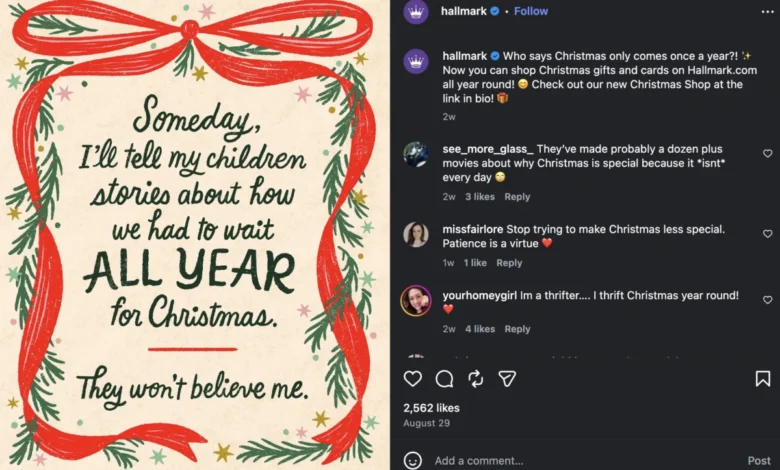
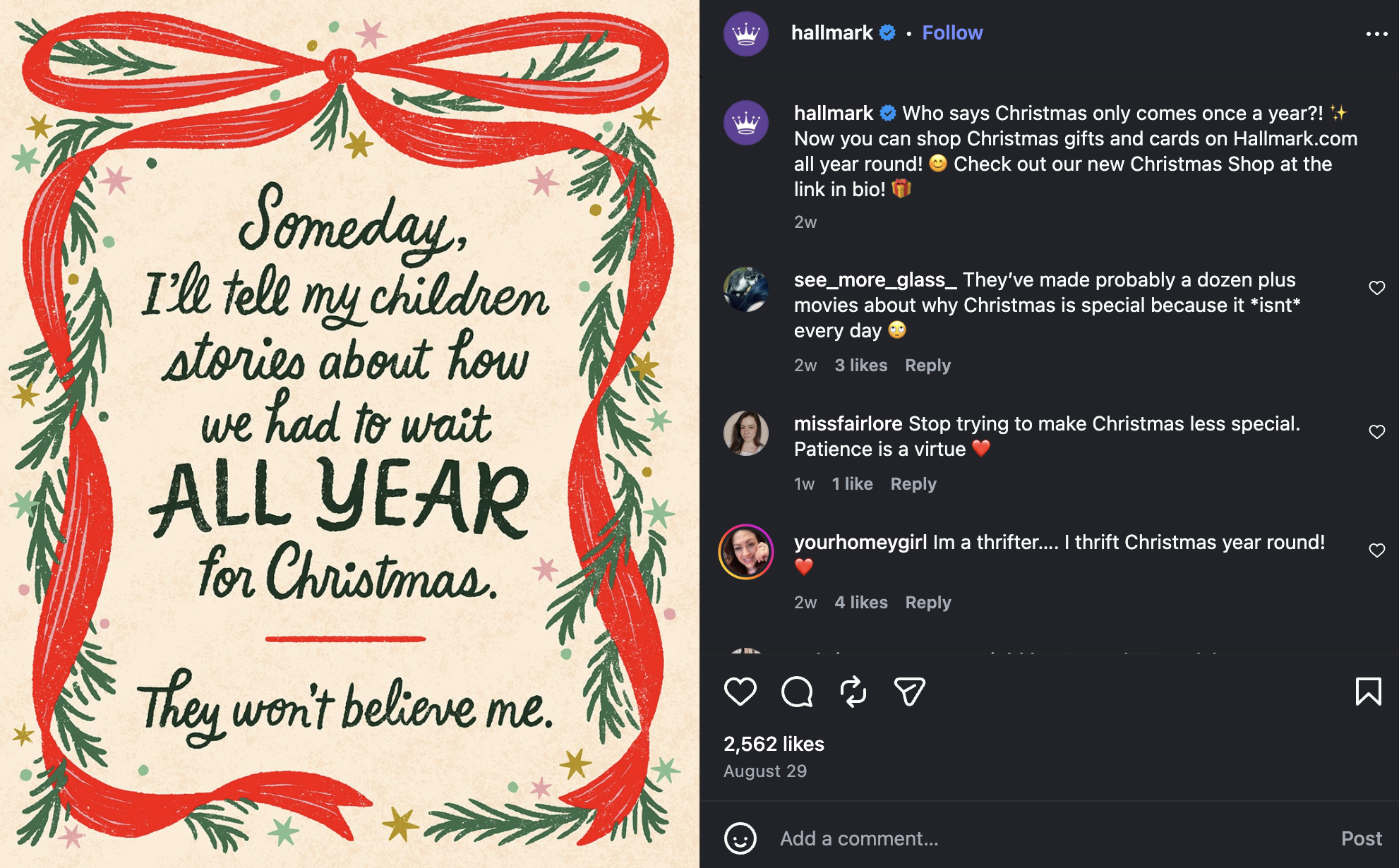
The acceleration of holiday marketing has become an annual point of discussion among retail analysts and consumers alike. In recent years, commercial entities have pushed seasonal campaigns progressively earlier into the calendar year. By June 2026, social feeds were already flooded with "Summerween" content. By August, major mainstream brands including Starbucks and Hallmark had rolled out autumn and holiday-themed promotions, attempting to capture consumer attention before the third quarter had even concluded.
Yet, this aggressive timeline starkly contrasts with stated consumer preferences. Data from the 2026 survey indicates a distinct shift in shopper sentiment: 50% of consumers now believe brands should wait until October to launch holiday advertising campaigns. This represents a noticeable departure from previous years, such as 2025, when consumers were more receptive to August and September campaign rollouts.
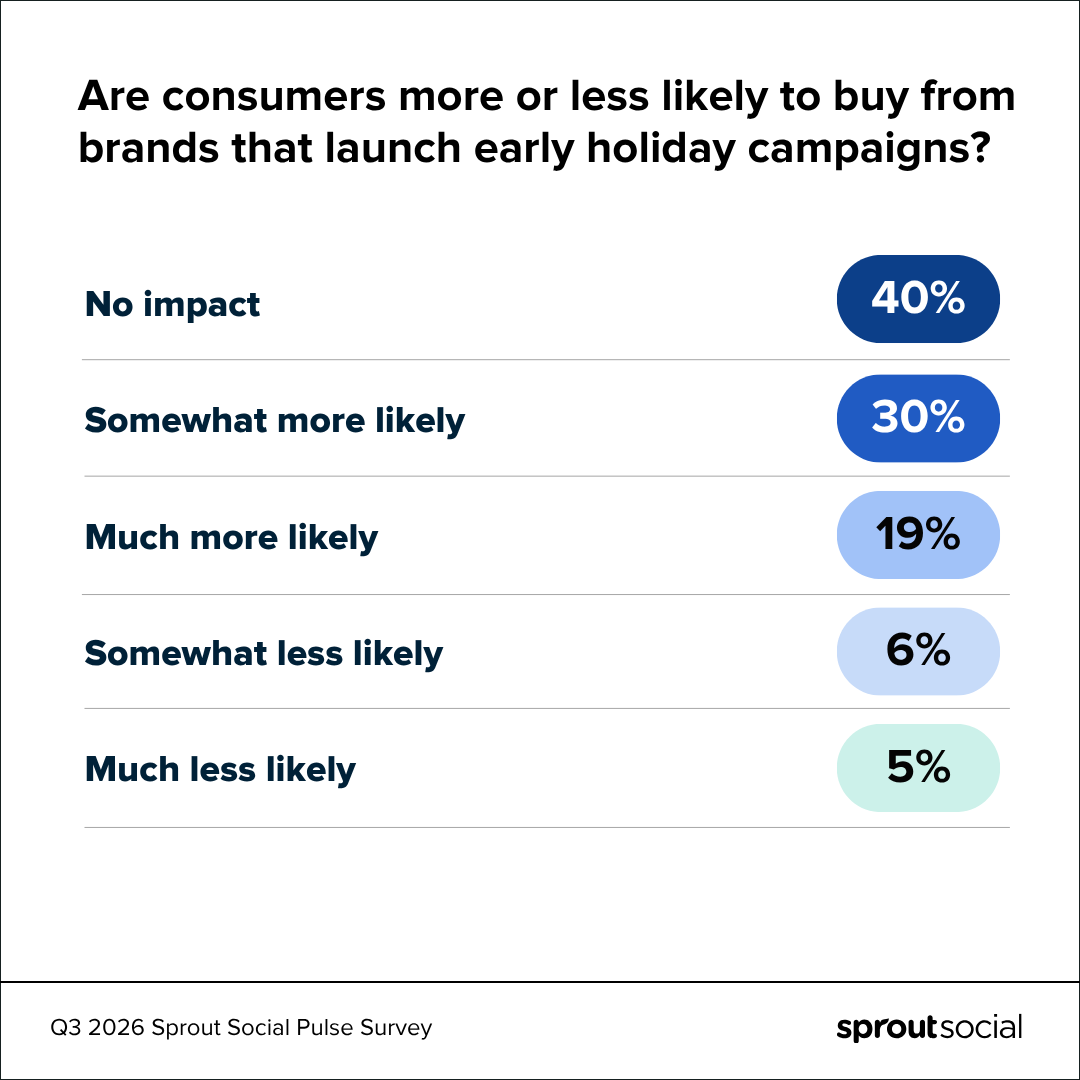
Despite this stated preference for a traditional October kickoff, consumer psychology reveals a fascinating paradox between attitude and action. When evaluated on actual purchasing behavior, early campaigns do not deter buyers. Approximately 40% of survey respondents noted that holiday marketing launching as early as August has zero impact on their decision-making process. More significantly, nearly 50% reported that they are either somewhat more likely or much more likely to purchase from a brand that initiates holiday advertising as early as August.
Industry analysts interpret this disconnect as a sign that campaign timing is secondary to core value proposition. For modern brands, launching a holiday message slightly ahead of schedule or maintaining a traditional timeline does not serve as a decisive conversion factor. Instead, retail strategists must redirect their focus toward the substance of their messaging, ensuring that creative assets resonate directly with audiences regardless of the calendar month.
Macroeconomic Pressures, Tariffs, and the Rise of Early Shoppers
While campaign timing preferences rarely dictate whether a consumer clicks "buy," broader macroeconomic realities certainly do. The 2026 holiday shopping season is heavily influenced by financial anxiety, specifically concerning inflation, economic tightening, and potential price hikes driven by international trade tariffs.
The survey data highlights profound consumer apprehension: 69% of respondents expressed concern over potential price increases resulting from tariffs. This anxiety is actively altering traditional shopping cadences. More than a third of consumers (36%) confirmed plans to shop earlier than usual specifically to outpace anticipated future price surges. Overall, 56% of shoppers intend to scale back their total holiday expenditures due to persistent economic pressures.
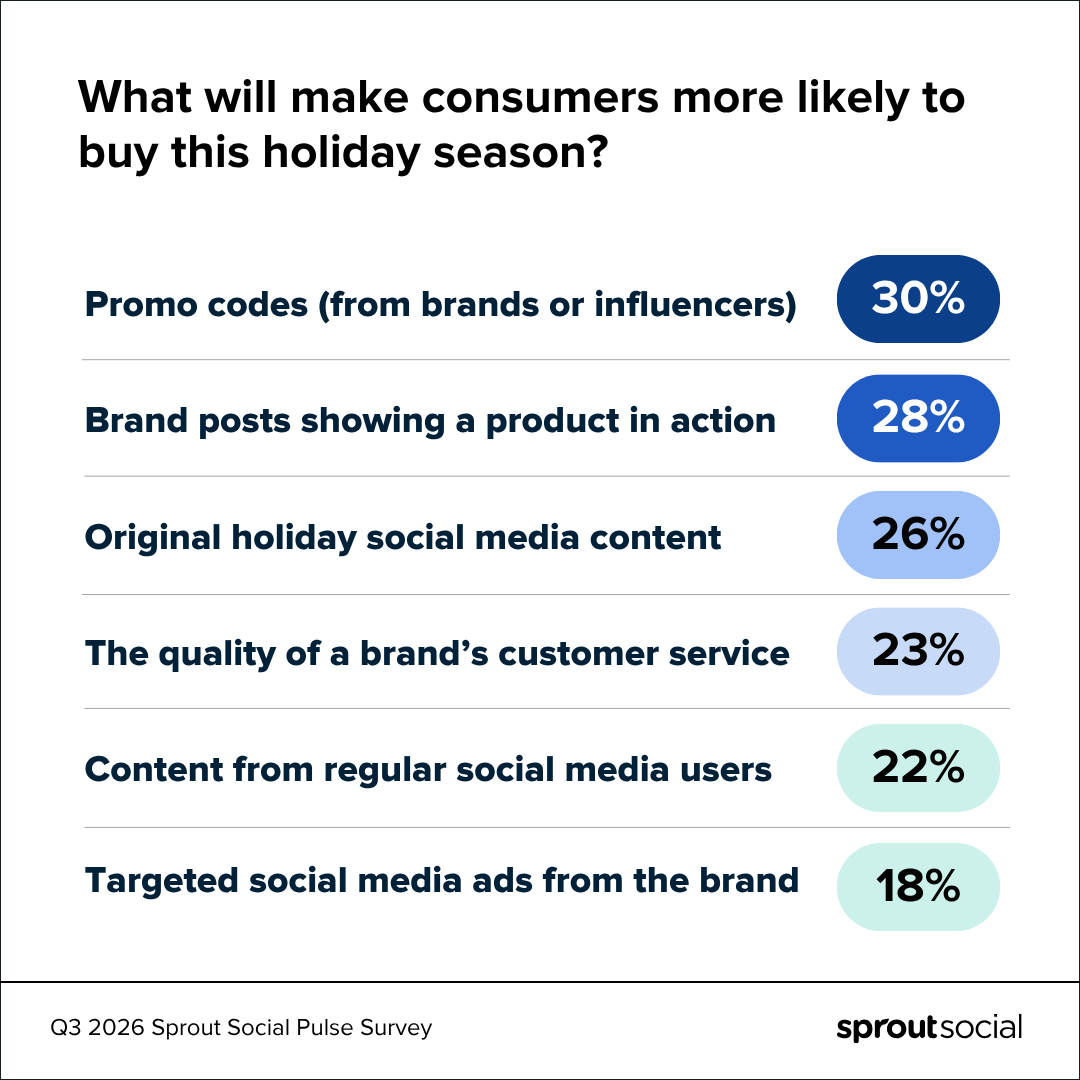
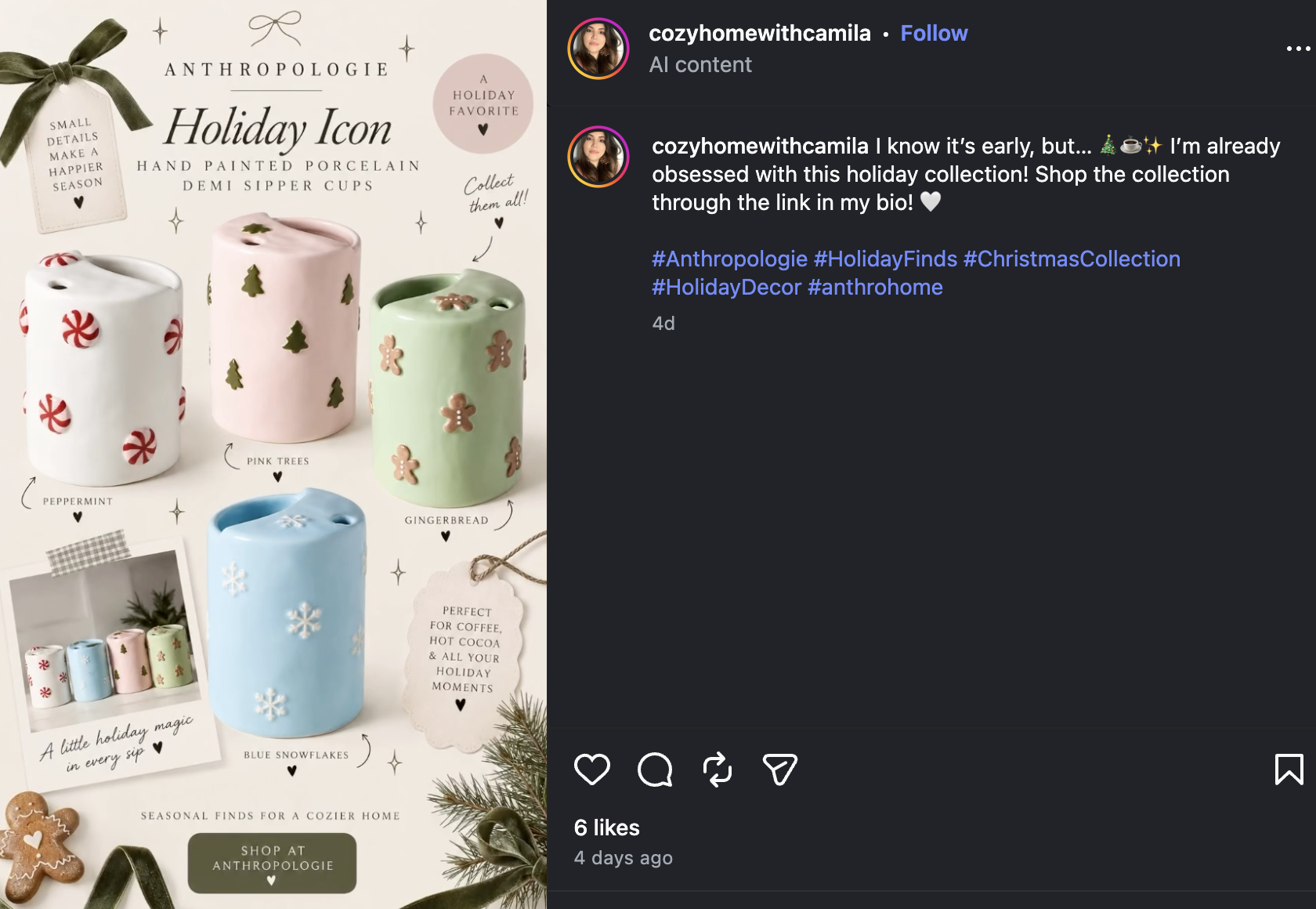
Faced with constrained budgets, consumers have developed clear criteria for which brands earn their business. Promo codes have emerged as the single most effective conversion tool. Thirty percent of consumers stated that a promotional discount—whether sourced directly from a brand or distributed via an influencer partnership—would successfully persuade them to complete a purchase. This high sensitivity to pricing underscores the necessity for brands to embed demonstrable value into every facet of their Q4 campaigns.
Beyond discounts, shoppers are demanding practical transparency. Twenty-eight percent of consumers indicated that seeing products demonstrated in action makes them significantly more likely to buy, while 23% prioritize original, holiday-specific creative content. Interestingly, this marks a pivot from 2025 trends, where customer service responsiveness and user-generated content held primary influence over purchase intent. Retail experts suggest that this evolution reflects a pragmatic consumer base seeking immediate utility, functional validation, and financial relief over passive brand storytelling.
Social Media as the Dominant Discovery and Purchase Engine
The transition of social media into a fully realized search engine has accelerated significantly over the past several years. While initial adoption focused on casual content exploration, recent data confirms that social platforms routinely outperform traditional search engines for experiential, highly visual, and peer-led inquiries.
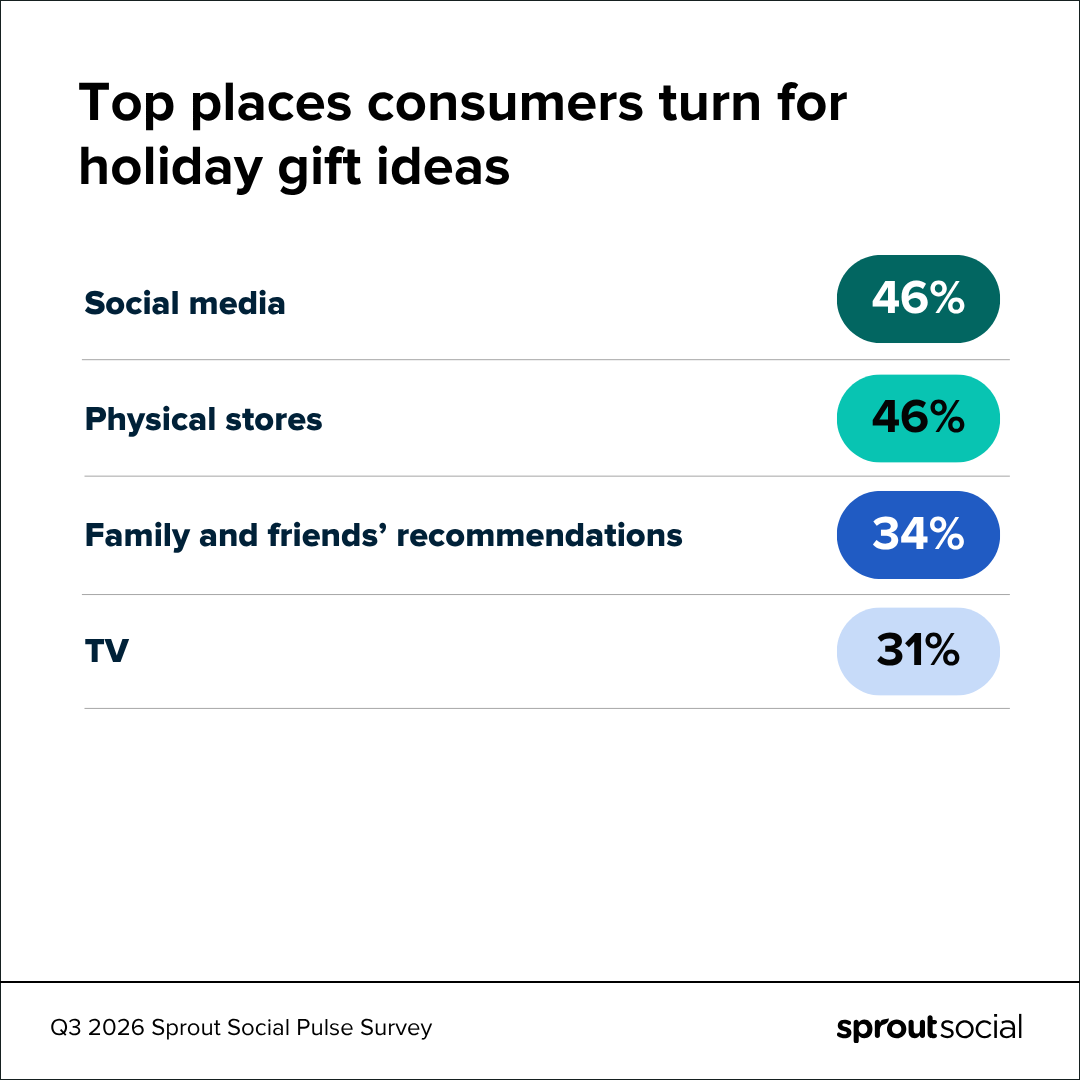
During the 2026 holiday shopping season, this behavior has translated directly into gift discovery. Social media has effectively tied with physical retail stores as the premier destination for holiday gift ideas, with 46% of consumers relying on social platforms to source inspiration. Among younger demographics—specifically Gen Z and Millennials—social media claims the undisputed top spot, with at least half of these cohorts utilizing social feeds to curate their gift-giving lists.
Crucially, consumer engagement does not terminate at the discovery phase. More than half of all surveyed shoppers expressed a willingness to complete transactions directly within social applications. The expansion of native shopping ecosystems such as TikTok Shop, Facebook Shops, and Instagram Checkout has streamlined the path to purchase, minimizing friction and allowing brands to capture impulse buying behavior instantly. Retailers that fail to integrate seamless, in-app checkout options risk forfeiting substantial revenue to more digitally agile competitors.
The Escalation of Social Customer Service and the Integration of AI
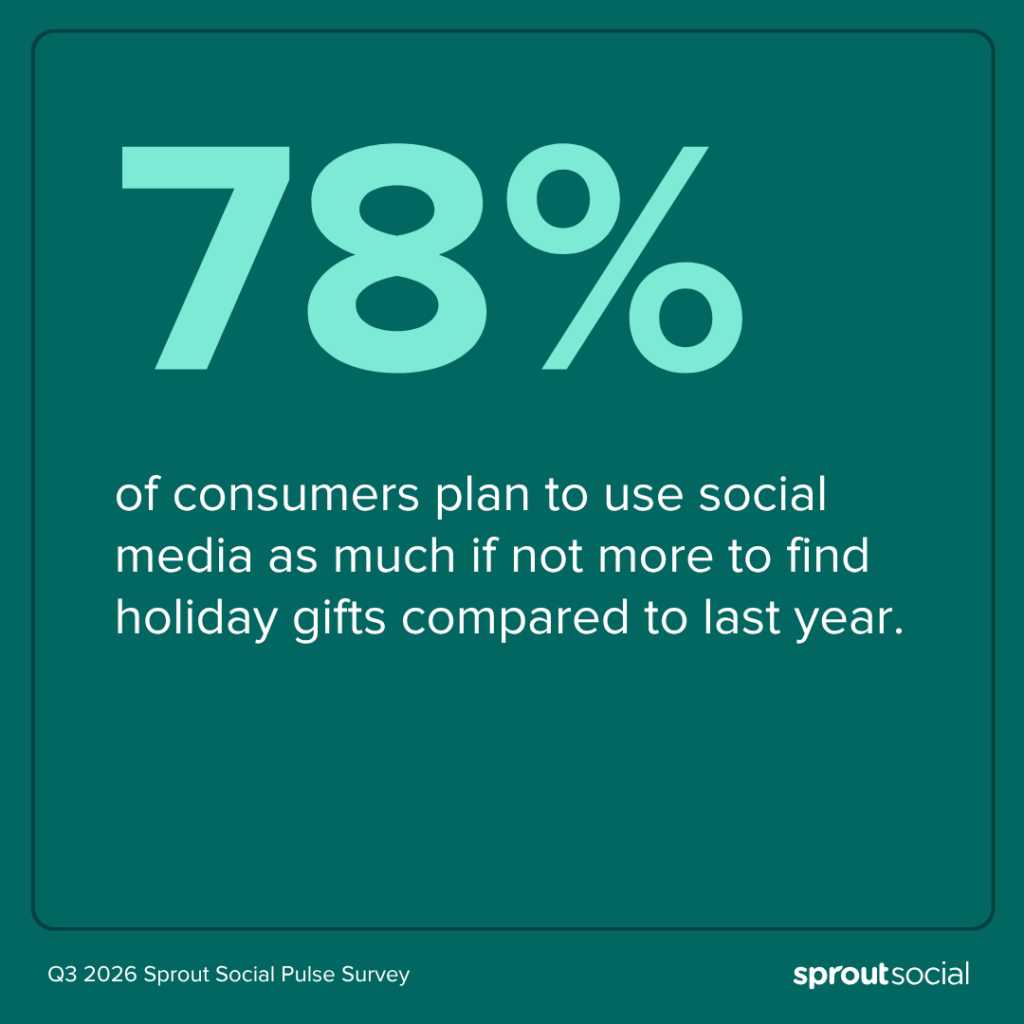
As social platforms absorb a larger share of the transactional journey, they simultaneously act as the primary frontline for consumer inquiries and support. The demand for social customer service during the holiday season has reached unprecedented heights, with 86% of users planning to utilize social channels for support interactions as much as—or more than—they did the previous year.
Consumer preference remains heavily concentrated on major platforms:
- TikTok: 50%
- Facebook: 46%
- Instagram: 44%
- X (formerly Twitter): 28%
- WhatsApp: 17%
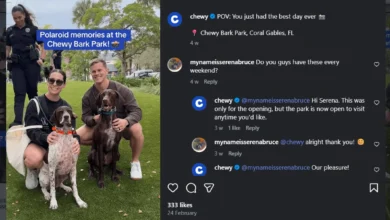
Regarding communication methods, direct messaging (DMs) remains the preferred channel for 55% of consumers across all generations. However, public comment sections are rapidly gaining traction as a primary support venue, with 31% of users stating they will seek assistance directly within public post comments.
This shift toward public-facing support heightens the stakes for brand reputation management. With 70% of consumers expecting a formal response from a brand within 24 hours—and 89% emphasizing that response time directly impacts brand loyalty—retail customer service teams face intense operational strain during the holiday rush.
To bridge the gap between high message volume and consumer expectations for speed, an increasing number of brands are turning to artificial intelligence. AI-powered tools are routinely deployed to triage incoming inquiries, categorize customer sentiment, and draft initial response templates. Consumer comfort with this technological integration is notably high: 70% of shoppers express comfort with brands utilizing AI to expedite customer service tasks, a figure that climbs to 77% among Gen Z respondents.
Despite this openness to automation, industry experts caution against entirely removing human oversight. While AI effectively manages backend triage and rapid initial acknowledgments, maintaining a human-in-the-loop framework is vital to preserve the personalization and empathy that modern consumers expect. Furthermore, because public comment sections expose service failures to entire digital communities, brands are advised to proactively deploy robust self-help resources, detailed FAQ libraries, and well-trained support staff before peak shopping volumes materialize.
Strategic Implications for the Retail Sector
The convergence of economic restraint, tariff concerns, early shopping habits, and social-first discovery defines the landscape of the 2026 holiday season. Consumers are approaching retail platforms with heightened scrutiny, demanding verifiable value, functional product demonstrations, and instantaneous customer support.
Brands that successfully navigate this environment are those capable of blending creative originality with operational responsiveness. By utilizing influencer partnerships to distribute verified discount codes, optimizing content for social search discovery, and maintaining a balanced approach to automated and human customer service, retailers can build resilient pathways from initial inspiration to final checkout. As social media solidifies its position as the foundational infrastructure of modern consumer behavior, the strategies deployed during these crucial months will lay the groundwork for long-term brand equity and financial health in the new year.