Dash Creative, a prominent digital design and development agency, has officially unveiled its comprehensive rebranding initiative, centered on a proprietary conceptual framework titled Magnetic Commerce. This strategic shift represents more than a visual overhaul; it signifies a fundamental change in how the agency approaches user engagement and digital retail experiences. By integrating advanced WebGL rendering, sophisticated motion physics, and a tactile user interface inspired by mobile operating systems, Dash Creative aims to redefine the boundaries of modern e-commerce environments.
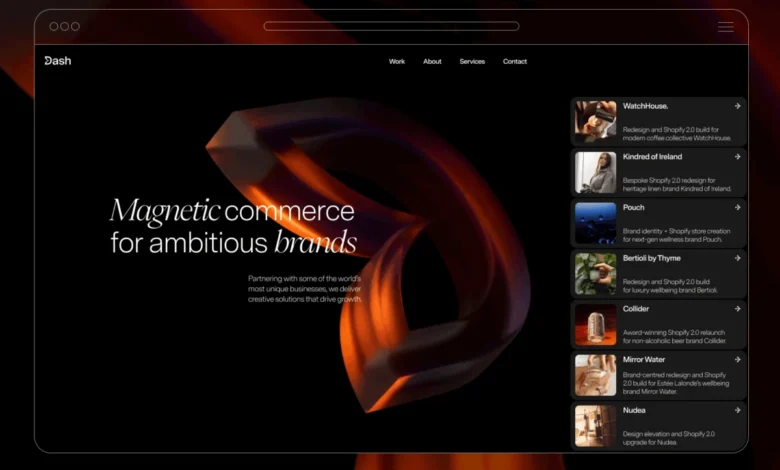
The rebranding project, which spanned several months, was born from a desire to move beyond traditional informative web design. The agency identified a growing need for digital experiences that do not merely present data but actively attract and retain user attention through intuitive interactions. This led to the development of the Magnetic Commerce identity, symbolized by a new logo where the letter "D" appears to be physically manipulated by an invisible force. This emblem served as the architectural foundation for the entire digital ecosystem that followed.
The Philosophical Foundation of Magnetic Commerce
In the contemporary digital landscape, where consumer attention spans are increasingly fragmented, the concept of "Magnetic Commerce" addresses the challenge of user retention. Statistics from the design industry suggest that it takes approximately 50 milliseconds (0.05 seconds) for users to form an opinion about a website that determines whether they will stay or leave. Dash Creative’s response to this reality was to create a design language that utilizes physical metaphors—specifically magnetism and momentum—to create a sense of weight and presence in a virtual space.

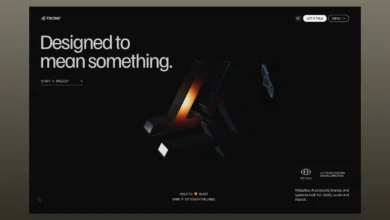
The "D" emblem, rendered as a rotating 3D object, is the primary vehicle for this concept. By implementing a cursor-based interaction where the logo "pulls" toward the user’s pointer, the agency established a precedent for the site’s motion language. This approach shifts the user’s role from a passive observer to an active participant in the brand’s digital environment.
Technological Infrastructure and Development Stack
To realize the complex interactions required for the Magnetic Commerce vision, Dash Creative employed a multi-tiered technological stack. The agency prioritized tools that allowed for high-fidelity design without sacrificing development efficiency or site performance.
- Figma for Systematic Design: The design phase was managed within Figma, where the agency established a rigorous set of brand guidelines. This systematic approach ensured that typography, spacing, and component architecture remained consistent throughout the iteration process. By treating the design as a living system, the team was able to prevent "decision drift," a common pitfall in long-term rebranding projects.
- Webflow for Core Build: Dash Creative utilized Webflow as the primary development platform. This choice served a dual purpose: it provided a robust framework for building the site’s infrastructure and acted as a proof-of-concept for prospective clients. The majority of the site’s interactions were built using Webflow’s native animation engine.
- GSAP for Precision Motion: For complex, sequenced animations and cursor-driven behaviors that exceeded the capabilities of native Webflow tools, the team integrated the GreenSock Animation Platform (GSAP). GSAP allowed for the fine-tuning of easing curves and momentum-based interactions that are critical to the "magnetic" feel of the interface.
- Custom WebGL for Hero Interactions: The most technically demanding aspect of the site—the hero background—was built using custom WebGL. This allowed the agency to perform high-performance image and video manipulation directly on the GPU, ensuring smooth frame rates even during complex distortions.
Engineering the Interactive Hero Background
The centerpiece of the Dash Creative website is an interactive hero background that utilizes a fragment shader to distort a live video surface. Unlike traditional ripple effects that emanate from a central point, this implementation focuses on directional momentum.
The technical objective was to create a surface that felt elastic and responsive. The distortion follows the path of the cursor, creating the impression that the video texture is being physically pulled or dragged. This was achieved by remapping the video’s texture coordinates in real-time.

Technical Implementation of the Shader
The core of the effect lies in a fragment shader that calculates displacement based on cursor velocity and position. The development team utilized a damped sine function to drive the displacement wave, ensuring that the movement felt natural rather than mechanical. The shader incorporates several configurable parameters, including:
- Radius and Amplitude: Defining the scope and intensity of the distortion.
- Motion Gain and Speed Decay: Controlling how the distortion responds to the speed of the cursor and how quickly it returns to a resting state.
- Vertical Damping: Limiting the spread of the wave to maintain the legibility of the typography layered above the effect.
By smoothing and decaying the interaction values on the JavaScript side before passing them to the shader, the team ensured that the distortion carried momentum. When a user stops moving their cursor, the background does not snap back instantly; instead, it gradually settles, mimicking the behavior of physical matter.
UI/UX Philosophy: The Influence of Mobile Ecosystems
A notable departure from standard web design conventions in the Dash Creative project is the deliberate influence of Apple’s iOS design language. The agency designed project cards and calls-to-action (CTAs) to mirror the aesthetic and tactile feedback of iOS notifications.
This decision was rooted in the psychology of familiarity. As mobile device usage continues to dominate digital interactions, users have become accustomed to specific UI patterns, such as rounded corners, subtle drop shadows, and spring-based animations. By porting these "tactile" elements to a desktop environment, Dash Creative created an interface that feels intuitive and "unexpectedly familiar."

The project cards are designed to behave like physical objects. They respond to hovers with subtle shifts in depth, reinforcing the overarching theme of magnetism. This adherence to strict brand guidelines allowed the team to create a cohesive experience where every element—from the largest background animation to the smallest button—contributes to the brand narrative.
Project Chronology and Development Timeline
The transformation of Dash Creative’s digital presence followed a structured timeline that prioritized conceptual clarity before technical execution.
- Phase 1: Conceptualization (Month 1): The team identified the need for a rebrand and developed the "Magnetic Commerce" thesis. This phase involved high-level strategy meetings to define how the agency’s identity should evolve.
- Phase 2: Visual Identity and Asset Rendering (Month 2): The 3D logo was designed and rendered. The "D" emblem’s magnetic behavior was prototyped, setting the tone for the rest of the visual language.
- Phase 3: Design System Development (Month 2-3): Using Figma, the team built a comprehensive library of components, ensuring that the iOS-inspired UI elements were scalable and consistent.
- Phase 4: WebGL and Interaction Engineering (Month 3-4): This was the most labor-intensive phase, focusing on the fragment shader for the hero section and the GSAP integrations. Significant time was spent refining the "feel" of the motion.
- Phase 5: Content Integration and Optimization (Month 5): The final stage involved refining the copy, optimizing video assets for web delivery, and ensuring cross-browser compatibility.
Analysis of Industry Implications
The Dash Creative rebranding serves as a case study for the shift toward "experiential commerce." As the global e-commerce market continues to expand—with projections suggesting it will exceed $8 trillion by 2027—the competition for user attention has intensified. Brands are increasingly moving away from "static" templates in favor of bespoke, high-interaction environments.
Dash Creative’s use of WebGL and physics-based motion reflects a broader trend in the design industry: the blurring of lines between web development and game design. By treating a website as a dynamic surface rather than a collection of static pages, agencies can create deeper emotional connections with users.

Furthermore, the project highlights the importance of "performance-conscious" creativity. While the site features complex shaders and 3D objects, the technical architecture ensures that the render loop remains lightweight. This balance between aesthetic complexity and technical performance is critical for maintaining SEO rankings and ensuring accessibility for users on various hardware configurations.
Reflections on Responsive Design and Future Challenges
Despite the success of the desktop experience, the project team acknowledged significant challenges in translating the "magnetic" experience to touch-based devices. The core of the interaction—the cursor-driven distortion—is inherently tied to a mouse-pointer interface. On mobile devices, where users interact via direct touch, the "hover" state does not exist in the same capacity.
This realization has led the agency to consider "touch-first" motion profiles for future iterations. The goal is to move toward interactions that respond to scroll velocity and gyroscopic data, ensuring that the concept of Magnetic Commerce remains consistent across all form factors.
Conclusion
The Dash Creative website demo stands as a testament to the power of a unified conceptual and technical approach. By grounding every design decision in the principle of magnetism, the agency has created a digital presence that is both a functional portfolio and a technical showcase. The project reinforces the idea that in the future of digital commerce, the most successful experiences will be those that do not just provide information, but those that physically—and metaphorically—draw the user in. Through the strategic use of WebGL, GSAP, and systematic design, Dash Creative has established a new benchmark for how agencies can communicate their brand value through interactive storytelling.