Beyond Vanity Metrics: Why Modern Marketing Must Pivot from Cost-Per-Session to Profitability and Accountability

In the complex landscape of global enterprise marketing, the metrics used to measure success often dictate corporate strategy, budget allocations, and executive longevity. Recently, strategic consulting engagements involving multinational corporations operating across dozens of jurisdictions have brought to light a critical misalignment between surface-level marketing activity and bottom-line corporate profitability. At the center of this debate is an over-reliance on legacy metrics such as Cost Per Session (CPS) and Return on Ad Spend (ROAS), indicators that frequently obscure true financial performance rather than illuminate it.
For decades, digital marketing has evolved through various phases of sophistication. However, basic operational reporting has often lagged behind technological capabilities. Industry veterans who have spent years architecting enterprise analytics frameworks and authoring foundational texts report encountering marketing sub-teams that rely on rudimentary, value-deficient metrics. While impressions and views have long been dismissed as hollow indicators of engagement, the emergence of metrics like Cost Per Session as a primary success key performance indicator (KPI) highlights a deeper systemic vulnerability within modern corporate structures.
The Anatomy of a Disconnect: Activity Versus Accountability
Corporate marketing departments traditionally operate under intense pressure to demonstrate immediate responsiveness and high volume. This often leads to an activity-centric reporting model. In a typical corporate dashboard, marketing reports focus heavily on top-of-funnel activity, celebrating high response rates, increased traffic, and platform-specific metrics generated by automated advertising tools such as Google Advantage+.
When executives evaluate these activity reports, the immediate reaction is frequently positive. High order volumes and increasing web traffic generate institutional enthusiasm, prompting leadership to allocate larger budgets to automated acquisition channels. However, this surface-level view fails to satisfy rigorous financial scrutiny. When a Chief Financial Officer (CFO) or a legacy-minded Chief Marketing Officer (CMO) demands accountability, the evaluation must transition from mere activity to concrete outcomes, such as revenue, conversion rates, and micro-conversions scaled by lead-to-conversion averages.
Yet, even measuring outcomes is insufficient for comprehensive fiscal governance. Marketing campaigns require financial inputs—specifically, campaign costs and the Cost of Goods Sold (COGS). When these variables are integrated into performance evaluations, the true business impact of digital advertising channels is revealed.
Comparative Performance Analysis: Paid Media Versus Traditional Channels
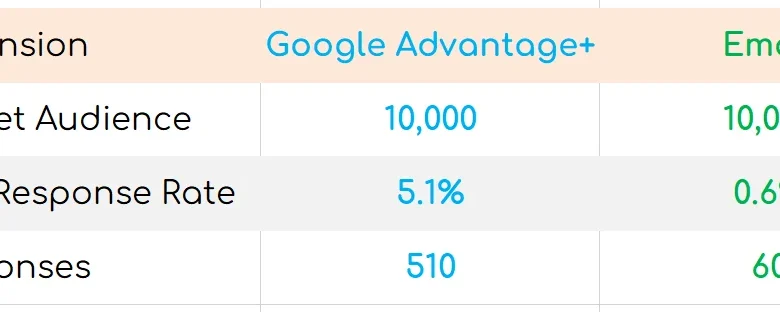
A real-world examination of multi-channel marketing campaigns illustrates the profound divergence between revenue generation and net profitability. In comparative performance models evaluating automated digital advertising suites against traditional direct channels like email marketing, the disparities are stark.
For instance, an automated digital advertising platform might generate 173 orders resulting in $17,000 in revenue, contrasted with an email campaign generating a modest 14 orders and significantly less gross revenue. Viewed strictly through an activity or basic outcome lens, the automated platform appears to be an overwhelming success.
However, when introducing accountability metrics—moving from Return on Ad Spend (ROAS) to Profit on Investment (POI)—the financial realities shift dramatically. ROAS calculations, which fail to subtract campaign ad spend from claimed revenue, routinely inflate the perceived impact of paid media. When true Return on Investment (ROI), Profit on Ad Spend (POAS), and ultimately Profit on Investment (POI) are calculated by factoring in both campaign costs and COGS, the financial picture inverts.
In many modeled scenarios, automated high-traffic digital campaigns yield negative profit margins, effectively returning fractions of a dollar in profit for every dollar spent. Conversely, targeted, low-traffic channels such as email marketing consistently demonstrate high positive net profitability. This disconnect exposes a fundamental flaw in enterprise marketing strategies that prioritize sheer traffic volume over economic sustainability.
Strategic Interventions and Immediate Recommendations
To correct these structural inefficiencies, corporate governance experts recommend a phased, disciplined intervention plan for enterprise marketing budgets.
Step 1: Immediate Audit and Pause
Organizations experiencing high traffic acquisition costs coupled with low net profitability are advised to temporarily pause spending on underperforming automated acquisition channels. While this action inevitably triggers internal alarm bells regarding declining traffic and lower gross revenue, it forces an immediate recovery of net profit margins.
Step 2: Stakeholder Alignment
Internal paid media teams, external agency partners, and platform sales representatives must be challenged to demonstrate verifiable positive Profit on Investment (POI) before budgets are reinstated.
Step 3: Intent and Automation Strategy
Modern advertising platforms rely heavily on automated algorithms that require precise alignment between user intent, creative messaging, and audience targeting. Enterprises must leverage advanced AI-powered features to optimize campaign structures rather than relying on automated spending models that lack strategic oversight.
Step 4: Phased Budget Reinstatement
Capital should be funneled back into paid acquisition channels incrementally, only when sustained high green POI is consistently demonstrated over established reporting cycles.
The Obsolescence of Cost Per Session in an AI-Driven Search Era
The persistence of legacy metrics like Cost Per Session is further challenged by shifts in global search architecture. As search engines transition toward generative artificial intelligence paradigms—such as AI-driven search experiences and conversational summary interfaces—user behavior and traffic quality are undergoing fundamental transformations.
Major search engine providers have released updated guidance for digital strategists, emphasizing that clicks originating from AI-driven search overview pages exhibit higher qualitative engagement. Users arriving via these channels demonstrate longer dwell times and deeper interaction because the foundational search environment provides enhanced contextual relevance prior to the click. Consequently, organizations that optimize strictly for click volume or Cost Per Session risk misallocating resources and missing the broader value of high-intent visitors.
Furthermore, operational metrics can be refined to reflect reality more accurately when organizational culture resists immediate structural overhauls. Transitioning from Cost Per Session to Cost Per Non-Bounced Session eliminates completely unproductive traffic—visitors who arrive and immediately depart without engagement—thereby exposing the true, often inflated cost of acquired traffic.
Broader Implications for Enterprise Leadership
The overarching challenge for modern enterprises lies in bridging the gap between creative marketing vision and stringent financial accountability. By prioritizing accountability over outcomes, and outcomes over activity, organizations can build resilient marketing operations capable of withstanding macroeconomic volatility and technological disruption.
Aligning the marketing organization with the analytical rigor of the finance department ensures that every dollar spent contributes measurably to net profitability. While this transition demands rigorous analytical thinking, uncomfortable internal conversations, and the dismantling of comfortable legacy metrics, the result is a sustainable, high-impact marketing strategy that secures long-term enterprise growth.