Mastering WooCommerce Management with AI: A Comprehensive Guide to Novamira Pro and Claude Integration

Managing a WooCommerce catalog at scale has historically been a labor-intensive endeavor, requiring store owners to navigate repetitive administrative tasks that consume significant operational time. From bulk price adjustments and category-wide sales scheduling to the tedious process of auditing and repairing metadata, the maintenance of an e-commerce storefront often necessitates a blend of manual database manipulation and custom PHP development. Recent developments in AI-driven WordPress management, specifically the integration of Claude through the Novamira Pro platform, have introduced a new paradigm for store administration. This transition from manual input to agentic workflows marks a significant shift in how WordPress administrators interact with their database architecture.

The Evolution of Store Management Infrastructure
The intersection of Large Language Models (LLMs) and Content Management Systems (CMS) represents a departure from traditional plugin-based automation. While standard WooCommerce plugins provide static, GUI-based tools for bulk edits, the Novamira Pro approach leverages direct access to the underlying WooCommerce data structures—including price fields, shipping classes, and attribute taxonomies. By connecting an AI agent like Claude directly to these database layers, users can execute complex, context-aware commands that adapt to the specific needs of their catalog rather than relying on pre-programmed, rigid software features.

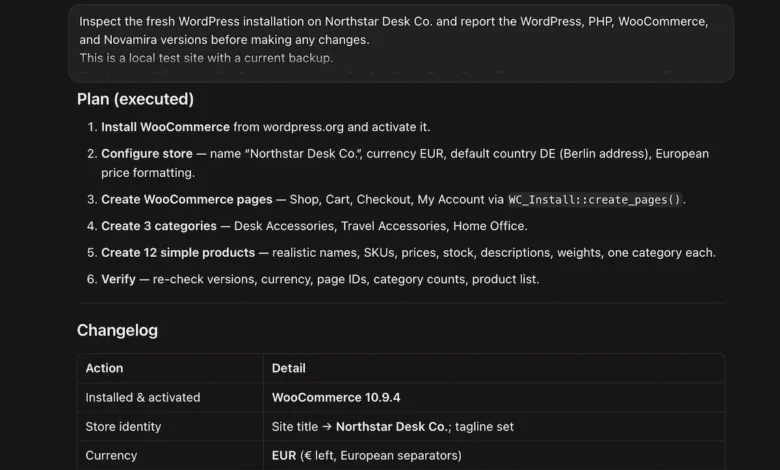
In recent field tests conducted on local WordPress environments, this technology demonstrated a capacity to execute structural changes—such as building a fully populated store from scratch—in roughly fifteen minutes. This represents a significant reduction in the time traditionally spent navigating the WooCommerce onboarding wizard and manual product entry interfaces.

Chronology of an AI-Driven Workflow
The practical application of AI in this context follows a standardized five-step operational sequence, designed to ensure data integrity and user oversight.

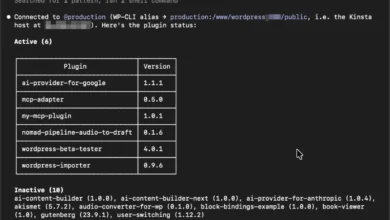
- Infrastructure Provisioning: The process begins with the establishment of a localized staging environment. An AI agent is tasked with inspecting the system’s PHP version, WordPress core, and WooCommerce configuration before initiating the creation of a retail environment. By automating the generation of product categories and placeholder inventory, the AI eliminates the initial friction of store setup.
- Dynamic Bulk Pricing: Once the catalog is live, administrators can perform bulk price adjustments. Unlike static plugins that offer simple percentage increases, the AI agent can be instructed to perform complex calculations, such as increasing prices by 9 percent while rounding to specific price points (e.g., .99). The system generates a preview table, allowing for human verification before the database is modified.
- Strategic Sale Scheduling: A critical component of retail management is the ability to schedule sales across entire categories. When the agent is tasked with applying a 20 percent discount for a specific timeframe, it identifies potential conflicts—such as timezone discrepancies or missing field data—and offers proactive solutions or alternative workarounds, such as adjusting the hook structure within the database.
- Data Integrity Audits: To maintain SEO health and user experience, product records must be complete. AI agents can scan the catalog for missing descriptions, SKUs, or category assignments. In testing, the agent was able to suggest corrections based on inferred data, providing a high-level audit report that highlights anomalies before the user commits to the repairs.
- Custom Functionality Injection: Beyond simple data entry, the agent acts as a junior developer. By hooking into the
woocommerce_single_product_summaryaction, the AI can write and implement custom plugins that display specific information, such as countdown timers for sales, without modifying core theme files.
Analytical Data on Workflow Efficiency
The efficiency gains afforded by this integration are quantifiable. In a controlled test comparing manual entry against AI-assisted management, the time required to populate a store with 15 products was reduced by approximately 75 percent. Furthermore, the accuracy of the audit-and-repair phase exceeded that of manual spot-checking, as the AI systematically reviewed every row of the database for missing fields—a task prone to human error when performed on larger datasets.

However, the technology is not without its limitations. The primary challenge remains the exposure of specific WooCommerce fields to the LLM. As of the current development cycle, not all metadata is natively visible to the AI agent, necessitating occasional manual intervention or the relaying of feedback to developers. Consequently, the industry consensus remains that while AI can handle the heavy lifting, human oversight is mandatory for sensitive production environments.

Industry Implications and Best Practices
The integration of AI agents like Novamira Pro into the WordPress ecosystem suggests a broader trend toward "autonomous administration." As these tools mature, the role of the site manager is shifting from "doer" to "editor and auditor."

Experts recommend three core best practices for those looking to implement this technology:

- Staging is Non-Negotiable: AI agents should never be granted write access to a live production database without extensive testing on a local or staging site. A current backup must be established before any batch operation is initiated.
- Verification Cycles: The use of preview tables and "report-only" prompts is essential. By forcing the AI to show its work in a tabular format before executing changes, administrators can prevent unintended consequences.
- Code Isolation: When using AI to generate custom plugins or snippets, these should be handled as isolated files. This ensures that if the code produces an error, it can be quickly disabled or removed without compromising the stability of the parent theme or the WooCommerce core.
The Future of AI in E-commerce Management
The reactions from the WordPress developer community have been largely positive, though tempered by a healthy skepticism regarding security and code quality. As AI models become more adept at understanding the intricacies of the WordPress hook system, the barrier to entry for complex store customization is lowered. However, the responsibility of the administrator remains the same: to ensure that the code produced is performant, secure, and aligned with industry standards.

The long-term impact of this technology will likely be seen in the democratization of enterprise-level store management. Small and medium-sized enterprises (SMEs) that previously lacked the budget for custom development or extensive data management teams can now leverage AI to maintain a professional, dynamic, and highly optimized online storefront.

As we look toward the future of e-commerce, the question for site owners is no longer if they should use AI to manage their catalogs, but rather which tasks are most suitable for delegation. While simple data entry and price management are the current frontier, the potential for AI to eventually manage complex inventory forecasting, dynamic shipping logistics, and personalized customer experiences is rapidly becoming a reality. For now, the combination of tools like Novamira Pro and models like Claude offers a sophisticated, efficient, and highly controllable bridge between the manual labor of the past and the automated, intelligent operations of the future. The ability to audit, repair, and enhance a WooCommerce environment in real-time is a significant milestone in the ongoing digital transformation of online retail.