Bridging the Traffic Divide: How Cathy Wu Is Using AI and Reinforcement Learning to Transform Modern Transportation


The modern urban landscape is defined by motion, yet it is routinely choked by congestion, slowed by outdated infrastructure, and burdened by preventable environmental emissions. For decades, urban planners, civil engineers, and computer scientists have attempted to untangle the complex web of traffic dynamics using traditional optimization models. These methods, while foundational, often require years of meticulous calculation to evaluate just a single design variant. Today, however, a quiet revolution is taking shape at the intersection of artificial intelligence and civil engineering, driven by researchers who are fundamentally rethinking how large-scale societal systems operate.
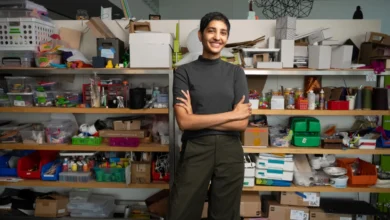
At the forefront of this paradigm shift is Cathy Wu, an associate professor in the Massachusetts Institute of Technology (MIT) Department of Civil and Environmental Engineering and the Institute for Data, Systems, and Society (IDSS). Wu, an alumnus of MIT who later completed her doctoral studies at the University of California at Berkeley, has dedicated her academic career to harnessing machine learning and reinforcement learning (RL) to solve deeply entrenched systemic challenges. Her work not only promises to make daily commutes safer and more efficient, but it also offers a vital blueprint for evidence-based policymaking in a democratic society.
From Childhood Observations to Academic Pursuit
Wu’s journey into the intricacies of transportation systems began long before she entered a university lecture hall. The daughter of Taiwanese immigrants, Wu grew up in an environment where the realities of inefficient urban design were acutely felt. Her father faced a grueling daily commute that separated him from the family for extended periods, while the rest of the household navigated life on a tight budget in a neighborhood bisected by a street too hazardous for children to play outdoors. Consequently, Wu and her siblings spent considerable time indoors, engaging with strategic simulations and computer games, most notably the popular urban planning title SimCity.
These formative experiences—her father’s daily battle against urban congestion, the spatial limitations of her childhood neighborhood, and the systemic problem-solving required in digital simulations—planted the early seeds of her academic interests. Supported by an older sister who instilled in her a profound desire to improve the human condition, Wu recognized early on that transportation is a universal equalizer.
"I like transportation because it connects everyone," Wu reflects. "We all use it, we all experience it, we all have issues with it. So, at some level, we’re all interested in the system being better."
The Evolution of an Academic Career: A Chronological Timeline
Wu’s trajectory from an aspiring technologist to a leading principal investigator in the Laboratory for Information and Decision Systems is marked by key milestones, mentorship, and moments of high-stakes academic perseverance.
- Undergraduate Years at MIT (Early 2010s): While earning her undergraduate degrees, Wu attended a pivotal lecture on autonomous vehicles delivered by the late MIT professor Seth Teller during an Independent Activities Period robotics competition—an event Wu notably won. This encounter honed her research focus, leading her to work directly under Teller.
- Transition and Industry Experience: When Teller shifted his research focus away from autonomous vehicles, he encouraged Wu to collaborate with Professor Daniela Rus, a pioneer in robotaxi research. Wu also completed strategic internships, including a significant stint at Dropbox focusing on transportation analytics.
- Doctoral Studies at UC Berkeley (Mid-to-Late 2010s): During her PhD program, Wu observed that transportation researchers spent years developing optimization models for single-system variants. Recognizing the bottleneck, she turned her computer science expertise toward reinforcement learning.
- The 2018 Viral Breakthrough: In the final year of her doctoral studies, Wu applied RL to a critical traffic problem, automatically analyzing how autonomous vehicles might impact traffic flow across diverse networks. The research garnered widespread attention and established her reputation in the field.
- Postdoctoral Research and Faculty Return (2018–2020): Following a postdoc at Microsoft focusing on RL theory, Wu returned to MIT as a faculty member, drawn by the sustainability focus of CEE and the interdisciplinary framework of IDSS. However, the subsequent two years brought intense professional challenges as her attempts to apply RL to traffic networks repeatedly failed.
- The Breakthrough in Contextual RL (2022–2023): After identifying that standard RL algorithms were hyper-sensitive to minor variations in problem sets, Wu and her team achieved a major breakthrough in 2023. They discovered that while RL models may fail on the vast majority of trial problems, they can train exceptionally well on a vital 10 percent. By leveraging these generalizable models, the team increased training efficiency by up to 30 times, restoring confidence in RL’s utility for complex optimization.
Overcoming Algorithmic Sensitivity in Reinforcement Learning
The primary obstacle in applying machine learning to civil infrastructure has long been the sheer complexity of real-world variables. Traditional transportation models struggle to scale when confronted with thousands of interacting parameters, such as vehicle densities, traffic signal timings, and driver behavior. Reinforcement learning offers a theoretical solution by allowing algorithms to learn optimal strategies through trial and error within simulated environments.
However, as Wu discovered during her early faculty tenure at MIT, RL is notoriously fragile. Algorithms optimized for one specific traffic network would routinely fail when deployed on a nearly identical neighboring network. This sensitivity created a period of significant academic stress, leaving researchers questioning whether the limitations lay within the algorithms, the domains, or the human supervision.
The solution engineered by Wu and her research team involved pivoting toward contextual reinforcement learning. By identifying a small subset of training scenarios that yield high generalizability, the team designed algorithms that bypassed the need to train individual models from scratch for every unique variation. This breakthrough reduced computational requirements drastically—slashing the number of required training models from one hundred to just three in certain applications. This efficiency gain effectively reopened the door for RL to be deployed across a wide array of high-stakes infrastructural domains.
Policy Implications and the Push for Evidence-Based Governance
Beyond theoretical computer science, Wu’s research carries profound implications for public policy and environmental sustainability. In recent studies, her team applied RL to evaluate eco-driving measures—strategies that intelligently modulate vehicle speeds to minimize unnecessary acceleration and deceleration.
The findings indicate that such targeted interventions can reduce vehicle emissions by 11 to 22 percent. Crucially, this research provides empirical evidence that data-driven policies can yield substantial environmental and operational improvements without requiring the immediate, trillion-dollar overhaul of physical infrastructure.
"I am a big fan of evidence-based policy and believe it’s the basis for a thriving democratic society, yet our societal systems are so complex," Wu notes. "People can bicker forever about what’s better or worse, but I do believe that there are questions we bicker about that can be analyzed systematically using data and have objective answers. A large part of the reason I am in academia is to better understand how technology can support democratic societal decision-making."
By framing her work as "use-inspired basic research," Wu ensures that her academic pursuits remain anchored to real-world utility. While her primary domain is transportation, the algorithmic frameworks developed by her lab are increasingly applicable to adjacent logistical challenges, including supply chain management, municipal manufacturing, and regional resource allocation.
Mentorship, Recognition, and the Future of Infrastructure
In recognition of her contributions to both research and pedagogy, Wu has received numerous accolades. In 2023, she was honored with a National Science Foundation Faculty Early Career Development (CAREER) Award. Furthermore, her dedication to student development was formally celebrated with the Ole Madsen Mentoring Award in 2025.
For students entering the demanding fields of data science and civil engineering, Wu offers a grounded perspective shaped by years of navigating negative results and complex theoretical hurdles.
"Be patient. Start small. Societal impact is a lifelong endeavor, not something to be accomplished in a few years," Wu advises her students. "It will take years to really understand what’s going on and where the real problems are. In the meantime, try to be helpful. Be curious. Ask many questions."
As urban centers worldwide grapple with population growth, climate change, and aging infrastructure, the integration of artificial intelligence into civil engineering is no longer optional; it is an operational necessity. Through rigorous mathematical inquiry, resilience in the face of research setbacks, and a steadfast commitment to public good, Cathy Wu and her team at MIT are helping to chart a clearer, cleaner, and more efficient path forward for the modern world.