Parenting Claude: Establishing Guardrails and Project Contracts for Reliable AI-Assisted Software Development

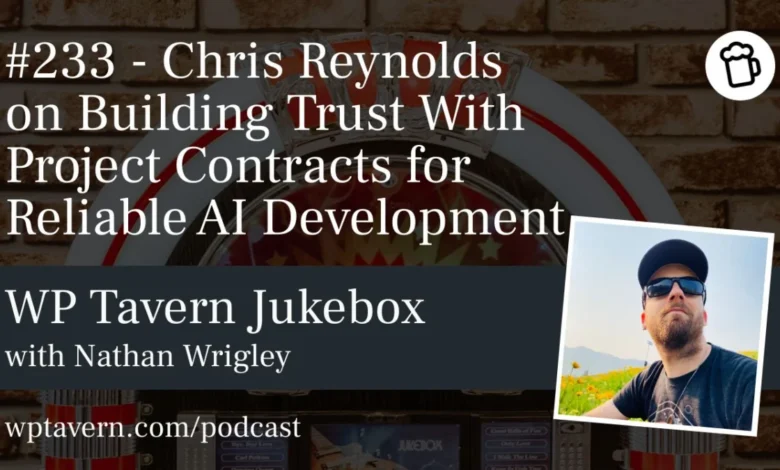
The integration of Large Language Models (LLMs) into the software development lifecycle has transitioned from an experimental novelty to a cornerstone of modern programming. As developers increasingly rely on AI-assisted coding tools to accelerate workflows, the industry is grappling with the fundamental shift from deterministic programming—where defined inputs consistently yield expected outputs—to the non-deterministic nature of AI models. At the recent WordCamp US, Chris Reynolds, a senior manager of developer relations at Pantheon, presented a framework titled "Parenting Claude: Guardrails for AI-Assisted Development," which addresses the critical need for structured oversight in an era of machine-generated code.
The core challenge identified by Reynolds is the inherent tendency of LLMs to prioritize efficiency over accuracy. These models are designed to find the fastest path between a user’s prompt and a perceived solution, a process that frequently bypasses necessary security protocols, accessibility standards, and testing rigor. Without intervention, this "fastest path" logic can lead to the introduction of vulnerabilities, such as hard-coded secrets or non-compliant code, into enterprise-grade software architectures.
The Rise of the Project Contract in AI Workflows
To mitigate the risks associated with AI-generated code, Reynolds proposes the implementation of a "project contract"—a set of codified rules, checklists, and automated guardrails integrated directly into the coding environment. This methodology treats the AI not as an autonomous expert, but as an intern that requires constant supervision. By establishing a formal contract, developers can force the AI to adhere to specific constraints, such as mandatory test-driven development (TDD), automated linting, and rigorous security audits before any commit is authorized.
The technical implementation of this concept involves the use of markdown-based configuration files, such as Claude.md and agents.md, located within the project directory. These files serve as the "rulebook" for the AI agent. A critical component of this workflow is the "reviewer agent"—a secondary AI instance spawned after the initial code generation to act as a gatekeeper. This reviewer agent cross-references the output against a comprehensive checklist, ensuring that every piece of code meets the established project standards. If the code fails to satisfy the criteria, the reviewer agent rejects the submission, creating a closed-loop system that prevents non-compliant code from entering the repository.
Chronology of AI Integration in Development
The rapid evolution of AI in web development has occurred in distinct phases over the last three years:
- 2022: Early adoption of LLMs for basic script generation and documentation assistance, characterized by high error rates and limited context retention.
- 2023: The emergence of specialized coding assistants, such as GitHub Copilot and early iterations of Claude, which began to demonstrate proficiency in boilerplate code generation.
- 2024: Significant improvements in context window management and reasoning capabilities, allowing AI to handle larger, more complex codebases and perform sophisticated refactoring tasks.
- 2025–2026: The current era of agentic workflows, where multiple AI agents work in concert—some to plan, some to execute, and some to review—marking the shift toward autonomous, yet guarded, development ecosystems.
Supporting Data and Industry Context
The adoption of AI in software engineering is supported by significant industry trends. According to recent developer surveys, over 70% of professional developers now use AI-assisted tools for at least a portion of their daily tasks. However, the efficiency gains—often reported as a 20% to 40% increase in development speed—come with a documented rise in "hidden" technical debt.
The concern regarding "vibe coding"—a term used to describe the practice of building applications through high-level prompts without a deep understanding of the underlying implementation—is becoming a focal point for enterprise IT departments. While these tools democratize access to coding, allowing individuals without formal computer science backgrounds to build functional applications, they also create a liability vacuum. The potential for "silent failures," where code functions correctly under basic testing but harbors deep-seated architectural flaws, remains a top priority for security professionals.
The Philosophical Implications for Senior Developers
Beyond the technical hurdles, the rise of AI-assisted development raises profound questions regarding the future of the profession. A significant concern among senior engineers is the erosion of the "junior" experience. Traditionally, the junior developer role served as an apprenticeship, providing the hands-on experience necessary to build a deep understanding of software reliability, security, and maintenance. By automating the foundational tasks, the industry risks creating a talent gap where developers lack the expertise required to act as effective "parents" or reviewers for AI-generated systems.
Furthermore, the shift toward non-deterministic development challenges the traditional concept of trust in code. If the AI produces a result that cannot be replicated in a standard, step-by-step fashion, developers must rely on verification tools rather than their own intuition. This change in paradigm suggests that the value of a developer in the future may lie less in their ability to write syntax and more in their ability to design robust systems of verification and oversight.
The Role of Developer Relations (DevRel)
As companies like Pantheon adapt to this new landscape, the role of Developer Relations (DevRel) has become increasingly vital. DevRel practitioners are now tasked with the translation of complex, rapidly shifting AI capabilities into practical, usable frameworks for the broader developer community. This involves not only creating documentation but also fostering a culture of responsible AI usage.
The "parenting" approach suggested by Reynolds is indicative of a broader industry shift toward "human-in-the-loop" systems. Rather than viewing AI as a replacement for human intellect, these frameworks position the human as an architect of constraints. By defining the boundaries within which the AI must operate, developers can maintain control over project quality while leveraging the speed and versatility of large language models.
Future Outlook and Regulatory Considerations
Looking toward 2027 and beyond, the industry is expected to move toward standardized AI orchestration protocols. As the volume of AI-generated code continues to grow, the need for automated governance will become a requirement for regulatory compliance, particularly in sectors such as finance, healthcare, and infrastructure.
The current reliance on "black box" models, where the internal reasoning of the AI remains opaque, is a point of contention. While researchers continue to explore methods to improve the interpretability of neural networks, practitioners are opting for the "guardrail" approach as a pragmatic, immediate solution. By ensuring that the output is always verified against a set of objective, deterministic tests, organizations can mitigate the risks associated with the non-deterministic nature of the models.
In conclusion, while the allure of rapid, AI-driven development is significant, the long-term sustainability of such projects depends on the implementation of rigorous oversight. The project contract model represents a necessary evolution in software engineering, balancing the desire for innovation with the fundamental requirements of security, reliability, and code quality. As the industry continues to navigate this transformation, the focus will likely remain on refining these guardrails, ensuring that the next generation of software remains under human guidance even as the mechanisms of production become increasingly automated.