Web Platform Evolution: A Comprehensive Review of Stable and Beta Browser Releases for May 2026


The landscape of web development underwent significant evolution throughout May 2026, highlighted by major stable releases across the industry’s leading browsers and a robust preview of upcoming tools in beta channels. Browser engine developers from Google, Mozilla, and Apple collectively deployed updates that standardize advanced CSS layout mechanics, bolster cross-platform hardware connectivity, enhance media performance, and improve user interface flexibility. These updates collectively bridge long-standing gaps in cross-browser compatibility, advancing the capabilities of the modern web platform toward more semantic, performant, and interactive application development.
Stable Browser Releases of May 2026
The month of May saw the official rollout of Chrome 148, Firefox 151, and Safari 26.5 to the stable channel. These coordinated releases introduced several long-awaited capabilities into the Baseline standard, ensuring developers can target these features globally without relying on complex feature-detection libraries or polyfills.
Among the most notable stable additions is the :open CSS pseudo-class, which reached Baseline Newly available status following its inclusion in Safari 26.5. Historically, styling interactive elements based on whether they were expanded or collapsed required brittle attribute selectors such as details[open]. The :open pseudo-class unifies this behavior across a broader spectrum of native components, including <details>, <dialog>, and form controls like <select> and date or color input pickers when their underlying dropdown menus are actively displayed. This update provides developers with a cleaner, uniform, and semantically consistent approach to styling state transitions.
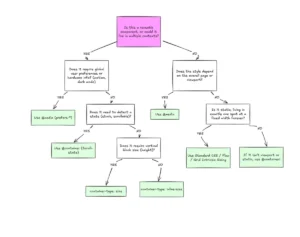
Concurrently, Chrome 148 brought name-only container queries into the Baseline tier. Previously, utilizing CSS container queries required developers to explicitly define a size or style constraint alongside the container’s identifier, as well as declare a container-type property on the ancestor element. With the new specification, developers can query named containers directly by their identifier alone, streamlining stylesheets and reducing boilerplate code for layout components such as sidebars and card grids.
Expanding upon container-based styling, Firefox 151 introduced full cross-browser support for container style queries targeting custom CSS properties via the style() function within @container rules. While container size queries have enjoyed widespread adoption for responsive design, style-based queries unlock non-geometric styling dependencies. Developers can now alter the visual presentation of child elements—such as modifying a card’s background and text color—based on whether a parent container has defined a specific custom property like --theme: dark.
Performance Enhancements and Hardware Integration
Beyond layout and styling improvements, May’s stable releases focused heavily on client-side optimization and peripheral device communication.
Chrome 148 introduced native lazy loading for <video> and <audio> elements through the straightforward addition of the loading="lazy" attribute. Following the performance patterns established by lazy-loaded images and iframes, this native browser capability delays the fetching of heavy media assets until the element approaches the device viewport. Industry benchmarks from early adopters, such as engineering teams at Squarespace, indicate that this standard attribute significantly decreases initial page load latency, preserves user bandwidth, and lowers mobile data consumption without requiring custom JavaScript intersection observers.

In the realm of desktop and mobile application interoperability, Firefox 151 and Chrome 148 expanded support for the Web Serial API. While Chrome 148 extended this capability to Android devices, Firefox 151 brought Web Serial support to desktop operating systems. The API allows web applications to interface directly with external hardware peripherals, microcontrollers, 3D printers, and development boards. To address security concerns regarding direct hardware access, Firefox implemented a safety mechanism requiring users to install a synthetically generated site permission add-on, maintaining user control while opening up industrial and hobbyist IoT use cases to the browser environment.
Additionally, Firefox 151 introduced the Document Picture-in-Picture API for desktop users. Unlike traditional picture-in-picture implementations that restrict out-of-window display strictly to <video> nodes, the Document Picture-in-Picture API permits developers to spawn an always-on-top browser window populated with arbitrary HTML markup. This empowers web applications to maintain persistent, interactive overlays such as live video conferencing participant grids, active timers, and financial trading tickers even when the user navigates away from the primary application tab.
Preview of Beta Releases: Chrome 149 and Firefox 152
Looking ahead to the subsequent production cycle, browser vendors rolled out preview builds for Chrome 149 and Firefox 152. These beta releases offer developers a critical window to test upcoming features and identify potential breaking changes before public deployment.
Chrome 149 beta introduces several sophisticated CSS layout additions, most notably CSS gap decorations, which allow direct styling of the whitespace gutters between flexbox and grid items. Additionally, the beta expands the shape-outside property to accept basic shape functions such as path(), shape(), rect(), and xywh(), alongside path-length as a dedicated CSS property. On the JavaScript and API front, programmatic scroll directives—including scrollTo(), scrollBy(), and scrollIntoView()—have been updated to return Promises that resolve precisely when smooth scrolling operations conclude. Furthermore, web pages maintaining active WebSocket connections are now eligible for the back/forward cache (BFCache), significantly accelerating page navigation transitions.
Firefox 152 beta focuses on form usability and animation debugging. The release includes full support for the field-sizing property, enabling form controls to dynamically resize themselves based on their current text content. It also expands the Notification interface by incorporating actions and maxActions properties for richer operating system-level alerts, and adds options.pseudoElement support to Element.getAnimations() for precise animation inspection.
Chronology of May 2026 Web Platform Milestones
- May 5, 2026: Initial developer previews highlight upcoming CSS container query updates and media lazy-loading frameworks.
- May 12, 2026: Firefox 152 enters the beta testing phase, bringing native
field-sizingsupport and enhanced Notification actions. - May 19, 2026: Chrome 149 beta launches, introducing gap decorations and promise-based scroll completion methods.
- May 29, 2026: Stable versions of Chrome 148, Firefox 151, and Safari 26.5 officially deploy globally, elevating features like
:open, name-only container queries, and native media lazy-loading to Baseline status.
Industry Implications and Technical Analysis
The convergence of these features in May 2026 underscores a broader industry movement toward declarative, platform-native solutions that reduce reliance on heavy JavaScript frameworks. By shifting tasks such as state-based styling, media lazy-loading, and hardware serial communication directly into the browser engine, web standards bodies continue to close the capability gap between native applications and web-based software.
Engineering organizations are advised to audit their existing codebases to leverage newly minted Baseline features—such as name-only container queries and the :open pseudo-class—while initiating compatibility tests against the Chrome 149 and Firefox 152 beta environments. Embracing these native capabilities early ensures enhanced performance metrics, cleaner and more maintainable stylesheets, and an elevated user experience across diverse hardware ecosystems.