Rorra Founders Bet Big on High-End Hydration with a $249 Premium Glass Water Pitcher

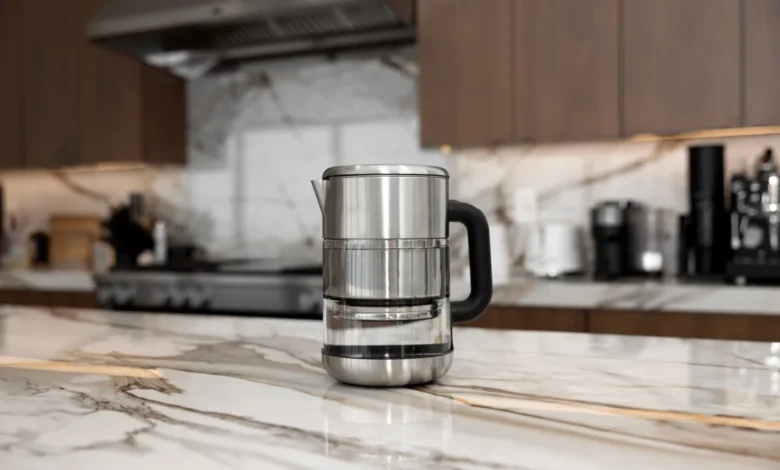
The global consumer market for water filtration has long been dominated by accessible, mass-market plastic pitchers retailing between $20 and $40. These ubiquitous kitchen staples offer temporary, budget-friendly access to cleaner tap water, but they are frequently discarded, replaced, and criticized for their reliance on single-use plastics and short lifespans. Challenging this status quo is Rorra, an ambitious water filtration startup founded by industry veterans Brian Keller and Charlie Carlisle. The company has officially introduced a luxury water pitcher priced at $249—more than six times the cost of conventional alternatives. This bold market entry forces consumers and industry analysts alike to reevaluate how much they are willing to pay for aesthetic durability, advanced filtration technology, and sustainable home goods.
Rorra’s new flagship pitcher is far from the typical injection-molded plastic vessel found in household refrigerators. Crafted entirely from premium borosilicate glass and high-grade stainless steel, the 13-cup device ensures that zero plastic comes into contact with the filtered water. Internally, it utilizes the exact proprietary filtration technology engineered for Rorra’s larger countertop systems, capable of reducing dangerous contaminants such as per- and polyfluoroalkyl substances (PFAS), lead, and microplastics over a 200-gallon filter lifespan. Keller and Carlisle recently detailed the arduous development of this product and their entrepreneurial philosophy during an appearance on the One Day with Jon Bier podcast, shedding light on the mechanics of scaling a high-end hardware brand in a commoditized market.
From Concept to Crisis: The Chronology of Rorra’s Rise
The genesis of Rorra traces back to the professional synergy between Keller and Carlisle, who previously collaborated at Love Your Melon, a socially conscious apparel brand famous for donating hats to children battling pediatric cancer. Having successfully built, scaled, and exited their previous enterprise, the co-founders brought a seasoned operational playbook to the water filtration sector. However, launching Rorra demanded a radically different kind of entrepreneurial sacrifice and capital endurance.
In the early stages, the venture existed purely as a research thesis. Keller and Carlisle operated for nearly two years full-time without generating a single dollar in revenue, entirely self-funded by their early convictions. The prototyping phase proved fraught with engineering hurdles. An early iteration of Rorra’s countertop filtration system was famously oversized—roughly one-and-a-half times the dimensions of the final commercial product—with Carlisle jokingly comparing its appearance to a giant industrial travel mug.
The most critical stress test occurred just as the founders believed they were primed for their official product debut. Their contracted engineering firm delivered sobering news: the hardware required an additional three to four months of extensive refinement before it could safely enter mass production. Facing a rapidly depleting runway, Keller noted that the leadership team had to fundamentally remodel the business model, restructure their financial projections, and secure additional capital reserves to survive the prolonged pre-launch phase.
Despite these harrowing delays, Rorra eventually brought its countertop system to market, quickly followed by a specialized filtered showerhead. The debut year exceeded initial projections, generating eight-figure revenues. Buoyed by this rapid commercial momentum, the startup anticipates a two-to-threefold sales expansion, providing the financial runway necessary to diversify their product catalog with the introduction of the $249 borosilicate glass pitcher.
Redefining Durability and Consumer Culture
The introduction of a $249 water pitcher is not merely an exercise in luxury branding; it is a direct challenge to the modern disposable consumer culture. During their podcast appearance, Carlisle articulated a broader philosophical mission for the company, invoking the manufacturing standards of mid-20th-century household appliances.
"Go back to the 1950s refrigerators," Carlisle stated on the podcast. "They used to last for 40, 50 years. How do we get back to that really wonderful, durable, and oftentimes self-serviceable culture?"
This commitment to longevity is reflected in the material selection. By ditching flimsy plastics in favor of thermal-shock-resistant borosilicate glass and architectural-grade stainless steel, Rorra is positioning its kitchenware as a permanent home investment rather than a disposable commodity. The filter mechanics are equally robust, engineered to process up to 200 gallons of water while eliminating complex flavor contaminants and heavy metals. This positions the product at the intersection of home wellness and interior design, targeting affluent consumers who prioritize aesthetic cohesion in modern open-plan kitchens.
Leveraging Artificial Intelligence in Product Launch Strategies

While superior craftsmanship and advanced contaminant reduction form the backbone of Rorra’s value proposition, convincing consumers to part with $249 for a water pitcher required a meticulously calculated go-to-market strategy. To optimize their launch plan, co-founder Brian Keller deployed an unconventional tactic: he utilized artificial intelligence not to validate his ideas, but to stress-test them through the lens of catastrophic failure.
Rather than asking an AI algorithm to review a promising business proposal, Keller deliberately fed his completed launch blueprint into the system with a provocative prompt: "This was the plan. It completely failed. Tell me where we went wrong."
The adversarial AI audit yielded immediate, actionable critiques. The algorithm flagged that Rorra lacked the immense brand equity required to sustain the lengthy, drawn-out pre-launch campaign Keller had originally envisioned. Furthermore, the AI warned that the marketing copy was suffering from message fatigue, attempting to communicate too many disparate selling points simultaneously.
Acting on these machine-generated insights, the founders pivoted rapidly. They compressed the pre-launch window and streamlined their marketing narrative to focus singularly on material purity, design aesthetics, and elite filtration efficacy. The strategic pivot proved remarkably effective; Rorra confirmed that its initial manufacturing run of the pitchers sold out almost immediately, forcing the company to schedule a secondary batch fulfillment cycle.
Scaling Beyond the Kitchen Counter
With the pitcher successfully introduced to the market, Keller and Carlisle are already looking ahead to the next phase of corporate expansion. Their long-term vision extends far beyond stationary kitchen appliances, aiming to construct a holistic water filtration ecosystem that accompanies consumers across multiple environments.
"Right now, when you go to fill your water bottle up at an airport or the gym, that brand is not the same brand that you can buy for your house and vice versa," Carlisle observed, highlighting a glaring fragmentation in the personal hydration market. The company envisions developing a fully integrated, multi-platform filtration lifestyle brand that transcends traditional product boundaries.
Simultaneously, Rorra is undergoing a major internal corporate restructuring. After operating as a decentralized, remote team for the first three years of its existence, the company has officially relocated its headquarters to Austin, Texas. This relocation is designed to foster closer in-person collaboration among the core team as they scale operations to meet surging consumer demand.
Navigating the Dangerous Mid-Growth Milestone
As Rorra transitions from an agile startup into a heavily capitalized mid-sized enterprise, the co-founders remain acutely aware of the macroeconomic and operational pitfalls that threaten scaling businesses. Having successfully crossed the initial proof-of-concept threshold, Keller acknowledges that the upcoming phase of corporate evolution carries distinct structural hazards.
"Businesses go to die between 20 to 50 million," Keller noted, referencing the treacherous revenue chasm where many high-growth startups lose their operational agility, overextend their payrolls, or fail to sustain product innovation. To successfully navigate this critical juncture, Keller emphasizes that leadership must relentlessly pursue new product developments, strategically recruit top-tier talent, and protect the rapid decision-making speed that fueled their initial market penetration.
For the immediate future, Rorra’s most consequential test lies in the open market: determining whether a sufficiently large demographic of health-conscious, design-oriented consumers will embrace a luxury paradigm shift and validate a $249 price point for everyday household hydration.
Related posts: