X Revamps Business Blog and Releases New Advertising Guides to Reengage Marketers Amid Evolving Digital Landscape

The platform formerly known as Twitter, now operating under the corporate moniker X, has taken a significant step toward revitalizing its advertising ecosystem by overhauling its official X Business blog and releasing a comprehensive suite of updated strategy guides. Despite facing well-documented challenges regarding user retention in certain international markets, such as the European Union, and navigating a tumultuous transition period since its acquisition by billionaire entrepreneur Elon Musk, X continues to command a massive global audience. According to internal platform metrics and recent corporate filings, the social media network maintains a robust user base exceeding 550 million monthly active users. This vast digital footprint ensures that X remains a critical forum for real-time industry discussions, geopolitical commentary, and niche community engagement, making it an indispensable touchpoint for brands aiming to influence high-level decision-makers and drive meaningful consumer purchase activity.
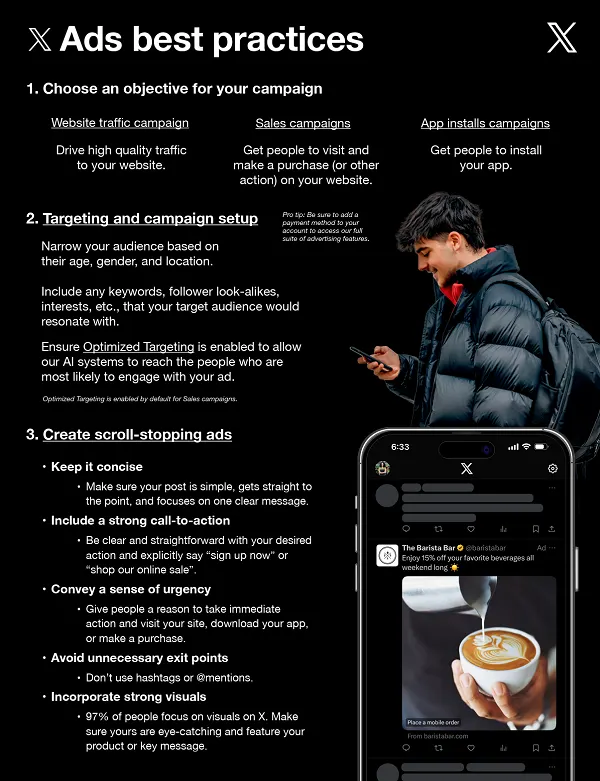
The newly revamped X Business blog serves as a centralized hub designed to equip marketers, media buyers, and small business owners with actionable insights, tactical frameworks, and foundational resources. Among the most notable additions to this resource library are a series of concise, highly practical one-page overviews that break down complex advertising elements into easily digestible blueprints. These include dedicated guides detailing universal X ads best practices and strategic frameworks for aligning promotional campaigns with major cultural moments and global events. By providing these structured roadmaps, X aims to lower the barrier to entry for prospective advertisers while simultaneously helping established enterprise brands optimize their return on ad spend (ROAS) in an increasingly competitive digital marketing environment.
A Turbulent Evolution: The Timeline of X and Its Advertising Infrastructure
To understand the strategic significance of these newly released marketing guides, it is necessary to examine the broader chronological trajectory of the platform over the past several years. Following Elon Musk’s acquisition of the company in October 2022 for approximately $44 billion, the platform underwent a sweeping transformation that affected nearly every facet of its operations, technology stack, and corporate identity.
In the immediate aftermath of the buyout, X experienced a mass exodus of major global advertisers. Concerns surrounding content moderation policies, brand safety, staffing reductions within the trust and safety teams, and shifts in platform verification protocols prompted numerous Fortune 500 companies to temporarily suspend or permanently pull their ad spending. Throughout late 2022 and 2023, independent analyses and media reports indicated a sharp decline in monthly advertising revenue, creating significant financial pressure for the newly private company.
In response to these headwinds, platform leadership initiated a multi-phased recovery plan centered on product innovation, subscription models, and advertiser reassurance. In July 2023, the platform officially dropped the iconic Twitter bird branding in favor of the minimalist "X" logo, signaling a broader pivot toward becoming an "everything app" modeled after Asian super-apps like WeChat. This transition involved the introduction of long-form video capabilities, creator monetization programs, enhanced data analytics tools, and early integrations of artificial intelligence through xAI and the Grok chatbot.
By mid-2024, leadership changes—most notably the appointment of former NBCUniversal advertising executive Linda Yaccarino as Chief Executive Officer—helped stabilize relations with the advertising community. Yaccarino’s primary mandate has been to rebuild trust, reestablish brand safety controls through third-party partnerships with firms like Integral Ad Science (IAS) and DoubleVerify, and demonstrate measurable value to enterprise clients. The overhaul of the X Business blog and the publication of these new tactical one-pagers represent the latest milestones in this ongoing rehabilitation campaign, shifting the corporate narrative from crisis management to proactive advertiser empowerment.

Analyzing the New Ad Guides: Best Practices and Cultural Synchronization
The newly published one-page overviews focus heavily on two foundational pillars of modern digital advertising: structural execution and cultural relevance. In the digital marketing sphere, execution dictates efficiency, while relevance dictates resonance.
The first guide, centered on X ads best practices, provides media buyers with a granular checklist designed to maximize campaign visibility and engagement. Historically, X has distinguished itself from static, search-driven platforms or visual-first networks by functioning as a high-velocity, text-and-multimedia town square. The platform’s real-time nature means that ad creative must capture attention instantaneously within a fast-moving timeline. The best practices guide emphasizes the importance of clear value propositions, concise copywriting, native-looking video assets, and strategic placement options—such as promoted posts, trend takeovers, and timeline takeovers. Furthermore, it outlines optimal audience targeting parameters, encouraging marketers to leverage keyword targeting, conversation targeting, and tailored audiences to reach users based on their expressed intent and behavioral patterns.
The second guide, dedicated to connecting with culture, addresses one of X’s historical strengths: its role as the digital second screen for global events. Whether it is breaking news, major sporting events like the Olympics or the Super Bowl, entertainment milestones like the Academy Awards, or viral internet memes, X has long served as the primary digital watercooler where collective conversations unfold in real time. The culture connection guide provides marketers with a seasonal framework and strategic prompts designed to help brands authentically insert themselves into these high-volume discussions without appearing opportunistic or tone-deaf. By mapping out key calendar events and offering tactical advice on how to deploy reactive advertising, X enables brands to capitalize on sudden spikes in platform traffic and user engagement.
Data and Demographics: Evaluating the Value Proposition of X
For digital marketers allocating budgets across a fragmented media landscape—which now includes Meta, TikTok, Google, Amazon, LinkedIn, and streaming TV platforms—data-driven decision-making is paramount. Despite the public controversies and user attrition reported in specific regulatory environments like the European Union, quantitative metrics suggest that X retains a highly desirable demographic profile.
Industry research consistently highlights that X’s user base skews heavily toward professionals, journalists, policymakers, tech enthusiasts, and early adopters. While total monthly active users (MAUs) hovering above the 550 million mark place X behind giants like Facebook, Instagram, and TikTok in terms of absolute scale, the platform punches above its weight in terms of influence. Users on X are frequently active participants in public discourse rather than passive consumers of content. Consequently, brand messages placed on the platform often ripple outward into broader cultural conversations, earning secondary earned media coverage across traditional news outlets and competing social networks.
Moreover, recent financial disclosures from affiliated entities, such as SpaceX filings that provided rare glimpses into xAI and X’s internal metrics, have offered analysts a clearer picture of the platform’s financial stabilization efforts. While private company disclosures are less frequent than those of publicly traded tech titans, indicators suggest that subscription revenue from X Premium tiers and renewed direct-response ad campaigns are gradually offsetting legacy losses. For B2B marketers, financial institutions, automotive brands, and technology companies, the ability to reach key decision-makers who utilize X for industry news ensures that the platform remains a viable component of a diversified media mix.
Industry Reactions and Market Implications
The release of the updated ad guides has elicited a cautiously optimistic response from the digital marketing community. Media agency executives note that while brands remain vigilant regarding brand safety and platform governance, the availability of clear, standardized educational resources lowers the operational friction associated with running campaigns on X.
"Marketers do not care about political noise as much as they care about predictable outcomes, transparent metrics, and ease of execution," notes Sarah Jenkins, a digital media strategist based in Chicago. "When a platform provides clear frameworks on how to leverage its ecosystem effectively—especially regarding real-time event marketing—it signals a level of operational maturity that enterprise buyers appreciate."
However, challenges remain. Skeptics point out that automated moderation tools and reporting dashboards on X must continue to improve to match the sophisticated standards set by competitors like Meta and Google. Furthermore, convincing risk-averse chief marketing officers to reallocate significant portions of their annual budgets back to X will require consistent demonstration of high conversion rates and brand-safe environments over an extended period.
Broader Impact on the Digital Advertising Ecosystem
The ongoing evolution of X’s advertising strategy carries broader implications for the digital marketing industry at large. As platform fragmentation accelerates and privacy regulations tighten globally—limiting the efficacy of traditional third-party cookie tracking—social networks are increasingly leaning into contextual and conversational data.
X’s unique ability to map real-time human sentiment and conversational trends gives it a distinct advantage in contextual targeting. By refining its educational resources and providing transparent, easy-to-implement guides, X is attempting to reframe the narrative around its platform: moving away from a debate over corporate ownership and platform governance, and returning to the foundational value proposition that originally made Twitter a marketing powerhouse—the speed and scale of human connection.
As these newly revamped resources take effect, the ultimate measure of their success will be reflected in quarterly advertising revenue reports and the willingness of major brands to test, scale, and maintain long-term commitments on the platform. For now, the updated guides provide a welcome roadmap for brands seeking to navigate the unique dynamics of the X ecosystem and connect with a massive, highly engaged global audience.
Related posts: