The Definitive Roadmap for Mastering Voice Agents and Conversational AI Systems

Voice interfaces have transitioned from experimental novelty to a cornerstone of modern digital interaction, fundamentally altering how consumers engage with technology. As large language models (LLMs) continue to dominate the artificial intelligence landscape, the focus has shifted toward modalities that mimic human-to-human communication. Voice agents—AI systems capable of auditory perception and vocalized output—represent the next frontier in this evolution. For developers and engineers, mastering this domain requires moving beyond text-based prompt engineering to understand the complex, real-time architecture of audio-integrated systems.
The Anatomy of the Voice Pipeline
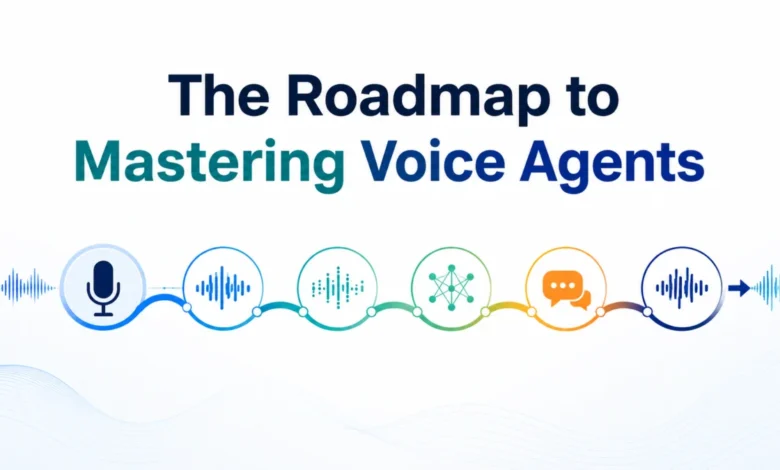
A voice agent is defined by its ability to operate within a continuous, three-tiered pipeline: Speech-to-Text (STT), Language Processing, and Text-to-Speech (TTS). While text-based agents rely on discrete input, voice agents must function as a seamless loop. The STT layer, often referred to as Automatic Speech Recognition (ASR), serves as the gatekeeper, transcribing volatile acoustic signals into machine-readable text. Following this, the language processing unit—usually an LLM—decides on a logical response. Finally, the TTS layer synthesizes the output, converting text into a synthetic voice that attempts to convey nuance, pacing, and tone.
Industry data suggests that the global conversational AI market, which includes voice-activated systems, was valued at approximately $10.7 billion in 2023 and is projected to reach nearly $30 billion by 2030, growing at a compound annual growth rate (CAGR) of roughly 16%. This expansion is driven by the integration of AI into customer service, automotive interfaces, and smart home ecosystems, where speed and natural interaction are critical.
The Latency Challenge and Technical Constraints
The primary differentiator between text-based AI and voice agents is the threshold for latency. In text-based chat, users generally accept a response time of several seconds. In spoken conversation, a delay exceeding 500 to 800 milliseconds is perceived as an awkward pause, and anything over two seconds often leads to user abandonment.
To mitigate this, developers are increasingly moving away from monolithic processing architectures toward streaming pipelines. In a streaming model, the system begins generating the TTS response while the language model is still finalizing the text. This "interleaved" processing is essential for maintaining the fluidity of a conversation. Furthermore, developers must account for external variables that text agents ignore, such as background noise interference, varied speaker accents, and the acoustic limitations of input microphones. If an STT layer misinterprets a word, the entire subsequent logic chain is compromised, illustrating that voice agent development is an exercise in managing cumulative error rates across multiple layers.
A Chronological Roadmap to Development
For professionals looking to build a competency in this field, a structured, seven-stage approach is the industry standard for ensuring both technical proficiency and product stability.
Stage 1: Foundational Architecture. Before writing code, developers must understand the signal processing requirements. This involves grasping the differences between audio formats, sampling rates, and the impact of the Word Error Rate (WER) on downstream model accuracy.
Stage 2: Language Processing Logic. At this stage, the developer focuses on adapting text-based LLMs for voice. Because voice cannot utilize visual cues like bolding, headers, or bullet points, the agent must be trained to speak in concise, conversational sentences that avoid technical jargon or dense lists.
Stage 3: Real-Time Streaming. This is the technical heart of voice development. Engineers must learn to implement WebSockets or gRPC protocols to ensure that audio packets are streamed and processed in real-time, effectively minimizing the "silence gap."
Stage 4: Conversation Design. Often underestimated, this field integrates linguistics and UX research. Experts in this area emphasize that a voice agent’s "personality"—its ability to handle interruptions, self-correct, and maintain a consistent tone—is just as vital as the accuracy of the underlying algorithm.
Stage 5: Tooling and Persistent Memory. Modern voice agents are increasingly expected to perform tasks beyond speech, such as querying databases or updating CRM systems. Integrating these agents with external APIs requires robust memory management so that the system can maintain context over long-duration interactions.
Stage 6: Deployment and Telephony Integration. Moving an agent into production requires navigating complex infrastructure, including cloud-based telephony (e.g., Twilio integration) and latency monitoring tools. Evaluation here shifts from simple accuracy checks to measuring task completion rates and analyzing dropout points in live call logs.
Stage 7: Advanced Multimodal Features. The final frontier involves emotion detection—where the agent adapts its tone based on the user’s frustration or joy—and voice cloning, which allows for branded, consistent audio identities across multiple platforms.
Industry Implications and Future Outlook
The shift toward voice-first AI has significant implications for enterprise operations. Research indicates that organizations deploying high-quality voice agents have seen a 20% to 30% reduction in support costs, as agents can handle complex, multi-turn interactions that were previously reserved for human agents. However, the deployment of these systems is not without risk. Concerns regarding data privacy, specifically the recording and processing of voice data, have led to increased regulatory scrutiny.
Industry leaders, including major cloud service providers, are currently investing heavily in "edge" processing, where voice data is processed on the device rather than the cloud, to address latency and privacy concerns simultaneously. This technological pivot is likely to be the defining trend of the next three years.
Conclusion: The Synthesis of Engineering and Art
The development of voice agents is a discipline that rewards rigorous engineering. While the fundamental pipeline of STT, processing, and TTS is standardized, the success of an application relies on the developer’s ability to minimize latency and optimize for the human element of conversation. By adhering to a structured development roadmap, engineers can move from basic understanding to deploying systems that are not only functional but also capable of providing a natural, intuitive experience. As the technology matures, the barrier between human-to-human and human-to-machine interaction will continue to blur, marking a significant milestone in the trajectory of artificial intelligence.