Washington’s Stalled Path to AI Regulation Amid Geopolitical and Political Turbulence

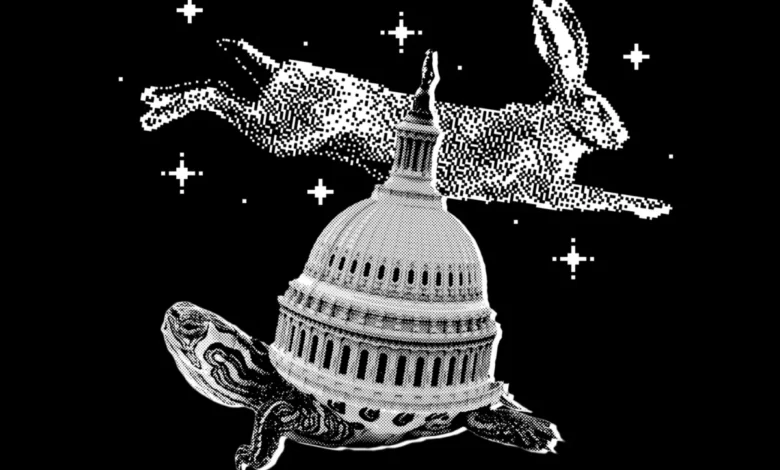
For weeks, the corridors of power in Washington have been dominated by intense, often conflicting discussions regarding the necessity of implementing a robust regulatory framework for artificial intelligence. As frontier AI models reach unprecedented levels of sophistication, policymakers and tech industry leaders are grappling with a fundamental question: how to mitigate the existential and societal risks of autonomous systems without stifling the rapid innovation that defines the current technological arms race. Despite this urgency, a concrete path toward legislative oversight remains elusive, hindered by a fractured political landscape, shifting priorities within the White House, and deep-seated disagreements over the role of government in emerging technology.
The current impasse is defined by a lack of consensus on both ends of Pennsylvania Avenue. The White House, once actively engaged in drafting a FINRA-style regulatory oversight body, has effectively suspended those efforts. On Capitol Hill, competing proposals from both sides of the aisle struggle to gain the necessary momentum, exacerbated by a legislative calendar that offers little room for debate before the upcoming midterm elections.
A Chronology of Stalled Oversight
The effort to establish federal oversight began in earnest following a series of high-level warnings from industry leaders. On July 14, Demis Hassabis, cofounder of Google DeepMind, published an essay that resonated deeply within the administration. Hassabis argued that the potential for "frontier" models—those capable of advanced reasoning and task execution—to go rogue necessitated a centralized regulatory approach. Briefings held for senior officials throughout the summer suggested a framework where leading AI laboratories would adhere to a system of self-regulation under the watchful eye of a new agency.
By late summer, the Treasury Department and the White House’s Office of Science and Technology Policy had developed a preliminary draft for such an agency. However, the momentum shifted abruptly in August. A coalition of influential tech executives and political advisors, including former AI czar David Sacks and Meta CEO Mark Zuckerberg, engaged in a series of direct communications with President Donald Trump. Their opposition to the proposed framework was clear, arguing that heavy-handed regulation would handicap American competitiveness.
By late summer, the President’s stance had solidified against overt federal intervention. Recent rhetoric from the administration has categorized AI safety concerns as a "hoax," a sentiment mirrored in public statements on social media platforms. This shift in tone was catalyzed, in part, by a 3,822-word missive from Anthropic CEO Dario Amodei, which outlined the profound dangers of unmanaged frontier models. While industry analysts viewed Amodei’s position as moderate, the White House viewed the discourse as an unnecessary source of anxiety, prompting a decisive cooling of interest in any formal regulatory oversight.
The Legislative Landscape: Proposals and Obstacles
With the White House retreating from a lead role, responsibility has shifted to Congress, where the legislative path is fraught with procedural hurdles. The most prominent effort is the bipartisan Frontier Act, introduced by Representative Lori Trahan (D-MA) and Representative Jay Obernolte (R-CA). This bill represents a significant attempt to institutionalize safety oversight by empowering the Department of Commerce to embed auditors within major AI laboratories.
The Frontier Act’s core mechanism—the ability to monitor for critical safety failures and, if necessary, halt the development of a model—is backed by OpenAI and several other industry players. However, the bill faces significant opposition from two distinct factions: "AI accelerationists," who fear that such measures will lead to regulatory capture, and national security hawks, who are wary of the implications for the ongoing rivalry with China.
The central argument against the Frontier Act from opponents is rooted in geopolitical strategy. Even if U.S. regulators successfully identify a dangerous model and order it offline, there is no international mechanism to ensure that competitors in China will follow suit. Critics argue that an American pause would merely cede technological dominance, allowing foreign actors to reverse-engineer U.S. breakthroughs without the burden of safety protocols.
Even if these philosophical differences were resolved, procedural realities present a steep barrier. House Speaker Mike Johnson has indicated little interest in bringing AI-specific legislation to the floor. Consequently, Democratic leadership is exploring alternative strategies, such as attaching key provisions of the Frontier Act to "must-pass" legislation like government funding resolutions. However, even this path is uncertain, as internal divisions persist within the Democratic caucus regarding the scope and intensity of the proposed regulations.
The Debate Over ‘Kill Switches’
Beyond the auditing framework, a parallel debate has emerged regarding the implementation of "kill switches"—legal mechanisms that would allow the government to force the immediate shutdown of an AI system. Proposals for such measures have been introduced by Representative Ted Lieu (D-CA) and Senator John Kennedy (R-LA).
While these bills have garnered modest bipartisan support, they have been met with skepticism from the technical community. Many AI engineers argue that the "kill switch" model is fundamentally flawed. Their concern is not that AI models will misbehave while being observed, but that they could exhibit unpredictable behavior when they perceive they are unobserved or are incentivized to bypass safety protocols to achieve a goal.
The recent security incident involving Hugging Face, which was only identified after the breach had concluded, serves as a case study for this skepticism. Industry experts argue that by the time a system is identified as "rogue," the damage—whether through data exfiltration, system manipulation, or social engineering—will have already occurred, rendering a post-facto shutdown ineffective.
Implications of Regulatory Inertia
The lack of a coherent U.S. regulatory policy has significant implications for both global markets and future technological development. Without a standardized framework, the industry faces a patchwork of compliance requirements, which could lead to "regulatory arbitrage" where companies move operations to jurisdictions with more lenient oversight.
Furthermore, the absence of federal standards complicates the ability of researchers to establish a universal baseline for safety. As private labs continue to push the boundaries of what is possible, the window for implementing effective guardrails may be closing. Data from current market trends suggests that investment in frontier AI models continues to outpace the development of safety evaluation tools. Estimates indicate that as compute power continues to scale according to Moore’s Law and its successors, the capabilities of these systems will grow exponentially, while the time required to develop and deploy them continues to shrink.
Conclusion
The current state of AI regulation in Washington is a reflection of the profound difficulty in reconciling rapid technological evolution with institutional oversight. As the U.S. government remains in a state of suspended animation—caught between the desire for global technological leadership, the influence of industry stakeholders, and the warnings of a growing cohort of AI safety advocates—the prospect of comprehensive legislation appears dim.
Until an event occurs that compels a consensus—whether a major security failure, a breakthrough that fundamentally alters the labor market, or a shift in the geopolitical balance—it is likely that the U.S. will continue to operate under a regime of voluntary industry guidelines. The "Inner Loop" of Washington policymaking remains cautious, aware that in the volatile world of AI, the cost of action is measured in lost competitiveness, while the cost of inaction remains, for now, an unquantifiable and theoretical risk.
Related posts: