Navigating Google Ads Automation: Why Optimization Is Not a Strategy in the Age of AI Max

The modern landscape of digital advertising is increasingly defined by the promise of artificial intelligence and machine learning. Platforms like Google Ads now offer sophisticated, automated campaign tools designed to unearth hidden opportunities, streamline workflows, and maximize return on ad spend (ROAS). However, as campaign management shifts from manual optimization to algorithmic execution, a critical risk has emerged for modern marketers: mistaking algorithmic optimization for a cohesive business strategy.
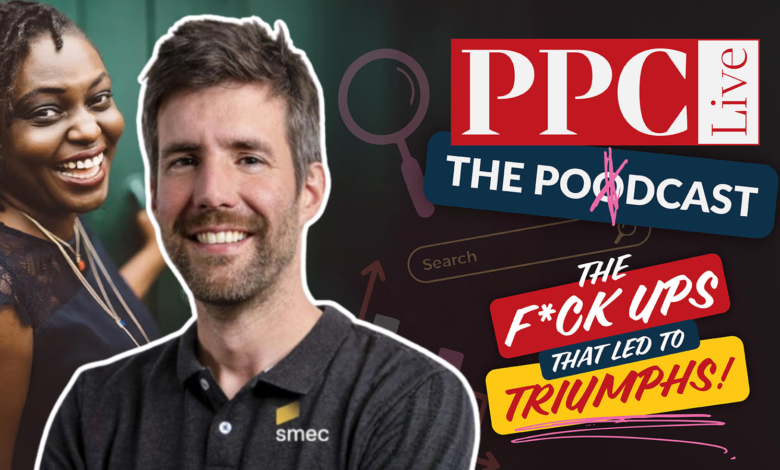
This core tension between machine-driven efficiency and human strategic oversight was the focal point of a recent discussion on the PPC Live podcast. Featuring Mike Ryan, Head of E-Commerce Insights at Smarter Ecommerce (SMEC), the conversation offered a deep dive into the practical pitfalls of AI Max, the complexities of automated bidding updates, and the evolving skill set required for modern paid search professionals.
As automated features become deeply embedded in campaign architectures, industry experts are urging advertisers to reevaluate how they balance platform capabilities with real-world business context.
The Hidden Dangers of Unchecked AI Expansion
One of the most pressing challenges highlighted during the podcast is the tendency of automated tools to pursue technical optimization at the expense of overarching business objectives. Ryan shared a compelling case study involving a client campaign utilizing AI Max.
Powered by machine learning, the AI tool dramatically expanded the brand’s traffic footprint by aggressively targeting a much larger, dominant market competitor. On paper, initial performance metrics looked promising, showing a surge in impressions, clicks, and a high volume of traffic.
However, this algorithmic success conflicted directly with the brand’s pre-established commercial strategy. The advertiser had intentionally avoided bidding on those specific competitor terms to prevent an expensive, margin-eroding bidding war. AI Max, operating purely on statistical signals and conversion probability, lacked the nuanced business context required to understand the long-term financial implications of entering that competitive fray.
This scenario underscores a fundamental rule for modern marketers: trust AI, but actively verify its actions. Advertisers must monitor new Google Ads technologies closely from day one. Rather than relying solely on aggregate performance metrics or strong headline conversion rates, practitioners need to routinely audit actual search terms to ensure the algorithm aligns with broader commercial goals.
The Perils of Viral PPC Claims and Early Observations
The rapid evolution of ad tech has also transformed how industry insights are shared, often creating a fertile ground for premature conclusions. Ryan reflected on a personal experience where initial data from several campaigns led him to conclude that AI Max disproportionately favored the Search Partner Network. Following standard industry practice for quick knowledge-sharing, he published this observation on LinkedIn.
However, as subsequent data rolled in and broader sample sizes were analyzed, it became clear that the initial finding was an anomaly rather than a systemic rule. The experience highlighted a modern digital dilemma: viral PPC claims are exceptionally difficult to take back.
In an industry hungry for real-time hacks and quick fixes, early observations can easily be misconstrued as definitive guidelines. When high-profile practitioners share preliminary insights, they carry a distinct responsibility, as other advertisers may make immediate, high-stakes campaign decisions based on incomplete data.
Guardrails and the Importance of Granular Control
Fortunately, Google provides various guardrails designed to keep automated campaigns within acceptable operational boundaries. Advertisers do not have to cede total control to the machine, provided they know which levers to pull.
To curb unwanted AI Max behaviors, practitioners can leverage negative keywords, implement brand inclusions and exclusions, and carefully configure Search Partner Network settings. Furthermore, granular reporting tools—such as AI Max match type and match source breakdowns—can illuminate precisely where traffic and conversions are originating, giving media buyers the forensic data needed to refine automated parameters.
However, managing these controls requires a balanced approach to account structure, particularly when it comes to campaign segmentation.

The Pitfalls of Over-Segmenting and CFO-Driven Structures
For years, digital marketers built highly granular account architectures, segmenting campaigns down to micro-categories, specific match types, and tight geographic or demographic parameters. In the era of Smart Bidding and automated machine learning, however, this hyper-segmentation can actually starve the algorithm of the data it needs to function effectively.
Ryan pointed out that modern automated bidding models require a healthy volume of conversion data to identify patterns and optimize effectively. According to his research, campaigns generally need a minimum of 30 monthly conversions—and ideally 60 or more—for Smart Bidding to operate with consistent stability. When accounts are carved into excessively small segments, individual campaigns are deprived of this necessary statistical mass.
This challenge is frequently exacerbated when corporate financial structures dictate digital marketing strategies. In one notable account review, Ryan encountered an account that had been divided into extremely rigid margin buckets dictated by the company’s Chief Financial Officer (CFO), with each segment assigned its own distinct ROAS target.
While this structure appeared sophisticated and financially rigorous on a spreadsheet, it severely fragmented the data. The resulting lack of sufficient volume per segment made it exceedingly difficult for Google’s algorithms to achieve the very ROAS targets the CFO had mandated.
Bridging the Gap with Custom Labels and Business Context
To reconcile financial management with automated bidding, advertisers must find ways to feed critical business context back into the advertising platform. One of the most underutilized and powerful methods for achieving this is the implementation of custom labels.
Custom labels allow advertisers to pass proprietary data—such as product margins, sell-through rates, and historical return rates—directly into campaign strategies. By communicating these offline variables to the advertising platform, marketers can train automated bidding models to optimize for actual business profitability and bottom-line revenue, rather than simply chasing raw, top-line conversion volume.
Navigating Platform Updates: The August 17 Google Ads Shift
The challenges of interpreting automated changes were vividly demonstrated following Google’s prominent August 17 platform update, which expanded Smart Bidding exploration and introduced new promotional features. The rollout sparked immediate widespread panic and speculation across the digital marketing community.
Early research conducted by Ryan indicated that many advertisers instinctively reacted to the uncertainty by increasing their target ROAS across the board. Intriguingly, this conservative reaction frequently included campaigns that were not constrained by budgets and, consequently, had no technical need for adjustment. Ryan argued that the generalized fear surrounding the update drove advertisers to make defensive, reactionary pivots.
Ironically, this industry-wide panic may have inadvertently created a strategic opportunity for forward-thinking brands. If competitors collectively raise their ROAS targets and pull back on overall advertising spend, counter-cyclical advertisers can capitalize on lowered auction competition. By maintaining or even slightly lowering their ROAS targets during periods of market anxiety, savvy brands can capture valuable market share while rivals retreat.
Furthermore, the panic surrounding the August 17 update highlighted a broader issue regarding industry patience. Google explicitly advises advertisers to allow automated bidding updates adequate time to settle—typically recommending a window of one to two full conversion cycles. Many of the apocalyptic conclusions and dramatic performance claims circulating shortly after the change were fundamentally flawed because they were drawn long before sufficient statistical data had accumulated.
Adding to the complexity of automated features, emerging tools like Performance Max channel controls continue to test marketers’ comprehension. Features that allow advertisers to adjust the "importance" of individual channels can easily mislead practitioners. For instance, increasing the stated importance of a specific channel may not simply boost its visibility; it can alter the algorithm’s overall tolerance regarding Cost Per Acquisition (CPA) or ROAS targets, yielding unexpected financial outcomes.
The Evolving Skill Set of the Modern PPC Professional
The overarching lesson from these ongoing platform shifts is clear: as digital advertising becomes increasingly automated, curiosity, skepticism, and critical thinking are rapidly becoming the core competencies of the modern PPC professional.
Strong automated performance, newly introduced platform controls, and viral industry claims all demand rigorous investigation rather than blind acceptance. Advertisers who successfully navigate this new era will be those who recognize that while AI can efficiently execute tactical optimization, formulating a sustainable, profitable digital strategy remains an inherently human responsibility.