The Evolution of Memory: How Storyworth is Transforming Personal History into Automated Archives

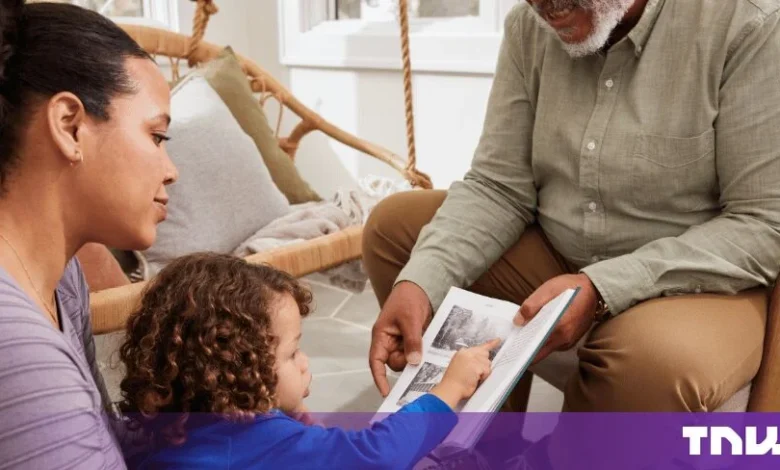
There is a particular kind of question that families postpone for years. It is difficult not because the answer is secret, but because the question is too large: Tell me about your life. Faced with it, even a willing storyteller may retreat into generalities. A childhood becomes “happy.” A marriage was “good.” A migration, a war, a career, a grief, all reduced to a few durable adjectives. The trouble is not necessarily memory; often, it is the daunting nature of the narrative form itself.
The Origins of a Digital Heirloom
Storyworth, founded in 2013 by Nick and Krista Baum, emerged from a personal need to bridge the gap between memory and documentation. Inspired by Nick Baum’s effort to record his 82-year-old father’s life stories, the company established a framework that broke down the intimidating task of writing an autobiography into manageable, incremental steps. By sending weekly prompts via email, the platform allowed users to respond to specific questions—such as "What was your first job?" or "Who was your best friend in high school?"—which were then compiled into a hardcover book.
For over a decade, this written-response model served as the primary interface for thousands of families. However, the nature of human recollection is rarely linear or textual. It is messy, spoken, and deeply tied to the cadence of conversation. Recognizing this, the company began a multi-year pivot toward integrating voice-based technologies, fundamentally changing the relationship between the storyteller, the interviewer, and the resulting historical record.
A Chronology of Technological Integration
The transition from a text-based archive to a voice-mediated platform occurred in distinct phases, reflecting the broader trend of consumer AI and speech-to-text integration:
- 2013: Storyworth launches, focusing on written responses and human-led transcription services.
- 2024: The introduction of "Story Calls" marks a pivotal shift. By utilizing automated transcription, the platform allows users to record their memories via telephone, including landlines. This feature captures verbatim transcripts, preserving the idiosyncratic rhythm and tone of the speaker.
- Early 2026: The company expands its suite of tools to include "Magic Interviews" and "Family Calls," moving from passive recording to active, AI-driven facilitation.
These updates represent a departure from simple storage. In the case of Magic Interviews, the software acts as an interviewer, guiding the storyteller through a conversation and posing follow-up questions. When the call concludes, the system processes the audio into a coherent narrative. Family Calls, meanwhile, introduces a collaborative element, allowing relatives to participate in the storytelling process, thereby ensuring that memories are contextualized and corroborated by those who lived them.
Data and Design: The Mechanics of Memory
The shift toward automated intermediation raises significant questions about the fidelity of personal archives. While automated transcription offers unprecedented convenience, it also acts as a filter. A verbatim transcript preserves the "loops, digressions, and pauses" inherent in speech—the very elements that make a life story feel authentic. Conversely, the "Magic Interview" function prioritizes structural clarity, smoothing out the disorder of natural speech to produce a polished narrative.
From an analytical standpoint, this creates a "layered preservation" model. The final product is no longer just a book; it is a hybrid artifact. Users can access a physical volume, but through integrated QR codes, they are granted access to a private digital repository containing the original audio recordings. This ensures that the "breath passing through a particular body" is preserved alongside the corrected, edited text.
The Role of the Telephone in Historical Preservation
The choice of the telephone as the primary tool for this process is not merely a matter of accessibility. According to behavioral studies on memory retrieval, low-stakes environments—such as a routine phone call—often yield more candid and detailed accounts than formal interview settings. Because the telephone is an ordinary object, it removes the performance anxiety often associated with "recording history." It does not require a studio or specialized equipment, allowing for a naturalistic flow of information that might otherwise be lost in the attempt to write a formal memoir.
Broader Implications for Digital Legacy
The expansion of Storyworth’s system highlights a critical development in consumer technology: the rise of software as an active participant in human cognition. Traditionally, memory-keeping tools were passive, serving as "containers" for human thought. Today, software is becoming an "intermediary."
By providing prompts, transcribing speech, and shaping recollections into narratives, Storyworth is effectively participating in the act of remembering. This has profound implications for digital legacy. As society moves away from physical letters and scrapbooks toward managed digital archives, the "design" of these systems becomes a matter of historical importance. If an AI interviewer steers a subject toward certain topics while ignoring others, the resulting archive is, by definition, a curated selection rather than an objective account.
The Tension of the Designed Archive
Critics and historians often note that every archive is a product of exclusion. Photographs omit what is outside the frame; diaries reflect only the moods of the day. Storyworth’s system introduces a new layer of partiality: the algorithm.
In early 2026, as these tools become more sophisticated, the challenge for the company and its users will be maintaining the balance between convenience and authenticity. While the system provides a structure that makes memory-keeping accessible to those who would otherwise never record their lives, it also necessitates a level of trust in the software’s ability to "clean up" a life story without erasing its meaning.
Conclusion: The Human Inheritance
The phrase "family legacy" is frequently treated as a static inheritance—something passed down intact. In reality, as evidenced by the fragments collected in these digital archives, legacy is a process of assembly. It is built from anecdotes, half-remembered dates, and the specific way a voice catches when describing a childhood home.
As software continues to join the act of remembering, the fundamental nature of the family memoir is changing. The finished product may be cleaner, more readable, and more durable than ever before, but it remains a collaborative effort between the human narrator and the machine. While the system can organize, prompt, and store, it cannot replicate the subjective experience of living. The inheritance remains human; the system helping to produce it, however, is increasingly designed to make that humanity easier to organize, yet perhaps slightly more mediated. In the end, families are not just deciding what to save; they are deciding how much of the original, messy, and unscripted truth they wish to keep.