How AI-Driven Autonomous Agents Have Quietly Taken Over Global Web Traffic and Rewritten the Rules of E-Commerce


The global digital landscape has officially reached a historic tipping point, as automated web traffic generated by software applications and artificial intelligence systems has surpassed human-driven engagement for the first time. Recent analytics compiled by prominent infrastructure and cybersecurity networks, including Cloudflare and HUMAN Security, reveal that non-human requests now constitute a clear majority of all internet interactions. However, industry analysts emphasize that the narrative surrounding this shift requires a vital nuance: while traditional automated traffic has long been associated with malicious scraping, resource exhaustion, and bandwidth theft, a new classification of non-human visitor has emerged. Known widely as agentic AI, this rapidly expanding segment of web traffic does not merely scavenge data to train underlying machine learning models; instead, these sophisticated autonomous agents act on behalf of individual human users, navigating digital storefronts, evaluating product pricing, comparing specifications, and executing complete commercial transactions from end to end.

This profound evolution has transformed the fundamental architecture of the internet, forcing web administrators, e-commerce merchants, and infrastructure providers to rethink standard defensive protocols. For decades, server logs recognized only three distinct visitors: human users, automated search engine crawlers indexing pages for public visibility, and simple scripts executing rudimentary, repeatable tasks. Today, autonomous AI agents represent an entirely new paradigm. These systems interpret the underlying structure of a webpage with the speed and efficiency of a search crawler while executing interactive behaviors characteristic of human consumers. As a result, merchants are discovering that standard, blanket security measures designed to block aggressive data scrapers are inadvertently neutralizing legitimate high-converting traffic channels, rendering modern bot management a delicate exercise in digital triage.
The rapid ascendancy of agentic traffic can be traced through a distinct technological chronology over recent years. In the early stages of the generative artificial intelligence boom, the primary discourse centered exclusively on large language model developers deploying web scrapers to harvest copyrighted text, images, and code. Website operators responded by implementing aggressive blocking mechanisms via robots.txt files, firewall rules, and infrastructural switches to protect proprietary server resources. However, as foundation models evolved into multimodal reasoning engines capable of executing multi-step workflows, technology firms began deploying autonomous agents directly into production environments. By late 2024 and early 2025, experimental agentic browsers and shopping assistants began appearing in consumer workflows. By mid-2026, empirical data from traffic monitoring firms confirmed that automated requests had decisively outpaced human traffic, with agentic browser sessions expanding at a compound annual growth rate that dramatically outpaces every other digital category.
Statistical insights published by major enterprise analytics firms underscore the commercial significance of this behavioral shift. According to comprehensive retail data released by Adobe covering over one trillion visits to United States retail sites, the economic value of AI-referred traffic has experienced a staggering transformation. In March 2025, traffic referred to retail sites by artificial intelligence channels converted at a rate roughly 38 percent worse than traditional acquisition channels such as paid search engine marketing and email campaigns. By March 2026, however, that dynamic had completely inverted: AI-referred traffic converted at a rate 42 percent higher than standard channels, representing an extraordinary 80-percentage-point swing over a twelve-month window.
Furthermore, detailed behavioral metrics indicate that shoppers referred by autonomous agents generate approximately 37 percent more revenue per visit than non-AI traffic. They also spend 48 percent longer browsing the target site and consume 13 percent more pages per session. Industry researchers attribute this dramatic disparity to fundamental differences in user intent. A human visitor arriving via an organic search engine query may be at the earliest stages of exploratory research, browsing without a definitive purchase timeline. Conversely, an autonomous agent dispatched by a user to complete a specific assignment possesses high-intent clarity, having already been programmed with precise budgetary constraints, product specifications, and fulfillment preferences. Consequently, online merchants operating on content management systems and e-commerce platforms—ranging from WooCommerce stores to subscription membership portals and automated booking engines—are discovering that capturing and accommodating this specialized traffic stream is essential for maintaining competitive market share.
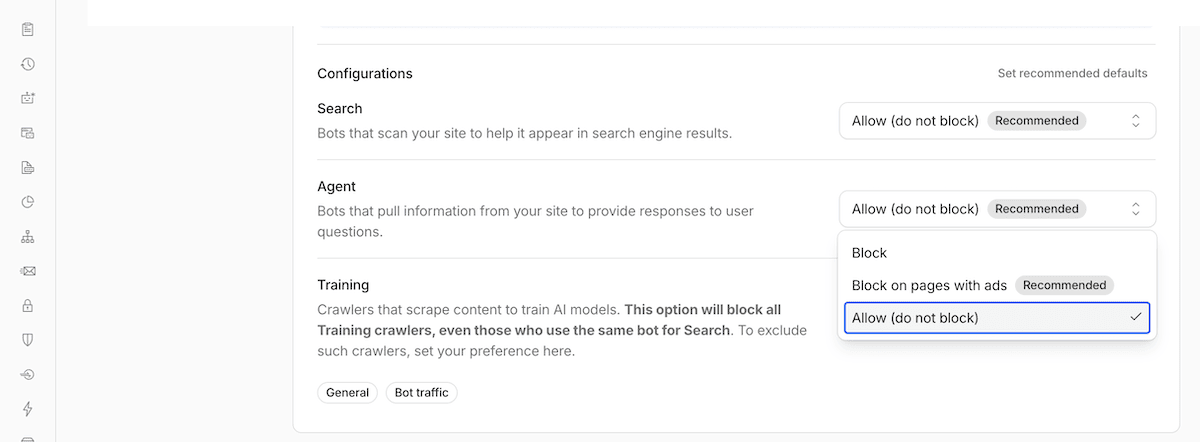
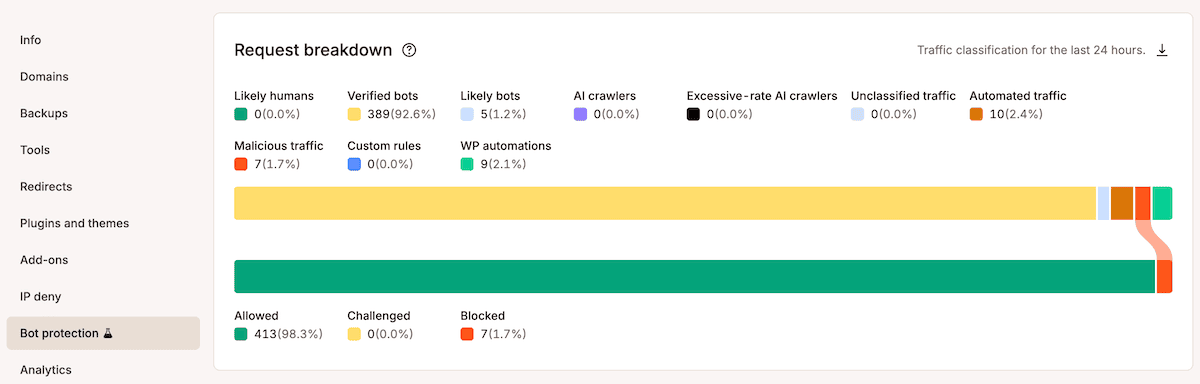
Infrastructure and content delivery networks are actively restructuring their defensive tools to accommodate this duality in automated traffic. Historically, server administrators relied on binary security switches that either permitted all automated requests or blocked them entirely. Recognizing the economic peril of repelling high-value purchasing agents alongside malicious scrapers, major network providers have introduced granular traffic controls. Cloudflare, for example, recently transitioned from a single unified AI-bot toggle to an independent three-way categorization framework available to its customer base. This system separates automated traffic into distinct operational classes: search engine indexing, automated agent interactions, and model training crawlers.
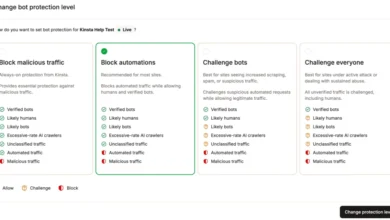
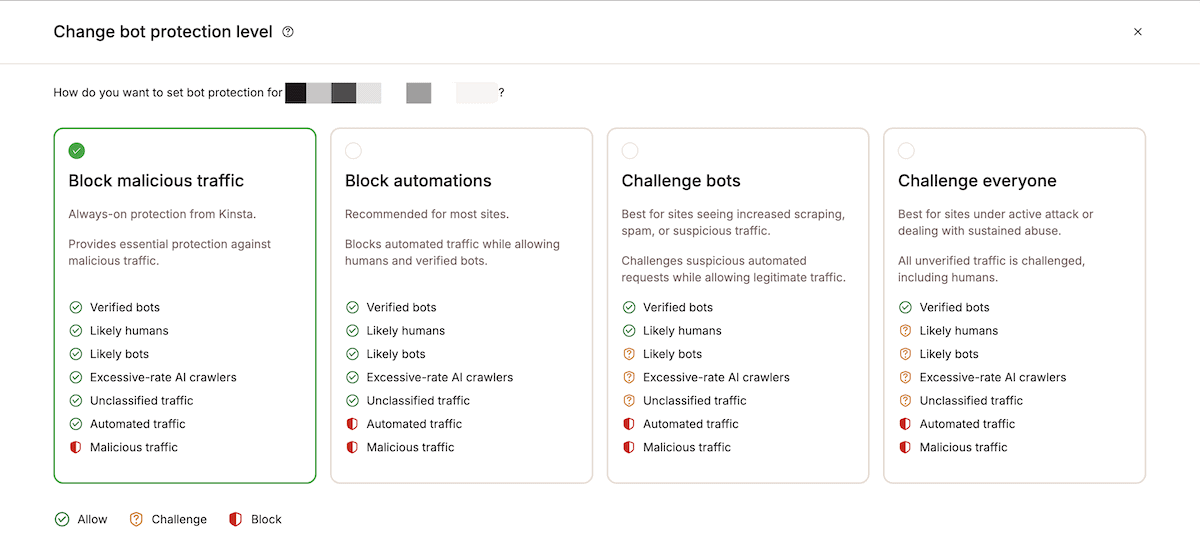
Under standard deployment parameters, infrastructure platforms frequently block training and scraping operations on monetized pages while preserving search indexing capabilities. However, technical complexities remain; multi-purpose automated crawlers operated by major search engines are frequently evaluated against the strictest applicable security rule, meaning a blanket defensive posture against data scrapers can inadvertently suppress organic search visibility. Managed hosting providers such as Kinsta have similarly adapted their proprietary bot protection suites, engineering sophisticated heuristics designed to differentiate between resource-intensive scraping scripts and legitimate transactional automations. Platform engineers stress that web administrators must review their infrastructure configurations regularly to ensure that aggressive edge-security policies are not inadvertently starving revenue-generating channels.
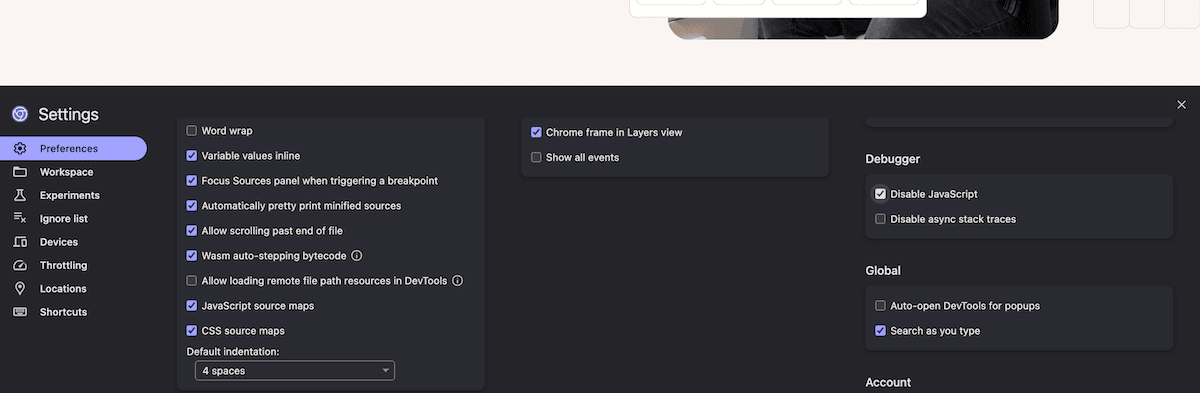
Technical evaluations conducted by systems architects indicate that an autonomous agent’s ability to successfully navigate and complete an online checkout depends heavily upon foundational infrastructure and semantic web design rather than superficial visual aesthetics. Because autonomous software agents evaluate web pages through underlying document object models and accessibility trees rather than rendered graphical layouts, conventional front-end design choices can introduce fatal barriers to conversion. If critical e-commerce data—such as dynamic pricing, inventory levels, or shipping availability—is withheld behind asynchronous JavaScript calls or interactive user events that require a physical mouse click, an agent operating without full script execution capabilities will fail to register the necessary data points.
Empirical studies examining the performance of autonomous web agents in real-world environments demonstrate that while such systems achieve high success rates on standard, well-structured web pages, their efficacy degrades significantly when encountering complex interactive elements or poorly optimized DOM hierarchies. Standard technical impediments include modal pop-ups requiring manual dismissal, drop-down menus driven exclusively by post-load scripts, non-semantic interactive containers lacking native accessibility labels, and sluggish server response times. Recognizing these architectural friction points, standards organizations and browser vendors—including Google’s ongoing development of the WebMCP framework—have begun exploring native browser-level protocols designed to expose site checkout and pricing functionalities directly to authorized agents, bypassing the need for optical or structural inference. Nevertheless, until such standards achieve universal adoption, maintaining clean semantic HTML remains the most reliable baseline mitigation.
Beyond structural design, server latency and concurrency management represent decisive variables in capturing agentic commerce. Unlike human consumers, who may exhibit considerable patience when waiting for a sluggish page to load, an autonomous agent executing a multi-step workflow will promptly abandon a stalling endpoint, terminating the session and forfeiting the potential transaction. Consequently, web performance metrics have acquired direct commercial urgency. Core Web Vitals thresholds—traditionally utilized as proxies for human user experience—serve as accurate indicators of agent tolerance. Maintaining a Largest Contentful Paint under 2.5 seconds ensures that both human shoppers and automated agents operate within acceptable operational timeouts.
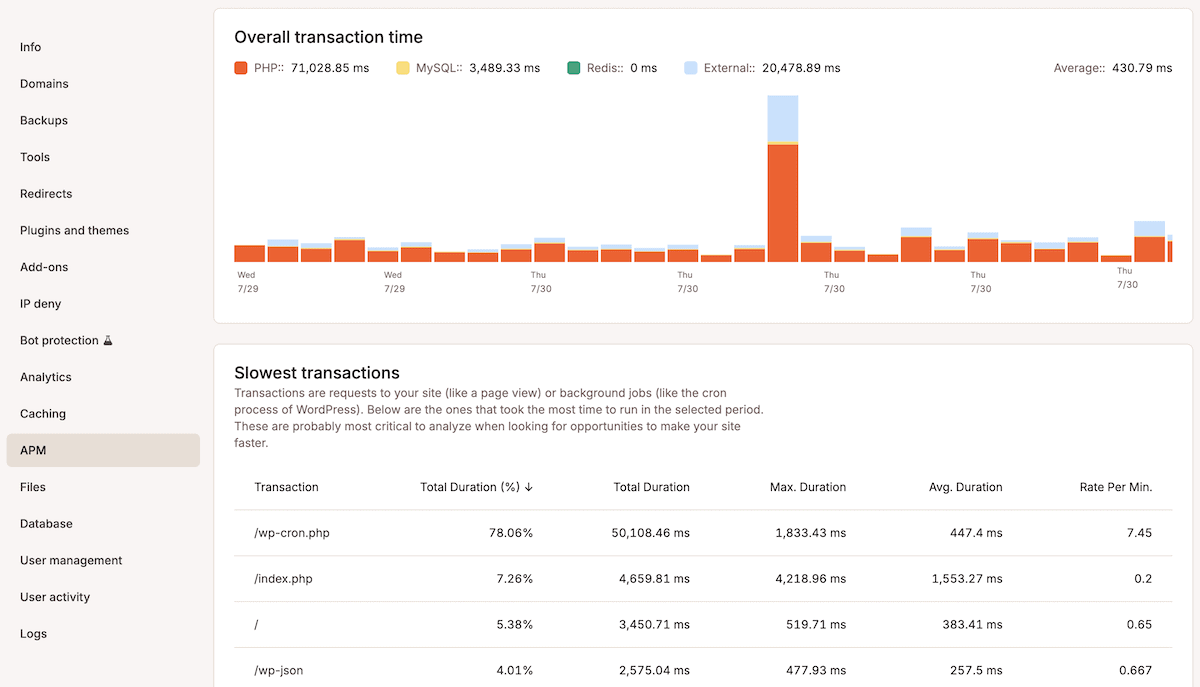
Performance engineering teams recommend deploying advanced application performance monitoring (APM) tools to audit database queries, third-party API calls, and backend processing delays on critical checkout endpoints. Furthermore, because an autonomous agent may initiate concurrent requests across multiple product categories simultaneously, servers must be provisioned to handle sudden bursts of localized computational load without exhausting available PHP thread limits or database connection pools. Adjusting server resource allocations and optimizing database queries directly correlates with higher completion rates for automated customer sessions.
The broader implications of the shift toward agentic traffic extend far beyond technical server administration, signaling a structural evolution in digital commerce and online marketing strategies. As software agents increasingly intermediate the relationship between consumer and merchant, traditional optimization methodologies focused exclusively on human psychological triggers—such as visual banner advertising, emotional copywriting, and pop-up conversion funnels—will likely diminish in relative importance. Instead, enterprise competitiveness will depend increasingly upon machine-readable data structures, API accessibility, deterministic pricing models, and frictionless transactional pathways optimized for software consumers.
Industry stakeholders and policy analysts suggest that this transition will necessitate new regulatory and security frameworks governing digital authentication and bot authorization. As autonomous agents become ubiquitous participants in the digital economy, distinguishing between authorized commercial agents, authorized search indexers, and unauthorized data harvesters will require standardized verification protocols akin to modern digital certificates. For online merchants, the immediate imperative is clear: treating non-human traffic as a monolithic security threat is no longer commercially viable. By adopting granular traffic classification tools, refining server infrastructure for low latency, and maintaining pristine semantic codebases, digital businesses can successfully harness the unprecedented conversion potential of the autonomous web.
Related posts: