The Digital Court: How IBM and the USTA are Redefining the Modern Sports Experience through Artificial Intelligence

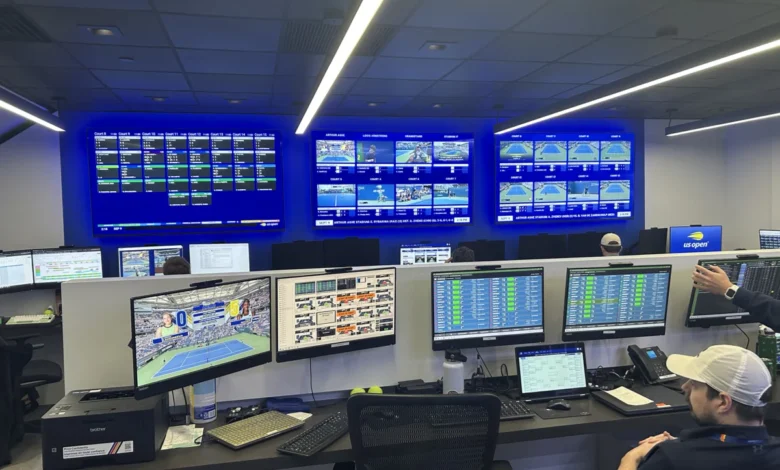
For the casual observer, the U.S. Open is a high-stakes spectacle of athleticism, sweat, and prestige played out on the hard courts of Flushing Meadows. For the United States Tennis Association (USTA), however, the tournament is a logistical titan—a massive, temporary business operation that must scale its infrastructure to accommodate millions of users globally, all within a compressed three-week window. While many corporate partners occupy the grounds with flashy experiential booths or traditional signage, IBM has carved out a more fundamental role. As the tournament’s technology partner, the century-old tech giant serves as the invisible engine driving the fan experience, processing billions of data points to turn a standard broadcast into a hyper-personalized digital ecosystem. In doing so, IBM is effectively positioning elite sports as the ultimate laboratory for the real-world application of artificial intelligence.
The Architecture of Real-Time Engagement
The shift toward data-driven sports consumption has moved rapidly over the last decade. In 2025 alone, the U.S. Open digital platforms recorded engagement from over 14 million unique devices, resulting in nearly 47 million visits—a 19% year-over-year increase. Managing this influx of traffic requires more than just raw server power; it demands a sophisticated integration of AI that can parse information with human-like nuance.
Central to this year’s technological overhaul is the introduction of "Serve Quality," a metric that represents a quantum leap in sports analytics. By tracking 21 distinct data points across a player’s body and racquet—sampled 50 times per second—the system generates approximately 4.6 million data points per match. Across the duration of the tournament, this results in a staggering 1.2 billion data points. These metrics are processed in real-time, allowing fans to understand not just the speed of a serve, but the biomechanical efficiency and tactical intent behind it.
To handle the complexity of this information, the USTA and IBM employ a hybrid model of AI and human oversight. While AI manages the initial ingestion and categorization of data, human editors provide the final layer of validation, ensuring that the "speed versus accuracy" trade-off remains tilted in favor of precision. This is particularly evident in the tournament’s AI-powered conversational bots, which allow fans to query historical records, match statistics, and player trajectories in natural language.
Operational Scalability: A Strategic Necessity
The USTA operates with a permanent staff of only a few hundred people, yet it is tasked with delivering a global media product that rivals the largest sporting events on the planet. This creates an inherent "scale gap." IBM’s role is to bridge that gap through enterprise-grade automation.
Beyond the fan-facing features, the USTA utilizes bespoke AI tools to manage its internal workflows. For instance, the editorial team—previously limited by the manual labor required to write summaries for hundreds of matches—now leverages AI to draft match narratives. Human editors then refine these summaries, a process that has increased the organization’s overall content production capacity by 300%. By automating the rote aspects of journalism, the USTA can focus its human capital on high-value, long-form storytelling.
Security remains the other pillar of this partnership. Given the U.S. Open’s status as a high-profile global event, its digital infrastructure is a constant target for cyber threats. According to internal reports, IBM’s security suite identifies and filters nearly 500 million suspicious requests during the tournament cycle. By utilizing AI agents to categorize and prioritize threats, the security team can mitigate risks before they impact the integrity of the tournament’s platforms, ensuring that the digital gates remain as fortified as the physical ones.

The Evolution of the Fan Experience
The U.S. Open’s new Live Updates homepage represents a fundamental shift in how sports organizations view their audience. Instead of a monolithic stream of information, the interface offers a personalized dashboard where fans can prioritize favorite players, follow specific match developments, and receive custom notifications.
This development comes at a time when the demand for live sports is at an all-time high, but physical stadium capacity remains fixed. The global fan base for tennis now vastly outstrips the number of people who can physically attend the event. Consequently, the digital experience is no longer a "second screen" alternative; for the vast majority of fans, it is the primary venue for consumption.
Data from the IBM 2026 Sports Survey underscores this trend, revealing that 80% of fans perceive significant value in AI-enhanced sports experiences. The appetite for real-time statistics and personalized content is particularly strong, with 64% of tennis fans expressing trust in AI-generated insights. Furthermore, the reliance on mobile technology is near-universal; while 73% of tennis fans use sports apps generally, that number jumps to 91% during live tournament play. This suggests that the quality of the digital interface is now a critical driver of fan retention and engagement.
A Legacy of Innovation and Future-Proofing
IBM’s involvement in the U.S. Open is part of a broader strategy that includes partnerships with the Masters, Wimbledon, and the UFC. However, the company is increasingly looking beyond these established giants to influence the next generation of sports tech.
In 2026, the USTA launched the "Connect Innovation Challenge," an initiative designed to scout startups capable of solving specific problems within the sport. Participants are given access to USTA data sets to build their prototypes, which are then evaluated by a panel of industry experts and investors. The winners not only receive funding but also the opportunity to pitch their solutions to a high-level audience at the tournament.
Complementing this is the "IBM Sports Tech Startup Challenge," which expands the search for innovation to a global stage. With events slated for tech hubs like Lisbon, Vancouver, and Rio, as well as high-profile American tech gatherings like a16z Tech Week, IBM is actively fostering a pipeline of entrepreneurs. This is not merely an act of corporate social responsibility; it is a calculated effort to ensure that the broader sports ecosystem continues to evolve in a direction that supports AI integration.
Implications for the Sports Industry
The implications of this partnership extend far beyond tennis. As AI continues to mature, the U.S. Open serves as a proof-of-concept for how traditional, legacy-heavy industries can undergo digital transformation without sacrificing their heritage. By successfully balancing the human element of sports—the unpredictability and emotion of a match—with the cold, calculated precision of machine learning, the USTA and IBM have created a blueprint for the future of sports management.
For entrepreneurs and business leaders, the takeaway is clear: the most successful applications of AI are not those that replace the core product, but those that enhance the user’s ability to engage with it. Whether through reducing latency in data processing, fortifying cybersecurity protocols, or democratizing access to high-level analytics, IBM is proving that the "invisible hand" of technology is the most important player on the court. As the industry moves forward, the ability to turn data into a competitive advantage—and, more importantly, into a deeper fan connection—will define the success of the next generation of sporting enterprises. The U.S. Open is no longer just a tournament; it is a live-running, data-generating, AI-powered business entity, and the rest of the sports world is watching.