The landscape of local search is undergoing its most significant transformation since the inception of the Google Map Pack. As Google integrates generative AI, Gemini, and AI Overviews into the core search experience, the traditional goal of driving traffic to a brand’s website is being superseded by a new paradigm: the "zero-click" conversion. In this new ecosystem, Google’s AI performs the heavy lifting—comparing options, evaluating attributes, and facilitating bookings—all within the search interface. For multi-location enterprises, this shift represents a fundamental change in the definition of visibility. Ranking is no longer the final objective; the primary goal is now ensuring that AI models possess the accurate, high-quality data necessary to recommend a specific location over a competitor.
The Evolution of Search: From Links to Intelligence
Historically, local SEO was defined by a set of predictable tactics: optimizing for keywords, managing citations, and encouraging reviews. While these elements remain foundational, their function has shifted. Google’s algorithms are increasingly moving away from simple directory-style indexing toward semantic understanding and AI-driven synthesis.
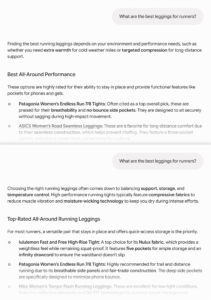
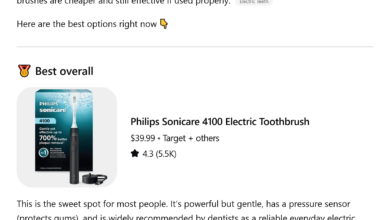
The current transition began in earnest with the rollout of Search Generative Experience (SGE), now evolved into AI Overviews. These features leverage Large Language Models (LLMs) to synthesize information from various sources to provide direct answers to complex queries. For a user searching for a "best-rated urgent care clinic with Saturday hours," the AI does not simply provide a list of links. It curates a selection based on its understanding of current availability, reputation, and proximity. If a brand’s local data is fragmented, stale, or conflicting, the AI effectively ignores that entity, regardless of its traditional SEO standing.
The Data Gap: Why 68% of Brands Are Losing Visibility
Recent industry analysis indicates that approximately 68% of multi-location brands are currently missing from key AI-driven recommendations. This is not necessarily due to a lack of brand presence, but rather a failure to feed the AI the "signals" it requires to make an informed recommendation.
Google’s AI relies on a structured hierarchy of local signals. These include, but are not limited to, NAP (Name, Address, Phone) consistency, real-time operating hours, service-specific attributes, and sentiment analysis derived from customer reviews. When a brand’s digital footprint—spanning its website, social media, Google Business Profile (GBP), and third-party directories—contains even minor discrepancies, the confidence score of the AI model decreases. In an environment where the AI prioritizes high-confidence data to ensure user satisfaction, conflicting information serves as a disqualifier.
Webinar Overview: Addressing the AI Imperative
To help marketing leaders navigate this shift, Search Engine Journal, in collaboration with Uberall and representatives from Google, is hosting an educational webinar on Thursday, September 24, at 11:00 am ET. The session, titled "Google On What’s Next In AI Search + 5 Local Marketing Strategy Fixes," aims to demystify the mechanics of how AI selects local businesses for inclusion in search results.
The webinar features a panel of experts who are directly involved in the development and application of search technology:
- Caroline Dissaux: Business Development Lead for Search & Gemini at Google.
- Bonnie White: Strategic Partnerships Manager at Adecco, focused on Google Business Profile integrations.
- Krystal Taing: VP of Solutions at Uberall, specializing in local search optimization and multi-location management.
- Katie Morton: Executive Editor at Search Engine Journal, serving as the moderator.
This session will provide attendees with a structured, five-point framework for optimizing local data for the AI era. These strategies are specifically designed to align with the upcoming updates to Google’s search infrastructure, ensuring that brands remain discoverable even as the platform moves toward a more automated, AI-first user journey.
Chronology of AI Integration in Local Search
The path to the current state of local search has been marked by several key milestones:
- The Map Pack Era (2010–2020): The period dominated by proximity, relevance, and prominence as the primary ranking factors. SEO efforts focused on local keyword optimization and review generation.
- The Rise of Structured Data (2020–2023): As Google began to rely more on schema markup and structured data, businesses that invested in technical SEO saw significant gains in rich snippets and local knowledge panels.
- The SGE/AI Overview Rollout (2023–Present): The introduction of generative AI into the SERP. The search engine began synthesizing content to answer questions directly, reducing the need for users to click through to external websites.
- The Future of Conversational Discovery (Late 2026): We are entering a phase where the search engine acts as a concierge. Discovery is driven by natural language processing, where the AI understands the user’s intent and context (e.g., "book a table at a quiet place for a business lunch") rather than just the literal search terms.
Strategic Implications for Multi-Location Enterprises
The primary challenge for large brands is the scale of data management. Maintaining accuracy across hundreds or thousands of locations is a logistical hurdle that becomes a competitive liability in the age of AI. When one location provides an incorrect closing time on a secondary directory, it can pollute the data pool that the AI uses to evaluate the entire brand.
The upcoming webinar will emphasize that "Local SEO" is no longer a marketing silo. It is now a data integrity project. Brands must move toward a centralized "source of truth" for their location data. By ensuring that every touchpoint—from the primary website to local business listings—reflects the same verified information, brands increase their "data confidence score" with Google’s algorithms.
Analysis: The Shift Toward Conversational Commerce
The move toward AI-driven local discovery suggests a broader economic shift toward "conversational commerce." If Google’s AI is the entity that facilitates the transaction, the role of the brand’s own website may shift from being a destination for lead generation to being an API-connected service point.
For many businesses, this means the future of local SEO will involve:
- Dynamic Attribute Optimization: Ensuring that specific, granular details—such as "wheelchair accessibility," "outdoor seating," or "EV charging availability"—are explicitly mapped and verified.
- Sentiment Analysis Alignment: AI models are increasingly using review content to determine if a business meets the "vibe" or specific quality requirements of a user. Proactive reputation management is now a prerequisite for visibility.
- Real-Time API Syncing: Moving away from manual updates to automated, real-time synchronization between internal business management software and Google’s search platforms.
Conclusion and Call to Action
The rapid pace of change in search technology presents both a challenge and an opportunity. Brands that treat AI-driven search as an extension of their customer experience strategy will likely thrive, while those that continue to rely on legacy SEO practices may find themselves sidelined.
The upcoming webinar serves as a critical checkpoint for digital marketers. By understanding the specific signals that Google’s Gemini and AI Overviews prioritize, organizations can adapt their strategies to maintain relevance in a search environment that is increasingly automated. Registration for the webinar is open, and for those unable to attend the live broadcast, the session will be recorded and made available to all registrants.
As Google continues to refine its AI capabilities, the message to business owners is clear: the most successful brands will be those that prioritize data quality and structured information, ensuring that when the AI goes looking for the best answer, your locations are the ones it chooses to recommend.