ChatGPT Ads Unveils Comprehensive Suite of Advanced Tools, Signaling Strategic Push Towards Performance Marketing Dominance

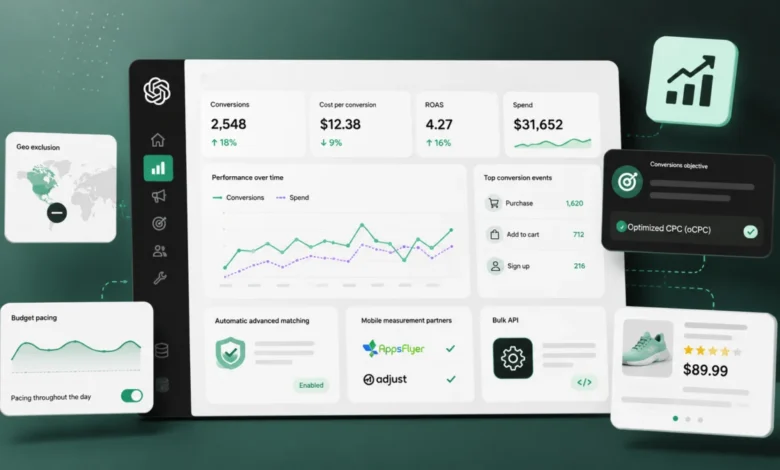
ChatGPT Ads is rolling out a slate of new advertiser tools strategically focused on smarter bidding, improved measurement, budget pacing, and sophisticated campaign management, marking a pivotal moment in the continuous evolution of its advertising platform. This significant update positions ChatGPT Ads closer to the robust feature sets expected from more mature ad ecosystems, particularly emphasizing capabilities around conversion optimization and automation—critical elements for modern performance marketers. The enhancements are designed to provide advertisers with greater control, efficiency, and ultimately, a stronger return on investment in an increasingly competitive digital advertising landscape.
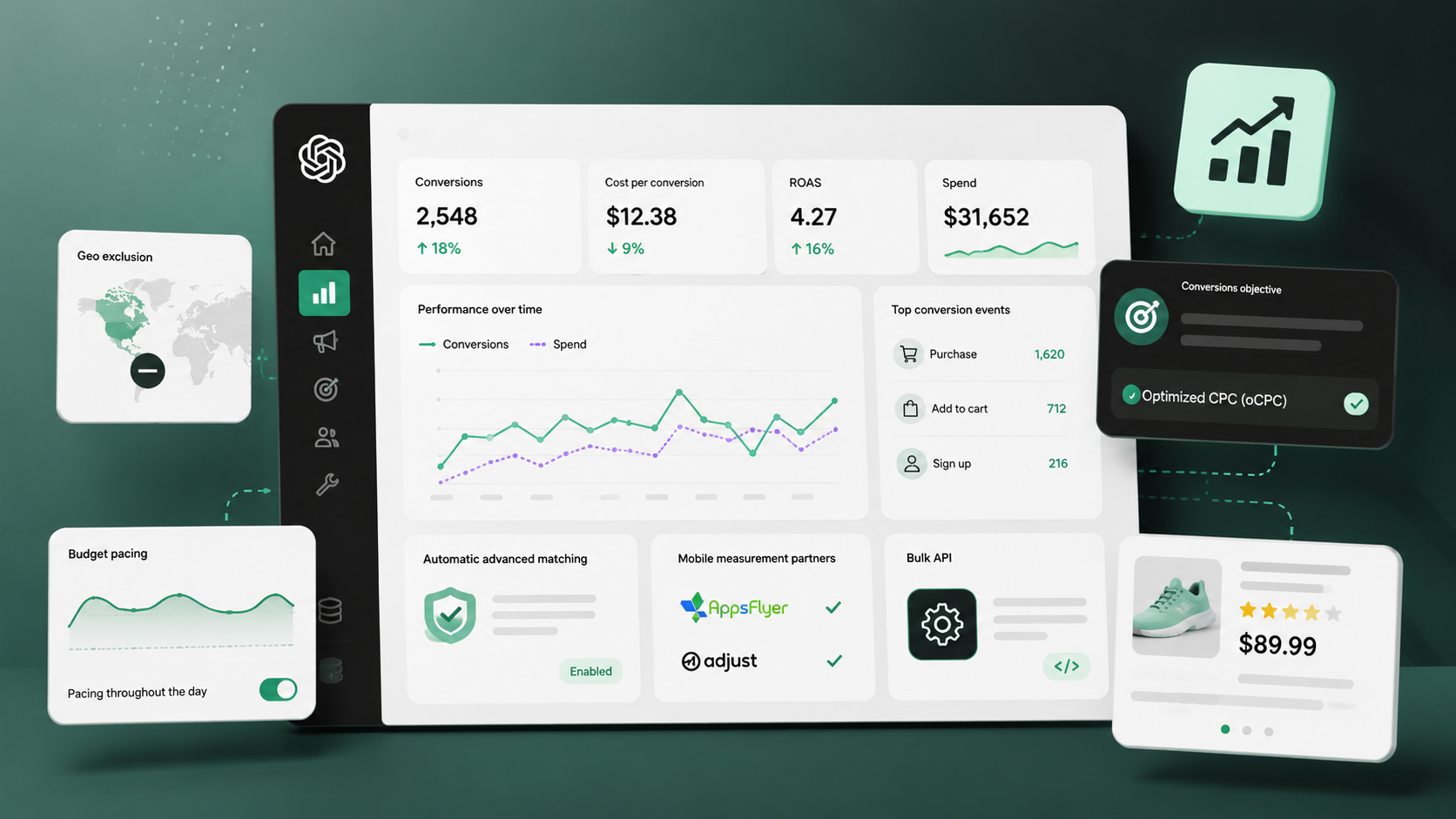
The latest release introduces several key capabilities that directly address long-standing demands from the performance marketing community. Among these are conversion-optimized bidding strategies, which allow advertisers to move beyond mere clicks and optimize directly towards tangible business outcomes like sales, lead generation, or app installs. This shift represents a fundamental change in how advertisers can leverage the platform, aligning ad spend more closely with their core business objectives. Complementing this is the integration of leading mobile measurement partners (MMPs) AppsFlyer and Adjust, making app measurement significantly more practical and accurate for developers and marketers. Further enhancements include granular geo exclusions for precise targeting, improved attribution models for a clearer understanding of the customer journey, and comprehensive bulk API support, which is essential for agencies and large advertisers managing campaigns at scale. Additional features like average daily budgets, advanced matching, and bulk campaign management tools further streamline operations and enhance overall campaign efficacy.
Deep Dive into the New Capabilities
The array of new tools introduced by ChatGPT Ads is not merely incremental; it represents a strategic leap towards becoming a full-fledged performance marketing platform.
- Smarter Bidding with Conversion Optimization: This is arguably the most impactful update. Historically, many emerging ad platforms begin with simpler bidding models focused on impressions or clicks. By introducing conversion-optimized bidding, ChatGPT Ads is empowering advertisers to leverage sophisticated machine learning algorithms to automatically adjust bids in real-time to achieve desired conversion goals. This means the platform will intelligently identify users most likely to convert, maximizing the efficiency of ad spend and directly impacting an advertiser’s bottom line. For instance, an e-commerce brand can optimize for "purchase completion," while a SaaS company might target "demo requests," ensuring that their budget is allocated to actions that drive genuine business value.
- Enhanced Measurement and Mobile Attribution: The direct integrations with AppsFlyer and Adjust are a game-changer for the mobile app ecosystem. These mobile measurement partners are industry standards for tracking app installs, in-app events, user engagement, and lifetime value (LTV). By integrating with these platforms, ChatGPT Ads provides app marketers with the accurate, unbiased, and granular data necessary to evaluate campaign performance, understand user behavior, and make data-driven decisions. This also extends to overall "improved attribution," which likely encompasses more sophisticated models beyond last-click, such as multi-touch attribution, view-through conversions, and cross-device tracking, offering a holistic view of how different touchpoints contribute to a conversion.
- Precision Targeting with Geo Exclusions: While geo-targeting allows advertisers to reach specific locations, geo exclusions provide the necessary precision to avoid specific areas where advertising might be irrelevant or inefficient. For businesses with highly localized strategies, or those looking to prevent ad fatigue in already saturated markets, this feature is invaluable for optimizing budget allocation and improving campaign relevance.
- Streamlined Campaign Management and Automation:
- Bulk API Support: This feature is crucial for large advertisers, agencies, and ad tech partners. It enables programmatic management of campaigns, allowing for the creation, modification, and reporting of ads at scale without manual intervention. This significantly reduces operational overhead and enhances efficiency for managing complex ad portfolios.
- Average Daily Budgets: Moving beyond simple daily caps, average daily budgets allow for more flexible spending, where the platform can spend slightly more on high-opportunity days and less on others, while ensuring the average daily spend remains consistent over a billing cycle. This optimizes budget utilization based on fluctuating demand and user behavior.
- Advanced Matching: This capability improves the accuracy of conversion tracking and audience matching by allowing advertisers to securely send hashed customer data (like email addresses or phone numbers) to the platform. This helps in more accurately attributing conversions and building custom audiences, leading to better targeting and retargeting efforts, akin to features seen in Google’s Enhanced Conversions or Meta’s Conversions API.
The Strategic Rationale: Why This Update Matters
This release from ChatGPT Ads is not about introducing a single flagship feature; rather, it strategically focuses on maturing the platform’s core advertising infrastructure. Many of the additions—such as average daily budgets, advanced matching, and bulk campaign management—mirror capabilities that advertisers already rely on in established platforms like Google Ads and Meta Ads. This deliberate alignment serves a crucial purpose: lowering the barrier to entry for advertisers considering or adopting ChatGPT Ads. By offering familiar tools and functionalities, the platform aims to instill confidence and streamline the onboarding process for marketers accustomed to industry-leading solutions.
For performance marketers, the implications are profound. Conversion-optimized bidding provides a stronger, data-driven mechanism to optimize towards specific business outcomes instead of mere engagement metrics. The AppsFlyer and Adjust integrations make mobile app measurement far more practical and reliable, a critical factor in the app-driven economy. When combined with granular geo exclusions, improved attribution models, and robust bulk API support, ChatGPT Ads is rapidly becoming an increasingly viable and attractive platform for advertisers managing campaigns at scale, seeking diversified channels for growth, and demanding measurable results.
Background: The Emergence of ChatGPT and its Advertising Ambitions
The journey of ChatGPT began with its public release in November 2022 by OpenAI, an event that rapidly captured global attention due to its unprecedented ability to generate human-like text across a myriad of topics. Its explosive growth, reaching 100 million users within two months, underscored the immense potential of generative AI. Initially, OpenAI’s monetization strategies revolved around premium subscriptions (ChatGPT Plus) and API access for developers, allowing businesses to integrate the powerful language model into their own applications.
However, the natural progression for any platform with significant user engagement and data insights is often towards advertising. The sheer volume of interactions and the depth of understanding that an AI like ChatGPT can glean from user queries present a unique opportunity for highly targeted and contextually relevant advertising. While the precise timeline for the conceptualization and development of "ChatGPT Ads" as a dedicated platform isn’t fully public, the current update, indicated by internal resource dates (e.g., July 2026 in the provided image), suggests a sustained and strategic development effort over several years to build a robust advertising ecosystem. This move aligns with a broader industry trend where major tech players, from search engines to social media and e-commerce platforms, leverage their user base and data to create advertising revenue streams. The promise of ChatGPT Ads lies in its potential to harness AI not just for ad delivery, but also for ad creative generation, audience segmentation, and predictive analytics, offering a new paradigm in digital marketing.
A Maturing Ecosystem: Drawing Parallels with Industry Giants
The strategic decision by ChatGPT Ads to introduce features mirroring those of established players like Google Ads and Meta Ads is a clear indicator of its ambition to compete at the highest level. Google Ads, with its vast search and display network, and Meta Ads, dominating social media advertising, have spent decades refining their platforms. They offer sophisticated bidding strategies (e.g., Target CPA, Maximize Conversions), comprehensive measurement tools (Google Analytics, Meta Pixel, Conversion API), and extensive campaign management features (Google Ads Editor, Meta Business Suite).
By adopting similar functionalities, ChatGPT Ads is signaling to advertisers that it understands the industry’s best practices and is committed to providing a comparable, if not superior, experience. This approach not only lowers the learning curve for experienced marketers but also builds credibility. For instance, "advanced matching" on ChatGPT Ads parallels Google’s Enhanced Conversions or Meta’s Conversions API, which are critical for improving conversion tracking accuracy in a privacy-centric world. Similarly, bulk API support is indispensable for agencies and large enterprises that need to automate campaign creation, optimization, and reporting across hundreds or thousands of campaigns. This convergence of features underscores a broader industry trend where performance marketing tools are becoming standardized, pushing platforms to differentiate through their unique audience access, data insights, and AI capabilities.
Industry Reactions and Expert Perspectives
While no specific public statements are provided, one can infer the likely reactions from key stakeholders based on the nature of the update.
A hypothetical ChatGPT Ads spokesperson might articulate the company’s vision: "This comprehensive release underscores our unwavering commitment to providing advertisers with the robust, intelligent tools they need to achieve measurable business outcomes. We are not just building an ad platform; we are building an intelligent advertising ecosystem designed for the future, where AI-powered optimization and precise measurement drive unparalleled efficiency and ROI."
From the perspective of a marketing industry analyst, the move is strategic: "ChatGPT Ads is clearly positioning itself to capture a significant share of the digital ad market by focusing on performance and automation, which are non-negotiable for today’s marketers. Their AI-native approach, combined with familiar features, could offer unique advantages in audience understanding, targeting, and predictive optimization, potentially disrupting traditional ad spend allocations."

A performance marketer or agency director might express cautious optimism: "The integration with major MMPs like AppsFlyer and Adjust is a significant validation for app marketers, making ChatGPT Ads a serious contender for our mobile ad spend. Combined with conversion-optimized bidding, it addresses critical needs. However, the true test will be its audience scale, unique targeting capabilities derived from AI, and how transparent the platform is with its data and algorithms compared to the incumbents."
An app developer would likely welcome the news: "Having AppsFlyer and Adjust integration from day one or early on is fantastic. It means we don’t have to rebuild our measurement infrastructure. This reduces friction and makes experimenting with ChatGPT Ads a much more viable option for driving app installs and engagement."
The Competitive Landscape and Broader Market Implications
The digital advertising market, estimated to be well over $600 billion globally and projected to grow substantially, is dominated by a duopoly: Google and Meta. However, other players like Amazon, TikTok, and Apple are increasingly carving out significant shares. ChatGPT Ads’ entry and rapid maturation signal increased competition, particularly in the performance marketing segment.
- For Advertisers: This update offers a compelling new channel for diversification. Relying too heavily on one or two platforms carries risks. ChatGPT Ads, with its unique AI-driven insights, could unlock new audience segments or provide more efficient ways to reach existing ones. The focus on ROI and automation means advertisers can potentially achieve better results with less manual effort.
- For the Ad Tech Industry: The push by ChatGPT Ads could accelerate innovation across the board. Established players might feel pressure to further enhance their AI capabilities, attribution models, and automation tools. This could lead to a healthier, more competitive market, benefiting advertisers in the long run.
- For ChatGPT/OpenAI: The ad platform represents a significant new revenue stream, diversifying OpenAI’s business model beyond subscriptions and API access. It strengthens their ecosystem, creating a powerful loop where user interactions with ChatGPT inform ad targeting and optimization, while ad revenue funds further AI development. This also positions OpenAI as a key player in the commercial application of AI, beyond just research and development.
Challenges and Future Outlook
Despite the promising advancements, ChatGPT Ads faces several challenges typical of emerging ad platforms:
- Data Privacy and Trust: As an AI company handling vast amounts of user data, navigating stringent privacy regulations (like GDPR, CCPA) and building user trust will be paramount. Transparency in data handling and ad targeting will be crucial.
- Audience Scale and Reach: While ChatGPT has a massive user base, its ad inventory and reach across various placements (e.g., within the ChatGPT interface, partner networks, or potentially future AI-powered applications) will need to expand significantly to compete directly with the sheer scale of Google’s network or Meta’s social reach.
- Differentiation: While AI is a core differentiator, the specific applications of AI in ad creative generation, dynamic content optimization, and hyper-personalization will need to evolve beyond what’s currently available to truly stand out.
- Building an Ecosystem: A robust ad platform requires more than just tools; it needs a thriving ecosystem of third-party integrations, agencies, and measurement partners, which takes time to cultivate.
Looking ahead, the future of ChatGPT Ads is likely to involve deeper integration of generative AI into every facet of advertising. One can anticipate features like AI-generated ad copy and visuals, dynamic creative optimization powered by real-time user feedback, and conversational ads where users can interact with AI to learn more about products. Furthermore, its potential to integrate with other OpenAI technologies, like DALL-E for image generation or future video models, could offer advertisers unprecedented creative flexibility and efficiency.
In conclusion, the latest comprehensive update to ChatGPT Ads marks a pivotal moment, transforming it from an emerging platform into a serious contender designed for the demands of performance marketers. By focusing on critical capabilities like conversion optimization, enhanced measurement, automation, and campaign scalability, ChatGPT Ads is laying a solid foundation for future growth. As the digital advertising landscape continues to evolve, driven by AI and data, ChatGPT Ads is strategically positioning itself to be at the forefront, offering a compelling new avenue for businesses to achieve their marketing objectives and secure a competitive edge.