The Evolution of CSS into Event-Driven Styling and the Rise of the Animation Triggers Specification

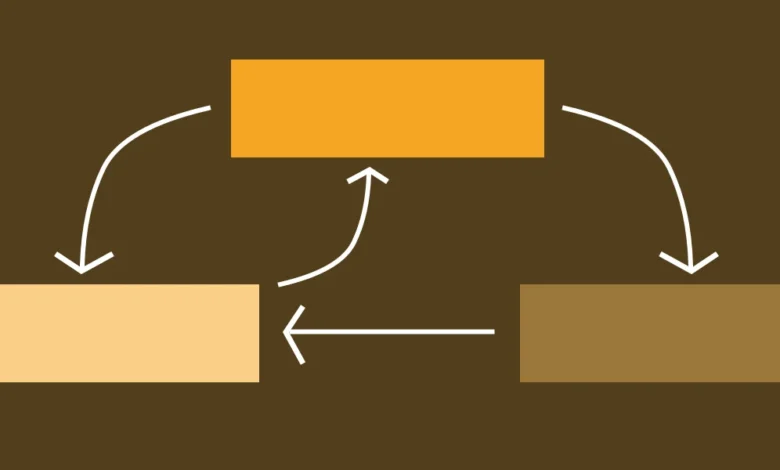
The landscape of modern web development is witnessing a significant paradigm shift as Cascading Style Sheets (CSS) increasingly adopts functionalities historically reserved for JavaScript. Traditionally viewed as a declarative language for visual presentation, CSS is evolving into a sophisticated state management tool through the expansion of pseudo-classes and the introduction of new specifications like Animation Triggers. This transition reflects a broader industry movement toward "low-code" styling solutions that prioritize performance, accessibility, and the reduction of main-thread JavaScript execution. By integrating logic that mirrors event listeners, CSS is enabling developers to respond to user interactions and browser events with native browser optimizations, signaling a new era of event-driven styling.
The Shift from Procedural Scripting to Declarative State Management
For decades, the division of labor in web development was clear: HTML provided the structure, CSS handled the presentation, and JavaScript managed the behavior. However, as user interfaces became more dynamic, the reliance on JavaScript to toggle classes and manage UI states led to increased complexity and potential performance bottlenecks. The World Wide Web Consortium (W3C) has responded by introducing a suite of pseudo-classes that allow CSS to "listen" to the state of the Document Object Model (DOM) without requiring external scripts.
While pseudo-classes technically represent states rather than discrete events, their practical application often mimics JavaScript event listeners. For instance, the :hover pseudo-class acts as a bridge between the pointerenter and pointerleave events, while :active corresponds to the duration between pointerdown and pointerup. By handling these interactions natively, browsers can optimize rendering cycles and provide a smoother user experience, particularly on resource-constrained mobile devices.
Chronology of CSS Interaction Capabilities
The journey toward event-like CSS has been gradual, marked by key milestones in the CSS specification history. In the early 2000s, CSS Level 2 introduced basic interaction pseudo-classes such as :hover, :active, and :focus. These were primarily used for simple visual feedback on links and buttons. The mid-2010s saw the rise of CSS Transitions and Animations, which allowed for visual changes over time, but these still required state changes—often triggered by JavaScript—to initiate.
The 2020s have ushered in the most aggressive expansion of CSS capabilities. The introduction of the :has() relational selector, often called the "parent selector," revolutionized how developers handle conditional logic. Following this, the Selectors Level 4 specification introduced advanced form validation and user-interaction pseudo-classes. Most recently, the Animation Triggers Level 1 draft has proposed a direct method for CSS to respond to specific browser events, such as clicks or element "interest," moving CSS closer to a true event-driven model.
Analytical Breakdown of Interaction-Based Pseudo-Classes
Modern CSS utilizes a variety of pseudo-classes to manage complex UI logic. These can be categorized by their functional proximity to traditional JavaScript event listeners.
Navigation and Focus Management
The :focus-visible pseudo-class represents a significant advancement in both CSS logic and web accessibility. Unlike the standard :focus, which triggers whenever an element receives focus, :focus-visible utilizes browser-level heuristics to determine if a focus indicator is necessary. This logic mimics a complex JavaScript conditional that checks if the user is navigating via keyboard or if the element is a form control. Similarly, :focus-within allows a parent element to respond to the focus state of its children, a task that previously required event delegation or bubbling logic in JavaScript.
Form Validation and User Intent
The evolution of form-related pseudo-classes has significantly reduced the need for client-side validation scripts. The :valid and :invalid selectors provide real-time feedback, but the introduction of :user-valid and :user-invalid has added a layer of "intent" logic. These pseudo-classes wait for a user to interact with a field and "blur" (unfocus) it before triggering, preventing the "aggressive validation" patterns that often frustrate users. Furthermore, the :autofill pseudo-class addresses a long-standing challenge in web development: styling elements that have been automatically populated by the browser’s password manager or address form, a state that is notoriously difficult to detect via standard JavaScript events.
Media and Interactive Element States
The Interop 2026 initiative, a collaborative effort between Google, Apple, Microsoft, and Mozilla, has prioritized the standardization of media element pseudo-classes. New selectors such as :playing, :paused, :muted, and :buffering allow developers to style custom video and audio interfaces based on the internal state of the <video> or <audio> tag. In the past, this required constant monitoring of the timeupdate or volumechange events. The inclusion of these selectors in the Interop roadmap suggests a near-future where complex media dashboards can be styled entirely through CSS.
The Emergence of the Animation Triggers Specification
The most transformative development in this field is the Animation Triggers Level 1 specification. Currently in the draft stage, this proposal introduces a syntax that allows CSS to explicitly define event listeners and link them to specific animations. This moves beyond state-tracking and into the territory of active event handling.
Syntax and Implementation
The proposed specification introduces several key properties:
event-trigger-name: Defines a custom identifier for an event sequence.event-trigger-source: Specifies the type of event to listen for, such asclick,scroll, orinterest.animation-trigger: Determines how an animation should react when the trigger is activated.
This system allows for "stateless" triggers, where an event like a click fires an animation once, and "stateful" triggers, where an animation can play forward upon an event and backward upon its conclusion. For example, the interest keyword is expected to integrate with the upcoming Interest Invoker API, allowing elements to react to hover or focus in a more nuanced way than the current :hover pseudo-class allows.
Cross-Element Interaction
One of the most powerful aspects of event-trigger is the ability to decouple the trigger source from the target of the animation. A button can be defined as the source of an event, while a completely different <div> or container acts as the recipient. This replicates the functionality of a JavaScript event listener that modifies the class of a distant DOM node, but does so within the CSSOM (CSS Object Model), potentially offering better performance and cleaner code separation.
Supporting Data and Performance Implications
The push for more logic within CSS is driven by performance data. According to the "State of CSS" 2023 survey, the :has() selector reached a 92% awareness level among developers within a year of its widespread browser adoption, indicating a high demand for advanced CSS logic.
From a performance perspective, CSS-based interactions are generally superior to JavaScript for UI states. JavaScript execution occurs on the main thread, which also handles layout, paint, and user input. If the main thread is busy, UI interactions can feel sluggish or "janky." In contrast, many CSS animations and transitions can be offloaded to the browser’s compositor thread, ensuring high frame rates even when the main thread is occupied. By moving state management to CSS, developers can reserve JavaScript for more intensive data processing and application logic.
Official Responses and Industry Perspectives
Browser vendors have expressed a cautious but optimistic view toward the expansion of CSS logic. Representatives from the Chrome team have noted that while CSS is becoming more powerful, the goal is not to replace JavaScript but to provide more efficient alternatives for common UI patterns. The "Interop" project has been instrumental in ensuring that these new features are not just implemented, but implemented consistently across Chromium, WebKit, and Gecko engines.
However, some architectural purists have raised concerns about "CSS bloat." As CSS takes on more responsibilities, the complexity of stylesheets increases. Critics argue that debuggers and developer tools will need to evolve to help programmers trace logic that is now spread across both scripts and stylesheets. Despite these concerns, the consensus among the W3C working groups is that the benefits of native browser implementations of these features outweigh the risks of increased CSS complexity.
Broader Impact and Future Outlook
The evolution of CSS into an event-responsive language has profound implications for the future of web development. It lowers the barrier to entry for designers who may be comfortable with CSS but less so with JavaScript, allowing them to create highly interactive experiences. It also promotes a more accessible web, as many of these CSS pseudo-classes are built with accessibility heuristics in mind.
As the Animation Triggers specification moves toward standardization, the industry can expect a reduction in the "JavaScript tax"—the performance cost of downloading and executing scripts for simple UI interactions. The future of the web appears to be one where the "behavior" layer is increasingly shared between JavaScript and CSS, with CSS handling the "how it looks when it changes" and JavaScript focusing on the "what data is being changed." This synergy promises to create a faster, more resilient, and more maintainable web ecosystem for developers and users alike.