The Essential Guide to Mastering Social Media Analytics Tools for Unprecedented Growth

The landscape of social media marketing is in a constant state of evolution, demanding a strategic approach driven by data. For professionals and businesses alike, understanding how content performs across various platforms is no longer a luxury but a necessity. This article delves into the critical role of social media analytics, exploring how to leverage these powerful tools to unlock growth, refine strategies, and achieve tangible results. It examines the top analytics platforms available, offering insights into their unique features, pricing, and ideal use cases, thereby empowering users to make informed decisions in a crowded digital space.
Understanding the Power of Social Media Analytics

At its core, social media analytics refers to the metrics that illuminate how content performs across social platforms. These metrics encompass a broad spectrum, including reach, impressions, engagement rate, click-through rate, and follower growth. Far beyond simply counting likes, tracking these metrics provides a deep understanding of why certain content resonates with an audience and informs the creation of future successful posts. This data-driven approach answers crucial questions such as:
- Which content formats (e.g., videos, carousels, text-based posts) yield the highest engagement?
- What posting times and days result in the greatest visibility and interaction?
- Which specific posts or campaigns drove the most website traffic or conversions?
- How is audience sentiment evolving around key topics or brand mentions?
- What is the return on investment for paid social media advertising efforts?
These analytics are instrumental in measuring performance and benchmarking it against established social media goals. The process is often referred to as social media data analysis, where the collected numbers (analytics) are scrutinized to identify patterns and inform strategic decisions. While major social media networks offer native insights within their platforms, relying solely on these can present significant limitations. For instance, LinkedIn’s native analytics may not display timestamps on past posts, making it challenging to pinpoint optimal posting times. Furthermore, managing multiple platforms necessitates manually compiling data from disparate dashboards, a time-consuming and often incomplete process. This is precisely where third-party social media analytics tools become invaluable.
Analytics vs. Reporting: A Crucial Distinction
While often used interchangeably, "analytics" and "reporting" represent distinct yet interconnected stages of the data utilization process. Analytics involves the collection and measurement of data, answering the "what happened?" and "why did it happen?" questions. Reporting, on the other hand, takes these analyzed findings and presents them in a clear, digestible, and shareable format for stakeholders, clients, or internal teams. The most effective social media analytics tools seamlessly integrate both functions, providing raw data through dashboards and organizing it into polished reports.
The choice between a dedicated social media analytics tool and a comprehensive social media management platform often hinges on specific needs. For individual creators or small marketing teams managing their entire social media strategy, an all-in-one management tool with integrated analytics is typically the most efficient. Conversely, established agencies or businesses requiring in-depth competitive analysis or specialized reporting features may benefit from a standalone analytics tool.
Navigating the Analytics Landscape: Key Tool Categories
Social media analytics tools can be broadly categorized based on their primary focus and the depth of insights they provide.
- Descriptive Analytics: These tools focus on what has happened, presenting raw metrics like impressions, reach, likes, comments, and shares. This is the foundational level of analysis, offering a clear overview of content performance.
- Diagnostic Analytics: Moving beyond descriptive metrics, these tools delve into why certain outcomes occurred. They analyze factors like content type, posting times, and audience demographics to explain performance trends.
- Predictive Analytics: These advanced tools leverage historical data and machine learning to forecast future trends and potential outcomes. They can identify emerging patterns and anticipate audience behavior, offering a forward-looking perspective.
- Prescriptive Analytics: The most sophisticated category, prescriptive analytics not only predict outcomes but also recommend specific actions to achieve desired results. These often involve AI-powered recommendations for content optimization or strategic adjustments.
Most social media analytics tools primarily focus on descriptive and diagnostic analytics, catering to the everyday needs of creators and marketers. However, premium solutions may offer predictive and prescriptive capabilities, often at a higher price point.
The Top Social Media Analytics Tools in 2026
After rigorous testing and evaluation, a curated list of the most effective social media analytics tools has been compiled, categorized by their unique strengths and best use cases.
1. Buffer
Best social media analytics tool for creators, growing teams, and agencies
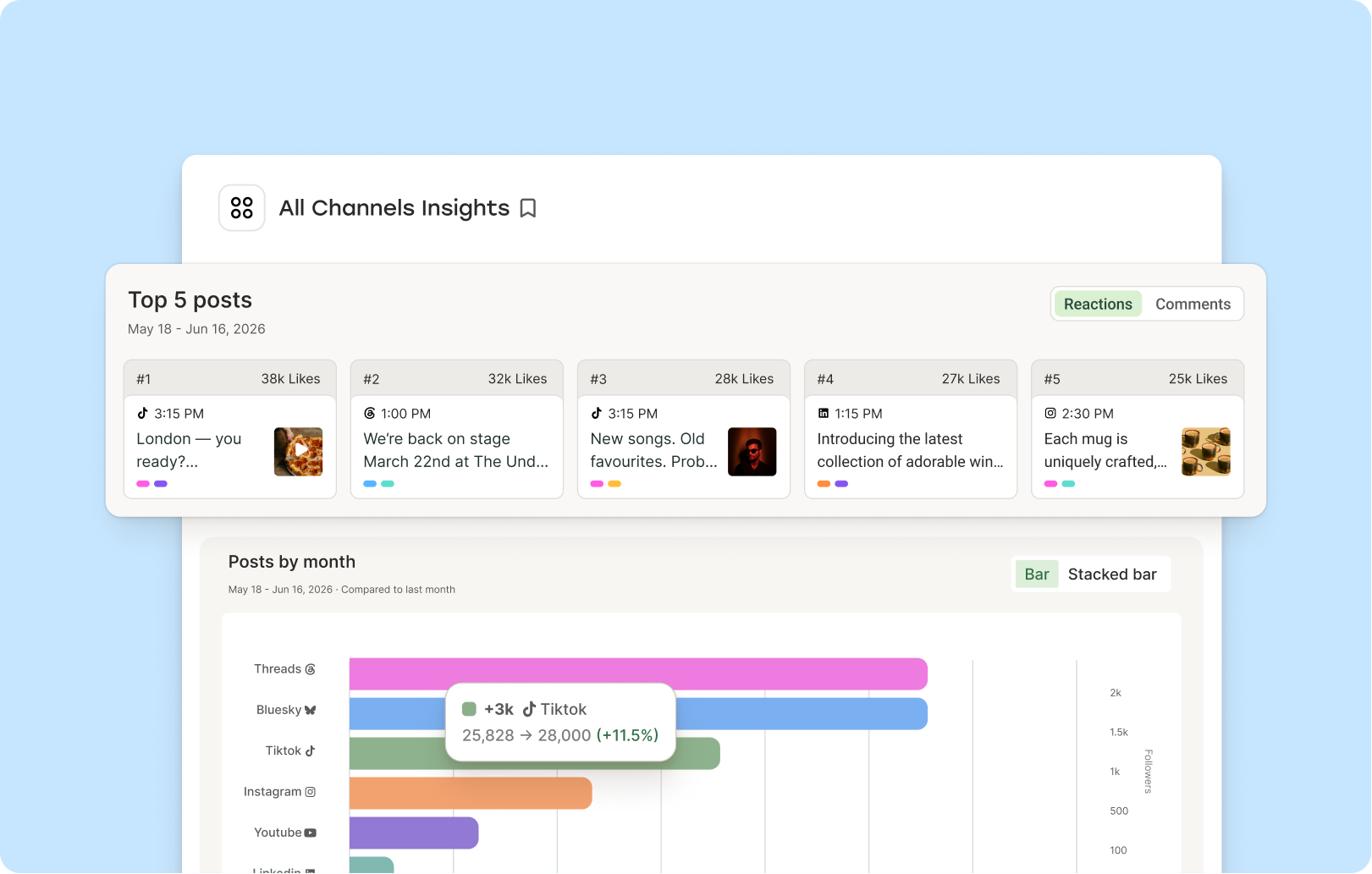
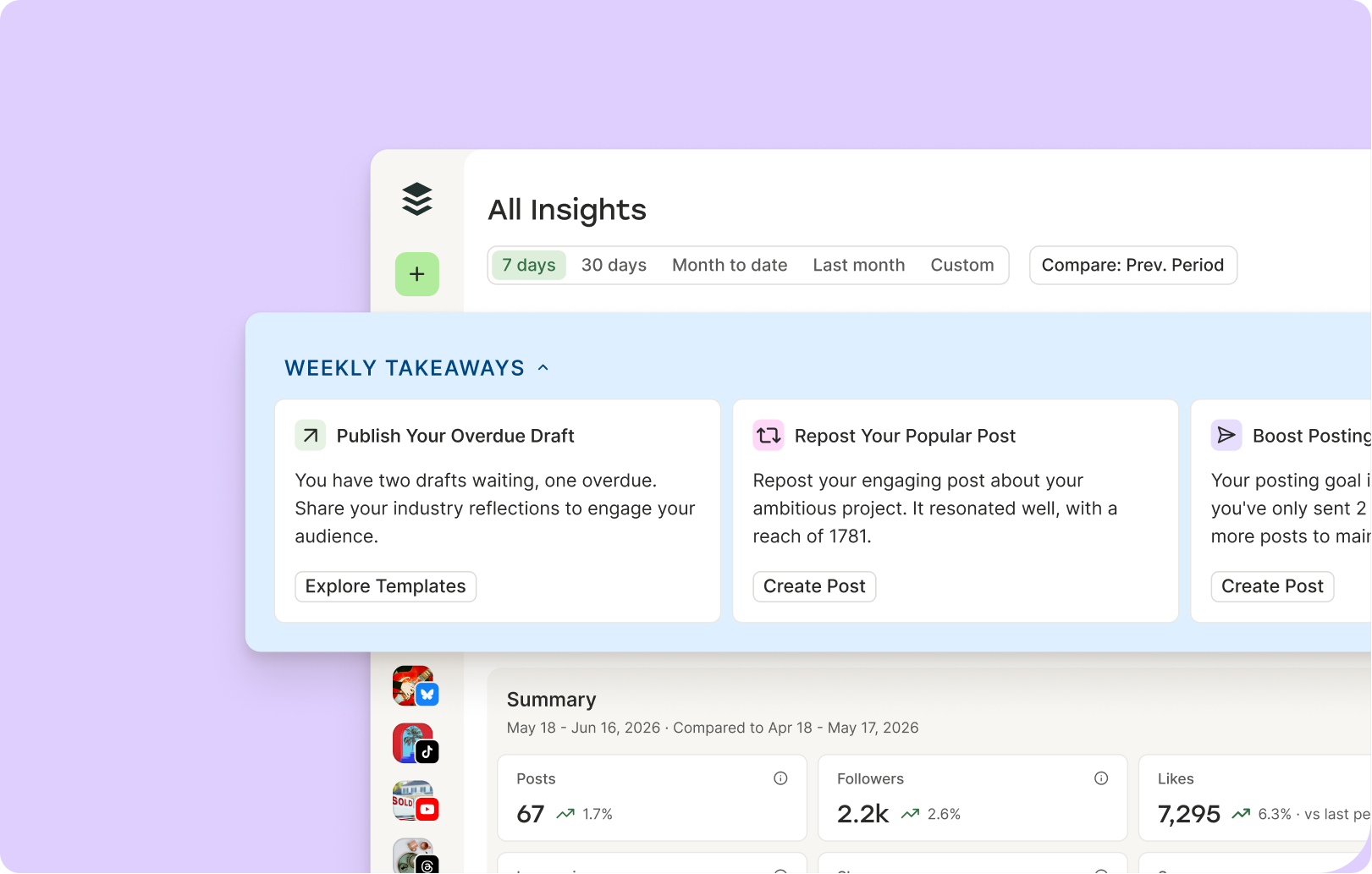
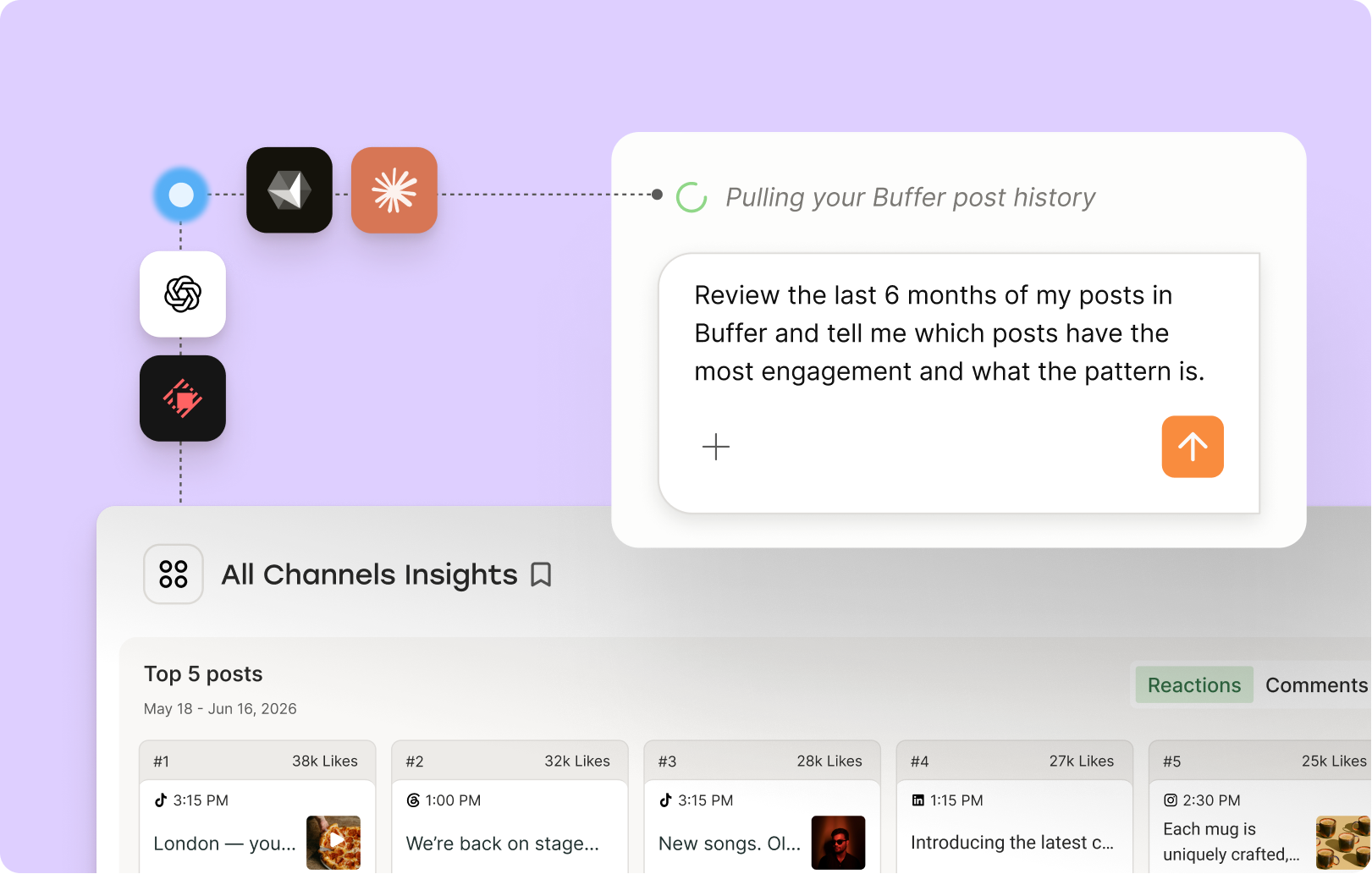
Buffer’s "Insights" dashboard stands out for its user-friendly interface and ability to surface actionable metrics without overwhelming users with raw data. It provides a clear overview of performance across multiple channels, helping users understand what’s working and what needs adjustment. A key feature is the AI-powered "Takeaways" section, which offers personalized observations, identifies high-performing older posts for resharing, and even suggests content ideas. This intelligent analysis bridges the gap between data visualization and strategic decision-making.
- Pricing: Offers a free plan for up to three channels, with historical data limited to the last 30 days. Paid plans begin at $6 per month, unlocking historical data, custom date ranges, and export capabilities.
- Supported platforms: Bluesky, Facebook, Instagram, LinkedIn, Mastodon, Pinterest, Threads, TikTok, X, YouTube.
2. Rival IQ
Best social media analytics tool for large agencies
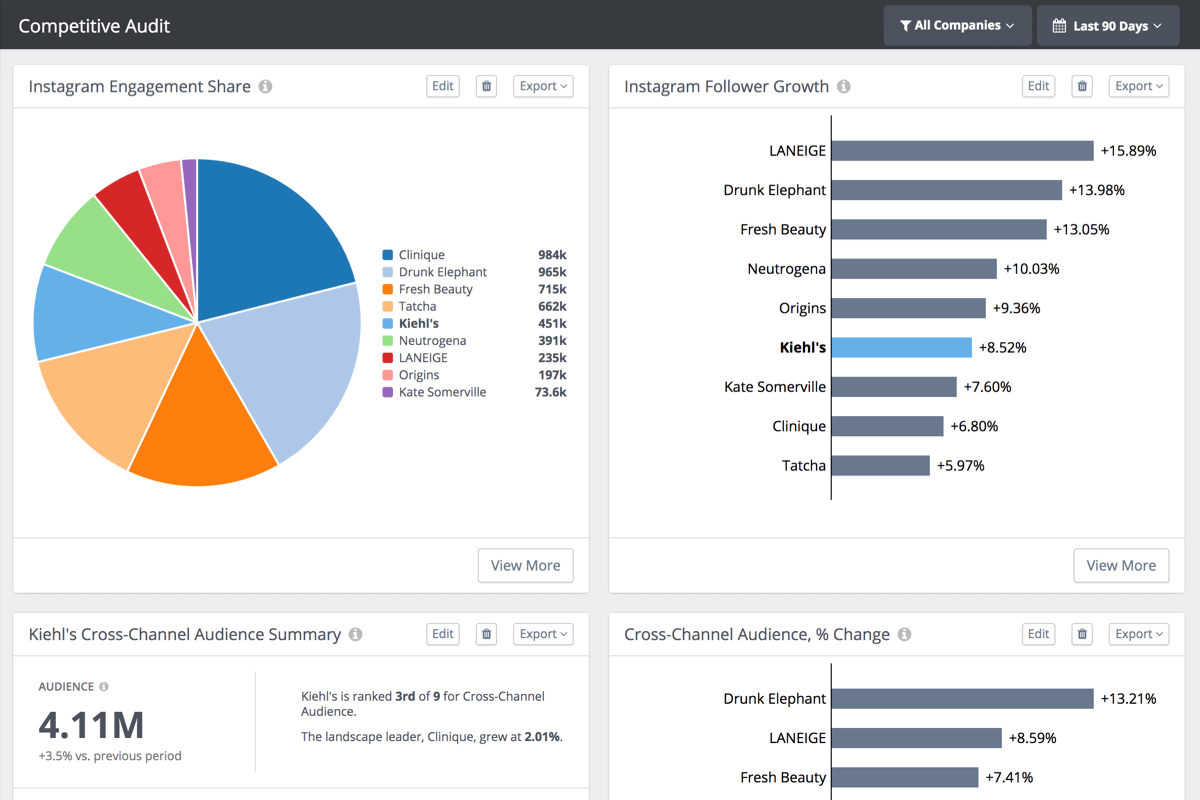
Rival IQ is a powerhouse for competitive benchmarking and in-depth social media analysis, making it an ideal choice for large agencies. It integrates robust analytics with competitor analysis and social listening features, providing a holistic view of market positioning. Its ability to identify boosted competitor posts, compare brand positioning attributes, and benchmark performance within specific niches offers a significant strategic advantage.
- Pricing: Plans start at $239 per month. A 14-day free trial is available.
- Supported platforms: Facebook, Instagram, LinkedIn, TikTok, X, YouTube.
3. Keyhole
Best social media analytics tool for market research
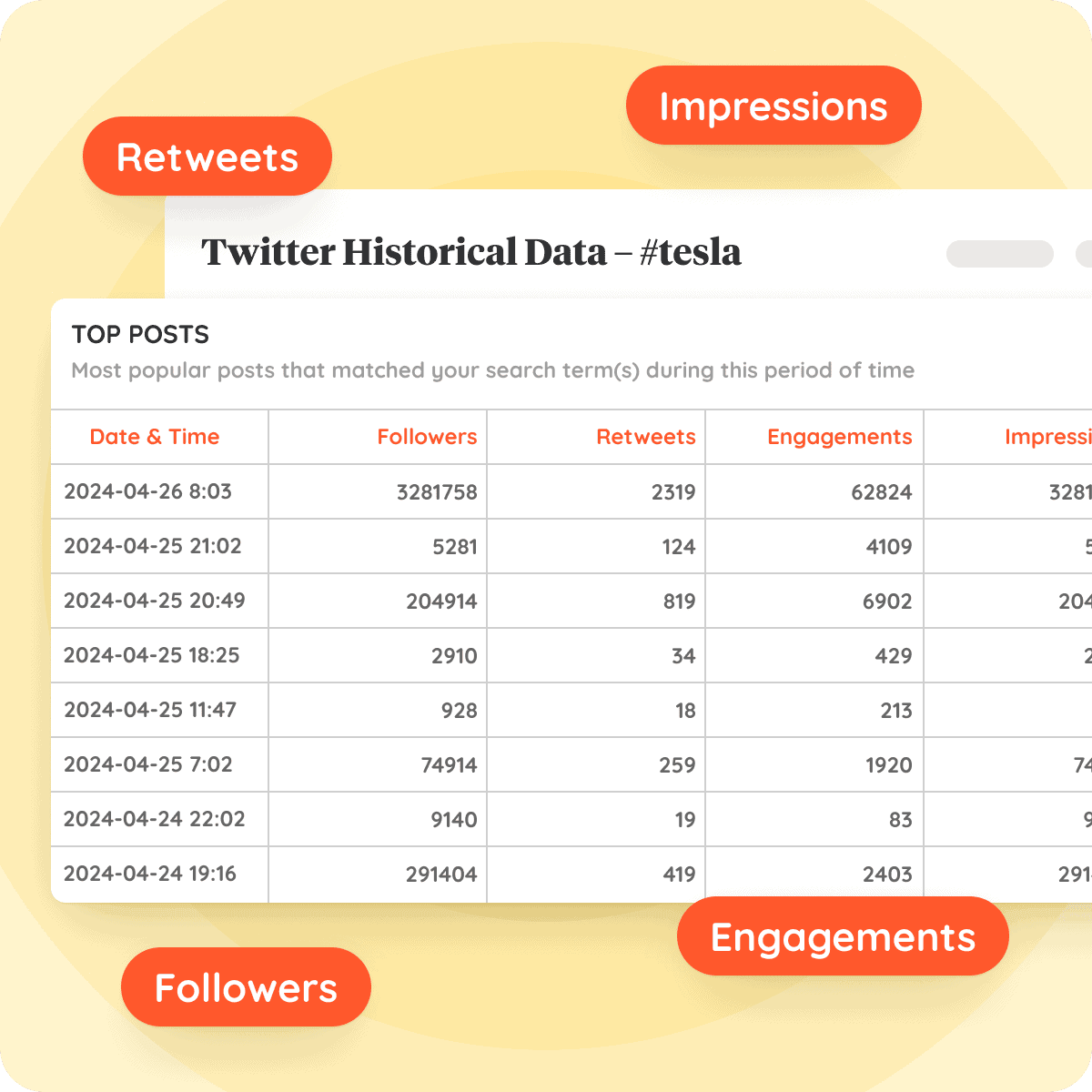
Keyhole excels in providing historical insights and conducting market research, particularly for understanding the evolution of conversations around specific topics over extended periods. Its strength lies in its long-range data analysis, offering insights up to a decade old, with a particular focus on X (formerly Twitter). The platform’s machine learning system can identify emerging trends and track audience sentiment shifts, proving invaluable for product development and service refinement.
- Pricing: Pricing is not publicly available and requires contacting sales.
- Supported platforms: Facebook, Instagram, LinkedIn, TikTok, X, YouTube.
4. Social Status
Best social media analytics tool for small businesses running ads and influencer partnerships
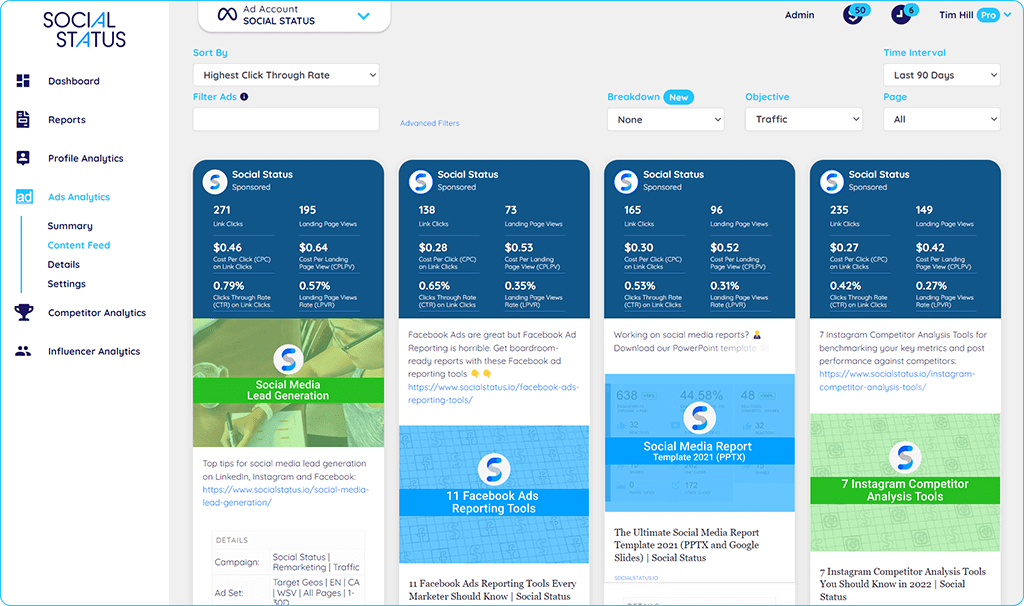
Social Status is a strong contender for small businesses looking to measure performance across both organic and paid social strategies. It provides essential KPIs and offers specialized features for ad performance tracking, influencer campaign management, and user-generated content analysis. Its unified dashboard simplifies the collation of insights for businesses juggling multiple marketing activities.
- Pricing: A free plan is available. Paid plans for small businesses start at $9 per month, with other users’ plans beginning at $99 per month.
- Supported platforms: Facebook, Instagram, LinkedIn, TikTok, X, YouTube.
5. Siftsy
Best social media analytics tool for analyzing your comments
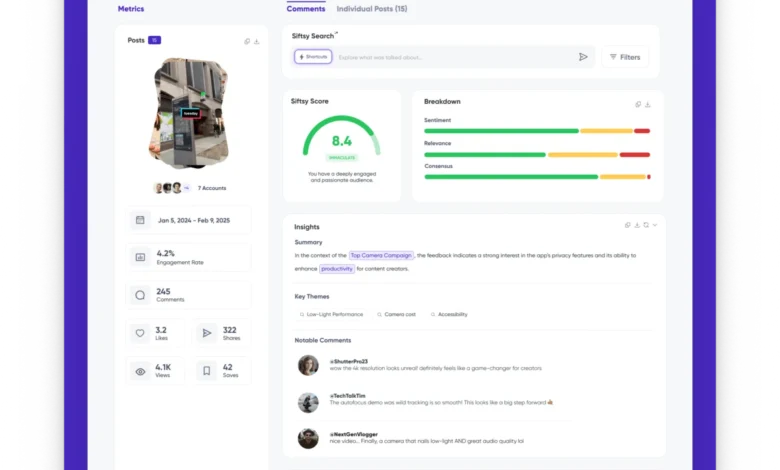
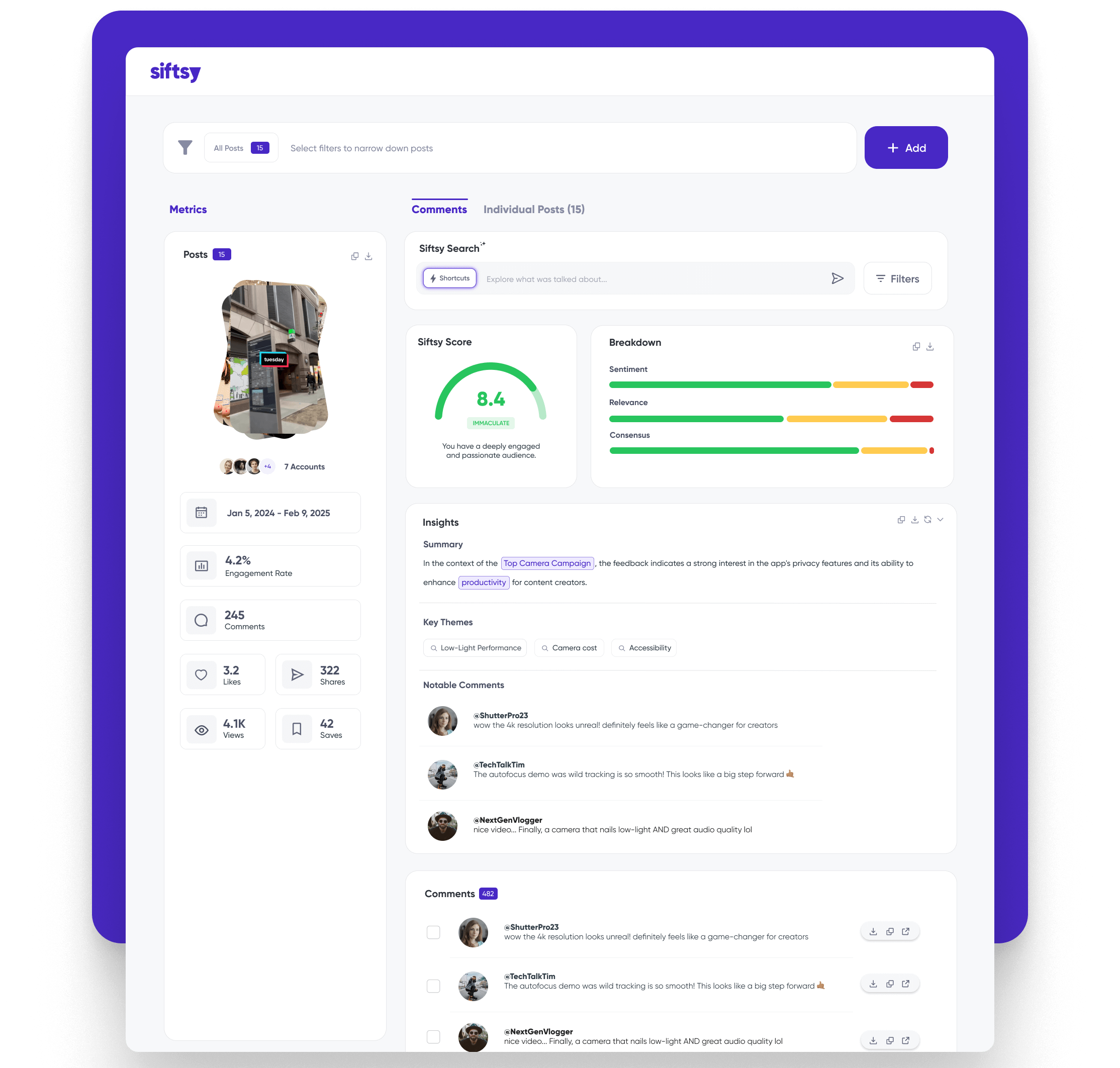
Siftsy specializes in extracting qualitative insights from comments, offering a unique perspective on audience sentiment and feedback. By leveraging AI, it analyzes comments across multiple channels, identifying key takeaways and valuable conversation threads. This tool is particularly useful for understanding the "why" behind engagement metrics and gaining a deeper understanding of customer perceptions.
- Pricing: Pricing is not publicly available and requires contacting sales.
- Supported platforms: Instagram, LinkedIn, TikTok, X, YouTube.
6. Vista Social
Best social media analytics tool for tracking reviews and social metrics
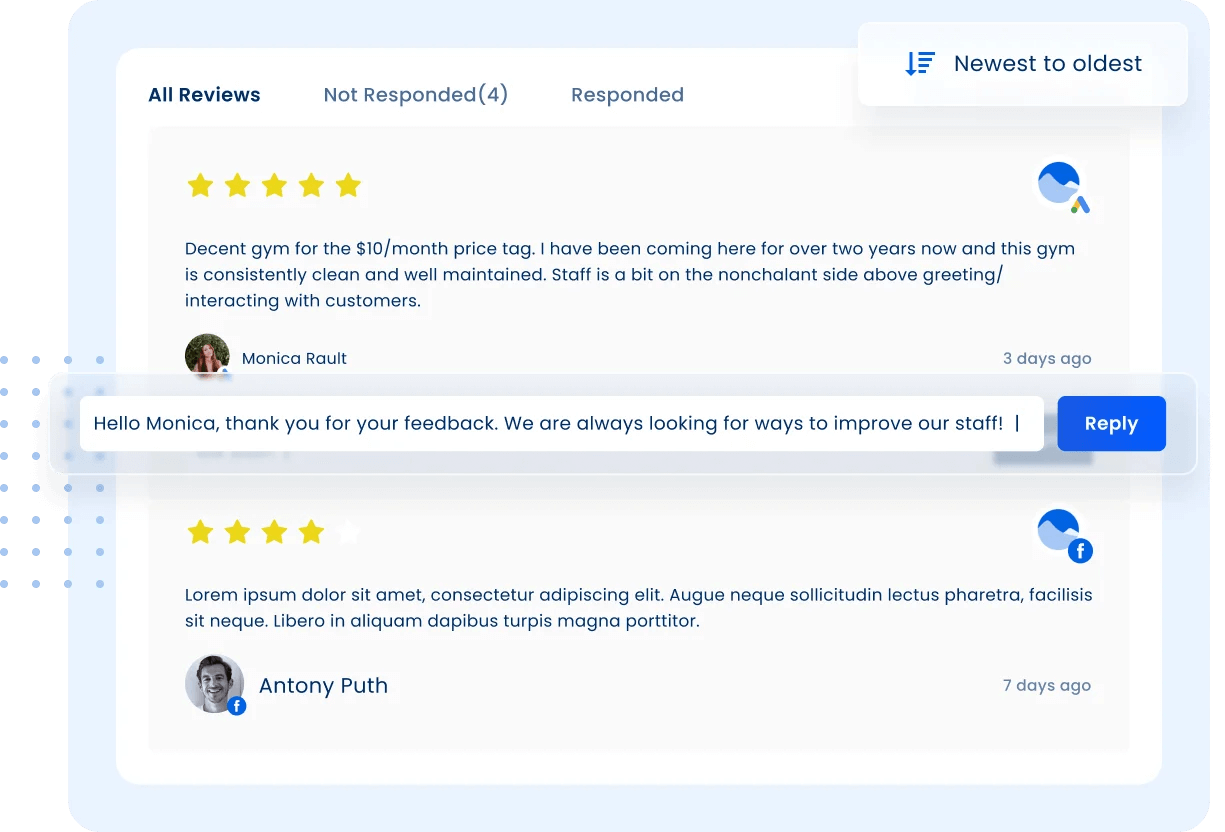
Vista Social offers a comprehensive suite of tools that extend beyond analytics to include post scheduling, comment management, and social listening. Its standout feature is review management, aggregating feedback from various platforms into a single dashboard for efficient monitoring and response. This integrated approach helps businesses manage their online reputation effectively.
- Pricing: Plans start at $79 per month, with a 14-day free trial available for each plan.
- Supported platforms: A wide array of platforms including Bluesky, Facebook, Google Business, Instagram, LinkedIn, Pinterest, Reddit, Threads, TikTok, X, Yelp, YouTube, and more.
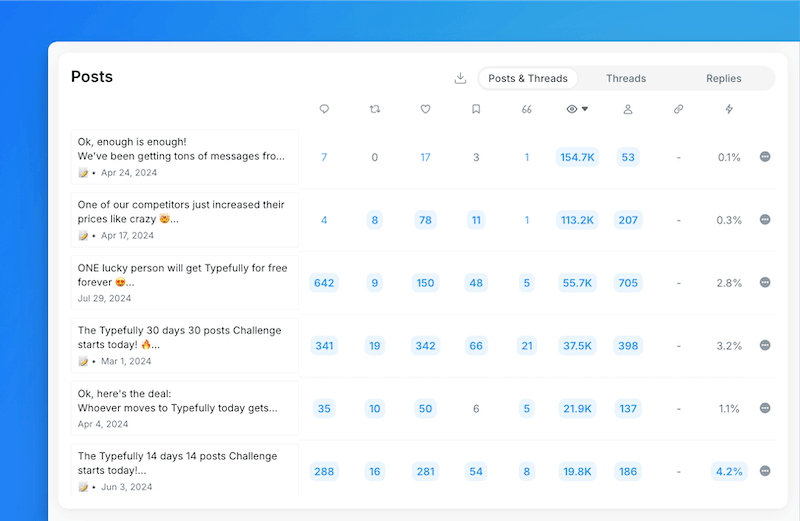
7. Typefully
Best social media analytics tool if you’re only focused on X (formerly Twitter)
Typefully distinguishes itself with its specialized focus on X (formerly Twitter). While supporting other platforms, it offers a superior user experience for X, including features for writing engaging threads and analyzing X-specific metrics like "profile conversion rate." This metric is crucial for understanding how effectively profile visitors are converted into followers.
- Pricing: A free plan allows for 15 posts per month. Paid plans start at $16 per month, with compulsory yearly billing.
- Supported platforms: Bluesky, LinkedIn, Mastodon, Threads, X.
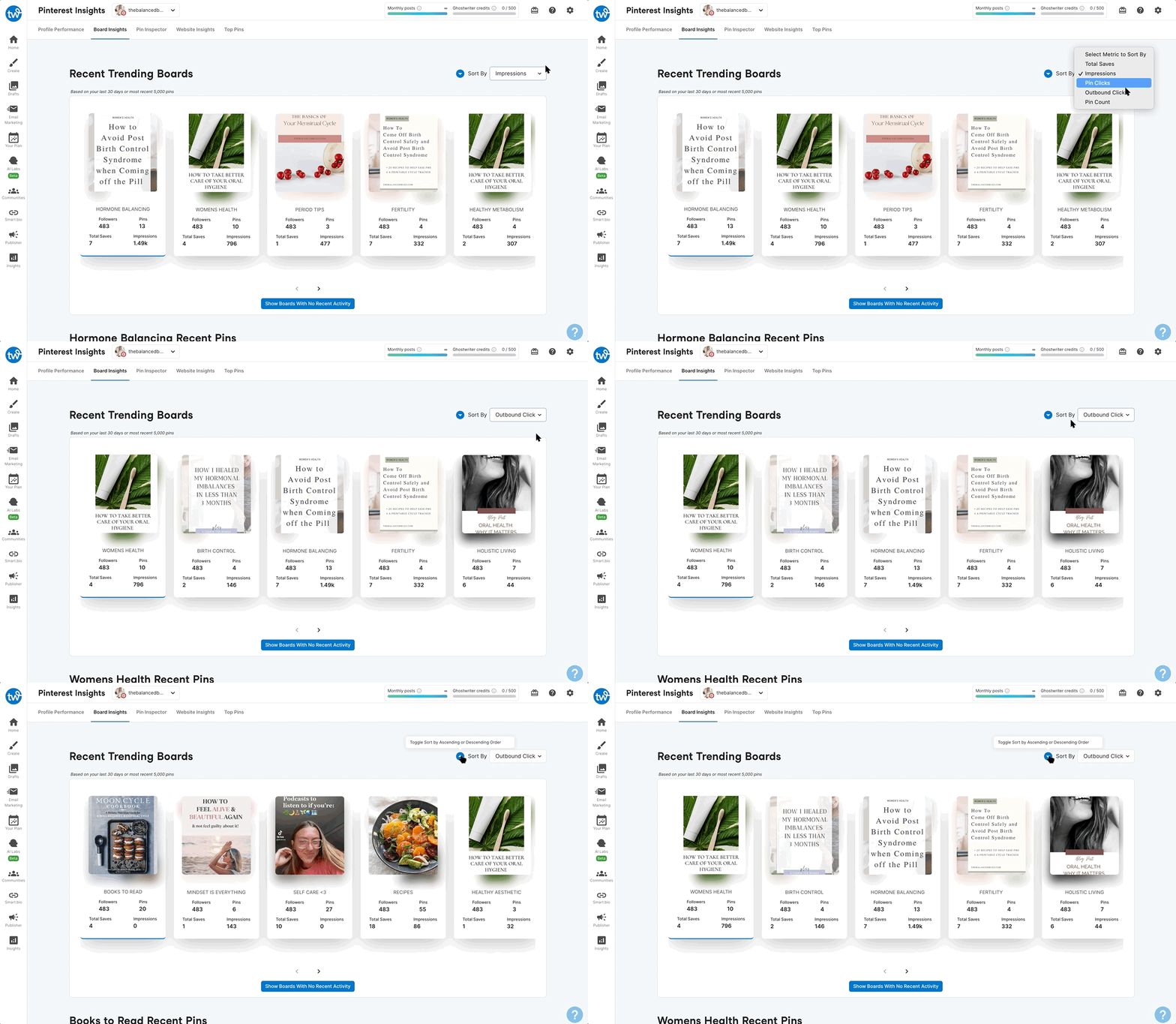
8. Tailwind
Best social media analytics tool for businesses relying on Pinterest traffic
Tailwind is an indispensable tool for businesses that leverage Pinterest for driving website traffic. Its features are specifically designed to complement Pinterest’s unique functionality as both a social platform and a search engine. The integration with Google Analytics is a significant advantage, enabling users to identify which pins drive the most traffic and replicate successful strategies.
- Pricing: A free plan offers five posts per month. Paid plans begin at $29.99 per month.
- Supported platforms: Facebook, Instagram, Pinterest.
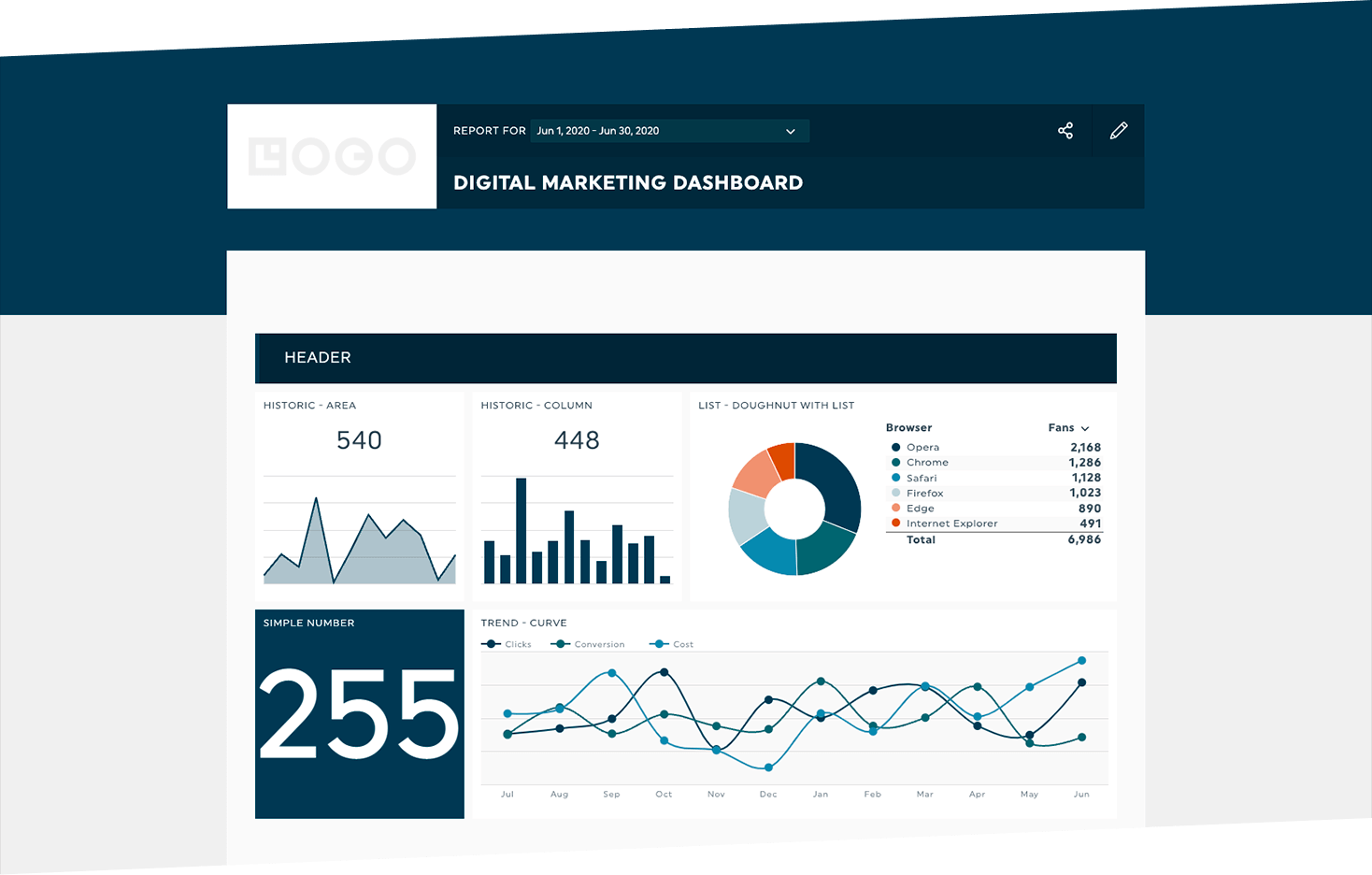
9. DashThis
Best social media analytics tool for an all-in-one marketing dashboard
DashThis functions as a comprehensive marketing dashboard, excelling at integrating social media data into a broader marketing context. It allows for the combination of social metrics with data from Google Analytics, ad performance, and other marketing channels into a single, unified report. This is particularly beneficial for demonstrating social media’s ROI to stakeholders who prefer consolidated overviews.
- Pricing: Plans start at $54 per month, with a 15-day free trial.
- Supported platforms: Facebook, Instagram, LinkedIn, Pinterest, TikTok, YouTube.
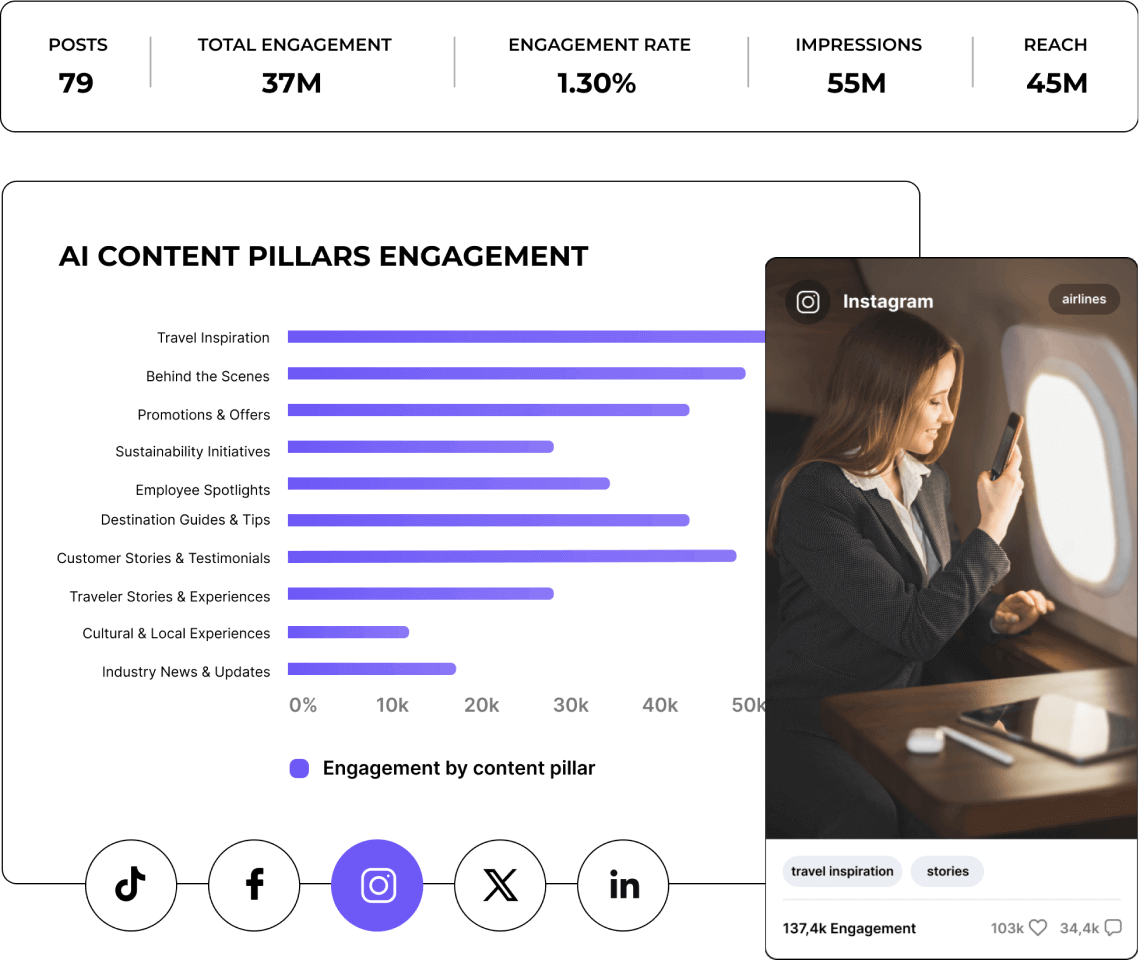
10. Socialinsider
Best social media analytics tool for AI-driven content pillar insights
Socialinsider provides advanced AI-driven insights, particularly for analyzing content pillars and conducting competitor analysis. Its ability to tag and group posts allows for collective performance monitoring of campaigns and content strategies. While powerful, its advanced features are primarily available on higher-tier plans, making it a more premium option.
- Pricing: Plans start at $99 per month, with a 14-day free trial.
- Supported platforms: Facebook, Instagram, LinkedIn, TikTok, X, YouTube.
11. Talkwalker
Best social media analytics tool for in-depth audience insights
Talkwalker, now part of Hootsuite, excels in providing deep audience insights by analyzing data from customer calls, support tickets, and online communities. Its audience segmentation features allow for slicing data by demographics, offering a granular understanding of different audience segments’ interests. The AI assistant, Yeti, further enhances this by providing quick access to relevant insights.
- Pricing: Pricing is not publicly available. The acquisition by Hootsuite means access to many features is tied to higher-tier Hootsuite plans, which can be substantial.
- Supported platforms: Facebook, Instagram, YouTube, Pinterest, X, and more.
Implementing a Data-Driven Social Media Strategy
The mere act of collecting data is only the first step. The true value lies in translating these analytics into actionable strategies. A systematic approach is crucial:
-
Define Clear Goals: Begin by establishing specific, measurable, achievable, relevant, and time-bound (SMART) social media goals. Align metrics with these objectives, focusing on data that directly contributes to desired outcomes. For instance, if the goal is brand awareness, focus on reach and impressions. If it’s lead generation, prioritize click-through rates and conversion data.
-
Centralize Data Views: Minimize the friction of data collection by using tools that consolidate metrics from all platforms into a single, intuitive dashboard. This provides a holistic view of performance, enabling quicker comparisons and trend identification.
-
Seek the "Why": Go beyond simply observing numbers. Analyze the underlying reasons for performance trends. Identify which content formats, topics, and posting times resonate most effectively with your audience. Tools with AI-driven analysis and "Takeaways" features can significantly aid this process.
-
Establish a Consistent Cadence: Regular review of analytics is key. A weekly check-in can help spot immediate trends and performance fluctuations, while a monthly deep dive allows for evaluation of long-term patterns and strategic adjustments. Campaign-specific analysis might require daily monitoring.
-
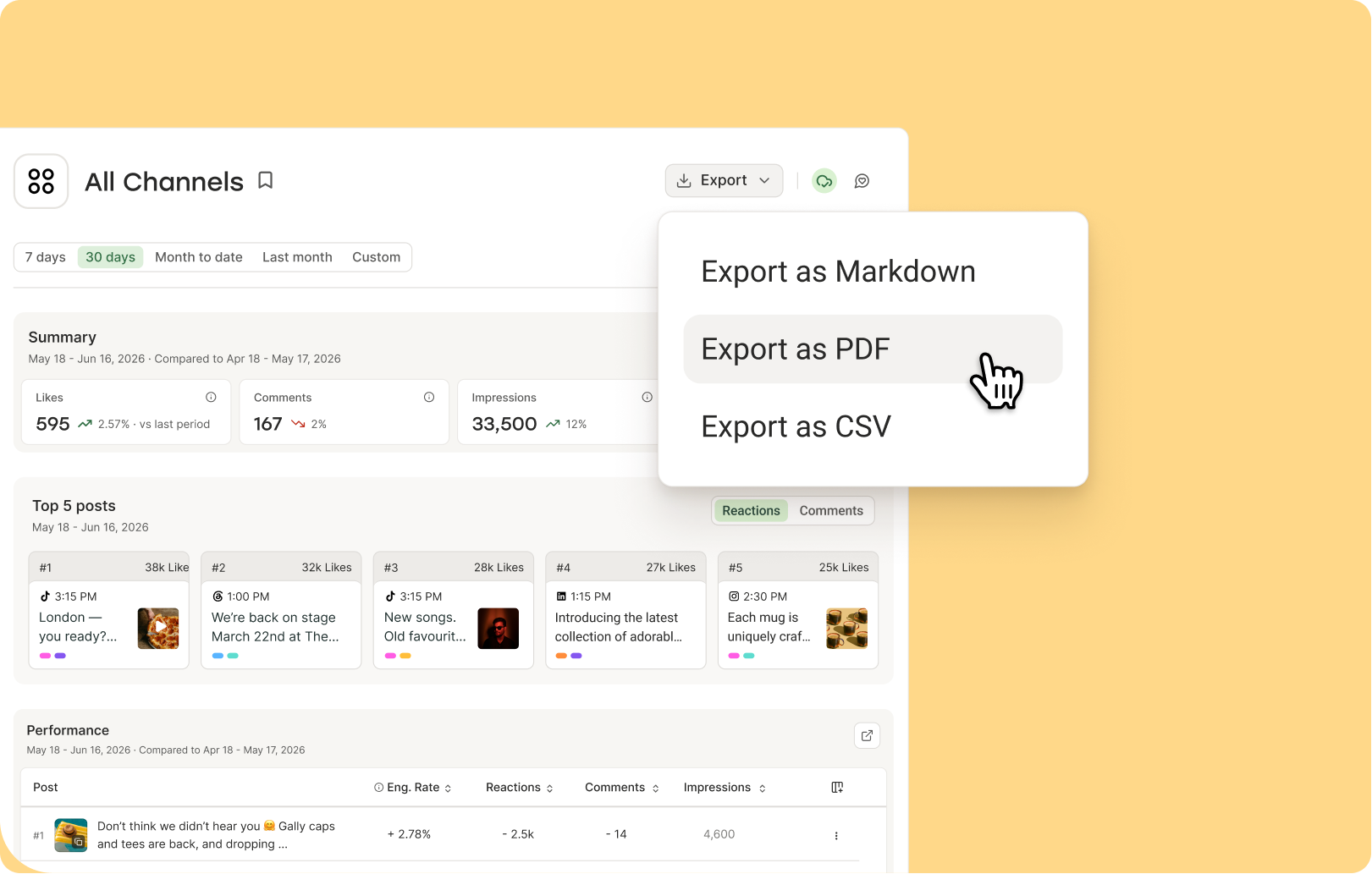
Automate Reporting: Streamline the reporting process by leveraging tools that offer customizable and exportable reports. This saves time and ensures consistency when communicating performance to stakeholders or clients. PDF and CSV exports are invaluable for this purpose.
By embracing these principles and leveraging the right social media analytics tools, businesses can transform their social media presence from a passive broadcast channel into a dynamic, data-informed engine for growth and engagement. The ability to understand what resonates, why it resonates, and how to replicate success is the cornerstone of a winning social media strategy in today’s competitive digital landscape.
Related posts: