MIT and Red Hat Researchers Unveil Breakthrough AI System for Automated, High-Fidelity CAD Generation

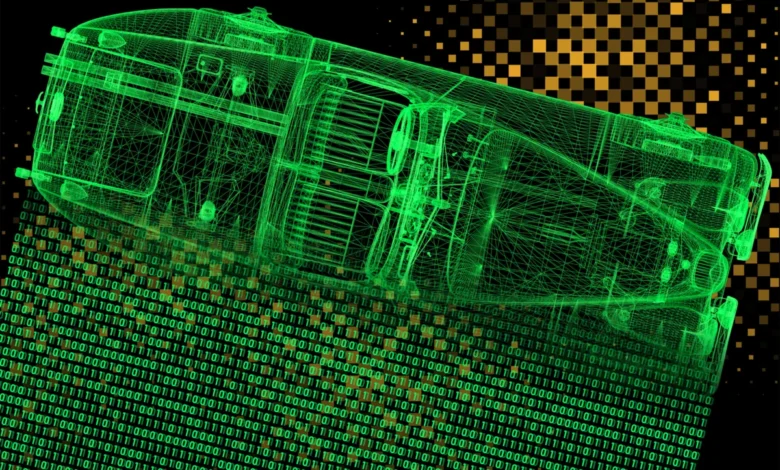
Engineers are constantly seeking innovative ways to design and simulate complex components, from the intricate aerodynamics of an airplane wing to the robust structure of an automobile chassis. Traditionally, this process involves utilizing advanced computer-aided design (CAD) software to translate initial 2D concepts into detailed 3D models. These virtual prototypes then undergo rigorous virtual testing, including crash simulations and durability analyses, to predict real-world performance. However, the creation of these high-fidelity CAD models often requires significant human expertise and computational resources. Now, a collaborative effort between researchers at the Massachusetts Institute of Technology (MIT) and Red Hat has yielded a groundbreaking system designed to teach vision-language models (VLMs) to automatically convert 2D designs into remarkably accurate and functional CAD programs, all while consuming a fraction of the computational power typically required.
This advancement promises to revolutionize the rapid prototyping pipeline, significantly streamlining the design iteration process and driving down associated costs. Furthermore, it has the potential to empower engineers by uncovering beneficial design choices that might have otherwise gone unnoticed, fostering greater innovation and efficiency in product development.
A Novel Approach to Self-Improving AI for Design
At the heart of this innovation lies a sophisticated system that enables a vision-language model to generate new training data based on its own evolving capabilities. As the model attempts to convert a 2D image into a CAD program, the framework meticulously analyzes its successes and failures. Crucially, it then corrects the model’s errors and integrates these corrected solutions, alongside its successful outputs, into a refined dataset. This iterative process allows the AI to learn from its mistakes, developing a nuanced understanding of how to fix specific inaccuracies and overcome complex challenges that would typically prove insurmountable for a standard VLM.
"Our vision is to empower engineers to simply point our framework at an underperforming CAD model, set a computational budget, and let the system take over," explained Giorgio Giannone, lead author of the research and a research affiliate in the Design Computation and Digital Engineering (DeCoDE) Lab at MIT, as well as a principal research scientist on the AI Innovation Team at Red Hat. "The system effectively transforms the model’s own errors into more effective training data, driving continuous improvement."
The research paper detailing this advancement, which was recently presented at the prestigious International Conference on Machine Learning, lists a distinguished group of contributors. Alongside Giannone, the authorship includes Anna Claire Doris, a mechanical engineering graduate student at MIT; Amin Heyrani Nobari, an MIT postdoc; Kai Xu of Red Hat; and co-senior authors Akash Srivastava, director of Core AI at IBM and a principal investigator at the MIT-IBM Computing Research Lab, and Faez Ahmed, an associate professor of mechanical engineering at MIT, leader of the DeCoDE Lab, and a principal investigator at the MIT-IBM Computing Research Lab.
"Nearly every physical product we interact with daily, from the aircraft that transport us to the appliances in our homes, originates as a CAD model," noted Professor Faez Ahmed. "Industry professionals are keenly anticipating AI solutions that can accelerate the creation of these designs. However, current models often generate rudimentary shapes that fall short of practical requirements. What is particularly exciting about this work is its ability to provide image-to-CAD-code models with a mechanism for self-improvement. By learning from their own errors rather than solely relying on human-generated data, these tools bring trustworthy AI design closer to everyday engineering practice."
Model-Aware Data Augmentation: The GIFT Framework
The researchers’ objective is to develop advanced vision-language models capable of sophisticated CAD generation. These VLMs are designed to ingest a 2D image and accompanying textual descriptions, subsequently outputting Python code that can be executed within CAD software to construct a 3D model of a physical object.
During their investigation into the challenges of deploying existing VLMs for this specific task, the MIT and Red Hat team identified a critical bottleneck: the scarcity of diverse and high-quality CAD datasets essential for training these complex models. To address this deficiency, they embarked on creating new data specifically engineered to enhance a model’s CAD generation capabilities, employing a technique known as data augmentation.
Traditionally, data augmentation involves generating new data by applying random modifications to existing samples. This might include altering the color, size, or shape of objects within images to create variations. However, the MIT researchers took a more targeted approach, developing a novel data augmentation system they named GIFT (Geometric Inference Feedback Tuning). GIFT is engineered to produce data that is specifically designed to improve the performance of a particular VLM on a defined task.
The GIFT system operates by first evaluating the VLM to understand its inherent strengths and weaknesses. Armed with this knowledge, it then generates synthetic data that directly addresses the areas where the model struggles, aiming to enhance its performance on challenging CAD generation problems.
"Our goal is to achieve data augmentation that is intrinsically informed by the model itself," Giannone emphasized. "We want the augmentation process to be intelligent and adaptive to the specific learning needs of the AI."
Learning from Near-Misses: A Smarter Path to Accuracy
To achieve this model-aware data augmentation, GIFT employs a clever strategy. It prompts the VLM to generate the CAD code required to solve a specific problem multiple times in parallel. The system then rigorously assesses the correctness of each generated code snippet to gauge the model’s proficiency in tackling that particular problem.
"For a model, producing CAD query code that is almost correct is a relatively achievable feat. However, generating code that is perfectly correct and executable presents a far greater challenge for standard VLMs," Giannone elaborated.
When the model produces code that is close to a correct solution – a "near-miss" – GIFT intervenes. It intelligently adjusts these near-misses to transform them into fully successful solutions. These corrected near-misses, along with the model’s outright successful outputs, are then compiled into a new dataset. This specialized dataset serves as a powerful training resource, teaching the VLM how to overcome the very obstacles that previously impeded its progress.
"If we sample the model ten times and it generates ten correct answers for the same problem, there’s limited room for it to learn. Our focus is on those intermediate cases, where the model might only achieve a 50 percent success rate," Giannone explained. "These ‘in-between’ scenarios are where the most valuable learning opportunities lie."
By leveraging these intermediate cases, GIFT generates data augmentations that are both model-aware and task-aware. Furthermore, by incorporating multiple distinct correct solutions for the same problem, the newly created data effectively broadens the model’s general understanding of CAD code generation principles, enhancing its overall versatility and robustness.
A significant advantage of the GIFT system is its complete automation. It does not require human intervention to identify and correct the model’s errors, further streamlining the development cycle.
Efficiency and Performance Gains: A Quantifiable Impact
GIFT constructs its data augmentations from a pre-trained VLM through a process known as inference-time scaling. This technique is particularly noteworthy because it enables a static, already-trained model to generate improved outputs without incurring the substantial computational costs associated with retraining the entire model from scratch.
The inference-time scaling approach offers users considerable flexibility. They can precisely control the amount of computational resources allocated to GIFT, tailoring the process to fit their specific time and budgetary constraints. This adaptability makes the technology accessible for a wider range of engineering applications.
In rigorous comparative evaluations, GIFT demonstrated superior performance over several competing data augmentation techniques. It consistently generated CAD programs that were more accurate and exhibited a higher degree of fidelity to the intended designs. Astonishingly, this enhanced accuracy was achieved using approximately only 20 percent of the computational resources required by other methods. The CAD models produced by VLMs augmented with GIFT showed a significantly better alignment with the geometric features of ground-truth models, indicating a deeper and more accurate understanding of the desired shapes.
"With GIFT, we deliberately started with geometry because, in engineering problems, if the geometry of a 3D shape is fundamentally incorrect, no other aspect of the design can be considered right," Giannone stated. "However, we recognize that geometry is just one piece of the puzzle, and there are many other crucial performance and manufacturability aspects to consider in future iterations."
Future Directions and Broader Implications
Looking ahead, the researchers are eager to expand the capabilities of GIFT. Their future work aims to equip the framework with the ability to teach models to generate CAD programs that not only accurately represent designs but also optimize for performance and manufacturability. This would involve incorporating considerations such as material properties, stress analysis, and production feasibility directly into the AI’s design generation process. Additionally, the team plans to apply the GIFT system to larger, more complex AI models and a broader spectrum of CAD generation tasks, further pushing the boundaries of AI-driven design.
This pioneering research, partially funded by the MIT-IBM Computing Research Lab, represents a significant leap forward in the quest for intelligent design tools. By enabling AI to learn from its own errors and generate high-fidelity CAD models with unprecedented efficiency, this work has the potential to accelerate innovation across numerous industries, making advanced design capabilities more accessible and cost-effective for engineers worldwide. The implications extend beyond mere efficiency, suggesting a future where AI acts as a true collaborative partner in the creative process, uncovering novel solutions and pushing the boundaries of what is possible in product design and engineering.
Related posts: