Buffer Unveils "Buffer Home," a Centralized Hub Aimed at Enhancing User Experience and Activation

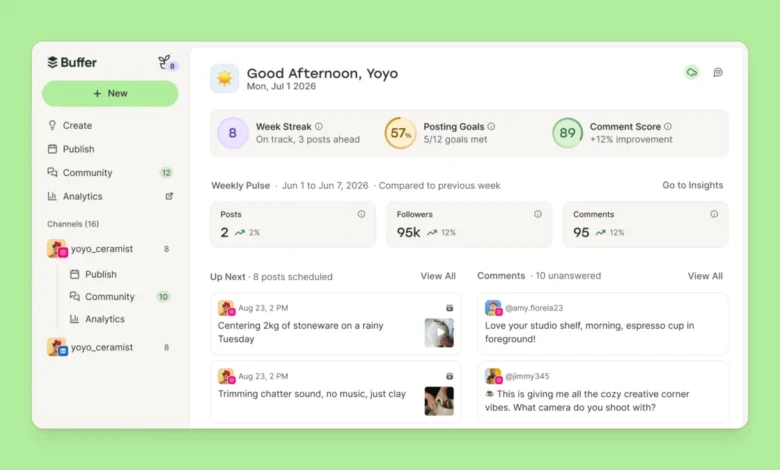
Buffer, a prominent social media management platform, has officially launched "Buffer Home," a significant overhaul of its user interface designed to address long-standing challenges in user activation and engagement. This new feature, which marks the first major user experience alteration since the company’s March visual redesign, aims to provide a more intuitive and personalized entry point for both new and existing users. Previously, Buffer users were directed straight into the "Publish" queue upon signup, a system that proved effective for seasoned professionals but often proved daunting for newcomers.
The introduction of Buffer Home represents a strategic shift in how the company approaches user onboarding and ongoing platform utilization. Historically, Buffer’s growth strategy had heavily emphasized retention, with substantial investments in features like "streaks" and goal-setting, alongside lifecycle email campaigns and a generally more refined product. While these efforts yielded positive results in keeping users engaged, a significant hurdle remained: user activation, the critical point at which a new user experiences the core value proposition of the platform and understands its potential as a social media toolkit.
Addressing the Activation Conundrum
For years, Buffer relied on a welcome checklist as its primary tool to guide new users towards this "a-ha!" moment. While statistically proven to contribute to a modest increase in activation rates, the checklist was frequently dismissed by users and offered only a superficial glimpse into Buffer’s extensive capabilities. Crucially, it treated all users identically, regardless of their specific needs or professional roles. Whether a solo creator, an agency representative, or a developer exploring Buffer’s API, every new signup was presented with the same four initial steps.
Buffer Home is engineered to rectify this by replacing the generic checklist with a dynamic, personalized experience. Upon completing the onboarding process, new users are now greeted by Buffer Home, which presents a curated selection of "setup cards." These cards are tailored based on information users provide about themselves during signup, aiming to meet them at their current level of understanding and specific requirements. The company is currently running Buffer Home as an A/B test for new signups, a data-driven approach to validate its effectiveness before a wider rollout. This methodology underscores Buffer’s commitment to evidence-based product development, prioritizing empirical data over assumptions.
A Unified Experience for All Users
For long-time Buffer users, Buffer Home is envisioned not as a replacement for their established workflows, but as a strategic starting point. Instead of immediately diving into the "Publish" queue or other specific modules, existing users are presented with a consolidated view of their social media ecosystem. This includes an overview of upcoming posts, pending comments requiring attention, and a summary of their posting frequency and habits. Each element on Buffer Home is designed to be interactive, serving as a springboard to specific actions and deeper platform engagement rather than a static dashboard.
The initial iteration of Buffer Home for existing users has been intentionally kept minimal. The company acknowledges a long list of potential features that could be integrated, such as advanced analytics, team activity dashboards, and content suggestions. However, the strategic decision was made to prioritize launching a valuable, albeit lean, version and gathering real-world usage data. This agile approach allows Buffer to iterate and refine the product based on user feedback, ensuring that future developments are aligned with actual needs and preferences.
Strategic Vision and Future Trajectory
Buffer Home is positioned as a foundational element in the company’s ambitious roadmap for the coming year. Key initiatives include a significant overhaul of Buffer’s analytics and insights features, continued development of its "Community" features, and enhancements to make Buffer more robust for teams managing complex social media strategies. The introduction of Buffer Home is crucial to ensuring that these future developments, and indeed all critical social marketing tasks, are easily discoverable and accessible to users.
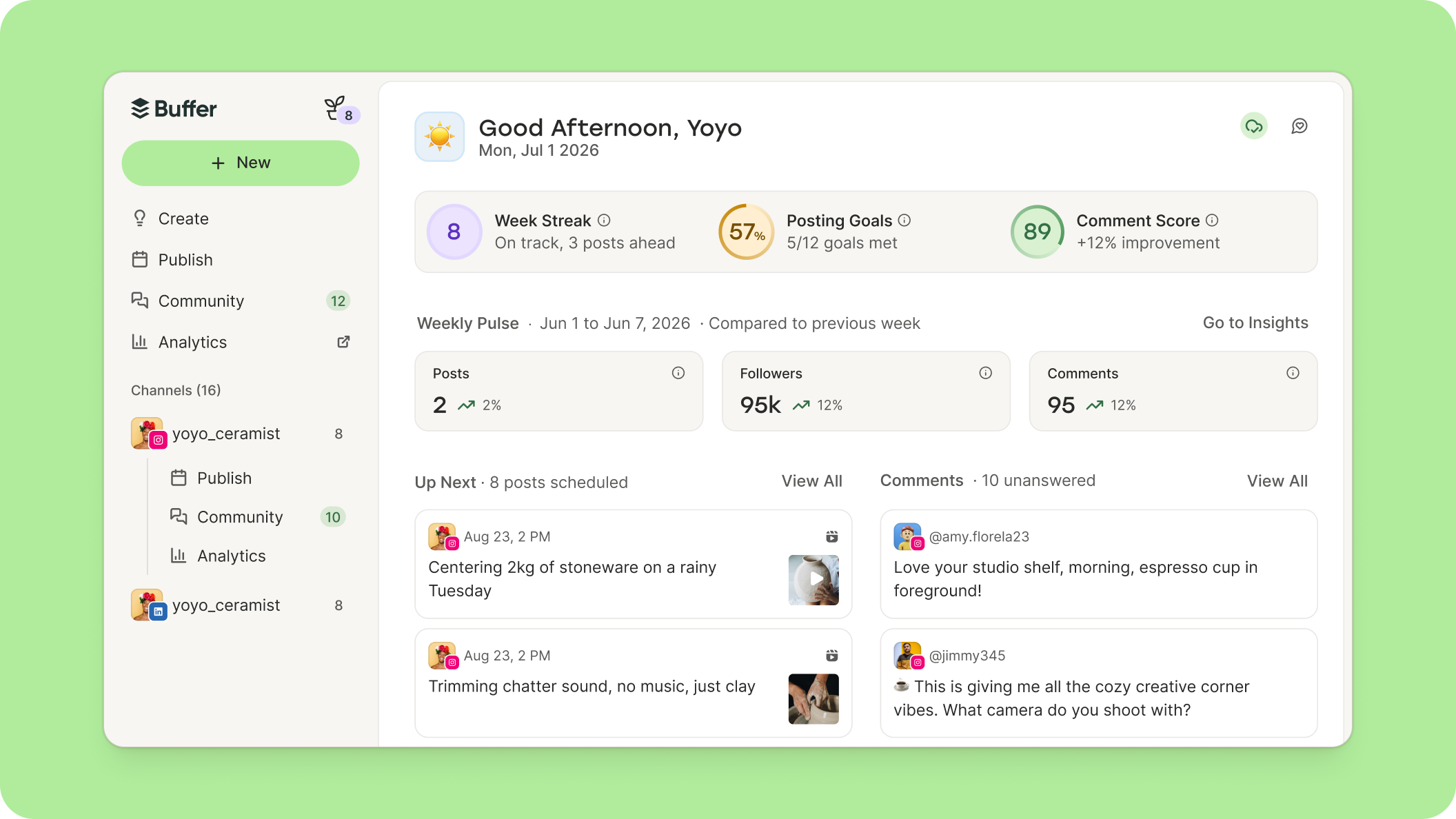
The strategic importance of Buffer Home lies in its ability to "unlock" rather than merely "add" functionality. The content presented on Buffer Home – encompassing posts, comments, templates, and goals – already existed within the platform. The innovation lies in how users encounter and interact with these existing features. As Buffer has expanded its feature set over the years, a fragmented interface where each feature resides in its own tab could lead to features being overlooked by users who aren’t actively seeking them out. Buffer Home aims to reverse this by progressively revealing the platform’s capabilities based on a user’s journey, offering a more guided and less overwhelming discovery process.
Implications for User Journey and Platform Discovery
Consider the example of a marketing agency contributor tasked with drafting posts for editorial review. Currently, addressing feedback on a draft can involve multiple clicks, disrupting the workflow. Buffer Home’s potential lies in its ability to surface these critical review comments directly, enabling users to act on them with a single click. This focus on streamlining essential workflows is a key driver behind the development of Buffer Home.
The introduction of a centralized "Home" page fundamentally alters the user’s initial encounter with Buffer. Instead of being presented with a multitude of options and left to navigate independently, users are now guided through a curated experience that adapts to their evolving needs. This approach is particularly significant in the current digital landscape, where user attention is a precious commodity and intuitive user interfaces are paramount for sustained engagement. By acting as a central hub that connects users to relevant actions and information, Buffer Home aims to reduce friction and increase the perceived value of the platform from the outset.
Data and User Engagement Metrics
While specific quantitative data from the A/B test on new signups was not immediately released, Buffer’s historical emphasis on data-driven decision-making suggests that key performance indicators such as activation rates, feature adoption, and time-to-value will be meticulously tracked. The company’s prior investments in retention, evidenced by features like "streaks" which have been shown to significantly improve daily active user numbers for platforms that implement similar gamification or habit-building mechanics, indicate a deep understanding of user psychology and engagement drivers. The success of Buffer Home will likely be measured by its ability to not only increase initial activation but also to foster deeper, more consistent engagement with the platform’s full suite of tools.
Industry Context and Competitive Landscape
The social media management industry is highly competitive, with platforms constantly seeking innovative ways to differentiate themselves and enhance user experience. Competitors often focus on expanding feature sets or offering specialized tools for niche markets. Buffer’s strategic pivot towards a more unified and intuitive user experience, particularly for new users, addresses a common pain point in the industry – the complexity of managing multiple social media channels and the steep learning curve associated with powerful tools. By creating a central "Home" that acts as an intelligent gateway, Buffer is positioning itself to simplify the user journey and make social media management more accessible to a broader audience.
Expert and User Perspectives
While official statements from Buffer executives have been central to the announcement, the broader impact on the user base is anticipated. Industry analysts suggest that such a move is a logical progression for a mature SaaS product that has expanded its offerings over time. "As platforms evolve, it becomes increasingly challenging for new users to grasp the full scope of their capabilities," commented a senior analyst at Tech Insights Group. "A well-designed home page can act as a crucial bridge, guiding users towards the most relevant features and accelerating their path to becoming proficient and engaged users. The success of Buffer Home will hinge on its ability to personalize this experience effectively and dynamically adapt to user needs."
Feedback channels, including Buffer’s public roadmap and direct outreach options, are actively being utilized to gather user input. This commitment to community involvement in product development is a hallmark of Buffer’s approach and suggests a continuous iteration process for Buffer Home. Users are encouraged to share their desired functionalities, indicating a collaborative effort to shape the future of the platform.
Conclusion: A New Chapter for Buffer’s User Experience
Buffer Home represents a significant evolution in Buffer’s product strategy, moving beyond a feature-centric approach to one that prioritizes the user’s journey and overall experience. By creating a central, personalized hub, Buffer aims to demystify its platform for new users and provide a more efficient and insightful starting point for existing ones. This strategic move, underpinned by a commitment to data-driven development and user feedback, signals Buffer’s dedication to simplifying social media management and unlocking the full potential of its platform for every user. The coming months will be critical in evaluating the impact of Buffer Home on user activation, engagement, and the overall trajectory of the Buffer product.