Mastering Pips: A Comprehensive Guide to the New York Times’ Latest Domino-Based Strategy Game and Solutions for the May 19 Challenge

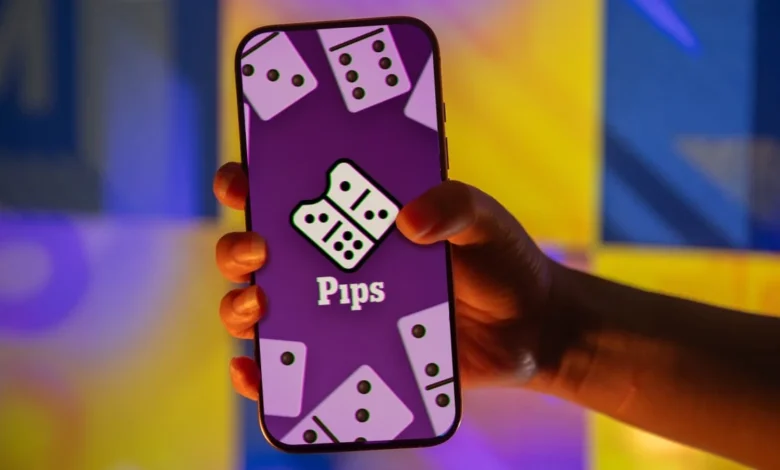
The New York Times has solidified its reputation as a powerhouse in the digital puzzle space, and its latest offering, Pips, represents a significant evolution in its strategy to engage a global audience through daily cognitive challenges. Released in August 2025, Pips has quickly ascended the ranks of the New York Times Games catalogue, joining the likes of Wordle, Connections, and The Crossword as a staple of the daily digital routine for millions of users. The game offers a sophisticated, single-player reimagining of traditional dominoes, blending spatial reasoning with mathematical constraints to create a gameplay loop that is both accessible to newcomers and deeply challenging for veteran puzzle enthusiasts. As the game continues to grow in popularity, players have sought more nuanced ways to navigate its difficulty spikes, particularly because the current interface offers limited assistance beyond a full puzzle reveal.
The Strategic Evolution of New York Times Games
The launch of Pips is part of a broader multi-year initiative by the New York Times Company to diversify its "Games" application, which has become a primary driver for digital subscriptions. Since the high-profile acquisition of Wordle in early 2022, the Times has focused on creating "low-friction, high-engagement" content. Pips follows in the footsteps of recent successes like Strands and Connections by focusing on a specific niche—in this case, tile-placement and arithmetic—that complements the linguistic focus of the publication’s other offerings.
Market data suggests that the "NYT Games effect" is a significant factor in the company’s ability to reach 10 million subscriptions ahead of schedule. By providing a diverse array of puzzles that cater to different cognitive strengths—vocabulary, logic, and now mathematical spatial awareness—the Times has created a "sticky" ecosystem. Pips, specifically, targets the "logic and numbers" demographic that previously gravitated toward Sudoku and Vertex.
Understanding the Mechanics of Pips
While Pips shares visual DNA with traditional dominoes, its mechanics are fundamentally different. In a standard game of dominoes, players match the number of dots (or pips) on adjacent ends of tiles. In Pips, however, the primary objective is to satisfy specific conditions dictated by color-coded zones on a grid. These conditions are mathematical or comparative, requiring players to think several moves ahead.
The tiles are standard dominoes, featuring two squares (halves) each containing a value from zero to six. These can be placed horizontally or vertically. The complexity arises from the color-coded "spaces" or "zones" on the board. A single tile can span two different zones, or be partially within a zone and partially in a neutral area. Neutral areas have no constraints, serving as "free spaces" that allow players to bridge tiles between more restrictive zones.
The specific conditions encountered in Pips include:
- Sum/Number (X): The total value of all tile portions within the highlighted space must add up exactly to the number provided.
- Less Than (X): Every individual tile portion within the space must have a value lower than the specified number.
- Greater Than (X): Every individual tile portion within the space must have a value higher than the specified number.
- Equal (X): Every tile portion within the space must exactly match the specified number.
Chronology of Pips Development and Daily Challenges
The development of Pips began in late 2024 under the direction of the Times’ internal games lab. The goal was to create a game that felt "tactile" despite being digital. After a brief beta period in early 2025, the game saw its wide release in August. The daily challenges, such as the one presented on May 19, are procedurally generated but curated to ensure that every puzzle has a unique, logical solution.
The May 19 puzzle has been noted by the community for its intricate "Hard" difficulty level, which requires precise placement of high-value tiles like the 6-6 and 5-6 dominoes to satisfy multiple overlapping "Number" and "Equal" conditions. Unlike earlier puzzles that allowed for more flexibility in the neutral zones, the May 19 board uses tight spatial constraints that force players to use specific orientations for their vertical and horizontal placements.
Detailed Solutions and Hints for May 19
For players who find themselves stuck on the May 19 puzzle, a step-by-step breakdown of the zones across the three difficulty tiers provides the necessary logic to complete the board without resorting to a full reset.
Easy Difficulty: Foundational Logic
The Easy level focuses on teaching the player how to isolate zones and manage low-value tiles.
- Less Than (4) Zone: This area requires values under 4. The solution involves a horizontal 2-2 tile and a vertical 1-1 tile.
- Number (5) Zone: To reach a sum of 5 using the available space, players must utilize a vertical 1-1 tile (contributing 2 pips) and a vertical 4-4 tile (where one half contributes 3 or 4 pips depending on the overlap). The specific configuration for May 19 requires the 1-1 and 4-4 vertical placements.
- Greater Than (9) Zone: This is a high-value zone. Placing a 4-4 vertically and a 6-6 horizontally ensures all portions meet the high threshold.
- Equal (3) Zone: A simple horizontal 3-3 tile satisfies this requirement.
Medium Difficulty: Increasing Complexity
The Medium level introduces overlapping tiles where one domino might serve two different conditions.
- Number (11) and Less Than (2): These zones are adjacent. A vertical 1-0 tile serves both, providing the low value for the "Less Than" zone and contributing to the sum of 11 in the neighboring zone.
- Number (11) and Equal (3): The horizontal 6-3 tile is the anchor here, bridging the sum requirement with the specific value requirement.
- Greater Than (4) and (3): These comparative zones are solved by a vertical 6-4 tile, which satisfies both "Greater Than" thresholds simultaneously.
- Number (1) Zone: A vertical 2-1 tile is used, where the ‘1’ portion sits within the zone.
Hard Difficulty: The Master Challenge
The Hard level for May 19 is characterized by a dense grid of color-coded zones, including light blue, green, purple, and dark blue areas.
- The Equal (1) and Greater Than (0) Cluster: This requires a series of horizontal placements: 0-1, 1-1, and 1-2. The 1-2 tile is particularly important as it also satisfies the "Greater Than (0)" condition.
- The Sum Zones: The "Number (9)" requirements are scattered across the board. In the light blue space, a horizontal 3-1 and 3-3 provide the necessary sum. In the purple space, a horizontal 5-4 is required.
- The Green Zone: This "Number (8)" space is solved specifically with a horizontal 4-4 tile.
- The Dark Blue and Overlapping Zones: The "Number (9)" in the dark blue space is satisfied by the 1-5 and 4-6 horizontal tiles. Finally, the "Equal (6)" zone—one of the most restrictive—is completed using the 4-6, 5-6, and 6-6 tiles, all placed horizontally to align their ‘6’ pips within the zone.
Analysis of Gameplay Implications and User Feedback
The reception of Pips has been largely positive, though the "all-or-nothing" hint system has been a point of contention among the user base. Currently, the New York Times Games app does not provide a "check word" or "hint" feature for Pips similar to those found in The Crossword. This has led to a surge in third-party guides and community forums where players share "piecemeal" hints.
Industry analysts suggest that this difficulty curve is intentional. "The New York Times isn’t just selling puzzles; they are selling a sense of accomplishment," says digital media strategist Elena Rossi. "By making Pips’ Hard mode truly difficult, they encourage social sharing and community problem-solving, which in turn keeps the game trending on social media platforms."
Furthermore, Pips represents a shift toward "spatial numeracy." While Wordle tests vocabulary and Connections tests categorization, Pips tests the ability to visualize how a single object (the domino) can satisfy two different logical rules at once. This type of mental exercise is linked to improved executive function and spatial reasoning skills.
Future Outlook for the NYT Games Portfolio
Looking ahead, the success of Pips likely signals more "math-adjacent" games in the Times’ pipeline. There are rumors of an upcoming "Logic Lab" section within the app that would host experimental games like Pips before they become permanent fixtures. For now, Pips stands as a testament to the Times’ ability to modernize classic concepts—like the centuries-old game of dominoes—and turn them into viral, modern-day digital experiences.
As players gear up for the next set of challenges, the May 19 puzzle will likely be remembered as a turning point where the community began to master the "Hard" difficulty’s reliance on overlapping horizontal placements. Whether you are playing for a quick morning distraction or to maintain a months-long streak, Pips offers a unique blend of math and logic that ensures its place in the pantheon of great daily puzzles. For those seeking even more challenges, the broader landscape of digital gaming continues to expand, with hubs offering everything from Sudoku to Mahjong, yet Pips remains a distinct, high-brow entry in the genre.