The New York City Reversal and the National Climate
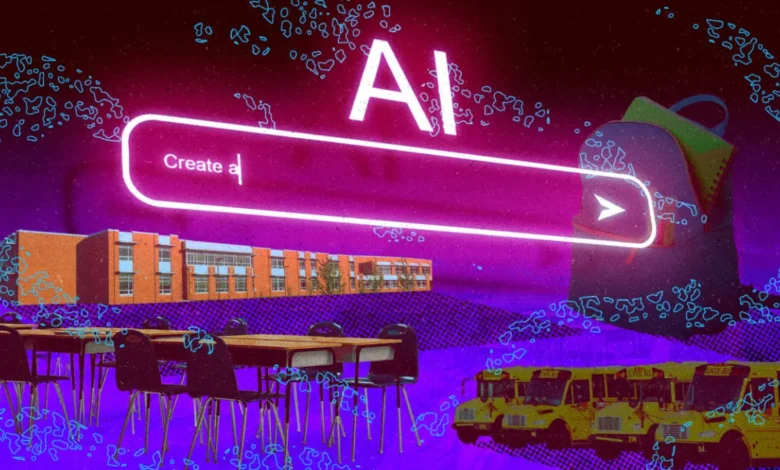
The cancellation of New York City’s AI-themed high school marks a significant shift in the narrative surrounding educational technology (EdTech). Just a year prior, city officials had touted the institution as a beacon of modernization. However, district leadership cited mounting concerns over "rapid, unsafe adoption" as the primary reason for pulling the plug. This pivot reflects a growing skepticism among stakeholders who argue that the educational system is being used as a testing ground for unproven software.
According to data from the Pew Research Center, the adoption of AI among teenagers has seen an unprecedented surge since 2024. Approximately seven in ten students now report using generative AI tools for schoolwork, often without formal guidance or oversight from their institutions. While proponents argue that these tools can bridge the gap in overburdened schools by providing 24/7 tutoring, critics view the trend as a "generational misstep." The debate has bifurcated into two distinct camps: those advocating for "AI literacy" to prepare students for a future workforce, and those calling for a total moratorium to protect student privacy and cognitive health.
A Chronology of AI Integration in Education
To understand the current friction, one must look at the "pendulum swing" of EdTech over the last quarter-century. Dylan Arena, chief data science and AI officer at McGraw Hill, notes that the history of technology in schools is cyclical.
- 2000–2010: The focus was on basic access, bringing the internet and computer labs into every school.
- 2010–2020: The "1:1 device" movement took hold, where school districts spent billions to provide every student with a Chromebook or tablet.
- 2023–2024: The emergence of Large Language Models (LLMs) like ChatGPT triggered a wave of panic, followed by a rush to integrate "adaptive learning" features into existing platforms.
- 2025: Major EdTech players like Instructure (the parent company of Canvas) formed formal partnerships with OpenAI and Anthropic, aiming to embed AI directly into the learning management systems used by millions of students.
- 2026: The emergence of organized resistance. A coalition of over 250 organizations, led by the child safety nonprofit Fairplay, issued a formal call for a five-year moratorium on generative AI in K-12 classrooms.
This timeline illustrates that while AI-driven tools like ALEKS (an assessment tool used by McGraw Hill) have existed for decades, the current "generative" wave represents a fundamental shift in how information is produced and consumed in the classroom.
The Industry Defense: Intentional Design and Workforce Readiness
Leaders in the technology sector argue that a moratorium would be a strategic error, leaving students ill-equipped for a global economy increasingly defined by artificial intelligence. Naria Santa Lucia, general manager of Microsoft Elevate, emphasizes that the goal is not to replace teachers but to "shape" the progress of the technology through intentional design.

Industry giants like Google and Microsoft maintain that their education-specific products, such as Gemini for Education and NotebookLM, are strictly compliant with child privacy laws. These companies emphasize that student data is not used to train their underlying models—a primary concern for privacy advocates. Leah Belsky, vice president of education at OpenAI, notes that the company has focused on "ChatGPT for Teachers," a platform designed to help educators build "deep fluency" with AI so they can guide students effectively.
Proponents also point to the potential for AI to act as an equity gap filler. Ashish Bansal, founder of the AI math tutor StarSpark.AI, argues that purpose-built systems can provide high-quality support to students who do not have access to private tutoring at home. In this view, AI is a tool for democratization, offering live translation for second-language learners and personalized pacing for students with learning disabilities.
The Case for a Pause: Cognitive Risks and Data Privacy
Conversely, the movement for a moratorium is gaining momentum among child safety advocates and neuroscientists. Josh Golin, executive director of Fairplay, describes the current state of EdTech as a "Wild West" where children are being used as "guinea pigs" in a massive commercial experiment.
The primary concerns cited by the pro-moratorium camp include:
- Cognitive Fatigue and "Brain Fry": Recent studies have indicated that over-reliance on chatbots for writing and problem-solving can lead to poorer critical thinking skills and "cognitive atrophy." When students bypass the struggle of drafting a sentence or solving an equation, they may fail to develop the neural pathways required for complex reasoning.
- Screen Addiction: With many districts already struggling to manage the impact of social media on student mental health, advocates like Anya Meksin of "Schools Beyond Screens" argue that adding more technology to the school day is counterproductive. Her organization advocates for a return to "pencil and paper" learning to combat rising rates of digital distraction.
- Data Insecurity: The concentration of student data in the hands of a few tech giants creates significant security risks. In 2025, a major breach at Instructure exposed the vulnerabilities of centralized EdTech platforms, leading to renewed calls for stricter data governance.
- The Devaluation of Human Instruction: Joe Clement, a veteran teacher and co-author of Screen Schooled, warns of an "Orwellian" future where AI differentiates instruction more than the teacher. He notes a disturbing trend where well-funded private schools are pivoting away from screens in favor of hands-on, human-led instruction, while underfunded public schools are increasingly pushed toward AI-based "personalized learning" as a cost-cutting measure.
Legislative Responses and the Regulatory Gap
The lack of a unified federal policy has left a vacuum that state legislators are now rushing to fill. In Vermont, State Representative Angela Arsenault has introduced bipartisan legislation aimed at regulating EdTech and slowing the rollout of AI tools. "We fell so far behind with social media," Arsenault stated, "and now we are very quickly losing any opportunity we have to try to keep pace with AI."
While the U.S. Department of Education issued AI guidelines in 2025, many educators, including American Federation of Teachers (AFT) President Randi Weingarten, argue that the department has "abdicated its responsibility." Weingarten contends that the federal government has ceded ethical implementation to the districts themselves, which often lack the technical expertise to vet complex AI algorithms.

In response, the AFT partnered with Microsoft and OpenAI to launch the National Academy for AI Instruction. This initiative aims to empower its 1.8 million members to make informed decisions about technology, rather than having it "imposed" on them by corporate interests. Weingarten’s stance is clear: while AI education is necessary, it should not be a "green light" for universal adoption in elementary schools.
Economic Implications and the "Public Dollar" Debate
A central theme in the battle over AI is the financial cost. U.S. school districts spend an estimated $30 billion annually on technology. Critics like Anya Meksin point out that EdTech companies are for-profit entities "going after precious public dollars" that could otherwise be spent on hiring more teachers, counselors, or improving physical infrastructure.
The concern is that the "urgency" to adopt AI is manufactured by investors who need to justify billion-dollar valuations. If school districts become reliant on proprietary AI models for core instruction, they risk being locked into expensive, long-term contracts with Big Tech companies, further straining public budgets.
Implications for the Future of Education
As the debate continues, the "wobbly spiral" of EdTech adoption shows no signs of slowing down. The core of the conflict lies in a fundamental disagreement over the purpose of schooling. Is the goal to produce "AI-literate" workers for a tech-driven economy, or is it to cultivate deep, human-centric critical thinking skills that are independent of digital tools?
The "New York City halt" may serve as a turning point, signaling to other districts that a "pause" is a viable and perhaps necessary political choice. For now, the classroom remains a contested territory. As Amanda Bickerstaff, CEO of AI for Education, observed, "This is one of the noisiest things that’s ever happened in education." Whether that noise leads to a productive evolution or a systemic breakdown will depend on whether districts prioritize the "impact" of technology over the "hype" of its novelty.
In the coming years, the success or failure of AI in schools will likely be measured not by the sophistication of the algorithms, but by the strength of the safeguards put in place to protect the next generation of learners. Without a clear "rudder" from federal authorities and a commitment to evidence-based implementation, the battle over AI in K-12 classrooms is expected to intensify, leaving parents and teachers to navigate the "Wild West" of the 21st-century classroom on their own.