Pickleball’s Strategic Playbook Offers Invaluable Lessons for Modern Bloggers

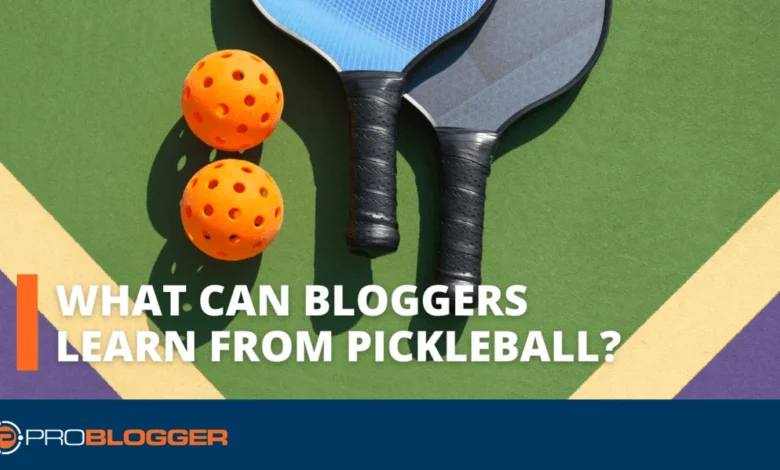
The meteoric rise of pickleball, a sport often described as a hybrid of tennis, badminton, and ping-pong, has captivated communities worldwide. Beyond its accessible gameplay and burgeoning popularity, this dynamic sport offers a surprising wealth of strategic parallels that can profoundly inform and enhance the craft of blogging in the digital age. What began as a casual backyard diversion has evolved into a global phenomenon, and its core principles—from strategic positioning to community engagement—provide a compelling framework for content creators seeking to navigate the competitive and ever-changing online landscape.
The Phenomenon of Pickleball: A Background Context
Pickleball’s origins are rooted in a serendipitous summer afternoon in 1965 on Bainbridge Island, Washington. U.S. Congressman Joel Pritchard, along with friends Barney McCallum and Bill Bell, improvised a new game for their bored families using a badminton court, ping-pong paddles, and a perforated plastic ball. The sport was named either after Pritchard’s dog, Pickles, or the rowing term "pickle boat," referring to the last boat to finish a race, often made up of leftover oarsmen. Regardless of its whimsical name, the game quickly gained traction due to its low barrier to entry, combining elements familiar from other racket sports but with reduced physical demands and a highly social atmosphere.
Over the decades, pickleball steadily grew, primarily among senior communities due to its less strenuous nature compared to tennis. However, in recent years, its appeal has broadened dramatically, becoming a multi-generational sport embraced by individuals of all ages and athletic abilities. Data from the Sports & Fitness Industry Association (SFIA) has consistently identified pickleball as the fastest-growing sport in America for several consecutive years. In 2023, SFIA reported that pickleball participation grew by 51.8% over the past three years, reaching 8.9 million players in the U.S. alone. This unprecedented growth is reflected in the rapid expansion of dedicated pickleball courts, both indoors and outdoors, and the increasing number of organized leagues, tournaments, and professional circuits. The sport’s accessibility, combined with its inherent fun and social interaction, has made it a powerful model for organic growth and community building—principles directly transferable to successful blogging.
Blogging’s Evolving Landscape: A Digital Chronology
The evolution of blogging mirrors, in many ways, the journey of pickleball from niche activity to mainstream staple. Beginning in the late 1990s as online diaries or personal journals, blogs rapidly transformed into platforms for news, opinions, expert advice, and content marketing. Early pioneers like Jorn Barger (who coined the term "weblog" in 1997) and Pitas.com (one of the first free blog hosting services in 1999) laid the groundwork. The early 2000s saw the explosion of platforms like Blogger and WordPress, democratizing publishing and enabling millions to share their voices.
Today, blogging is a sophisticated component of digital marketing and content strategy. The landscape is fiercely competitive, demanding not just compelling content but also strategic distribution, audience engagement, and continuous adaptation to algorithm changes and technological advancements. What was once a simple act of sharing has become a complex endeavor requiring a blend of creativity, analytical thinking, and strategic foresight. This is precisely where the lessons from pickleball, a seemingly unrelated sport, offer profound insights.
Core Strategic Lessons from the Pickleball Court for Digital Content Creators
The strategic nuances of pickleball provide a powerful metaphorical toolkit for bloggers. Each aspect of the game, from the initial serve to the delicate "dink," holds a direct corollary to best practices in content creation and audience engagement.

1. Start Small, Think Big: The Genesis of Influence
Pickleball’s journey from a makeshift game to an international phenomenon underscores the power of humble beginnings coupled with a grand vision. Similarly, every thriving blog began with a single post, a blank page, and an initial idea. The early days of blogging were characterized by individual passion projects that, over time, attracted dedicated followings and evolved into authoritative content hubs. For new bloggers, this means embracing the iterative process: launching with an initial set of well-crafted articles, gathering feedback, and steadily expanding content depth and breadth. The strategic goal, much like pickleball’s founders envisioning a widely played sport, is to build a lasting platform, not just a collection of isolated posts. This long-term perspective is crucial for sustained growth, allowing for organic development and adaptation rather than a desperate pursuit of instant virality.
2. Cultivating Community: The Heartbeat of a Digital Rally
In pickleball, a lively rally is the essence of the game, drawing in players and spectators alike through continuous interaction. In blogging, fostering a vibrant community is paramount. This goes beyond simply publishing content; it involves actively engaging with readers through comments, social media discussions, and interactive formats such as live Q&As, webinars, or dedicated online forums. The longer a blog can sustain this "rally" of interaction, the more deeply engaged and loyal its community becomes. Digital marketing experts consistently emphasize that community engagement metrics—like comment volume, share rates, and direct interactions—are increasingly vital indicators of a blog’s health and influence, often surpassing mere page views. A responsive blogger who values and incorporates reader feedback transforms passive consumers into active participants, creating a self-sustaining ecosystem of content and conversation.
3. The Art of the ‘Dink’: Mastering Simplicity and Strategic Nuance
The "dink" shot in pickleball is a soft, strategic hit that lands just over the net in the non-volley zone, forcing opponents to approach the net and hit upwards. It’s a shot of precision and control, not power, designed to disrupt an opponent’s rhythm or set up a stronger attack. For bloggers, the "dink" represents the art of simplifying complex information into digestible, engaging, and highly accessible content. In an age of information overload, clarity and conciseness are invaluable. Avoiding jargon, employing clean layouts, and structuring posts for easy readability (e.g., using subheadings, bullet points, and short paragraphs) can be far more effective than verbose, overly academic prose. The inherent simplicity of pickleball makes it easy to learn, driving its popularity. Bloggers can leverage this principle by making their content approachable, ensuring that even nuanced topics are communicated with a gentle, strategic touch that resonates with a broad audience.
4. Finding the ‘Sweet Spot’: Optimizing Engagement Zones
In pickleball, the "kitchen" (or non-volley zone) is a critical strategic area, dictating where players can hit the ball directly versus letting it bounce. Players must find their "sweet spot" on the court to optimize their play. For bloggers, this translates to finding the optimal balance in content delivery where engagement naturally thrives without overstepping boundaries. This "sweet spot" exists between being overly promotional and being too distant or academic. Content that provides immense value while subtly integrating relevant offers or calls to action performs best. Overly sales-driven content can alienate readers, while content that lacks any direction may fail to achieve conversion goals. Strategic positioning of information, understanding audience receptiveness to different content types, and delivering value consistently are key to maintaining this delicate equilibrium, ensuring that interactions "bounce back" positively.
5. Learning from the ‘Whiff’: Embracing Iteration and Resilience
Even the most seasoned pickleball players occasionally miss a shot, a "whiff." These missteps are not failures but opportunities for learning and adjustment. In blogging, not every post will be a viral sensation, and some content strategies may underperform. The history of blogging is replete with experiments, some successful, others less so. The critical lesson here is resilience and analytical iteration. Bloggers must be prepared to analyze what didn’t resonate, understand why certain content failed to gain traction (using analytics, heatmaps, or direct feedback), and then refine their approach. The ability to pivot, learn from data-driven insights, and "keep swinging" is fundamental to long-term success in a dynamic digital environment where audience preferences and algorithmic demands are constantly shifting.

6. Strategic Adaptation: Navigating the Dynamic Digital Court
Pickleball players continuously learn new strategies, refine techniques, and adapt to the diverse styles of their opponents. Similarly, the digital landscape is in a perpetual state of flux. SEO algorithms (like Google’s core updates), social media platform trends (e.g., the rise of short-form video on TikTok, the evolution of X/Twitter), and content consumption habits are constantly evolving. Successful bloggers adopt a mindset of continuous learning and adaptation. This means staying informed about the latest SEO best practices, experimenting with new content formats, understanding emerging platforms, and being flexible enough to adjust content strategies to maintain relevance and visibility. Stagnation in blogging is often a precursor to obsolescence; dynamic adaptation is the key to enduring impact.
7. Unwavering Focus: Keeping Your Eye on the Ball (and Audience)
In pickleball, a momentary lapse in focus can cost a point. In blogging, losing sight of the content’s core purpose or the audience’s fundamental needs can lead to disengagement and irrelevance. Maintaining unwavering focus means having a clear understanding of your blog’s mission, target audience, and content pillars. It involves consistently aligning content with user intent, addressing audience pain points, and staying true to the brand’s voice and values. Continuous feedback loops, through analytics and direct engagement, help ensure the blog remains on target, relevant, and genuinely valuable to its readership, preventing aimless content creation.
8. Serving Strong, Serving Smart: The Art of the First Impression and Call to Action
A well-executed serve in pickleball can dictate the rhythm and provide an immediate advantage in a rally. In blogging, the "serve" is represented by a compelling headline, an engaging introduction, and a clear value proposition. These elements are crucial for capturing attention in a crowded digital space. A strong opening hooks readers, promising value and setting the tone for what’s to come. This must be followed by content that delivers on that promise and concludes with a clear, concise call to action (CTA). Just as a smart serve sets up the entire game, a well-structured blog post, from compelling headline to effective CTA, guides the reader through a valuable experience and encourages desired actions, whether it’s sharing, commenting, or converting.
9. Utilize Strategic Positioning: Carving Out Your Niche
Effective positioning on the pickleball court is crucial for controlling the game, anticipating shots, and creating offensive opportunities. For bloggers, strategic positioning of their brand and content is equally vital. This involves a deep understanding of one’s niche, knowing the target audience’s demographics and psychographics intimately, and positioning the blog as a unique authority or essential resource within that specific domain. In a marketplace saturated with content, differentiation through strategic positioning allows a blog to stand out, attract a dedicated readership, and establish credibility. This involves not just what is said, but how it is framed and to whom it is directed, much like a player strategically places themselves to dominate the court.
10. Embrace the Fun: The Unseen Ingredient for Sustained Success
Ultimately, pickleball is enjoyed for its sheer fun and social interaction, even amidst fierce competition. This joy is infectious. Similarly, blogging, at its heart, should be a passionate endeavor. When bloggers are genuinely enthusiastic about their topics, that passion permeates their writing, making the content more authentic, engaging, and resonant. This enthusiasm fosters a stronger connection with readers and, crucially, prevents blogger burnout. A fun, personal approach humanizes the blog, making it more relatable and enjoyable for the audience, transforming a routine read into a delightful experience. This inherent joy becomes a sustainable driving force, ensuring consistent content creation and a vibrant online presence.

Broader Implications for the Digital Content Creator
The surprising synergy between pickleball and blogging reveals that fundamental principles of strategy, engagement, and adaptability transcend disparate fields. For the modern digital content creator, these lessons from the court offer a holistic philosophy. They underscore that blogging is not merely a creative outlet or a technical exercise in SEO, but a strategic game demanding resilience, community focus, clarity of communication, and an unwavering passion for the subject matter. By approaching content creation with the strategic foresight and joyful spirit of a pickleball player, bloggers can enhance their creative expression, build stronger connections with their audience, and ultimately achieve sustained success in the competitive digital arena.
In conclusion, who would have thought a sport with such a peculiar name could yield such profound pearls of wisdom for the intricate craft of blogging? Pickleball teaches us that fun and strategy are not mutually exclusive but powerful allies. By injecting genuine enjoyment into the meticulous process of content creation, leveraging strategic insights, and maintaining a focus on audience engagement and continuous improvement, bloggers can significantly elevate their game. So, whether armed with a paddle or a keyboard, the message is clear: be strategic, stay focused, and above all, embrace the fun. Your blog, infused with these principles, might just serve up the next big hit in the digital world.