The Evolution of Digital Media Archiving and the Ascendance of yt-dlp as the Primary Tool for Content Preservation

The landscape of digital media consumption has undergone a radical transformation over the last quarter-century, moving from a decentralized era of file sharing to a highly centralized, streaming-dominated ecosystem. In the late 1990s and early 2000s, the internet was often characterized as a "Wild West" for media acquisition, where platforms like Napster, LimeWire, Kazaa, and the early BitTorrent protocol allowed users to download and store MP3s, movies, and software with relative ease. However, as the industry matured, major media conglomerates and tech giants shifted toward the "Software as a Service" (SaaS) and "Streaming as a Service" models, effectively turning media ownership into a temporary licensing agreement. This shift has led to the rise of sophisticated technical barriers designed to prevent the local saving of content, yet a robust community of developers continues to provide tools for digital preservation, most notably through the command-line utility yt-dlp.
The Historical Context of Media Acquisition and Piracy
To understand the current state of media downloading, one must examine the chronology of internet file sharing. The launch of Napster in 1999 served as the catalyst for a global conversation regarding digital rights management (DRM) and the ethics of online distribution. At its peak, Napster had approximately 80 million registered users, a figure that terrified the recording industry and led to a landmark legal battle. Following the shutdown of Napster in 2001, decentralized peer-to-peer (P2P) networks like Gnutella and FastTrack (the backbone of Kazaa) emerged, making it nearly impossible for authorities to shutter a single central server.
By the mid-2000s, the introduction of high-speed broadband coincided with the rise of YouTube, which debuted in 2005. Initially, downloading content from YouTube was a simple matter of extracting a direct link from the site’s source code. However, as YouTube was acquired by Google and grew into the world’s largest video repository—currently hosting over 800 million videos—the platform began implementing increasingly complex measures to keep users within its ecosystem. The shift from simple progressive downloads to Adaptive Bitrate Streaming (ABS) meant that videos were no longer served as single files but as hundreds of small "segments" delivered via protocols like HLS (HTTP Live Streaming) or MPEG-DASH.
Technical Barriers: The Era of Blob URLs and DRM
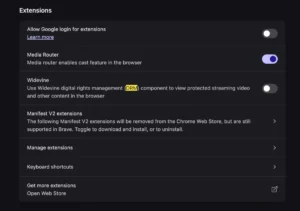
In the modern web environment, the ability to right-click and "save as" has become a relic of the past for most media-rich sites. Developers now utilize "blob URLs"—a temporary, internal pointer to data held in a browser’s memory—to obscure the actual source of the media. This prevents casual users from identifying a direct MP3 or MP4 link. Furthermore, Encrypted Media Extensions (EME) and Content Decryption Modules (CDM) provide a layer of DRM that ensures content is decrypted only during playback, never leaving a permanent footprint on the user’s hard drive.

Despite these hurdles, the demand for offline access remains high. Whether for researchers archiving historical footage, travelers preparing for areas without internet connectivity, or creators seeking to backup their own libraries, the need for a reliable downloader has never dissipated. For years, the gold standard for this task was youtube-dl, an open-source project that could bypass many of these technical restrictions. However, as the project’s development slowed and its performance began to lag against YouTube’s constant updates to its throttling algorithms, a fork emerged: yt-dlp.
The Rise of yt-dlp and the Stagnation of youtube-dl
The transition from youtube-dl to yt-dlp represents a significant milestone in the community-driven effort to maintain internet freedom. In late 2020, youtube-dl faced a major legal challenge when the Recording Industry Association of America (RIAA) filed a DMCA takedown notice against its GitHub repository. The RIAA argued that the tool was designed to circumvent technological protection measures. Although GitHub eventually restored the repository after a public outcry and legal analysis by the Electronic Frontier Foundation (EFF), the development of the original tool became sporadic.
yt-dlp was launched as a fork of the original project, incorporating new features, faster download speeds, and, crucially, more frequent updates to counter YouTube’s "rolling cipher" and rate-limiting tactics. Today, yt-dlp is widely considered the superior tool. It supports thousands of sites beyond YouTube, including Vimeo, Dailymotion, and various social media platforms.
For users seeking to archive entire channels, yt-dlp offers a streamlined command-line interface. A simple command such as yt-dlp [URL] initiates the download of a video in the highest available quality. To download an entire channel—such as an archival project like "beetlejuicearchives3490"—the tool automatically parses the channel’s video list and begins a sequential download of every piece of content available.
Advanced Functionality and Audio Extraction
One of the most praised features of yt-dlp is its ability to handle post-processing tasks, such as extracting audio from video files. This is particularly useful for users who utilize YouTube as a primary source for podcasts, lectures, or historical radio broadcasts. By using specific arguments, such as -x for audio extraction and --audio-format mp3, a user can convert a video stream directly into a portable audio file.

The command yt-dlp -x --audio-format mp3 [URL] leverages the FFmpeg library—a powerful multimedia framework—to strip the video data and re-encode the audio into a standard format. This level of granular control is what distinguishes yt-dlp from the myriad of "YouTube-to-MP3" websites, which are often riddled with invasive advertisements, malware, and privacy-compromising tracking scripts.
Supporting Data and the Scale of Digital Content
The necessity for tools like yt-dlp is underscored by the sheer volume of data generated daily. According to market research, over 500 hours of video are uploaded to YouTube every minute. While much of this content is ephemeral, a significant portion serves as a primary record of contemporary history, education, and culture.
Data from the "State of the Internet" reports suggests that video content accounts for over 80% of all internet traffic. As platforms implement "data caps" or "fair use policies" on mobile networks, the ability to download content over home Wi-Fi for later offline consumption has become a matter of economic necessity for many. Furthermore, in regions with restricted internet access or high levels of censorship, local archiving of educational content is often the only way to ensure permanent access to information.
Legal and Ethical Implications of Local Archiving
The use of downloaders exists in a complex legal gray area. While YouTube’s Terms of Service explicitly prohibit the downloading of content without prior written consent from the platform or the respective rights holder, the legal concept of "fair use" in the United States and "fair dealing" in other jurisdictions provides a potential defense for personal, non-commercial archiving.
In 2020, the EFF argued that youtube-dl (and by extension yt-dlp) does not violate the DMCA because it does not "circumvent" an effective technological protection measure in the way the law intended. Instead, it simply uses the information provided to the browser to facilitate a download. Legal experts note that while the tools themselves are legal to possess and develop, the application of the tools determines the legality of the action. Archiving a public lecture for personal study is generally viewed differently by the courts than downloading a copyrighted blockbuster movie for redistribution.
Official Responses and Industry Reaction
Major platforms like Google, Meta, and Netflix have generally remained silent on specific tools like yt-dlp, choosing instead to engage in a technical "cat-and-mouse" game. YouTube frequently updates its source code to change the way video URLs are generated or to introduce artificial speed limits on connections that do not appear to be coming from a standard web browser.
The developer community behind yt-dlp responds to these changes with remarkable speed, often releasing patches within hours of a platform update. This cycle highlights the difficulty platforms face in completely locking down content that is, by its very nature, intended to be viewed by a client-side device. If a device can play the video, it can, in theory, record or save it.
Broader Impact: The Future of Digital Preservation
The rise of yt-dlp is more than just a technical convenience; it is a vital component of digital preservation. As platforms age, they often delete "inactive" accounts or remove content that is no longer deemed profitable, leading to a phenomenon known as "link rot" or "digital decay." Without independent archiving tools, vast swaths of 21st-century culture could be lost if a single corporation decides to pull the plug on a service.
Groups like the "Archive Team" and various library science professionals utilize scripts built on yt-dlp to mirror at-risk content before it disappears from the public record. In this context, the tool moves from the realm of "piracy" into the realm of "curation."
As we look toward the future, the tension between the "walled garden" model of the internet and the "open web" philosophy will likely intensify. Tools like yt-dlp represent a bridge between these two worlds, allowing users to reclaim a sense of ownership over the media they consume. Whether for travel, education, or the long-term preservation of human knowledge, the ability to save a digital file remains a fundamental skill in the modern age—a "lost art" that is being kept alive by a dedicated global community of developers and archivists.