SEO Expert Became AI Search Expert (Gulp.): How To Control AI Answer Accuracy

The digital marketing landscape has undergone a profound and rapid transformation over the past year, fundamentally redefining the role of Search Engine Optimization (SEO) professionals. What was once a specialized field primarily focused on driving organic traffic through keyword rankings and traditional Search Engine Results Page (SERP) visibility has expanded dramatically to encompass the intricate dynamics of Artificial Intelligence (AI) search. This seismic shift has effectively rewritten job descriptions without explicit permission, challenging experts to not only track conventional SERP performance but also to meticulously monitor and influence AI answer accuracy, ensuring that AI models accurately represent and proactively mention their brands. The critical new imperative is to transition from merely fighting for clicks to strategically shaping the narrative and factual representation of a brand within the burgeoning realm of AI-generated search results.
The Evolving Search Landscape: A Recent History
For decades, the bedrock of digital visibility rested on SEO principles that optimized websites for search engine algorithms. Professionals meticulously crafted content, built robust backlink profiles, and engaged in technical optimizations to secure top rankings on SERPs. The goal was clear: drive users to a website where they could engage directly with a brand’s content, products, or services. Success was measured in organic traffic, conversion rates, and keyword positions.
However, the latter half of 2022 and early 2023 marked a pivotal inflection point with the mainstream emergence of sophisticated generative AI models, such as OpenAI’s ChatGPT, Google’s Bard (now Gemini), and Microsoft’s Copilot. These powerful language models quickly began to integrate into core search functionalities, exemplified by Google’s Search Generative Experience (SGE) and Microsoft Bing’s AI-powered chat features. Instead of merely presenting a list of links, search engines started providing direct, conversational answers, summaries, and syntheses of information, often drawn from multiple sources. This represented a fundamental shift from a "links economy" to an "answers economy."
The immediate implication for brands and SEO experts was a palpable "gulp" moment. The traditional funnel, which directed users from a search query to a website, suddenly faced a new intermediary: an AI summary that might provide all the necessary information directly on the SERP, potentially bypassing the brand’s website entirely. More critically, these AI models, while powerful, were not infallible. Early instances revealed challenges with "hallucinations" (generating factually incorrect information), misattributions, or simply failing to mention the original source of information. This created an urgent need for brands to exert control over what AI systems were saying about them.
Navigating the Nuances of AI-Driven Brand Representation
The advent of AI in search introduced a complex array of challenges for brand managers and digital marketers. The battle for visibility transformed into a fight for accurate representation and authoritative attribution within AI-generated responses. Key concerns quickly emerged:
- Accuracy and Veracity: The primary worry revolved around AI models generating incorrect or misleading information about a brand, its products, or services. A study by Vectara in late 2023, analyzing several large language models, found that while impressive, models still demonstrated varying degrees of factual accuracy, with some exhibiting significant rates of hallucination, particularly when pushed to provide specific data points. For brands, an inaccurate AI answer can quickly erode trust and damage reputation.
- Brand Mentions and Attribution: Even if accurate, AI summaries often synthesize information from various sources without explicit attribution. The fear was that an AI might correctly answer a user’s query using a brand’s proprietary information or product details, but fail to mention the brand by name or link back to its website. This would effectively devalue the brand’s content creation efforts and diminish its authority.
- Brand Voice and Messaging: Maintaining a consistent brand voice and messaging is crucial for identity. AI models, by their nature, synthesize information in a generic or optimized tone. Ensuring that AI reflects a brand’s unique personality and communication style, particularly in direct answers, became a new frontier.
- Competitive Landscape: How AI chooses to present competitors, or even synthesize comparative information, also became a strategic concern. Brands needed to ensure that their unique selling propositions were clearly understood and articulated by AI systems.
- Lack of Transparency: The "black box" nature of many AI models means that understanding precisely how they arrive at a specific answer or prioritize certain information remains opaque. This lack of transparency makes it challenging to diagnose issues or proactively optimize for AI consumption without specialized tools and insights.
The transition from purely tracking SERP rankings to simultaneously monitoring AI answer accuracy necessitated a new skillset and a refined strategic approach. The digital marketing community, particularly those within SEO, found themselves at the forefront of this evolution, tasked with not only understanding but actively shaping the future of information dissemination.
Leveraging Foundational SEO Principles in the AI Era
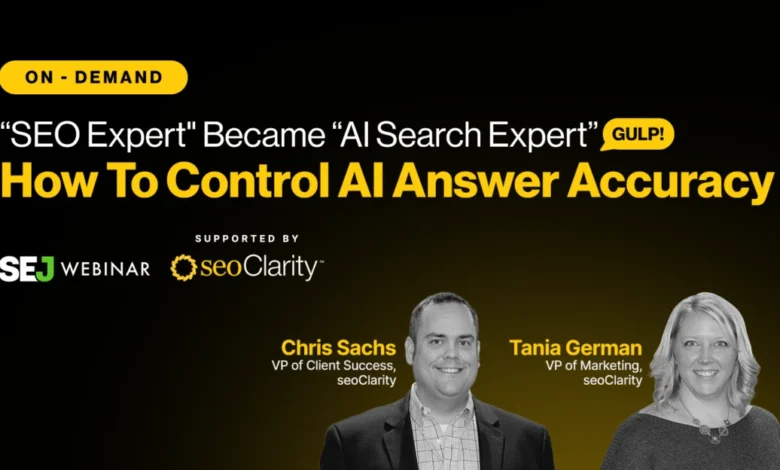
Despite the dramatic shift, the good news for seasoned SEO professionals is that their core expertise is far from obsolete; it serves as the precise foundation upon which effective AI search strategies are built. Companies like seoClarity, a prominent enterprise SEO platform, quickly recognized this synergy. Their Vice President of Client Success, Chris Sachs, and Vice President of Marketing, Tania German, have been instrumental in articulating this bridge, emphasizing that existing SEO knowledge is not a relic but an indispensable asset.
Here’s why traditional SEO principles are more relevant than ever in the AI search era:
- Understanding Search Intent: At its heart, SEO has always been about understanding what users are looking for and providing the most relevant, helpful answer. This deep comprehension of user intent is paramount when optimizing for AI. AI models strive to provide definitive answers to queries, and content that clearly and comprehensively addresses user intent is more likely to be identified as an authoritative source.
- Content Quality and Authority (E-E-A-T): Google’s long-standing emphasis on Experience, Expertise, Authoritativeness, and Trustworthiness (E-E-A-T) has found a new, amplified resonance with AI. AI models are trained on vast datasets, but they are also designed to prioritize and synthesize information from highly credible and authoritative sources. Brands that have invested in creating high-quality, expert-driven, trustworthy content are inherently better positioned to be recognized as definitive sources by AI. For example, a medical site written by certified doctors with clear citations is far more likely to be sourced by an AI for health queries than a forum post.
- Technical SEO and Structured Data: While AI models are sophisticated, they still rely on well-structured, easily digestible data. Technical SEO practices, such as ensuring site crawlability, optimizing site speed, and implementing clear information architecture, remain critical. More specifically, structured data (using Schema.org markup) becomes incredibly powerful. By explicitly labeling information within content (e.g., product details, FAQs, reviews, "About Us" information), brands can make it easier for AI to understand, extract, and accurately present specific data points. This direct "feeding" of structured facts significantly increases the likelihood of accurate AI representation.
- Link Building and Reputation Management: The digital reputation of a brand, built through quality backlinks and positive mentions across the web, influences its perceived authority. AI models, in their learning and answer generation, inherently lean on sources that are widely recognized and cited as credible. A strong backlink profile and a positive brand presence across diverse, reputable platforms contribute to a brand being deemed a trusted entity, thereby increasing its chances of being cited accurately and prominently by AI.
In essence, the skills honed by SEO professionals—analytical thinking, content strategy, technical optimization, and an unwavering focus on user experience—are precisely the skills needed to navigate and succeed in the AI search environment. The transition isn’t a replacement but an evolution, where traditional strengths are leveraged to address new challenges.
Three Core Strategies for Mastering AI Search Accuracy
Recognizing the urgent need for a practical roadmap, industry leaders like seoClarity have outlined strategic frameworks to help brands take the lead in AI search. While specific tactical details would be covered in a full session, the overarching strategies coalesce around proactive optimization, continuous monitoring, and authoritative brand building.
Strategy 1: Proactive Content Optimization for AI Ingestion
This strategy emphasizes preparing content specifically for AI consumption, going beyond human readability to machine parseability.
- Implement Comprehensive Structured Data: Brands must rigorously apply Schema.org markup to all relevant content. This includes product schemas, FAQ schemas, "How-To" schemas, organization schemas, and review schemas, among others. By explicitly defining data points, brands tell AI exactly what each piece of information represents, minimizing misinterpretation. For instance, clearly marking a product’s price, availability, and description with schema ensures AI accurately retrieves these details.
- Create Definitive Answer Content: Develop dedicated content designed to be the single, authoritative source for specific queries. This could involve highly detailed FAQ sections, "What Is X?" pages, or "definitive guide" articles that address common user questions comprehensively and concisely. These pages should be structured with clear headings, bullet points, and summary statements to facilitate AI extraction.
- Amplify E-E-A-T Signals: Reinforce authoritativeness by prominently featuring author biographies, credentials, and affiliations. Ensure content is regularly updated, fact-checked, and supported by credible internal and external references. Showcase customer testimonials, industry awards, and transparent "About Us" information to build trust signals that AI can detect and prioritize.
Strategy 2: Continuous Monitoring and Feedback Loops
Given the dynamic nature of AI, ongoing vigilance is paramount. This strategy focuses on tracking AI outputs and establishing mechanisms for correction.
- AI Answer Monitoring: Implement tools and processes to actively monitor how AI search features (like Google SGE summaries or Bing Copilot answers) mention and represent the brand for key queries. This involves tracking not just whether the brand is mentioned, but the accuracy, tone, and completeness of that mention. Specialized AI monitoring tools are emerging to assist with this, often integrated into broader SEO platforms.
- Competitor AI Analysis: Extend monitoring to competitor brands. Understanding how AI portrays rivals can offer insights into effective optimization strategies and highlight areas where a brand might need to strengthen its own AI-readiness.
- Establish Feedback Mechanisms: While direct feedback channels to major AI providers are still evolving, brands should be prepared to report inaccuracies. This might involve using built-in feedback options within search results, engaging with developer forums, or leveraging industry connections to highlight critical errors. The goal is to correct misrepresentations swiftly and prevent their perpetuation.
Strategy 3: Cultivating Brand Authority and Definitive Presence
Beyond content and monitoring, this strategy emphasizes making the brand an undeniable authority in its domain, almost forcing AI to recognize and cite it.
- Thought Leadership and Public Relations: Actively engage in thought leadership initiatives. Publish original research, contribute to industry conversations, and secure media mentions in reputable publications. When a brand is frequently cited by high-authority external sources, AI models are more likely to perceive it as a definitive authority on its subject matter.
- Consistent Brand Messaging Across All Channels: Ensure that core brand messages, product descriptions, and company information are consistent across the website, social media, press releases, and any other digital footprint. Inconsistencies can confuse AI models and lead to fragmented or inaccurate representations.
- Build a Knowledge Graph Presence: Focus on contributing to and correcting information within knowledge graphs (like Google’s Knowledge Graph). This often involves claiming and optimizing Google Business Profiles, Wikipedia entries (if applicable), and other public data sources that AI systems frequently consult.
These three strategies, when implemented collaboratively, empower brands to move beyond passive observation to proactive control, positioning themselves as the go-to source for AI-generated answers.
Industry Insights and the Role of SEO Platforms
The rapid evolution of search has prompted significant discourse among industry leaders. Loren Baker, Founder of Search Engine Journal and Foundation Digital, a digital marketing agency, has consistently highlighted the critical nature of this transition, noting how quickly the landscape has shifted. His platform, SEJ, serves as a vital resource for professionals seeking to understand and adapt to these changes, underscoring the urgency of mastering AI search.
From seoClarity, Chris Sachs, VP of Client Success, emphasized during their recent session that the transition is not about abandoning traditional SEO but rather augmenting it with new AI-focused methodologies. "Your foundational SEO expertise is not just relevant; it’s the exact blueprint for success in AI search," Sachs reportedly stated, stressing the need for marketers to translate their understanding of search intent and content quality into an AI-digestible format. Tania German, VP of Marketing, further added, "Proactive engagement with AI systems, coupled with robust data analysis, is paramount for maintaining brand integrity and securing definitive answers. We’re moving from a world of ‘find’ to a world of ‘know,’ and brands must be the source of that knowledge."
This collective sentiment reflects a broader industry consensus: the future of digital visibility is inextricably linked to AI. SEO platforms are rapidly evolving to provide the necessary tools for monitoring AI answer accuracy, analyzing AI-generated content for competitive insights, and facilitating the structured data implementation critical for AI ingestion. These platforms are becoming indispensable partners for brands navigating this complex new frontier.
The Future of Digital Expertise: Beyond Clicks to Conversational Authority
The transformation of the "SEO Expert" into an "AI Search Expert" signifies more than just a job title change; it represents a fundamental shift in the strategic importance of digital marketing within an organization. Professionals are no longer just fighting for clicks; they are fighting to ensure that their brand is accurately represented, authoritatively cited, and positioned as the definitive answer in a conversational, AI-driven search environment.
This expanded role necessitates a new level of cross-functional collaboration. SEO teams must work closely with content creators to ensure content is not only engaging for humans but also optimally structured for AI. They must collaborate with PR and legal teams to manage brand reputation and respond swiftly to any AI-generated inaccuracies. They must also be able to articulate the value of these new strategies to leadership, proving the return on investment of optimizing for AI accuracy.
Ultimately, the goal is to build and maintain consumer trust in an age where information can be instantly synthesized by machines. Brands that proactively embrace these strategies, leveraging their deep SEO expertise to control AI outputs and lead the charge, will be the ones that thrive. They will not only secure their place at the top of traditional SERPs but also cement their status as the authoritative, trusted voice in the evolving landscape of AI-driven conversational search, ensuring that when an AI model speaks for their brand, it truly gets the information right.