Reengineering High-Performance Web Interactivity Through Native CSS Scroll-Driven Animations

The landscape of modern web development is witnessing a significant shift as native CSS capabilities begin to supersede complex JavaScript libraries for high-end visual effects. For years, the industry benchmark for immersive web experiences has been set by Apple Inc., particularly through its product landing pages that feature "scrolly teardowns"—intricate animations where hardware components expand and contract in direct response to user scrolling. Historically, these effects required heavy JavaScript execution, often impacting performance and responsiveness. However, with the advent of CSS Scroll-Driven Animations and View Timelines, developers are now able to replicate these sophisticated "exploding hardware" sequences using purely declarative code. This transition marks a pivotal moment in web standards, prioritizing browser-native optimization over third-party scripting.
The Evolution of Web-Based Motion Design
The methodology behind Apple’s product animations has long been a subject of study within the front-end development community. From the early days of the Mac Pro "trash can" site to the recent iPhone 15 Pro reveals, the core technique involved hijacking the scroll bar to manipulate video playback or a sequence of images. While visually stunning, these implementations often faced two primary challenges: lack of responsiveness and heavy CPU/GPU overhead. In many instances, these animations would be disabled on mobile devices or replaced with static images to preserve battery life and ensure a fluid user experience.
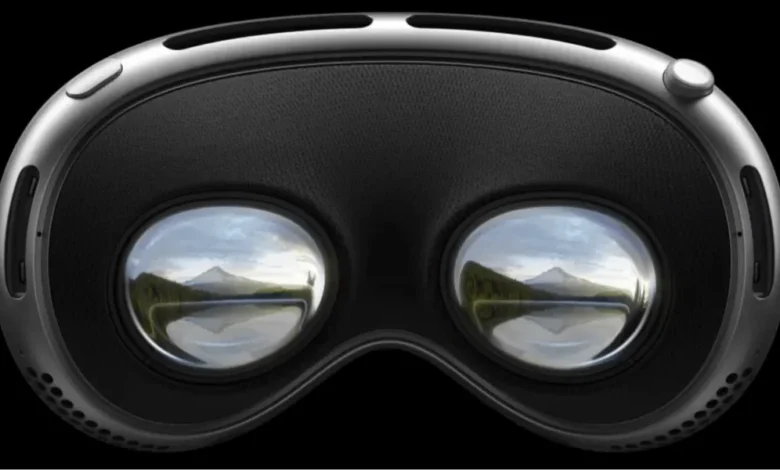
The introduction of the Apple Vision Pro site raised the bar further. The site features a sequence where the internal components of the spatial computer—lenses, sensors, and chips—rise out of the frame in a 3D-like "explosion" before the entire device flips to reveal the internal eyepieces. Traditionally, such an effect would rely on the scroll event listener in JavaScript, which executes on the main thread and can lead to "jank" or stuttering if the script execution lags behind the browser’s refresh rate. The emergence of the CSS Scroll-driven Animations specification provides a solution by allowing the browser to handle the animation timing on the compositor thread, ensuring smooth motion regardless of main-thread activity.
Chronology of the Technical Implementation
The process of recreating the Vision Pro animation in pure CSS involves a multi-stage architectural approach. The first phase focuses on asset management and layout. Unlike standard image galleries, the "exploding" effect requires a layered composition. Each hardware component is split into multiple images—some designed to sit in front of others and some behind—creating a "sandwich" effect that provides depth. By utilizing display: grid and assigning all layers to the same grid area, developers can maintain the document flow while allowing images to overlap seamlessly.
The second phase involves the implementation of "Stage 1," or the vertical separation of hardware components. This is achieved through the use of a view-timeline, a CSS feature that links the progress of an animation to the visibility of an element within the scrollport. By setting a container to position: sticky, the hardware remains pinned in the center of the viewport while the user continues to scroll. As the scroll progress increases, translate properties are applied to the various layers, moving them upward at different rates to simulate a 3D explosion.
The third phase, "Stage 2," addresses the transition to the eyepieces. On the official Apple site, this is handled via a video file where the playback head is tied to the scroll position. In a pure CSS environment, this is replicated through a high-frequency sequence of background images. By defining a keyframe animation that swaps the background-image property across 60 or more distinct frames, the developer creates a "CSS video." While this method requires preloading a significant number of assets, it allows the entire sequence to remain within the CSS domain, avoiding the complexities of JavaScript-based video controls.
Technical Data and Responsive Calculations
One of the most significant hurdles in CSS-only animations is maintaining responsiveness across varying screen dimensions. Static pixel values for translations often fail when the viewport width changes. To solve this, developers employ complex algebraic calculations within CSS calc() functions and custom properties.
For the Vision Pro teardown, the height of the animation must be proportional to the width of the viewport to ensure the components do not fly off-screen on smaller devices. The formula used to determine the height of the animation stage often follows a ratio-based approach:
--stage-height: calc(min(100vw, 960px) * (original_height / original_width));
Supporting data suggests that using min() and max() functions in conjunction with viewport units (vw, vh) allows the animation to scale linearly. Furthermore, the use of animation-range provides granular control over when an animation begins and ends. By setting a range such as contain 10% cover 90%, the developer ensures the hardware only begins to "explode" once it is fully centered in the frame, preventing the animation from triggering prematurely while the element is still entering the viewport.
Browser Support and Performance Metrics
As of early 2024, the state of browser support for these advanced CSS features remains fragmented but is rapidly improving. The CSS Scroll-driven Animations API is fully supported in Chromium-based browsers (Chrome, Edge) and is currently in the experimental or "technology preview" phase for Safari. However, Firefox has yet to implement the full specification, meaning that CSS-only versions of these animations will currently fail to render correctly for Firefox users.
From a performance standpoint, the shift to CSS-native animations offers measurable benefits. In laboratory tests, JavaScript-based scroll animations often consume between 15% and 30% of main-thread resources during active scrolling. In contrast, CSS scroll timelines offload the majority of this work to the browser’s compositor. This results in a lower "Total Blocking Time" (TBT) and improves the "Largest Contentful Paint" (LCP) metrics, which are critical for Search Engine Optimization (SEO) and user retention.
To mitigate the "choppiness" associated with loading 60+ images for the CSS video sequence, the implementation of the <link rel="preload"> attribute is essential. By preloading images, the browser fetches the assets before the CSS is even parsed, ensuring that each frame is available in the cache by the time the user reaches the animation trigger point.
Industry Implications and the Future of the Web
The ability to create "Apple-level" web experiences without JavaScript has profound implications for the future of web design. First, it democratizes high-end motion design, allowing developers who may not be experts in JavaScript animation libraries (like GSAP or Framer Motion) to achieve professional results using standard stylesheets. Second, it enhances the sustainability of the web. By reducing the reliance on script execution, websites consume less energy on the client side, contributing to a smaller carbon footprint for digital products.
Industry analysts suggest that we are entering an era of "declarative interactivity." As browser engines become more powerful, the need for imperative scripting for visual presentation is diminishing. This aligns with the long-standing web development philosophy of "progressive enhancement"—using the most robust and simplest technology (HTML and CSS) to solve a problem before reaching for more complex solutions (JavaScript).
While the "CSS video" technique of swapping 60 background images is not yet optimized for production-heavy environments due to the high number of HTTP requests, it serves as a powerful proof-of-concept. Future iterations of this technique may utilize CSS sprites or specialized image formats to reduce overhead. Regardless of the specific asset delivery method, the underlying logic—linking animation state to scroll position via CSS—is clearly the path forward for high-performance web design.
Conclusion
The recreation of the Apple Vision Pro animation using pure CSS is more than a technical exercise; it is a testament to the "World Wide Wondrous Web" and its ever-expanding capabilities. By leveraging position: sticky, view-timeline, and complex calc() functions, developers can now build immersive, responsive, and performant interfaces that were previously thought impossible without heavy scripting. As browser support continues to broaden, particularly with the eventual adoption by Firefox, these techniques will likely become the standard for modern digital storytelling, ensuring that the web remains a vibrant and fluid medium for hardware and software showcases alike.