The Evolution of Modern Asset Management How Filestack is Redefining the Digital Media Pipeline for Developers and Enterprises

In the contemporary digital landscape, the management of media assets has transitioned from a peripheral administrative task to a core operational challenge for businesses of all sizes. As the global volume of user-generated content continues to surge, developers are increasingly seeking robust, scalable solutions to handle the complexities of uploading, transforming, and delivering high-quality media across diverse platforms. Filestack, a prominent player in the digital asset management (DAM) and file handling space, has emerged as a critical utility for organizations looking to streamline these workflows without the prohibitive overhead of building proprietary infrastructure. By providing a comprehensive suite of tools for the entire file lifecycle, Filestack addresses the technical debt associated with custom media handling, offering a seamless bridge between raw data submission and optimized consumer delivery.
The Growing Complexity of Digital Asset Management
The modern internet is fundamentally visual. Statistics indicate that images and videos account for more than 80% of all internet traffic, a trend driven by the rise of social media, e-commerce, and remote collaboration tools. For developers, this creates a multifaceted problem: users expect to upload files from various sources—ranging from local drives to cloud storage services like Google Drive and Dropbox—and they expect those files to be processed and rendered instantly on any device, regardless of bandwidth or screen resolution.
Historically, managing this pipeline required significant engineering resources. Developers had to write custom code for various API integrations, manage server-side storage, handle file type conversions, and implement content delivery networks (CDNs) to ensure global availability. The introduction of services like Filestack marks a paradigm shift toward "Headless" file management, where the heavy lifting of infrastructure is outsourced to specialized APIs, allowing development teams to focus on their core product features.
Initial Setup and Developer Onboarding
The journey toward a streamlined media pipeline begins with an accessible entry point. Filestack offers a structured onboarding process designed to minimize the "time to first upload." New users are typically granted a 21-day trial period, providing full access to the platform’s libraries and features. This low-friction entry is crucial for startups and enterprise teams alike, as it allows for rapid prototyping and proof-of-concept development without immediate financial commitment.
Central to the developer experience is the Filestack documentation. In the software development community, the quality of documentation often dictates the adoption rate of a service. Filestack’s documentation is frequently cited as a benchmark for the industry, offering detailed code samples, comprehensive API references, and use-case-specific guides. This resource ensures that even junior developers can implement sophisticated file-handling logic with minimal oversight, significantly reducing the development lifecycle.
Streamlining the Upload Process
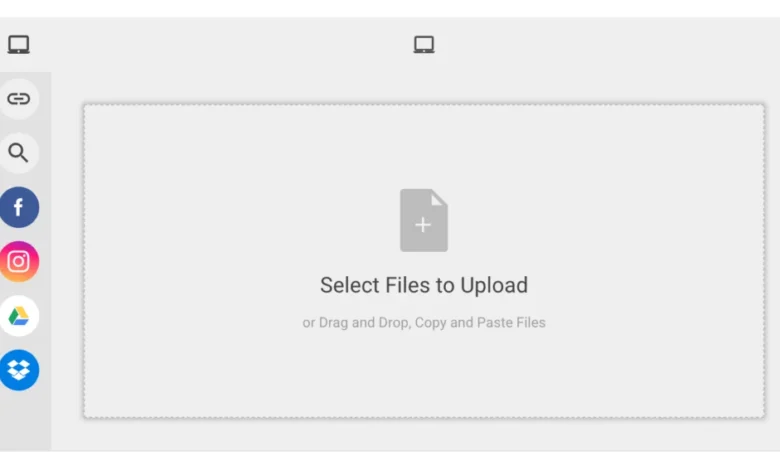
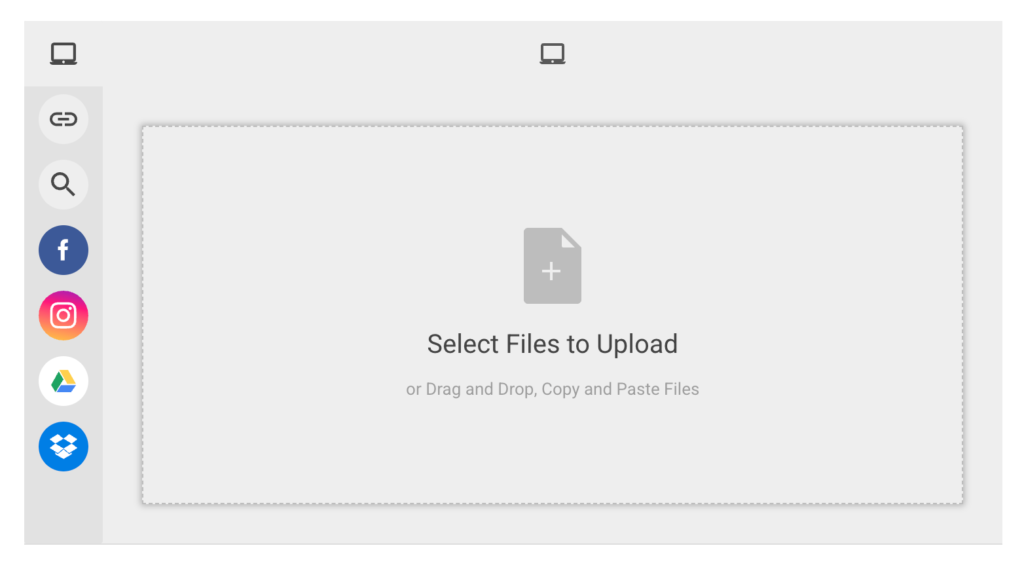
The first pillar of the Filestack ecosystem is the upload mechanism. In many legacy systems, file uploading is a fragile process prone to timeouts and format errors. Filestack mitigates these risks through its highly optimized File Picker. The Picker is a pre-built UI component that can be integrated into a web application with just a few lines of JavaScript.
const client = filestack.init("apikey");
const picker = client.picker();
picker.open();
This simple implementation grants users access to an elegant, feature-rich interface that supports drag-and-drop functionality and integrates with over 20 popular third-party services. These include industry staples such as Google Drive, Dropbox, Box, GitHub, Facebook, and Instagram. By centralizing these integrations, Filestack eliminates the need for developers to maintain separate OAuth flows and API connections for each service.
For organizations that require backend processing or server-to-server file transfers, Filestack provides robust SDKs for languages like Python. This allows for automated workflows where files can be moved from local storage to cloud providers like Amazon S3 with precise control over metadata and storage paths.
from filestack import Client

client = Client(APIKEY)

store_params =
    'location': 's3',
    'path': 'folder/subfolder/',
    'upload_tags':
          "foo":"bar"


filelink = client.upload(filepath='path/to/filename.jpg', store_params=store_params)
Real-Time Transformation and Content Adaptation
Once a file is securely uploaded, the next challenge is transformation. User-submitted content is rarely in the ideal format for every end-user device. A high-resolution JPEG might be perfect for a desktop hero image but would be prohibitively large for a mobile thumbnail. Filestack’s transformation engine allows developers to manipulate media on-the-fly using simple URL parameters.
This URL-based transformation API is one of the platform’s most powerful features. By appending commands to the file URL, developers can resize, crop, rotate, and apply filters to images without ever touching the original file. For example, resizing an image to a width of 300 pixels is as simple as adding resize=width:300 to the CDN link. More complex operations, such as applying a sepia tone or adding a "polaroid" border effect, can be chained together.
Beyond aesthetic adjustments, Filestack provides critical utility transformations, including:
- Document Conversion: Converting PDFs to high-quality images or vice versa.
- Video Transcoding: Optimizing video files for various bitrates and formats to ensure smooth playback on all devices.
- AI-Powered Analysis: Integrating machine learning for object detection, optical character recognition (OCR), and sensitive content detection (NSFW scanning).
For applications that require a more interactive user experience, Filestack also offers a Transformation UI. This allows end-users to edit their own photos—cropping or applying filters—directly within the browser before the final file is saved, further reducing the processing burden on the application’s backend.
Reliability in Delivery and Global Performance
The final and perhaps most critical stage of the media lifecycle is delivery. A slow-loading image or a broken video link can lead to immediate user churn. Industry data suggests that a one-second delay in page load time can result in a 7% reduction in conversions. To combat this, Filestack utilizes a sophisticated CDN architecture to ensure that assets are delivered with maximum speed and reliability.
Filestack’s CDN caches URLs the first time they are accessed. This includes any unique combination of transformations applied to a file. For instance, if a specific image is requested with a 300px width and a grayscale filter, that specific version is cached. This cached copy remains active for 30 days, after which it is automatically refreshed upon the next request. This strategy ensures that subsequent users requesting the same asset experience near-instant loading times, as the content is served from an edge server geographically closest to them.
Analysis of Economic and Operational Impact
From a strategic perspective, adopting a service like Filestack represents a "buy vs. build" decision that heavily favors the "buy" model for most modern enterprises. The cost of maintaining an internal team to manage global file uploads, security patching for image processing libraries (which are frequent targets for exploits), and CDN contracts can easily exceed six figures annually for a mid-sized company.
Furthermore, the security implications cannot be overstated. Filestack acts as a buffer between the public internet and a company’s internal storage. By handling the initial upload and providing tools for malware scanning and file sanitization, Filestack reduces the attack surface of the applications it serves. In an era of increasing cybersecurity threats, this layer of abstraction is a significant asset for risk management teams.
Official Responses and Market Outlook
Industry analysts have noted that the "API-first" economy is maturing, with Filestack positioned as a leader in the specialized niche of file intelligence. "The goal is to remove the friction between a user’s intent to share a file and the application’s ability to display it," says one industry observer. "Filestack has successfully turned a complex engineering hurdle into a utility, much like Stripe did for payments or Twilio did for communications."
As we look toward the future, the integration of artificial intelligence into the Filestack pipeline is expected to be the next major frontier. With the ability to automatically tag images, generate captions, and even enhance low-resolution photos using AI upscaling, the platform is moving toward becoming an "intelligent" media layer rather than just a storage and delivery tool.
Conclusion
Filestack offers a comprehensive solution to one of the most persistent problems in web and mobile development. By mastering the pillars of upload, transformation, and delivery, the platform allows businesses to deliver a high-quality user experience with minimal technical overhead. As digital content continues to evolve in complexity and volume, the reliance on such specialized, high-performance utilities is likely to become a standard requirement for any organization seeking to remain competitive in the digital age. From the initial signup to the final delivery of a cached asset, Filestack provides a cohesive and powerful framework that bridges the gap between raw data and a polished consumer experience.