The Evolution of Modern Web Standards and the Emergence of High-Performance HTML in Canvas Rendering

The landscape of web development is currently undergoing a significant transformation as engineers explore new methods to bridge the gap between high-performance graphics and semantic markup. At the forefront of this movement is the emergence of the HTML-in-Canvas API, a development that promises to redefine how user interfaces are constructed within the browser’s most flexible drawing environment. Traditionally, the <canvas> element has been an immediate-mode bitmap, meaning that once an object was drawn, the browser "forgot" what it was, retaining only the pixels. This created a long-standing rift between the performance of canvas-based applications—such as data visualizations and games—and the accessibility and search engine optimization (SEO) benefits of standard HTML. The introduction of the HTML-in-Canvas (HiC) API seeks to resolve this by allowing developers to render real, semantic HTML elements inside a canvas context while maintaining visual effects and hardware acceleration.
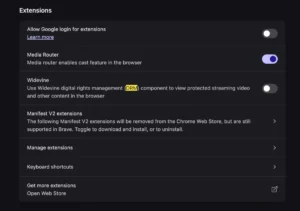
Amit Sheen, a prominent figure in the CSS community, has recently showcased the capabilities of this API through a series of experimental demonstrations at the HiC Showroom. These experiments utilize the chrome://flags/#canvas-draw-element flag, currently available in experimental builds such as Chrome 146, to draw DOM elements directly into the canvas’s rendering pipeline. This allows for a unique hybrid approach where elements can be manipulated with the power of a graphics engine while remaining "readable" to the browser’s accessibility tree. For the developer community, this represents a pivot point; the choice is no longer strictly between a fast but "dumb" canvas and a flexible but potentially slow DOM-heavy interface.
The Engineering of Hexagonal Geospatial Analytics
Beyond the rendering engine, the industry is seeing a sophisticated evolution in data visualization, specifically in the realm of geospatial analytics. Ben Schwarz of Calibre recently detailed the retrospective development of a hexagonal world map feature, a project that highlights the intersection of design constraints and engineering precision. Hexagonal grids, or "hexbins," have become a preferred method for data scientists and web developers to represent density without the "meridian distortion" common in square-grid projections. Because hexagons share an equal distance between their center and all six neighbors, they provide a more accurate representation of proximity and connectivity.
The implementation of such a system requires a deep understanding of SVG (Scalable Vector Graphics) and CSS. In the Calibre project, the team had to navigate the complexities of rendering thousands of individual shapes while maintaining a responsive layout that could adapt to varying screen sizes. The technical challenge lies in the coordinate system; unlike square grids that align with standard X and Y axes, hexagonal grids require axial or cubic coordinates to calculate placement accurately. By leveraging modern CSS properties alongside SVG, developers can create interactive maps that are not only visually striking but also performant enough to handle real-time data updates without taxing the user’s hardware.
Rekindle and the Standardization of E-Ink Interfaces
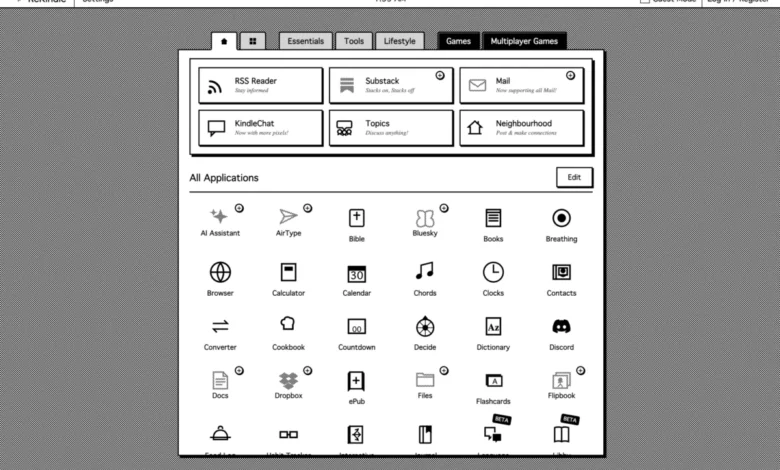
As the web expands into diverse hardware categories, the limitations of traditional web browsers on low-power devices have become more apparent. This is particularly evident in the e-ink market, dominated by devices like the Amazon Kindle, Kobo, and Boox. These devices often ship with proprietary, underpowered browsers that fail to support modern web standards, leading to the creation of projects like Rekindle. Rekindle serves as a web-based operating system designed specifically for the constraints of electronic paper displays.
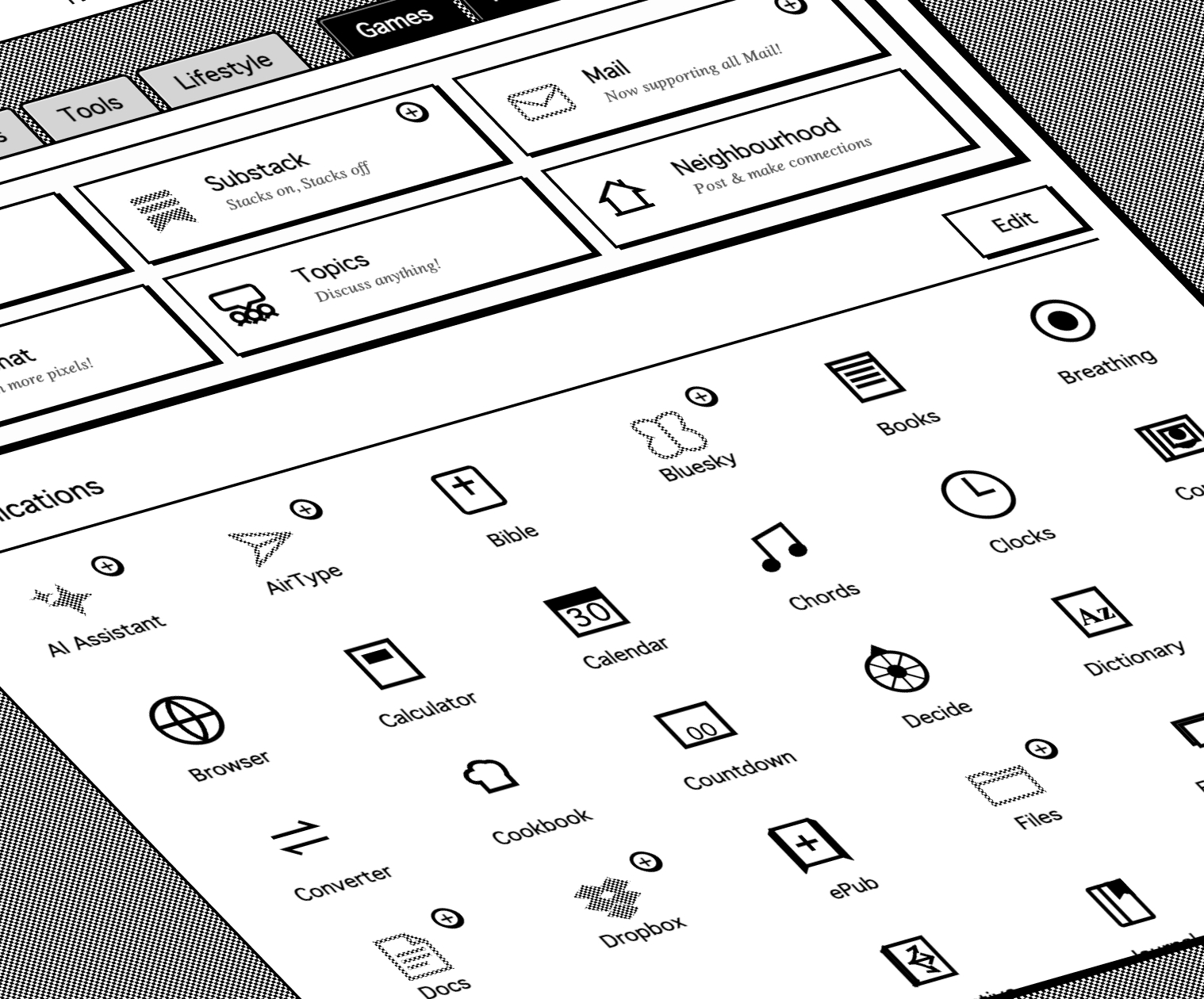
The architecture of Rekindle focuses on high-contrast, black-and-white user interfaces, the elimination of animations to accommodate slow refresh rates, and the optimization of touch targets. This project highlights a significant gap in the current implementation of Media Queries Level 5. While the W3C (World Wide Web Consortium) has outlined specifications for media queries that can detect a device’s display update frequency, color depth, and monochromatic bit-depth, many hardware manufacturers have yet to implement these in their native browser engines.
The implications of this are twofold. First, it necessitates the existence of third-party platforms like Rekindle to provide a usable web experience on e-readers. Second, it serves as a call to action for the broader web community to advocate for better standards support in non-traditional browsing environments. If the "Display Update" and "Monochrome" media queries were universally supported, developers could serve specialized stylesheets that automatically optimize any website for an e-ink screen, significantly improving accessibility for users who rely on these devices for long-form reading and low-distraction work.
Advanced CSS Techniques for Asset Management
In the realm of front-end styling, the CSS content property is seeing a resurgence in utility, specifically regarding the manipulation of <img> tags. Recent discoveries shared by developers like Jon (known in the community as @scrwd) have highlighted that the content property can be used to replace the src of an image directly within a stylesheet. While the content property has been a "Baseline" feature for over a decade, its application on replaced elements like images—rather than just :before and :after pseudo-elements—is gaining traction as a solution for legacy system overrides.
The syntax allows for a direct swap:
img content: url(new-image.png) / "New alt text";
This technique provides a powerful tool for developers who are tasked with updating or "reskinning" websites where they do not have direct access to the underlying HTML or CMS (Content Management System) markup. Furthermore, this method can be integrated with the image-set() function, allowing for a form of responsive image delivery managed entirely through CSS. By defining multiple resolutions within the content property, the browser can intelligently select the appropriate asset based on the user’s device pixel ratio. However, experts caution that while this is technically efficient, it must be handled with care to ensure that the semantic meaning of the image remains clear to assistive technologies.
The Transition to Breakpoint-Free Responsive Design
The methodology of responsive web design is shifting away from manual, media-query-heavy breakpoints toward browser-automated optimization. A key driver of this shift is the new sizes="auto" attribute for responsive images. Mat Marquis, a long-time advocate for responsive standards, has demonstrated how this attribute, when combined with lazy loading (loading="lazy"), allows the browser to determine the exact display size of an image after the layout has been calculated, but before the image is downloaded.

Historically, developers had to manually calculate and provide a list of viewport-based widths in the sizes attribute to tell the browser which source from the srcset to fetch. This process was error-prone and difficult to maintain as layouts changed. With sizes="auto", the browser takes over this responsibility. This advancement represents a broader trend in web development: moving away from "imperative" instructions (telling the browser exactly what to do at every pixel width) toward "declarative" design (describing the desired outcome and letting the browser’s layout engine handle the execution).
This philosophy is also being applied to general UI layouts. Developers like Amit Sheen are experimenting with "breakpoint-less" layouts that utilize CSS functions like clamp(), min(), and max(), alongside Flexbox and Grid, to create fluid interfaces that scale naturally without the jarring jumps associated with traditional media query breakpoints.
Industry Implications and Future Outlook
The convergence of these technologies—HTML-in-Canvas, advanced geospatial mapping, e-ink optimization, and automated responsiveness—points toward a more sophisticated and automated web. The data suggests that as browser engines become more powerful, the focus is shifting from "how to display" to "what to display."
The adoption of the HTML-in-Canvas API could lead to a new generation of web applications that rival native desktop software in performance while remaining fully accessible. Meanwhile, the push for better e-ink support reflects a growing recognition of "slow tech" and the need for the web to be performant on low-energy, high-visibility hardware.
As these features move from experimental flags to stable releases, the role of the front-end developer is evolving. The modern engineer must now balance the high-level logic of browser-automated layouts with the low-level optimizations required for specialized hardware and high-performance rendering. The timeline for these features suggests that within the next 18 to 24 months, many of these "experimental" techniques will become standard practice, further narrowing the gap between the web and native application capabilities. This evolution ensures that the web remains the most versatile and accessible platform for information and application delivery in the digital age.