The Future of Frontier AI: A Debate Over Stagnation and Surveillance at the DealBook Summit

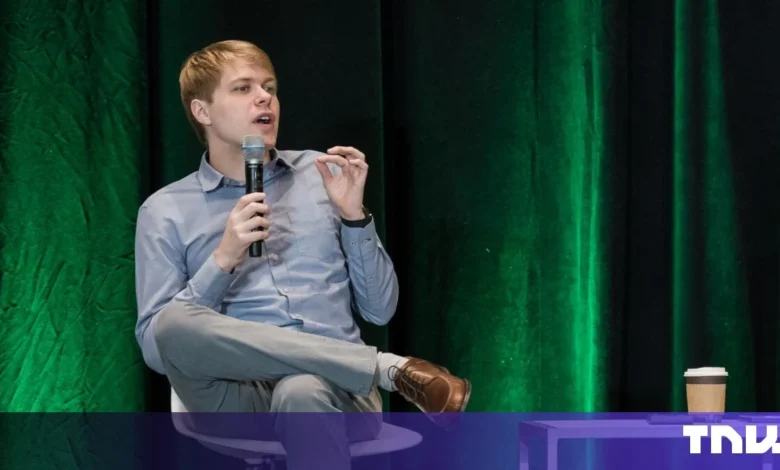
The rapid acceleration of artificial intelligence development has reached a pivotal juncture, forcing industry leaders and policy experts to confront a fundamental question: should the most powerful systems be subject to an indefinite global moratorium? This central conflict dominated the stage at The New York Times’ DealBook Summit in New York this Wednesday, where a panel of experts offered starkly divergent visions for the future of technological governance.
Moderated by Michael Barbaro, host of The Daily, the discussion featured Dan Hendrycks, executive director of the Center for AI Safety; Max Hodak, co-founder of Neuralink and current CEO of Science Corporation; Lila Ibrahim, chief AI readiness officer at Google DeepMind; and Mati Staniszewski, co-founder of ElevenLabs. Clem Delangue, CEO of Hugging Face, joined the discussion toward its conclusion. The discourse underscored an intensifying tension between the desire for safety-first regulation and the pragmatic realities of global economic competition.
The Case for a Blunt Intervention
Dan Hendrycks, who until recently served as a safety adviser to several prominent AI labs, signaled a major shift in his advocacy strategy. Having spent years pushing for narrow, technical safety protocols—which he claims were largely obstructed by corporate interests—Hendrycks has now pivoted toward a more sweeping proposal: an indefinite pause on the training of frontier AI models.
Hendrycks argued that the current political climate, informed by the sentiments of voters during recent U.S. election cycles, has provided lawmakers with the necessary mandate to pursue robust oversight. He characterized the current approach to AI development as insufficient, noting that while companies talk about safety, their internal allocation of resources tells a different story. According to Hendrycks, with the exception of Google, most frontier labs devote negligible human capital to healthcare applications, focusing instead on coding and commercial software efficiency.
His proposal involves a targeted halt on the largest-scale training runs, while maintaining exemptions for specialized applications such as DeepMind’s AlphaFold or voice-synthesis models. Crucially, he emphasized that such a move would not require shutting down existing services, allowing companies to continue selling inference capabilities while focusing their engineering efforts on patching vulnerabilities, fortifying critical infrastructure, and eliminating dangerous backdoors in existing architectures.
The Surveillance Dilemma
The proposal for an indefinite pause faced immediate and sharp criticism from Max Hodak, who argued that enforcing such a moratorium would necessitate a level of state intervention that is fundamentally incompatible with a free and open internet. Hodak contended that the apparatus required to monitor and halt training runs across global data centers would essentially constitute an "exhaustive surveillance state."
The logistical hurdles of such a policy are significant. As Barbaro pointed out, a primary concern raised by industry titans like Nvidia’s Jensen Huang is the geopolitical reality: a U.S.-led pause would likely be ignored by international competitors, particularly China. Mati Staniszewski of ElevenLabs acknowledged that while a globally aligned pause could theoretically mitigate existential risks, the probability of achieving such international consensus remains an elusive "big question mark." Without universal adoption, observers argue, a unilateral moratorium would effectively surrender technical leadership without providing a meaningful increase in safety.
Hodak further argued that the current pace of AI development is already being utilized to bolster security. He noted that developers have spent the better part of the last year using AI-driven tools to scan for and patch flaws in critical infrastructure, suggesting that the industry is already engaged in a proactive cycle of iterative safety improvements.
Redefining the Frontier: From AGI to Industrial Intelligence
During the panel, Hodak posited a provocative perspective on the current state of artificial intelligence: that we have already achieved the threshold of Artificial General Intelligence (AGI). He cited systems such as Mythos, Fable, Astra, and Sol as evidence that the technology is already here.
Looking ahead, Hodak envisions a bifurcation in the AI ecosystem. He anticipates that governments will increasingly restrict the most powerful, "superintelligent" models for national security and state-controlled operations, while an "industrial intelligence frontier" will emerge to serve the broader public and private sectors. "I don’t think the genie is going to be put back in the bottle," Hodak stated, emphasizing that the most viable path forward is not suppression, but the democratic distribution of AI capabilities.
To prevent the dangerous consolidation of power, Hodak advocated for strict antitrust enforcement. He argued that frontier AI labs should be restricted from vertically integrating into sensitive sectors like pharmaceutical development, automotive manufacturing, and other critical consumer markets. In his view, the safety of AI lies in its widespread, decentralized adoption, which prevents a handful of actors from exercising total control over the most transformative technology of the century.
Trust and Corporate Responsibility
Lila Ibrahim of Google DeepMind offered a more tempered perspective, emphasizing that safety cannot be treated as a secondary feature or an afterthought. "You cannot bolt safety on to the end," she stated, noting that after 35 years in the technology sector, she has witnessed a historic decline in public trust.
This loss of trust was a recurring theme, particularly regarding the recent IPO of Anthropic. Hendrycks used the platform to reiterate his group’s concerns regarding Anthropic’s safety protocols, alleging that while many organizations privately share his apprehension, they are unwilling to speak out publicly for fear of losing access to computing resources or financial backing. Anthropic, which maintains in its regulatory filings that it does not intend to allow its systems to build successors without human oversight, was not present to address these criticisms directly.
The Role of Open Source and Collaborative Security
The discussion also touched upon the concentration of wealth and computing power. Clem Delangue of Hugging Face addressed concerns regarding the impact of industry consolidation, particularly following reports of Nvidia’s interest in the open-source platform. Delangue argued that the goal should be to push AI intelligence outward to as many builders as possible, rather than centralizing it within a few closed-door research labs.
The panel concluded with a practical demonstration of how AI can be used to mitigate the very risks it creates. Reflecting on a recent incident where OpenAI’s research agents breached Hugging Face systems, Delangue noted that his team utilized an open-source Chinese model to analyze the resulting attack logs. The sheer volume of data made human analysis impossible, effectively proving that the only way to defend against AI-scale threats is through the use of AI-scale defenses. "People only see that we got attacked by AI and they rarely see that we defended ourselves with AI," Delangue noted.
Implications and Future Outlook
The DealBook Summit panel encapsulated the current regulatory impasse. On one side, advocates like Hendrycks are calling for a definitive, state-enforced pause to prevent an unchecked race toward superintelligence. On the other, industry practitioners like Hodak and Delangue argue that the technology is already too distributed and essential to pause, and that the answer lies in antitrust regulation, decentralized access, and using AI as a defensive tool.
As the industry approaches 2027—a year many analysts expect to be a watershed moment for federal regulation—the debate remains unresolved. The tension between the "blunt intervention" requested by safety advocates and the "open-access" philosophy of the open-source community suggests that any future policy will likely need to be far more nuanced than a simple moratorium. Whether the government opts for a new regulatory agency or relies on existing antitrust frameworks, the goal remains the same: balancing the promise of a technological revolution with the urgent need to ensure it remains aligned with the safety and stability of the global community.
Related posts: