Unlocking the Black Box: MIT and Dana-Farber Researchers Reveal Widespread Inconsistencies in Medical Research Code Sharing

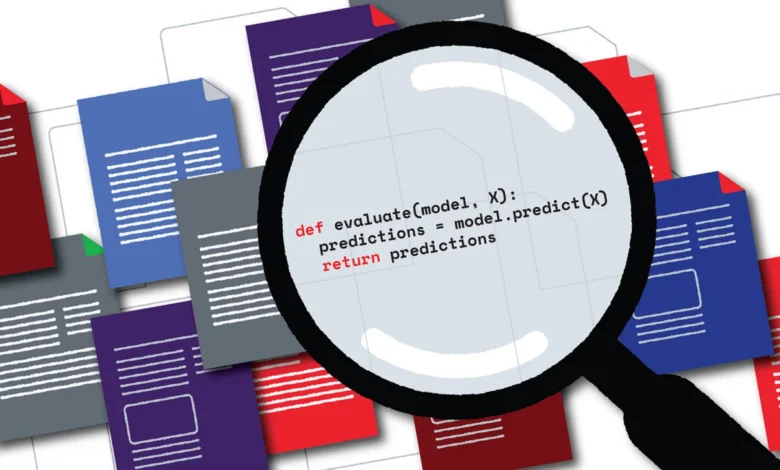
Access to underlying data and computational code serves as the digital bedrock of modern scientific reproducibility. In contemporary medical research, where algorithms frequently determine patient prognoses, diagnose malignancies, and guide treatment pathways, transparency is not merely an academic ideal—it is a clinical necessity. When a medical study is published, the written manuscript acts as a high-level summary, but the raw data and the executable code tell the complete story of how conclusions were reached. They reveal the granular methodological choices made by investigators: how patient cohorts were curated and filtered, how missing or corrupted clinical values were imputed, and how predictive models were ultimately validated. Without open access to these digital assets, independent verification remains exceptionally difficult, slowing the pace of scientific translation and clinical innovation.
A comprehensive new international study led by researchers at the Massachusetts Institute of Technology (MIT) and the Dana-Farber Cancer Institute has exposed critical vulnerabilities in current scientific reporting standards. Utilizing advanced large language models (LLMs) to screen thousands of academic papers, the research team discovered that not only is the public sharing of clinical prediction code remarkably uncommon, but existing repositories frequently lack the essential documentation required for meaningful replication or reuse. Published recently in the open-access pages of Nature Medicine, these findings are already driving the development of TRIPOD-Code, a forthcoming reporting guideline designed to establish rigorous, standardized criteria for code availability in medical literature.
The Hidden Complexity of Researcher Degrees of Freedom
In the realm of predictive analytics—particularly in healthcare—researchers face a multitude of methodological fork-in-the-road decisions during the lifecycle of a study. These choices encompass data preprocessing steps, feature selection algorithms, model architecture design, and performance evaluation metrics. Within the scientific community, these variables are collectively referred to as "researcher degrees of freedom."
According to Tom Pollard, a research scientist at MIT’s Laboratory for Computational Physiology and the Computer Science and Artificial Intelligence Laboratory (CSAIL), these subjective yet impactful decisions directly govern the final output of a study. "Studies involve many choices about how to prepare data, develop models, and evaluate performance," Pollard explains. "The choices we make affect the results, and a methods section in a paper can only capture so much detail."
While the scientific community has increasingly advocated for open science, merely uploading a compressed folder of code to a public repository like GitHub is often insufficient for true transparency. To be genuinely useful, code must be clearly structured, logically organized, and comprehensively described. Historically, however, researchers have received little to no formal guidance regarding what constitutes an adequately documented code repository. This ambiguity has led to a Wild West of software sharing, wherein repositories range from meticulously crafted, turnkey packages to haphazard collections of obsolete scripts devoid of documentation or instructions.
Methodology and Chronology of the MIT-Led Review
To systematically evaluate the state of code sharing in clinical prediction research, the research team designed an ambitious, high-throughput investigation. The study focused specifically on clinical prediction models—computational frameworks that estimate patient outcomes, such as the likelihood of developing a specific pathology or the expected progression of an existing chronic condition. Because these predictive tools increasingly inform high-stakes clinical decision-making, ensuring their transparency is paramount for patient safety and clinical trust.
The chronology of the review centered on evaluating studies that formally cited established reporting checklists, specifically TRIPOD (Transparent Reporting of a multivariable prediction model for Individual Prognosis Or Diagnosis) and its extension, TRIPOD+AI. By narrowing their focus to literature referencing these foundational reporting standards, the team established a baseline cohort of studies authored by investigators ostensibly committed to methodological transparency.
Using PubMed Central’s comprehensive open-access collection, the researchers identified nearly 4,000 full-text papers published between the inception of these reporting guidelines and the study’s data-collection window. The sheer volume of unstructured text presented a formidable technical hurdle. As Thomas Sounack, the study’s first author, notes, "The challenge was that the information was highly inconsistent. First, we had to identify whether or not a paper shared code. Authors discuss and link to code from a paper in many different ways."
To overcome this bottleneck, the investigative team deployed large language models to automate the heavy lifting. The LLMs were programmed to comb through thousands of unstructured academic manuscripts, identify natural language statements regarding code availability, and accurately extract embedded hyperlinks pointing to online software repositories. Once the links were harvested, specialized software automatically scraped the associated GitHub and GitLab repositories to evaluate their structural and documentation characteristics.
To ensure methodological rigor and mitigate the known risks of algorithmic hallucinations or misclassifications, human validation was integrated directly into the workflow. Two independent researchers manually audited a random sample of 500 papers and a corresponding subset of code repositories. Any discrepancies between human evaluators were resolved through consensus before being benchmarked against the automated LLM outputs. While agreement was robust for objective metrics—such as the presence of a software license file or a README document—evaluating the qualitative adequacy of code documentation proved more subjective, prompting the authors to frame their findings around broad macro-level patterns rather than absolute arithmetic counts.
Quantifying the Transparency Gap: Key Data and Findings
The results of the large-scale audit revealed a striking deficit in contemporary medical research transparency. Out of the nearly 4,000 papers examined, only about 1 in 8 studies (approximately 12.5 percent) reported making their analytical code publicly available. This finding underscores that code sharing remains the exception rather than the norm in clinical research, even among studies purporting to follow rigorous reporting checklists.
Furthermore, among the minority of studies that did share their code, the quality, completeness, and usability of the repositories varied wildly. "Some repositories were extremely well-organized and -documented, while others gave almost no guidance at all," Sounack observes. Optimal code sharing, he emphasizes, requires "giving enough information to understand what the code does and be able to run it to reproduce the results reported in the paper."
The investigation also uncovered stark institutional and geographical disparities. The proportion of studies sharing code ranged dramatically across academic journals, stretching from zero percent in some publications to more than 70 percent in others. Intriguingly, the data revealed that the mere presence of a journal-mandated code-sharing policy did not guarantee compliance; several journals with low code-sharing rates officially maintained written policies requiring data and code availability, suggesting that editorial mandates alone are insufficient to alter researcher behavior without active enforcement and practical support.
Despite these systemic shortcomings, the audit successfully identified numerous examples of best practices. For instance, in clinical studies where patient privacy laws strictly prohibited the public release of raw medical records, forward-thinking research groups provided carefully generated synthetic datasets. These artificial datasets allowed external researchers to test, execute, and validate the shared code without compromising patient confidentiality or violating health data regulations like HIPAA or GDPR.
Implications for Clinical Practice and the Birth of TRIPOD-Code
The implications of these findings extend far beyond academic bookkeeping; they strike at the heart of patient care and evidence-based medicine. Clinical prediction models are rapidly proliferating across healthcare systems, integrated directly into electronic health record (EHR) systems to flag sepsis, predict hospital readmissions, and tailor oncological therapies. When clinicians and hospital administrators deploy these algorithms, they inherently trust that the underlying models are robust, unbiased, and mathematically sound.
However, without the ability to inspect and re-run the code, hospitals and regulatory bodies cannot adequately audit these models for hidden bugs, algorithmic bias, or overfitting. The multidisciplinary nature of modern predictive research—which frequently bridges medicine, biostatistics, and computer science—compounds the issue. Professionals from these diverse fields often operate under vastly different cultural norms regarding software development, documentation, and intellectual property sharing.
Recognizing the urgent need to bridge these disciplinary divides, the international research team leveraged their empirical findings to inform the creation of TRIPOD-Code. Currently under development through an extensive expert consensus process, TRIPOD-Code will serve as an authoritative reporting guideline that explicitly defines what constitutes essential, high-quality shared code in clinical prediction studies.
The initiative aims to provide researchers with clear, actionable frameworks for preparing and releasing their software, while simultaneously offering academic journals a definitive standard to communicate to prospective authors. "We want to give researchers practical guidance on how to share code, and give journals clearer expectations to communicate to authors," Pollard concludes. "The review gives us evidence to inform those discussions."
As the medical establishment transitions further into an era dominated by artificial intelligence and big data, initiatives like TRIPOD-Code represent a vital evolutionary step. By transforming code sharing from an ad-hoc, chaotic afterthought into a standardized, transparent pillar of scientific publishing, the research community moves closer to a healthcare system where predictive algorithms can be rigorously scrutinized, safely validated, and continuously improved for the benefit of patients worldwide.