Google is telling brands that AI did not make them invisible in search but that their own content strategy is the culprit

In a direct challenge to long-standing digital marketing conventions, Google has issued a stern warning to Chief Marketing Officers regarding the efficacy of their online content strategies. Through its official "Think with Google" platform, the search giant declared on November 19 that the perceived decline in brand visibility within search results is not a byproduct of artificial intelligence, but rather a failure of brands to move beyond low-value, commodity-style content. This message, which has sent shockwaves through the search engine optimization (SEO) community, represents a significant pivot in how Google expects brands to interact with its search ecosystem in an era dominated by Generative AI.
The Core Message: A Shift Toward Expertise
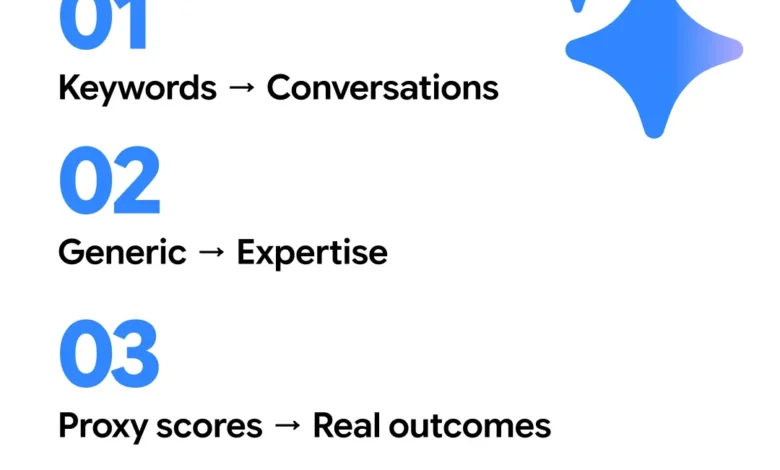
The directive, encapsulated in a social media post that pairs the command to "Stop the Top 10 listicle" with an urgent call to "start leading with first-hand expertise," serves as the public-facing summary of a more detailed argument presented by Brendon Kraham, Google’s Vice President of Search & Commerce Global Ads Solutions. In an article published on October 14, Kraham laid out a framework for modern marketing, arguing that the "super-empowered consumer" of today is no longer satisfied with generic, high-volume, low-effort content that dominates much of the web.
Kraham’s central thesis is that the proliferation of AI-generated and template-driven content has created a sea of mediocrity that fails to provide actual utility to users. He uses the example of a specialized running store to illustrate his point. Instead of producing a generic "Top 10 Things to Consider When Buying Running Shoes"—a piece of content that is easily replicable and lacks depth—a brand should instead produce a granular, deep-dive analysis of a specific customer’s footwear issues, such as a breakdown of why a specific model of shoe collapsed under certain training conditions. By providing highly specific, real-world, and verifiable expertise, the brand creates a moat of authority that generic AI models cannot easily emulate or replace.
Chronology of the Shift
The recent messaging is not an isolated incident but rather the latest installment in a multi-year effort by Google to redefine content quality. To understand the current climate, one must look at the timeline of Google’s evolving guidelines:
- May 2024: Google publishes its formal guide to optimizing for generative AI, explicitly labeling content based on "common knowledge" as a commodity that adds little value to the search ecosystem.
- June 2024: SEO experts, including Lily Ray, begin publishing data indicating that self-promotional "best" listicles—where companies rank themselves at the top—are increasingly being treated as low-value content by AI models, sometimes even resulting in the AI recommending competitors instead.
- October 14, 2024: Brendon Kraham publishes his "Think with Google" piece, formalizing the transition from keyword-focused content to expertise-focused content.
- November 19, 2024: The "Think with Google" social media account amplifies these sentiments, explicitly targeting "Top 10" listicles as a symbol of outdated content strategies.
Industry Reactions and Expert Interpretations
The SEO community’s response to these developments has been both intense and polarized. Lily Ray, a prominent voice in the SEO space, was among the first to highlight the apparent contradiction in Google’s messaging. While Google is effectively asking brands to pivot away from listicles, many SEOs have pointed out that these formats have historically been the backbone of search visibility.
Ray noted on social media, "Wow, did Google really just tell CMOs to stop with the top 10 listicles?" This sentiment reflects a broader anxiety among marketers who have relied on standardized content templates for years to maintain search presence. The concern is that while Google’s advice is theoretically sound from a user-experience perspective, it may create a significant void for brands that lack the resources to produce constant, highly technical, "first-hand" content.
Growth advisor Eli Schwartz offered a more cynical interpretation of the shift, suggesting that the industry should look past the sanitized PR language of the tech giant. Schwartz argued that marketers should stop trusting "proxy scores"—the metrics often used to justify the creation of generic content—and accept that traditional "Answer Engine Optimization" (AEO) visibility is inherently unstable. He suggests that what Google labels as a "content failure" is actually a fundamental shift in the economics of search, where the search engine is now prioritizing its own AI output over the third-party websites it once directed traffic toward.
Analyzing the "Commodity Content" Problem
Google’s definition of "commodity content" centers on information that is easily derived from existing web data. When a brand writes a generic "7 Tips for First-Time Homebuyers," it is merely rehashing information that already exists in thousands of other places. Because this content is inherently redundant, Google’s algorithms—and increasingly, its Generative AI—do not view it as a unique or authoritative source.
The implications for CMOs are clear: the cost of content production must shift from quantity to quality. If a brand cannot provide a perspective that is grounded in proprietary data, unique experience, or specific case studies, it is essentially competing in a race to the bottom. In the eyes of Google, if a piece of content can be written by a freelancer who has never used the product or visited the business, it has no place ranking in the top tier of search results.
The Measurement Dilemma
Kraham’s directive also includes a strong rebuke of vanity metrics. He urges CMOs to stop measuring content success by "unproven proxy metrics"—a direct hit at common KPIs like keyword rankings, search volume, and traffic volume. Instead, he suggests that brands should measure their content efforts by "real business goals" such as qualified leads and actual sales.
This shift presents a massive hurdle for traditional digital marketing departments. It requires a fundamental restructuring of how content is commissioned, created, and measured. If a piece of content does not directly contribute to a business outcome, Google is suggesting that it is not worth the time or investment. For many organizations, this requires a transition from an "SEO-first" mentality to a "customer-first" mentality, where the primary objective is to solve a user’s specific problem rather than simply capturing a search term.
Broader Implications for the Future of Search
The ongoing push by Google to prioritize "first-hand expertise" has profound implications for the future of the digital economy. If search results continue to prioritize deeply specific, experiential content, the barrier to entry for smaller brands and niche experts may actually rise. While it levels the playing field against generic content mills, it creates a new barrier: the necessity for deep, internal knowledge and the operational capability to turn that knowledge into high-quality media.
Furthermore, this pivot suggests that Google is moving further away from being a "referral engine" and closer to an "answer engine." By demanding that brands provide unique value that the search engine can digest and present, Google is essentially asking the entire internet to become a vast, high-quality database that powers its AI features.
Conclusion: A Strategic Pivot
For CMOs and marketing leaders, the message from Google is not merely a recommendation; it is an ultimatum. The era of the generic "Top 10" listicle is effectively over. Brands that wish to remain visible in the age of AI must stop viewing search as a game of keyword manipulation and start viewing it as a platform for demonstrating true brand authority.
As the digital landscape continues to fragment, the brands that thrive will be those that lean into the specific, the personal, and the empirical. Whether this shift will genuinely benefit the end-user or simply serve to consolidate the power of the largest, most resource-rich brands remains a subject of intense debate. However, for those operating in the search environment today, the path forward is clear: produce content that only you can write, or risk being rendered invisible by the very technology that was supposed to help you grow.
To stay abreast of these changes, organizations should prioritize monitoring Google’s official documentation updates, which remain the primary source for shifts in search strategy. As Google continues to refine its search algorithms, the reliance on transparent, data-driven, and highly specialized content will likely become the only viable strategy for long-term search survival.
Related posts: