The Great SEO Debate: Marc Benioff, Salesforce, and the Shift Toward AI Answer Engine Optimization

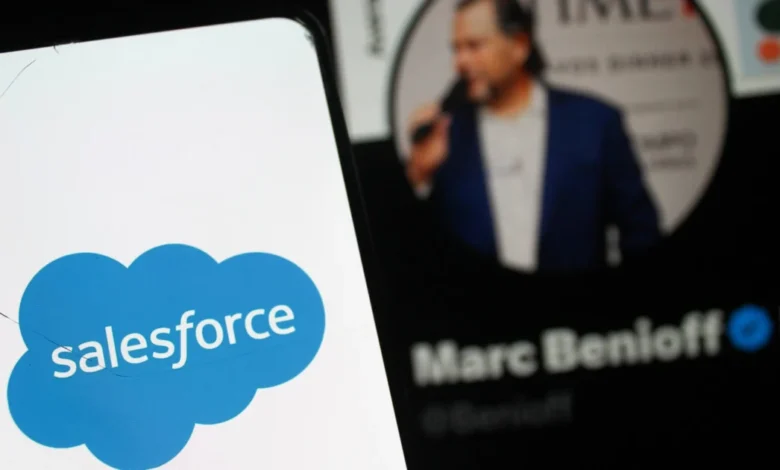
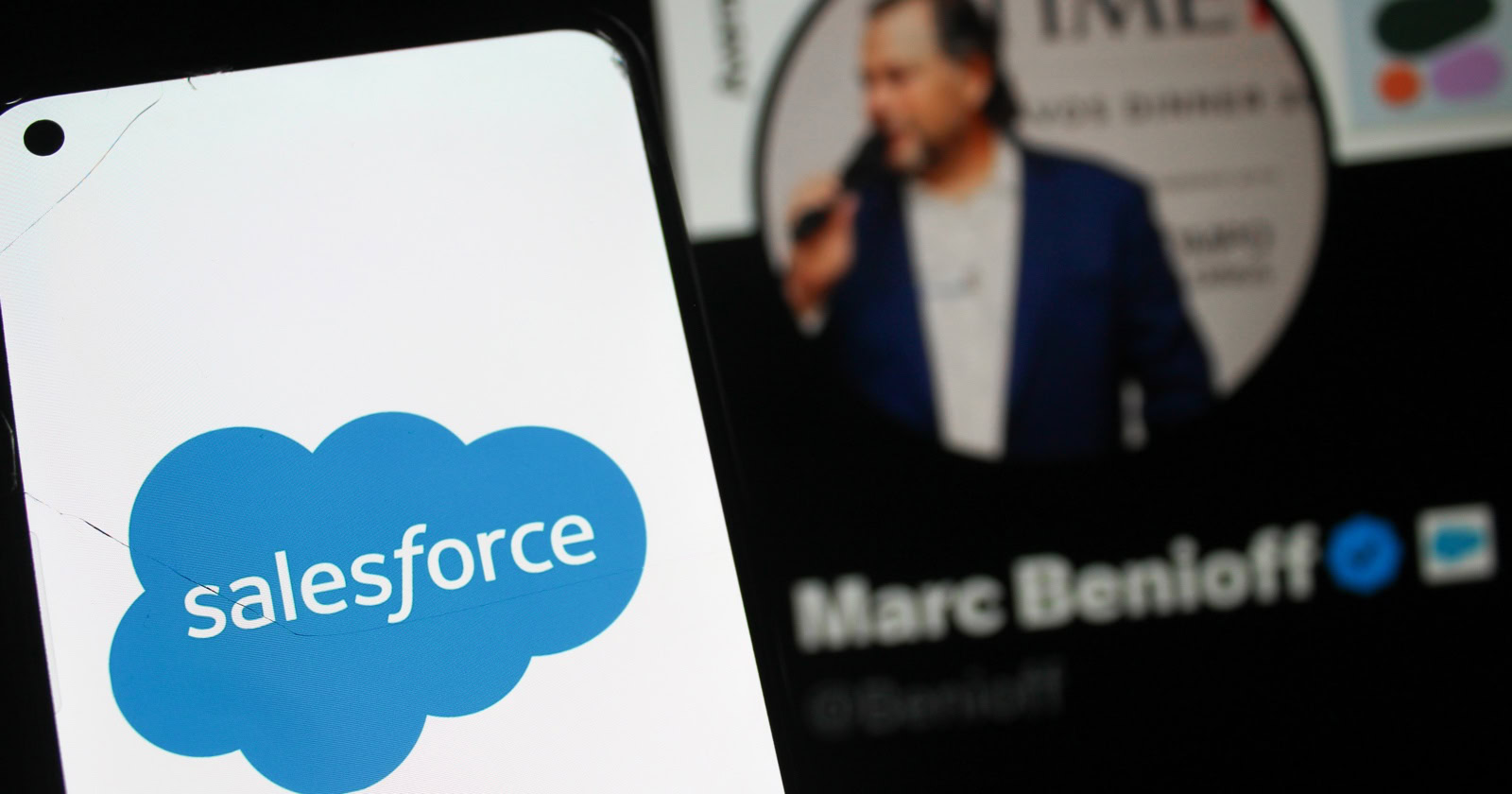
The digital marketing landscape experienced a significant tremor on November 18 when Salesforce CEO Marc Benioff took to X (formerly Twitter) to issue a provocative declaration: "Goodbye SEO." This bold statement, which quickly rippled through the professional marketing community, was strategically timed to promote Palmata, an AI-driven tool designed to measure and optimize brand visibility within generative AI platforms like ChatGPT, Claude, and Google Gemini. Benioff’s assertion—that the traditional era of search engine optimization is effectively over—challenges the foundational logic that has governed digital traffic acquisition for the better part of three decades.
However, the messaging coming from the broader Salesforce ecosystem presents a more nuanced reality. While the CEO signals a departure from legacy search strategies, internal documentation from Salesforce explicitly identifies SEO as the essential foundation upon which modern answer engine optimization (AEO) must be built. This internal tension highlights a pivotal moment in the evolution of the internet: the shift from a link-based web to an answer-based ecosystem.
The Chronology of an Acquisition and a Pivot
To understand the current debate, one must trace the recent history of Salesforce’s strategic positioning. The narrative began in June, when the content management platform Contentful introduced Palmata, a specialized tool designed to track how brands appear within the output of large language models (LLMs). The tool aimed to solve a growing problem for CMOs: when a user asks an AI, "What is the best CRM for small business?", the AI delivers a definitive answer rather than a list of blue links. If a brand is not cited in that answer, the traditional metrics of traffic and referral clicks become irrelevant.
On September 1, Salesforce completed its acquisition of Contentful, bringing Palmata into its expansive Marketing Cloud suite. Shortly thereafter, on September 11, Salesforce published an official guide titled "SEO vs. AEO," authored by Graham Hardt, the company’s Senior Director of SEO. The guide was clear in its professional assessment: "SEO isn’t going away. SEO is still the foundation."
The contrast between this formal guidance and Benioff’s mid-November social media pronouncement created an immediate friction point. Benioff’s argument is rooted in the "Zero-Click" phenomenon. He posited that users are no longer performing active searches in the traditional sense; they are consulting AI assistants that synthesize information internally. By the time a user gets an answer, the brand has already been recommended or bypassed, leaving the original content provider with no click, no referral, and no trace in standard web analytics software.
The Case for Answer Engine Optimization
The rationale behind the push for tools like Palmata is based on the changing behavior of the modern consumer. According to recent industry estimates, the search paradigm is moving away from the "10 blue links" model—a format that has dominated the web since the mid-1990s—toward a conversational model. In this new environment, visibility is defined by "citations" or "mentions" within the output of AI models.
Palmata functions by monitoring these AI outputs, offering specific recommendations on how brands should adjust their messaging to better align with the training data and logical associations of LLMs. Furthermore, the tool provides simulation capabilities, allowing marketers to preview how their content changes might influence an AI’s likelihood to cite their brand before those changes are pushed live. This represents a transition from "keyword optimization" to "semantic and authority optimization."
Industry Skepticism and the SEO Backlash
The professional SEO community, which has spent years adapting to algorithm updates from Google and Bing, reacted to Benioff’s comments with a mix of exhaustion and professional disagreement. The consensus among many leading voices is that while the medium is changing, the underlying mechanics remain tethered to traditional SEO principles.
Aleyda Solis, a prominent SEO consultant and founder of Orainti, was among the first to offer a detailed critique. In a widely circulated response, Solis argued that AI search engines do not operate in a vacuum; they crawl and index the same web content that traditional search engines do. Therefore, high-quality, authoritative content—the hallmark of good SEO—remains the primary signal that AI models use to determine which brands to recommend. She noted that while AEO is a necessary evolution, it is a layer on top of, not a replacement for, established SEO practices.
Pedro Dias, a former Google product manager, provided a more structural critique. He pointed out that the industry’s obsession with "traffic" has long been a misunderstanding of what SEO actually is. "SEO isn’t traffic. It never has been," Dias noted. His perspective suggests that the focus on clicks, which Benioff laments as a lost metric, was always a secondary outcome of visibility and authority, not the goal itself. By this logic, if an AI cites a brand, that brand is achieving the primary goal of SEO—building brand authority and presence—even if the user does not land on a traditional web page.
Other industry veterans, such as Lily Ray and Eli Schwartz, pointed to the "gold rush" mentality currently saturating the marketing technology market. They expressed concern that the renaming of established practices as "AEO" is largely a marketing tactic to sell new SaaS subscriptions to companies fearful of losing their competitive edge in an AI-dominated world.
Bridging the Gap: Data and Strategy
For marketing executives currently navigating this transition, the Salesforce guide serves as an important document. It argues that businesses should not be forced to choose between the two. Instead, the guide advocates for a dual-track strategy: tracking traditional organic rankings and traffic while simultaneously monitoring AI citations.
Data from the digital marketing sector indicates that this hybrid approach is not just a theoretical recommendation but a practical necessity. Brands that neglect traditional SEO often find that their AI visibility declines as well, as the AI models frequently pull their "knowledge" from the same indexed sources that drive traditional search traffic. If a website’s domain authority, technical health, and content quality are allowed to degrade, the likelihood of being cited by an AI decreases proportionally.
The Broader Implications for Digital Infrastructure
The friction between Benioff’s "Goodbye SEO" and the internal Salesforce mandate of "SEO as the foundation" is symptomatic of a larger industry struggle: the loss of control over the user journey. Historically, a company’s website was the "destination." In the AI era, the destination is often the AI interface itself.
This shift has profound implications for digital analytics. If the web becomes a back-end database for AI models, the "attribution" models that have fueled the growth of the internet advertising economy for decades will need to be entirely rebuilt. Salesforce’s dual approach, incorporating both traditional metrics and new AEO data, reflects an understanding that companies must now operate in both worlds simultaneously.
Future Outlook: Evolution, Not Extinction
Looking ahead, the role of the SEO professional is likely to expand rather than disappear. The skill set required to ensure a brand is represented accurately in an AI’s answer is becoming more complex, requiring an understanding of natural language processing, entity recognition, and data structuring—all of which are logical extensions of advanced technical SEO.
While Marc Benioff’s rhetoric served as a successful marketing hook for the launch of Palmata, the reality on the ground is far more collaborative. The integration of Palmata into the broader Marketing Cloud suggests that Salesforce views this not as a replacement for its existing search marketing tools, but as an expansion of its capability to capture data.
Ultimately, the "death of SEO" remains a premature narrative. As long as there is information to be organized, synthesized, and retrieved, there will be a need for the optimization of that information. The platforms may change, the metrics may evolve, and the terminology will undoubtedly continue to shift, but the core objective—ensuring that a brand is discovered, understood, and recommended by the tools that consumers use to navigate the digital world—remains the fundamental mandate of digital marketing. The industry is not saying goodbye to SEO; it is merely learning to speak the language of the machine.