MIT Makes a Comprehensive Cross-Campus Showing at Climate Week NYC 2026 to Accelerate Global Climate Action

Climate Week NYC stands globally as one of the most prominent annual gatherings dedicated to addressing the escalating climate crisis, bringing together more than 100,000 participants across more than 1,000 distinct events throughout New York City. The overarching objective of the multi-day convergence is to foster dynamic discussions surrounding ongoing climate challenges, explore pioneering technological and social solutions, and aggressively spur actionable implementation. Attendees traditionally represent a diverse spectrum of global society, drawing heavily from private industry, academic institutions, philanthropic foundations, non-profit organizations, government bodies, the financial sector, and the fast-growing venture capital ecosystem. During the recent iteration of Climate Week NYC, held from September 21 to September 27, the Massachusetts Institute of Technology (MIT) established an unprecedented, highly coordinated presence, demonstrating a sweeping institutional commitment to tackling global environmental degradation through cross-disciplinary collaboration.
The multi-day deployment of the MIT community showcased the institution’s rigorous academic and technical footprint across numerous Manhattan and borough venues. Key leadership figures, including Evelyn Wang, MIT’s vice president for energy and climate, played prominent roles in major proceedings, beginning with a high-profile appearance at the official opening ceremony where she addressed the critical intersection of artificial intelligence and the climate equation. This year’s institutional footprint featured a landmark collaborative event co-hosted by MIT and the Bezos Earth Fund focusing on next-generation climate innovation. Furthermore, the MIT Climate Project—working in tandem with eight distinct MIT departments, laboratories, centers, and initiatives—curated and executed 14 standalone sessions. Participating entities included the Abdul Latif Jameel Water and Food Systems Lab (J-WAFS), the MIT Sloan Sustainability Initiative, the Center for Transportation and Logistics (CTL), MIT Lincoln Laboratory, MIT Open Learning, the MIT Initiative for New Manufacturing (INM), the MIT Climate Policy Center, and the Priscilla King Gray (PKG) Center for Social Impact.
A Whole-of-Institution Mobilization for Global Impact
The strategic decision by MIT to dramatically scale up its physical and intellectual footprint at Climate Week NYC underscores a broader, fundamental shift in how premier research universities engage with the global climate crisis. Rather than operating in isolated academic silos, modern research institutions are increasingly recognizing that the velocity of environmental change demands immediate, synchronized mobilization across all disciplines, ranging from mechanical engineering and public policy to behavioral economics and supply chain management.
"The MIT Climate Project is a whole-of-institution mobilization, but no single institution can deliver the climate solutions the world needs—from reducing greenhouse gas emissions to adapting to a changing climate and building more-resilient communities and systems," stated Evelyn Wang, who also serves as the Ford Professor of Engineering in MIT’s Department of Mechanical Engineering. "Climate Week New York is important because it convenes the range of stakeholders and sectors that must work together to confront these challenges. When we connect the MIT community with this global network, we uncover powerful possibilities to strengthen not only our own efforts, but the world’s capacity for change."
This philosophy was clearly operationalized throughout the week. Operating primarily out of multiple dynamic spaces at the Dream Downtown Hotel in Manhattan’s Chelsea neighborhood, the MIT coalition successfully convened more than 700 targeted attendees. These participants engaged in rigorous programming that spanned intimate, highly specialized private roundtables, interactive workshops, and expansive, multidisciplinary panel presentations designed to bridge the persistent gap between theoretical research and scalable real-world application.
Tackling Critical Frontiers: Data Centers and Super Pollutants
Among the most heavily attended and critically discussed sessions hosted by the MIT coalition were those addressing emerging industrial pressures and overlooked atmospheric threats. As the global economy undergoes a massive digital transformation heavily accelerated by the proliferation of artificial intelligence and cloud computing, the physical infrastructure supporting this growth has emerged as a major environmental challenge.
During the major session titled "The Future of Data Centers: Technologies to Change the Paradigm," leading experts gathered to dissect the mounting operational and ecological realities facing modern computing facilities. Gang Chen, the Carl Richard Soderberg Professor of Power Engineering and faculty director of the Climate Project at MIT, emphasized the urgency of the moment. "Data centers are at an inflection point, facing interconnected technical, operational, economic, and community constraints that demand cross-sector dialogue and innovation," Chen noted.
Chen, who spearheads the Data Centers of the Future frontier for the MIT Climate Project, convened a specialized panel of researchers and industry executives to evaluate breakthrough technologies capable of fundamentally altering the operational paradigm of modern server farms. While acknowledging the inherent limitations of technology alone in resolving complex societal and environmental friction points, Chen maintained an optimistic yet pragmatic outlook. "Technology can’t solve all the challenges we’re facing with data centers, but technology has a significant role to play in shaping a future role that is more sustainable and better for the communities that are home to these facilities. This session was a productive conversation on data center challenges and the potential solutions to overcome them," he added.
In parallel, another vital technical frontier was interrogated during the workshop titled "Next-Generation Super Pollutant Solutions: Challenges and Opportunities." Hosted by Jesse Kroll, a faculty director and lead for the Super Pollutants frontier for the Climate Project, the session featured expert speakers from the Environmental Defense Fund, Spark Climate Solutions, and various MIT research laboratories.
The scientific context surrounding super pollutants—which include methane, hydrofluorocarbons (HFCs), black carbon, and tropospheric ozone—demands immediate international attention. According to atmospheric data, super pollutants account for nearly half of all global anthropogenic warming to date. Despite their potent warming capacity, these compounds currently lack viable, widespread solutions for adequate industrial abatement. However, because many super pollutants possess significantly shorter atmospheric lifespans compared to carbon dioxide, targeted interventions offer a crucial "emergency brake" mechanism capable of measurably decreasing peak near-term global warming within human lifetimes. Furthermore, aggressive investments aimed at mitigating super pollutants yield substantial collateral economic benefits, including drastically lowered global health-care costs and enhanced agricultural and labor productivity. Achieving these outcomes, however, necessitates deeply integrated cross-disciplinary teams capable of engineering next-generation abatement technologies.
"Super pollutant mitigation is getting a lot of attention as an ‘emergency brake’ for near-term climate warming. But a huge fraction of our super pollutant emissions simply cannot be mitigated with current technologies and approaches," explained Kroll, who is also the Peter de Florez Professor in MIT’s Department of Civil and Environmental Engineering. "Our session focused on the innovation—technical and otherwise—needed to tackle these hard-to-abate pollutants."
Bridging the Valley of Death: Reimagining the Climate Innovation Pipeline
A persistent structural hurdle in the global fight against climate change is the perilous transition phase often referred to in industrial economics as the "valley of death"—the treacherous gap separating a brilliant laboratory-scale scientific breakthrough from commercial deployment and real-world impact at scale. To address this systemic bottleneck, MIT and the Bezos Earth Fund co-hosted a flagship event that brought together high-level leaders drawn from private industry, venture capital, government oversight bodies, academia, philanthropic organizations, and early-stage startups.
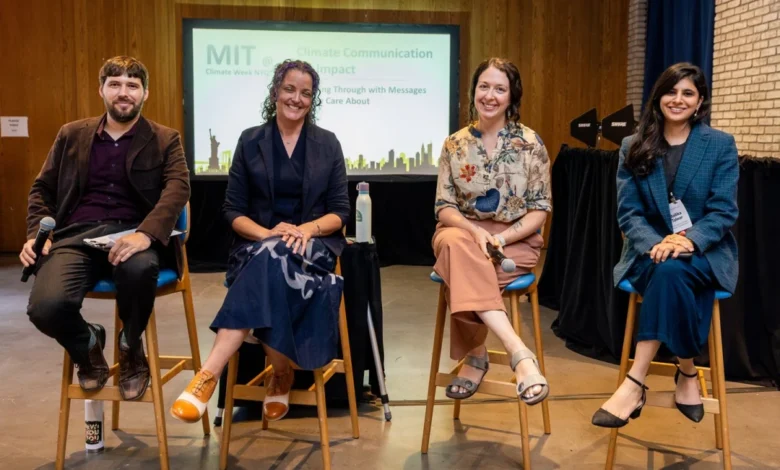
The centerpiece of this collaboration was a dynamic panel discussion featuring prominent MIT faculty members and alumni spinout leaders, including Asegun Henry, Seonghoon Woo, Ariel Furst, and Assil Halimi. Moderated by Ray Rothrock, a seasoned venture capitalist and life member of the MIT Corporation, the panel explored the multifaceted complexities inherent in scaling promising climate and nature-focused technologies. The discussions underscored that for scientific discoveries to mature into market-ready solutions, they require substantially enhanced early-stage research funding, access to specialized testing and validation infrastructure, patient capital structures capable of absorbing long-term risk, and structured pathways toward demonstration and pilot-scale projects.
This overarching theme was further elaborated during a public dialogue between Evelyn Wang and Tom Taylor, president and CEO of the Bezos Earth Fund. Both leaders stressed the necessity of a holistic, end-to-end perspective on technological development. "A breakthrough in the lab is not yet impact in the world. For climate and energy technologies, we need to think about the entire journey—from discovery and invention through validation, commercialization, and deployment—and build better pathways through the gaps along the way," Wang emphasized during the exchange.
Contextualizing Technology: The Socioeconomic Nexus of Adoption
A recurring consensus across the diverse array of MIT-led panels and workshops at Climate Week NYC 2026 was the absolute necessity for proposed climate solutions to be not only technically feasible and massive in magnitude, but also contextually realistic and socially equitable. History is replete with examples of highly efficient, low-cost technological innovations that nevertheless failed to achieve widespread societal adoption due to a fundamental failure to account for end-user incentives, behavioral economics, regulatory landscapes, and community constraints.
Highlighting this crucial socio-technical dimension, Claire Walsh, global director of policy and communications at MIT’s Abdul Latif Jameel Poverty Action Lab (J-PAL), offered sharp analytical insights during the proceedings. "Even when a technology is low-cost, it doesn’t mean it will diffuse naturally or get widely adopted," Walsh observed. "Frontier technologies are often more expensive to start, so that means it’s even more important for scientists and engineers to think about end user adoption, and their incentives and constraints, from the start."
Broader Implications and Future Outlook
The robust participation of MIT at Climate Week NYC 2026 serves as a compelling case study in institutional evolution within higher education. By stepping out of traditional campus boundaries and embedding institutional resources directly into the world’s premier climate networking nexus, MIT has reinforced its commitment to actionable, multidisciplinary problem-solving.
The implications of this heightened engagement extend far beyond the week’s events in Manhattan. As academic institutions increasingly align their research agendas with the urgent demands of global decarbonization, climate adaptation, and resilient infrastructure design, platforms like Climate Week NYC provide an indispensable proving ground. They facilitate the vital cross-pollination of ideas between hard engineering sciences and the socio-economic realities of global markets. Moving forward, the success of initiatives like the MIT Climate Project will likely be measured not merely by the volume of academic publications or lab-scale prototypes generated, but by how effectively these entities forge enduring partnerships with industry, finance, and policymakers to drive measurable, long-term planetary healing.