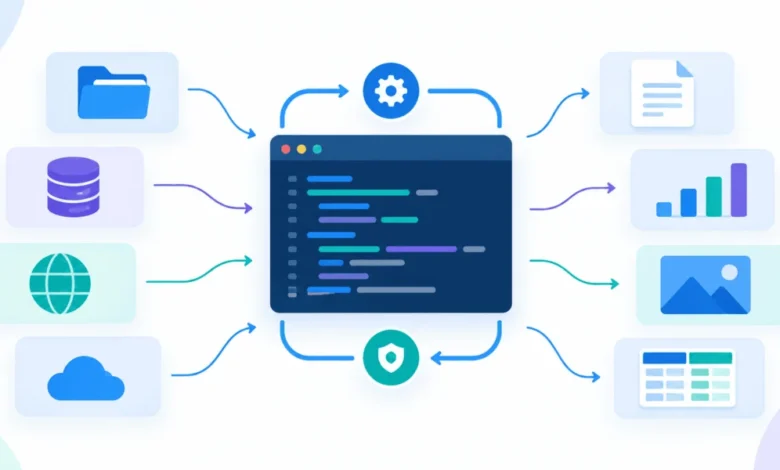
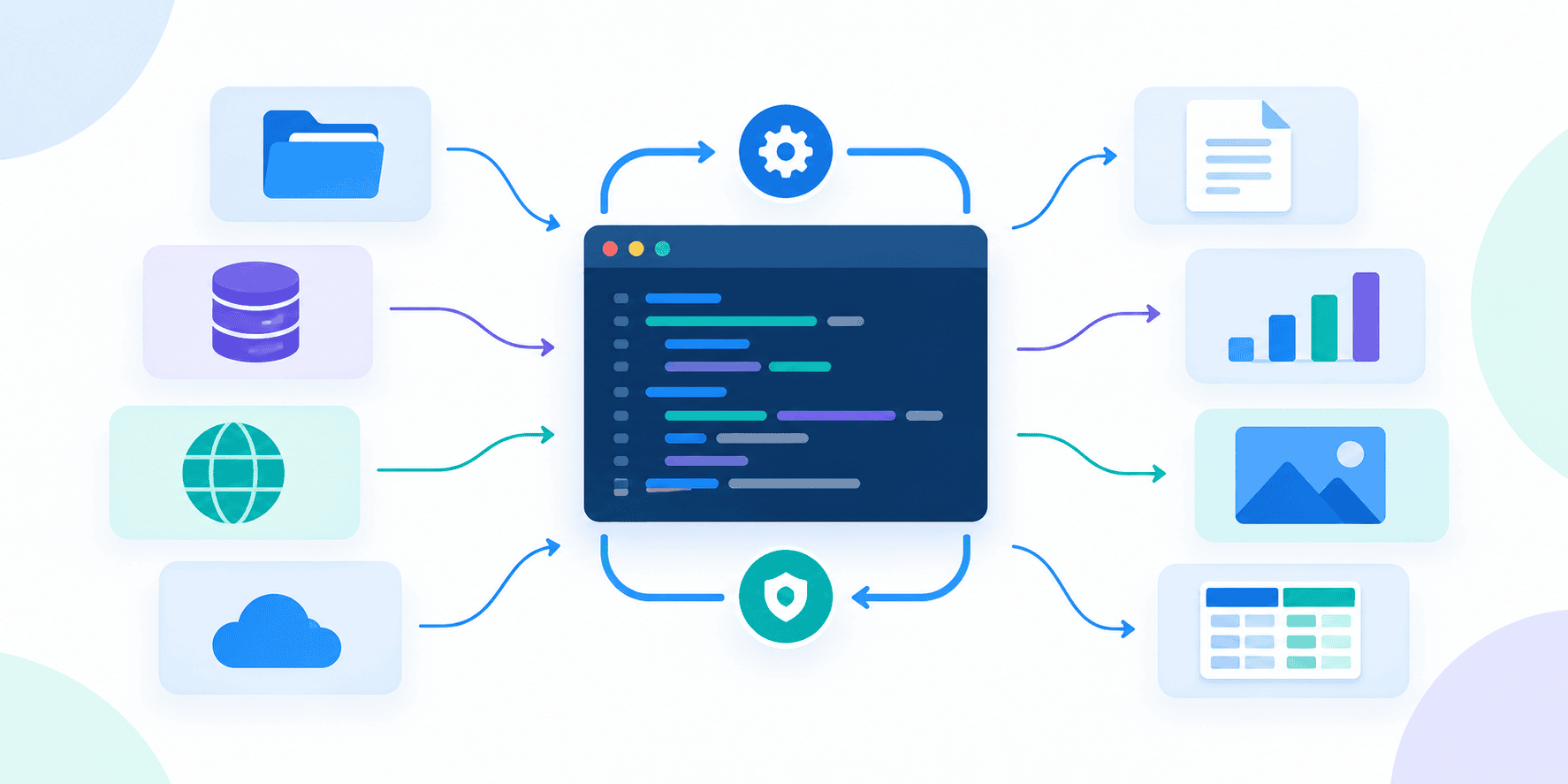
In the architectural landscape of modern software engineering, the Python with statement is frequently misunderstood as a mere convenience for handling file I/O. While its primary association remains the automated closing of file handles, the underlying mechanism—the Context Manager protocol—represents a robust design pattern for resource management and state synchronization. By decoupling the setup and teardown logic from the primary business logic, developers can create resilient codebases that remain stable even when unexpected runtime exceptions occur. This article explores how to leverage context managers to manage complex system states, temporary environments, and performance monitoring, ensuring that cleanup operations remain ironclad regardless of whether a script succeeds or crashes.
The Architecture of the With Statement
The Python language specification defines the with statement as a formal boundary, not a simple syntactic sugar. Internally, the statement invokes the context manager protocol, which relies on two primary methods: enter() and exit(). When a with block begins, Python executes the enter() method, binding its return value to the optional variable specified after the as keyword. Crucially, the exit() method is guaranteed to execute upon the completion of the block, whether that completion occurs naturally, via a return statement, or through an unhandled exception.
This guarantee is the cornerstone of professional-grade error handling. In traditional procedural code, cleanup tasks—such as deleting scratch directories, resetting logger verbosity, or restoring environment variables—are often placed at the end of a script. If a fatal error occurs mid-process, these lines are never reached, resulting in a "stale state" where temporary files accumulate, logs remain improperly configured, and environment variables point to incorrect paths. By encapsulating these tasks within a context manager, the cleanup logic is bound to the block’s lifecycle rather than the script’s success.
Chronology of a Failed Cleanup: A Case Study
Consider a typical machine learning evaluation script. The standard workflow involves creating a temporary scratch directory, modifying global logging levels to suppress excessive output, pointing a model cache to a high-speed disk, and initializing a performance timer. In a legacy procedural implementation, these steps are executed sequentially at the start of the script, with the corresponding deletions and resets placed at the very end.
Data from internal engineering audits suggests that in long-running CI/CD pipelines, "cleanup failure" is a leading cause of disk space exhaustion and memory leaks. When a record fails to process—often due to a malformed data packet—the evaluation function triggers an exception, and the script terminates immediately. Because the cleanup commands (shutil.rmtree, logging.setLevel, etc.) exist outside the scope of the error, they are bypassed entirely. This leaves behind gigabytes of abandoned data and an altered global environment that can cause subsequent, unrelated tests to fail. The context manager pattern mitigates this by shifting the responsibility of cleanup to the object itself, ensuring the "exit" phase executes regardless of the "middle" phase’s outcome.
Building Resilient Instrumentation with Custom Timers
Performance monitoring is often implemented with simple start/stop timestamps. However, manually measuring block duration is prone to errors, particularly when exceptions truncate the execution flow. A custom Timer class serves as a prime example of a stateful context manager. By capturing the start time in enter() and calculating the elapsed duration in exit(), developers can create a diagnostic tool that is immune to runtime crashes.
From a design perspective, the Timer class should never suppress exceptions. If an error occurs during feature extraction, the timer must still record the elapsed time and log the failure status before allowing the exception to propagate up the stack. This is achieved by ensuring the exit() method returns False, signaling to the Python interpreter that the error should not be swallowed. This provides engineers with critical post-mortem data: "Did the process fail because it was running too long, or because of a specific data format error?"
Managing Lifecycle via @contextmanager
While classes are ideal for complex stateful managers, the contextlib module offers the @contextmanager decorator for simpler, linear tasks. This tool allows a generator function to define the setup and teardown phases cleanly. Everything appearing before the yield statement acts as the setup, while everything after the yield, placed within a finally block, handles the cleanup.
This approach is highly effective for global state management. For instance, temporarily silencing a third-party library’s logs during an evaluation run can be handled by a "quiet" manager. By using a try/finally structure within the generator, the code ensures that even if the evaluation function raises an error, the logger’s original level is restored. This is a best practice in modular software development, as it prevents local configurations from leaking into the broader application scope.
Automating Temporary Environments with tempfile
The standard library’s tempfile.TemporaryDirectory provides a clear example of why built-in context managers are superior to manual implementation. Manually creating and deleting directories is fraught with edge cases—such as race conditions, insufficient permissions, or partial cleanup failures. The TemporaryDirectory manager generates a unique path, handles the creation, and, upon exiting the block, recursively removes the directory and all its contents.
In enterprise-grade AI production environments, utilizing built-in managers like this is not just a convenience; it is a security and reliability requirement. It ensures that sensitive artifacts do not persist on the file system after a process concludes, effectively reducing the surface area for data leaks and storage bloat.
Managing Complex Dependencies with ExitStack
As applications grow, developers often encounter scenarios where a variable number of resources must be managed simultaneously—for example, opening hundreds of data shards for a parallel merge operation. Managing these via nested with statements becomes unreadable and error-prone. The ExitStack class provides a programmatic solution, allowing developers to register an arbitrary number of context managers and cleanup functions dynamically.
ExitStack functions as a stack of cleanup operations. When the stack closes, it executes the registered exit methods in reverse order—the same sequence as nested with statements. This provides a robust mechanism for handling complex data pipelines. By using enter_context() and callback() methods, engineers can ensure that every open handle, every temporary lock, and every diagnostic print statement is processed in the correct order, even if an early resource fails to initialize.
Theoretical Implications and Best Practices
The transition from manual resource management to context managers represents a shift toward more declarative programming. By defining the lifecycle of a resource at the point of its acquisition, code becomes self-documenting. A developer reviewing the code can immediately identify the boundaries of an environment variable’s influence or the duration of a temporary cache.
However, developers must be mindful of the pitfalls of exception suppression. A common error involves writing an exit() method that returns True or performs a truthy operation, effectively hiding bugs. Professional standards dictate that context managers should remain transparent; they should handle cleanup but allow errors to propagate so that they can be handled by the appropriate upstream monitoring systems.
Furthermore, when dealing with global state—such as the working directory (os.chdir) or environment variables—one must account for thread safety. Context managers that modify global state are inherently unsafe in multithreaded or asynchronous environments, as the changes will impact all concurrent threads. In such cases, it is preferable to pass the necessary state explicitly rather than relying on global context modification.
Conclusion
Context managers are a fundamental component of resilient Python engineering. By adopting the pattern of "setup, block, and guaranteed exit," developers can eliminate the silent failures that plague long-running processes. Whether utilizing a simple class for instrumentation, a generator for logger management, or ExitStack for complex resource handling, the goal remains the same: ensuring that the application environment is left in a clean state, regardless of the path taken through the code. In the high-stakes environment of production machine learning and data engineering, this clarity is not merely an aesthetic preference—it is a critical requirement for operational stability.