How High-Volume GenAI Publishing Impacts WordPress Hosting and Editorial Governance


The rapid adoption of generative artificial intelligence across digital media has fundamentally transformed publishing cadences, bringing human and AI-generated content to a near 50-50 parity on the modern web. While this technological leap allows organizations to scale content production exponentially, it simultaneously introduces unprecedented operational hurdles. Publishing generative AI content often appears straightforward until the operational workflow encounters friction, such as a client flagging stale data or factual inaccuracies weeks after a batch goes live. Resolving these errors efficiently requires robust server-side checks and sophisticated hosting infrastructure; without them, businesses face costly delays, reputational damage, and algorithmic penalties.
The intersection of automated content generation and content management system deployment demands a fundamental shift in perspective. Historically, website updates involving code changes have adhered to rigorous deployment pipelines, utilizing staging environments, strict user permissions, and version-control rollbacks. Conversely, content publishing has traditionally bypassed these safety mechanisms, going straight from an editor’s desk to live production environments. As search engines like Google intensify their crackdowns on scaled content abuse—frequently shuffling search engine result pages during core algorithm updates—publishers can no longer afford to treat content production as an isolated editorial task. Instead, high-volume AI content operations must adopt the rigorous governance framework traditionally reserved for software engineering.
The Structural Strain of High-Volume AI Publishing on WordPress Infrastructure
Deploying generative artificial intelligence models at scale introduces a myriad of technical and editorial inconsistencies. Large language models are inherently prone to hallucinations, outdated training cutoffs, and formatting errors that can easily bypass automated filters. When publishing frequency increases dramatically, these errors multiply, embedding themselves deep within a site’s architecture.
The repercussions extend far beyond the initial drafting phase, directly impacting the underlying WordPress hosting infrastructure. For instance, if a server-side caching layer fails to clear automatically after an editorial team approves a critical factual correction, the outdated copy will persist for front-end users and web crawlers alike. Similarly, when severe structural errors necessitate a complete reversion to a previous site revision, a lack of comprehensive database backups can leave administrators with no viable path to roll back changes.

Industry analysts note that search engine algorithms have grown increasingly sophisticated in detecting unedited, high-volume output. Google’s continuous algorithmic adjustments penalize sites that flood the index with unverified automated text. Consequently, organizations engaging in high-cadence publishing must implement stringent architectural safeguards to protect both their search engine optimization equity and their brand integrity.
Implementing Staging Environments for Content Review
In software development, deploying code directly to a live production server is considered a critical error. Development teams universally rely on staging environments—isolated sandboxes identical to production—to test code behavior, verify user interfaces, and catch bugs before public release. Yet, standard editorial workflows have historically omitted this vital step, routing raw or AI-generated text directly to indexed pages.
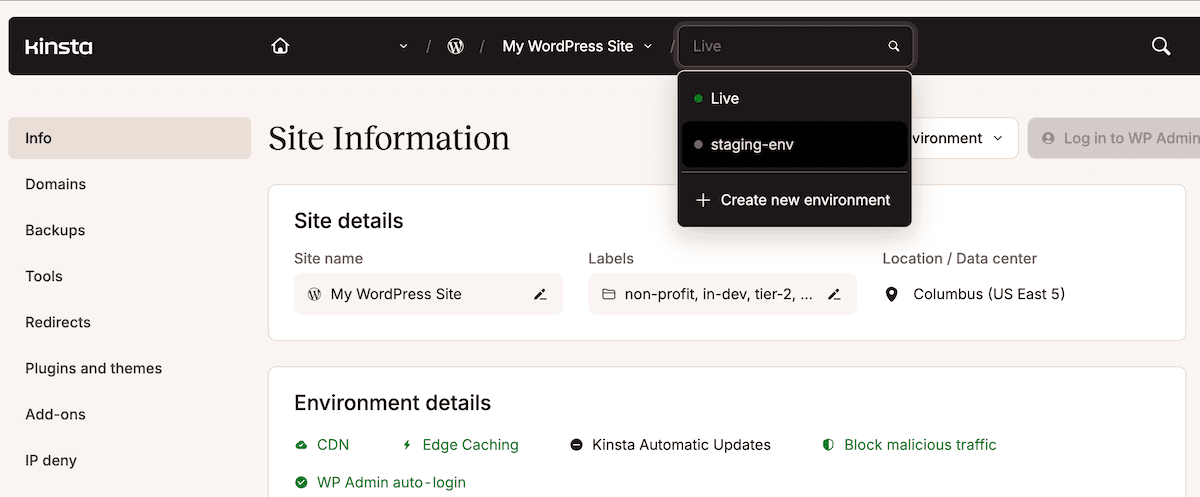
To mitigate the risks associated with bulk AI publishing, organizations must integrate content staging into their standard operating procedures. By utilizing a staging environment that mirrors the live WordPress deployment, content teams can preview formatting, verify responsive design layouts, and observe how newly generated posts interact with existing site elements, active plugins, and custom scripts.
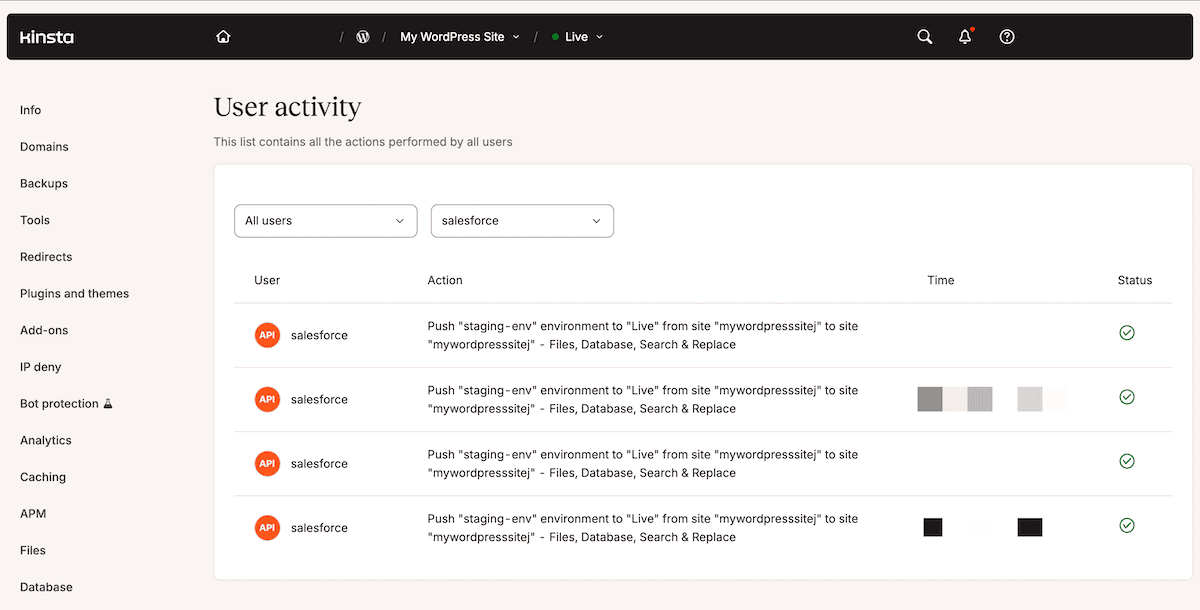
Managed hosting providers have begun adapting to this necessity by offering streamlined staging solutions. For example, enterprise-grade platforms like Kinsta provide complimentary and high-performance staging environments accessible directly through dashboard interfaces. Crucially, these systems support selective push and pull operations. This functionality allows developers and editors to sync files and databases selectively—pushing a batch of reviewed posts to live production without inadvertently overwriting concurrent backend code modifications or database transactions.
Enforcing Governance Through Granular User Permissions and Security
Technology alone cannot solve governance challenges; it must be paired with strict procedural controls. Having advanced staging and deployment tools is ineffective if team members can bypass them on a whim. Organizations must leverage role-based access control systems to enforce procedural compliance, ensuring that content generation, review, and deployment are handled by distinct personnel.
A secure publishing pipeline typically segregates responsibilities across multiple tiers. Team members or automated agents utilizing generative AI tools should be restricted to foundational roles, such as Site Developer or Contributor, operating strictly within staging environments. Mid-level editorial staff can hold Editor or Author privileges to review and refine drafts, while the authority to push content to live production should be strictly bottlenecked behind Site Administrator credentials.
Furthermore, baseline account security remains non-negotiable in high-volume operations. Enforcing multi-factor authentication across all administrative accounts ensures that automated scripts and human users alike are cryptographically verified, drastically reducing the vulnerability surface against unauthorized content injections or accidental live deployments.
Mitigating AI Errors with Advanced Backup Strategies
While visual website layout errors or critical system crashes trigger immediate notifications, AI-induced errors—such as subtle factual inaccuracies, out-of-date statistics, or flawed product descriptions—often remain hidden. These errors survive cache generation, indexing by search engine crawlers, and initial consumption by readers, only coming to light long after the traffic surge has subsided.
When an organization discovers systemic copy errors embedded across dozens or hundreds of pages, manual remediation via individual post edits becomes financially and logistically prohibitive. In such scenarios, relying on robust backup architecture offers a vastly superior alternative. Restoring an entire environment from a clean, pre-publication backup point can resolve widespread template or batch-publishing errors in a matter of seconds.
Modern hosting infrastructures provide diverse backup methodologies, ranging from automated hourly snapshots to manual, tagged restore points. Utilizing application programming interfaces (APIs), organizations can programmatically trigger backups immediately before initiating a bulk-publishing script. By executing administrative commands—such as generating a manual backup tagged specifically as pre-batch-publish—teams establish an immutable anchor point, allowing for instant recovery should the automated content pipeline introduce critical errors.
The Critical Role of Cache Management in Content Corrections
A frequent operational hurdle in high-volume publishing is the discrepancy between the back-end database and the front-end display. Content managers frequently update or correct an article within the WordPress editor, only to find that the live site continues to serve the outdated, erroneous version. This phenomenon is almost invariably caused by aggressive server-side caching, edge caching, or content delivery network layers.
In traditional human-led workflows, cache clearing is often treated as an ad-hoc troubleshooting step. However, in an automated or high-volume generative AI workflow, cache invalidation must be systematically integrated into the deployment pipeline. Without programmatic cache clearing immediately following a batch update or content correction, the front-end user experience remains compromised, and search engine crawlers continue to index obsolete data.
Advanced hosting platforms provide developers with direct API endpoints to automate this process. Integrating cache-clearing functions—encompassing site-level caches, CDN caches, and edge caching nodes—into publishing scripts ensures that front-end updates propagate instantly. This technical synchronization guarantees that human oversight or automated verification scripts evaluate the exact version of the content currently visible to the public.
Tracking Accountability via Detailed Activity Logs
As organizations scale their publishing volume and expand the number of contributors interacting with their content management systems, tracking accountability becomes increasingly complex. When errors emerge within the live ecosystem, identifying the root cause and assigning responsibility requires granular audit trails.
Enterprise hosting platforms address this requirement by maintaining comprehensive site and user activity logs. These systems record timestamped telemetry for every administrative action, user login, API request, and database modification. By leveraging administrative dashboards or querying activity log APIs, system administrators can filter events by user roles, specific API key identifiers, and flagged system warnings.
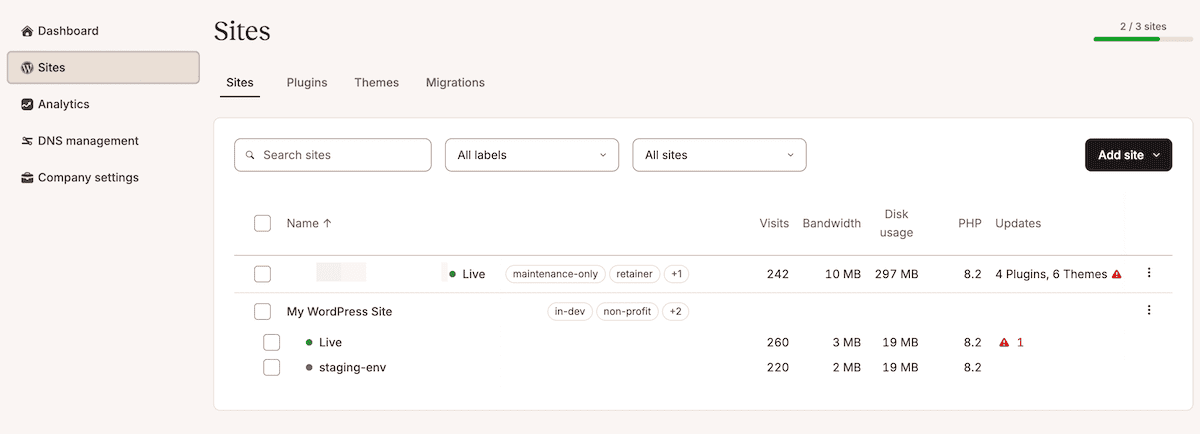
This data-driven visibility eliminates the guesswork traditionally associated with troubleshooting digital publishing failures. If a third-party API integration or an automated publishing script introduces corrupted formatting or erroneous data, activity logs allow technical teams to pinpoint the exact vector of failure within seconds, streamlining remediation and preventing future occurrences.
Broader Implications and Strategic Outlook for Digital Agencies
The proliferation of generative AI has undeniably democratized content creation, lowering the barriers to entry and enabling unprecedented publishing volumes. However, this shift has exposed a dangerous disconnect between content generation velocity and infrastructure governance. Agencies and enterprise publishers that fail to adapt their hosting and operational workflows to match this new reality risk severe algorithmic penalties, diminished brand trust, and operational paralysis.
Addressing these challenges requires a holistic rethinking of the publishing pipeline. By treating content production with the same operational rigor applied to software deployment—incorporating isolated staging environments, granular permission structures, programmatic backup protocols, automated cache invalidation, and detailed activity tracking—organizations can harness the efficiency of generative AI without sacrificing quality or stability. Ultimately, sustainable high-volume publishing demands an infrastructure capable of supporting the entire lifecycle of digital content, ensuring that speed never compromises structural integrity.