The UK as the European Commercial Hub
The United Kingdom remains the undisputed leader in TikTok’s European expansion strategy. Having served as the pilot market for the platform’s shopping features since 2021, the UK has benefited from a head start that allowed for the cultivation of a robust creator economy and a sophisticated logistics network. Currently, more than 300,000 British small and medium-sized enterprises (SMEs) have integrated their storefronts into the TikTok interface, leveraging the platform’s algorithmic reach to convert viral video content into direct sales.
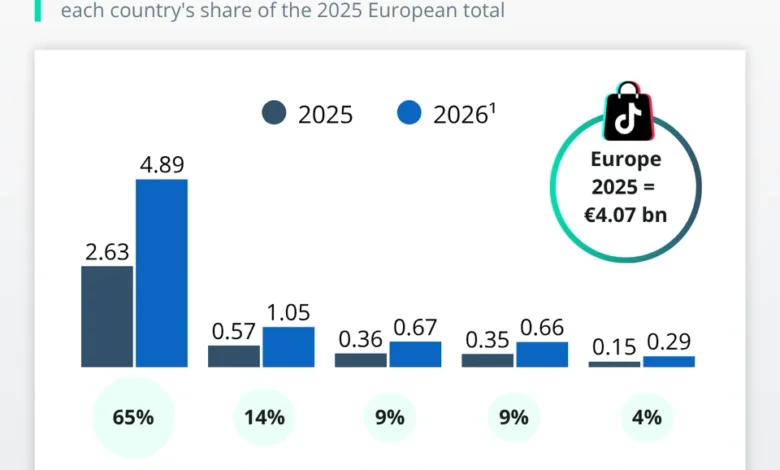
The disparity between the UK and the rest of Europe remains substantial. In 2024, the United Kingdom accounted for 65 percent of all European spending on TikTok Shop, generating a total GMV of 2.63 billion euros. This concentration of activity is attributed to the UK’s mature digital infrastructure and a consumer base that has rapidly embraced the integration of social media and e-commerce. While other European nations are beginning to catch up, the UK’s early-mover advantage has created a self-sustaining loop of influencer marketing and consumer trust that competitors are still struggling to replicate.
Chronology of European Expansion
The evolution of TikTok Shop in Europe has been marked by a phased, strategic rollout designed to mitigate logistical risks while maximizing market penetration.
- 2021: TikTok Shop officially debuts in the United Kingdom, marking the platform’s first foray into integrated e-commerce outside of Asia.
- Late 2024: TikTok expands its geographical footprint to include Spain and Ireland, signaling an intent to capture the Southern and Northern European markets.
- March 2025: A major expansion phase sees the launch of TikTok Shop in France, Germany, and Italy, bringing the platform’s total reach to 72 million potential new European customers.
- June 2025: The platform extends its reach into the Netherlands, Belgium, Poland, and Austria.
- September 2025: TikTok initiates a pilot program for cross-border sales, allowing select merchants to sell directly between the European Union and the United Kingdom, effectively creating a unified trade zone for social commerce.
- October 2025: A wider rollout of the EU-UK cross-border initiative commences, cementing the platform’s status as a pan-European marketplace.
Market Distribution and Regional Performance
While the UK leads the charts, the performance of the continental European markets provides a glimpse into the future trajectory of the platform. According to ECDB, Spain emerged as the second-largest market for TikTok Shop in 2024, recording 570 million euros in GMV—a 14 percent share of the European total.
France and Germany, despite their larger traditional retail sectors, each accounted for 9 percent of European spending, contributing 360 million euros and 350 million euros respectively. Italy followed with a 4 percent share, or 150 million euros. These figures reflect the varying levels of maturity in social commerce adoption across the continent. While the UK consumer has largely normalized the act of purchasing products directly within a video feed, users in Germany and France are still transitioning through the adoption curve. However, industry analysts note that the nearly identical growth rates projected for all these markets in 2025—roughly a doubling of GMV—suggest that TikTok’s growth is no longer limited by geographical maturity but is instead driven by a platform-wide optimization of its "Sell Across Europe" initiative.
The "Sell Across Europe" Strategy
The introduction of the "Sell Across Europe" program represents a critical milestone in TikTok’s business model. By transforming from a fragmented collection of local shops into a cohesive, pan-European marketplace, TikTok has effectively lowered the barrier to entry for international brands. Sellers can now manage inventory, marketing, and distribution across twelve different countries through a centralized dashboard.
This infrastructure is particularly vital for SMEs that lack the resources to navigate the regulatory and logistical complexities of individual European nations. By providing a unified gateway, TikTok is not merely acting as a storefront but as a facilitator of international trade, allowing a small business in Poland to reach a consumer in the UK with the same ease as a domestic transaction.

Implications of Cross-Border Trade
The launch of the cross-border pilot between the European Union and the United Kingdom is perhaps the most significant development of the past year. Since the UK’s departure from the European Union, trade between the two regions has been hampered by customs complexities, VAT requirements, and logistical friction. TikTok Shop’s ability to streamline these processes for small-scale sellers provides a significant competitive advantage.
By automating the tax collection and shipping documentation processes for participating merchants, TikTok is effectively subsidizing the "friction" that usually discourages SMEs from exporting. If the pilot proves successful, it could fundamentally alter the landscape for European small businesses, making the UK a much more accessible market for EU-based sellers, and vice versa.
Strategic Analysis: The Future of Social Commerce
TikTok’s growth trajectory highlights a shift in consumer behavior where the "discovery" phase of shopping—traditionally handled by search engines or retail websites—is being replaced by the "entertainment" phase. Because TikTok’s algorithm is optimized for engagement rather than intent-based search, the platform is uniquely positioned to generate impulse-driven revenue.
However, this rapid growth is not without challenges. Regulatory scrutiny remains a concern. As the platform scales, it faces increased pressure from EU authorities regarding consumer protection, data privacy, and the authenticity of products sold on the marketplace. Furthermore, as the platform becomes a dominant retail channel, the quality control of goods and the reliability of logistics providers will determine whether TikTok can retain the trust of its expanding user base.
Industry experts suggest that for TikTok to sustain its current growth, it must focus on three core pillars:
- Logistical Reliability: Ensuring that the speed of delivery matches the immediacy of the purchase.
- Influencer Accountability: Maintaining the integrity of product reviews and sponsored content, which are the primary drivers of consumer trust.
- Regulatory Compliance: Navigating the complex tax and consumer protection laws of twelve different jurisdictions, particularly as it relates to cross-border trade between the UK and the EU.
Conclusion: A New Era for Retail
As the platform enters late 2025, the data is clear: TikTok Shop is no longer a peripheral experiment but a central component of the European digital economy. With a total European GMV on track to surpass previous expectations, the platform is forcing traditional retailers to reconsider their own digital strategies.
The integration of video-based storytelling with a seamless checkout process has proven to be a highly effective formula for capturing consumer attention and wallet share. As TikTok continues to refine its "Sell Across Europe" features and expands its cross-border capabilities, the platform is poised to bridge the divide between local artisans and a continent-wide customer base. While the UK continues to hold the mantle of the primary revenue driver, the rapid expansion across the EU suggests that the platform’s influence is only just beginning to reach its full potential. The coming year will likely be defined by how effectively TikTok manages the growing pains of its marketplace, specifically regarding logistics and cross-border regulatory compliance, as it aims to sustain its impressive growth trajectory into 2026 and beyond.