WordPress Education Initiatives Experience Unprecedented Global Expansion, Cultivating Next-Generation Talent

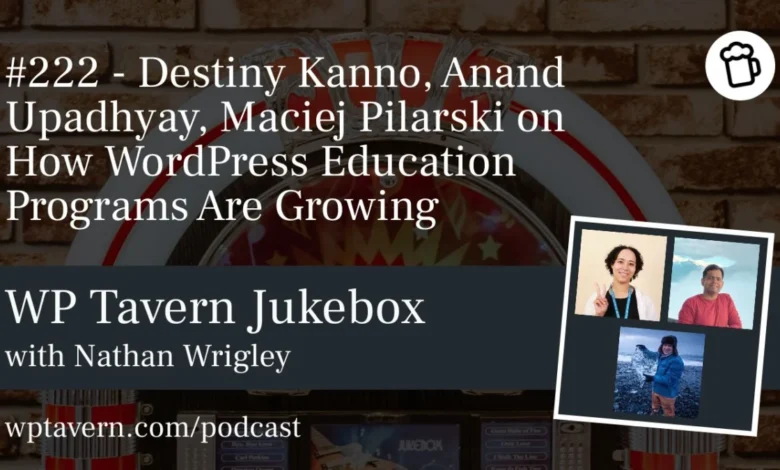
WordPress, the world’s most popular content management system, is currently experiencing a "turbocharged" expansion in its educational outreach programs, designed to introduce the platform and the broader open-source ethos to a new generation of learners globally. This significant growth, highlighted in a recent WP Tavern Jukebox podcast hosted by Nathan Wrigley, underscores a strategic effort to ensure the long-term sustainability and vibrancy of the WordPress ecosystem. The discussion featured key leaders in these initiatives: Destiny Kanno, Education Program Manager at Automattic; Anand Upadhyay, a prominent community contributor and founder of WPVibes; and Maciej Pilarski, an administrator for the WordPress Credits Program. Together, they detailed the interconnected strategies driving this educational renaissance.
A New Era for WordPress Education
The burgeoning educational landscape within WordPress is characterized by three distinct yet complementary initiatives: the WordPress Credits Program, Campus Connect, and Student Clubs. These programs collectively aim to lower barriers to entry for students of all ages and academic levels, offering pathways from initial exposure to sustained contribution. The impetus behind this intensified focus stems from a recognized need to diversify the contributor base, introduce fresh perspectives, and secure a pipeline of talent as the existing community matures.
Nathan Wrigley underscored the profound importance of this educational thrust, describing the juxtaposition of free open-source software and education as a "real sweet spot" and "the most profoundly useful thing to do." This sentiment reflects a broader understanding within the WordPress Foundation and the wider community that proactive engagement with educational institutions is crucial for the project’s future.
The WordPress Credits Program: Academic Rigor Meets Open Source Contribution
Spearheaded by the WordPress Foundation, the WordPress Credits Program stands as a unique initiative designed to integrate open-source contributions directly into higher education curricula. Maciej Pilarski, who joined the program’s administration in October of last year, described it as a "contribution-based program, internship, initiative" that connects university students with the global open-source community.
Students enrolled in this program undertake either a 50-hour or a 150-hour commitment, typically spanning a full academic semester. This dedicated time is formally recognized with academic credit by their respective institutions, making it a tangible part of their degree pathways. The program is structured in three phases:
- Onboarding: Students are introduced to the broader open-source ecosystem, learning not only about WordPress but also the fundamental principles and importance of open source for the internet.
- Contribution Area Selection: Learners choose a specific area of contribution from those listed on make.wordpress.org, allowing them to align their efforts with their interests and skills, whether it’s core development, documentation, design, or translation.
- Project Completion and Documentation: Students work on their chosen area, culminating in a final post detailing their achievements and contributions.
A critical element of the Credits Program is mentorship. Each student is assigned a vetted mentor from the WordPress community who provides guidance and support throughout their journey. This direct interaction not only facilitates practical learning but also builds bridges between established contributors and the next generation.
The program’s reach has expanded rapidly; Maciej Pilarski reported a significant jump from six onboarded universities to 21, including the first institution from Africa (Uganda), secured following a connection made at WordCamp Asia. Notably, the program is not limited to technical fields; the inaugural partnership was with the University of Pisa, involving students from humanities studies. Upon successful completion, students receive an official certificate from the WordPress Foundation, personally signed by Matt Mullenweg, the co-founder of WordPress. Their contributions are also recorded on their wordpress.org profiles, along with a special badge, creating a tangible portfolio for future career opportunities. Currently, the program boasts 450 globally enrolled students and 75 graduates, with the long-term ambition of fostering a new wave of active, engaged contributors.
Campus Connect: Bridging WordPress with Diverse Educational Settings
Complementing the academic focus of the Credits Program, WordPress Campus Connect serves as a more flexible, community-driven initiative aimed at introducing WordPress to a broader spectrum of students. Destiny Kanno highlighted its role as an "official WordPress event series" since May 2025, emphasizing its rapid growth and impact.
Campus Connect events are designed to be "barrier-free," welcoming students of all ages and education levels, from elementary school to vocational training. The definition of "campus" is intentionally broad, encompassing not just universities but also high schools, libraries (like the Lira Public Library in Uganda), and other educational institutions. These events can range from one-off workshops to multi-day sessions, with repeat engagements being a key indicator of success.
The initiative has demonstrated remarkable traction, with 42 completed events across 71 participating institutions, reaching over 5,500 students since its official launch. A significant outcome of these events is that the majority of participating students create their first WordPress website, effectively adding thousands of new sites to the web.
Destiny Kanno elaborated on the community-driven nature of Campus Connect, noting that it has a much lower barrier to entry for organizers compared to traditional WordPress events. The focus is on local community members forging connections with educational institutions, proving the value of WordPress through action. This approach has led to recurring partnerships, such as a third Campus Connect event in Ajmer, India, demonstrating sustained interest. To further empower organizers and facilitators, a "Meetup Activity Library" is being developed, providing kits with facilitation guides and presentation decks for hands-on activities, ensuring quality and consistency while reducing preparation burden. This resource directly addresses the need for scalable facilitator training to meet the growing demand.
Student Clubs: Fostering Peer-Led Learning and Local Engagement
The third pillar of this educational ecosystem is the Student Club initiative, conceptualized by Anand Upadhyay as an "in-campus meet program" similar to local WordPress Meetups, but "for the students and by the students." These clubs are designed to sustain the momentum generated by Campus Connect events, transforming initial interest into ongoing, peer-led learning.
After an initial Campus Connect event introduces WordPress to a campus, interested students can form a club and elect organizers. These clubs then host regular, in-campus events—perhaps once or twice a month—depending on their academic calendar. Activities are diverse and creative, ranging from teaching juniors the basics of WordPress to fun quizzes, hackathons, or "speed build challenges" where students clone websites.
Anand Upadhyay shared examples from his city where students who learned WordPress through Campus Connect began teaching their juniors, fostering a self-sustaining learning environment. Student Clubs also serve as a platform for leadership development, encouraging students to take ownership of their learning and community building. They facilitate connections with broader community members for guidance on advanced topics like SEO or plugin development, opening horizons for specialized learning.
The primary ambition for Student Clubs is to create a "sustainable ecosystem" within campuses, ensuring that future Campus Connect events can move beyond basic introductions, focusing instead on advanced topics and contributions. This initiative is seen as crucial for bringing new users to WordPress, balancing the focus on contribution with the need for growth in the user base.
An Interconnected Ecosystem for Sustainable Growth
The three initiatives – WordPress Credits, Campus Connect, and Student Clubs – are not independent but form a synergistic ecosystem. Maciej Pilarski emphasized that they "don’t compete with each other; they support each other." Campus Connect often acts as the initial spark, introducing WordPress to institutions and students. This initial engagement can then lead to deeper interest, paving the way for formal academic integration through the WordPress Credits Program. Conversely, students participating in the Credits Program might become mentors or facilitators for Campus Connect events or help establish Student Clubs, extending their impact beyond their academic requirements. Student Clubs, in turn, ensure continuous engagement and learning, nurturing a consistent flow of informed and enthusiastic individuals who may later pursue formal contributions or advanced studies.
This virtuous cycle is instrumental in building a resilient and adaptable community, addressing the long-term challenge of an aging contributor base. By organically fostering interest and providing structured pathways for learning and contribution, these programs are laying the groundwork for the next generation of WordPress leaders and users.
Measuring Impact Beyond Statistics
While direct numerical metrics are tracked (e.g., students reached, events held, graduates), the leaders stressed that the true impact of these initiatives extends beyond immediate statistics. The focus is on long-term, qualitative outcomes and the creation of self-sustaining community engagement. Key indicators of success include:
- Repeat Campus Partnerships: Institutions requesting multiple Campus Connect events or expressing interest in ongoing collaboration.
- Faculty and Educator Involvement: Direct participation of academic staff in organizing and facilitating WordPress activities, signaling institutional buy-in and increased sustainability.
- Student-Driven Momentum: Calls from faculty coordinators during vacations, seeking ways to maintain student involvement, demonstrating genuine interest and ownership among students.
- Community Integration: Students transitioning from learners to active participants in local Meetups and WordCamps, bringing new energy and perspectives. An example cited was the Ajmer Women’s Day event, where 50% of tickets sold were to students, directly attributable to Campus Connect outreach, leading to a rapid sell-out.
The ultimate measure of success, as Anand Upadhyay articulated, will be observed in "the next two or three years," when current participants reflect on how they were first introduced to WordPress through a Campus Connect event or initiated into contribution via the WP Credits Program. These personal narratives, shared in future community gatherings, will be the "real metrics" of profound impact.
Advocacy and Future Directions
The growing prominence of education within the WordPress community is also a result of strong advocacy from key figures, notably Mary Hubbard, Executive Director of the WordPress Foundation. Her consistent support has created a fertile ground for these initiatives to flourish. Maciej Pilarski noted that Isotta’s initial experiment with the Credits Program at the University of Pisa proved its viability, leading to broader adoption. Similarly, Campus Connect grew organically from a clear community need.
Efforts are also underway to increase the visibility of these educational achievements. The monthly "Education Buzz Report" aims to surface success stories, with plans to amplify these reports through social media. Flagship events like WordCamp Europe are increasingly integrating educational components; the upcoming WordCamp Europe in early June will feature a dedicated education table at the contributor day, along with an entire educational track on its second day. This track will include a discussion panel on "rethinking learning in WordPress" and presentations from students and teachers involved in the programs, showcasing their projects and experiences. High school students, in particular, are eager to present their WordPress projects, underscoring the broad appeal and impact of these initiatives.
Destiny Kanno also highlighted the importance of keeping WordPress relevant for young learners, citing the new AI Leaders Credential as an example of how integrating cutting-edge technologies like AI can enhance student engagement and demonstrate WordPress’s adaptability. The emphasis is on continuous innovation and ensuring that students feel "seen" and valued for their contributions, irrespective of their skill level or area of interest.
The Human Element: Empowering the Next Generation
At its core, the expanding educational outreach of WordPress is driven by a deeply personal and humanitarian mission. Maciej Pilarski articulated this sentiment, sharing his personal goal of "unlocking those possibilities for those students, helping them out, making it easier for them." Reflecting on his own challenging educational path, he emphasized that learning doesn’t "need to be very difficult or crazy when you study." The aim is to provide opportunities that "might click" for young people, offering a supportive environment where they can explore, grow, and contribute without unnecessary impediments. This focus on the individual, the child or adult seeking to learn and grow, underscores the profound moral and practical imperative behind WordPress’s commitment to education. It is about fostering a global community where curiosity is nurtured, skills are developed, and the open-source spirit is passed on to shape the digital future.