What’s !important #18: , Syntax ::highlight()ing, named-feature(), and More | CSS-Tricks

The Evolution of UI Interaction: Tooltips and Interest Invokers
The implementation of tooltips has long been a source of friction for developers. Historically, creating a responsive tooltip required a careful balance between user experience and performance, often relying on JavaScript event listeners that could introduce latency. Recently, Abhishek Jakhar demonstrated a refined approach to tooltip design, emphasizing the necessity of delayed activation to prevent accidental triggering, coupled with near-instant dismissal for improved UX flow.
This design pattern has been further formalized through the introduction of "interest invokers" in Chrome. Chris Coyier has championed this implementation, which utilizes the interest-delay-start and interest-delay-end CSS properties. This development marks a transition away from custom JavaScript state management toward native browser support for interaction states. While currently limited to Chromium-based engines, the industry consensus suggests that this is a prime candidate for progressive enhancement. By providing a native mechanism for these delays, browsers can optimize rendering cycles, ensuring that tooltips do not block main-thread execution or cause layout shifts during hover events.
Spatial Awareness in CSS Grids
One of the most technically demanding aspects of modern CSS has been the retrieval of layout data. Historically, if a developer required the specific coordinates or the count of rows and columns within a grid, they were forced to utilize the getBoundingClientRect() API or similar DOM-intensive operations.
Temani Afif recently introduced a breakthrough methodology for injecting CSS grid information directly into custom properties. By leveraging the inherent structure of the grid container, developers can now extract the number of rows, columns, and individual cell coordinates without leaving the CSS file. This capability—provided the columns maintain equal widths—enables dynamic UI behaviors such as hover proximity detection, where elements react to the cursor’s location relative to the grid structure. This advancement is particularly significant for data-heavy applications, where real-time layout awareness is essential for creating interactive dashboards and complex graphical interfaces.
Standardizing Syntax: The Rise of the Class Prefix Selector
The CSS Working Group has been exploring more intuitive ways to handle repetitive class naming conventions. Bramus recently proposed the "class prefix selector," a syntax feature designed to target multiple classes using a unified prefix—for instance, .something-*.
While this syntax is not yet supported in production environments, its potential impact on development speed and performance is substantial. Current methodologies rely on attribute selectors, such as [class^="something-"], which are notoriously inefficient as they force the browser to perform string matching against the entire class list of every element in the DOM. By introducing a native class prefix selector, the CSS engine can optimize the matching process at the parser level, potentially reducing the style-recalculation time for large-scale web applications. Industry analysts expect this to become a priority for browser vendors, given the increasing complexity of utility-first CSS frameworks.
The Geolocation API and Modern HTML Integration
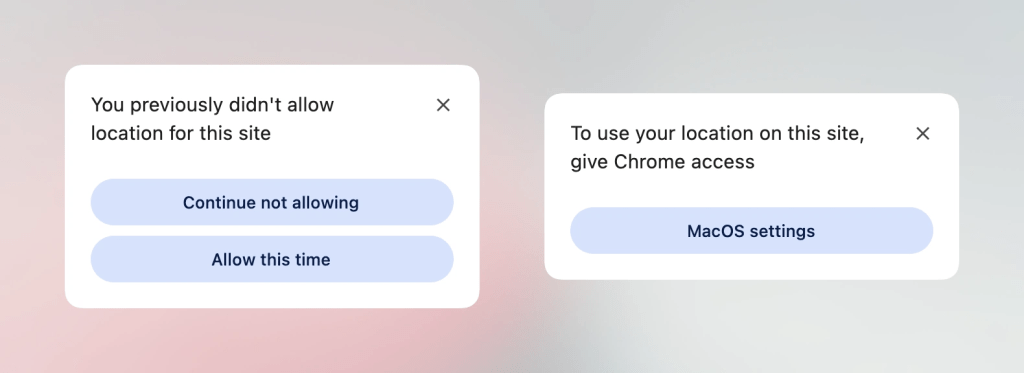
The Geolocation API has historically been one of the most fragmented aspects of the web platform, often hindered by the underlying complexity of integrating GPS, Wi-Fi, and cellular trilateration. The introduction of the <geolocation> HTML element aims to streamline this process, though it has introduced new challenges regarding styling and permission management.
By providing a native element, the browser handles the lifecycle of permission requests more consistently, mitigating the "permission fatigue" that plagues many users. However, the styling restrictions inherent in this new element necessitate a hybrid approach. Developers are currently encouraged to use the new element alongside the existing Geolocation API to ensure backwards compatibility. This dual-layer strategy allows for a seamless transition, enabling developers to adopt the new standard while maintaining functionality for users on older browser versions.
Syntax Highlighting with the Custom Highlight API
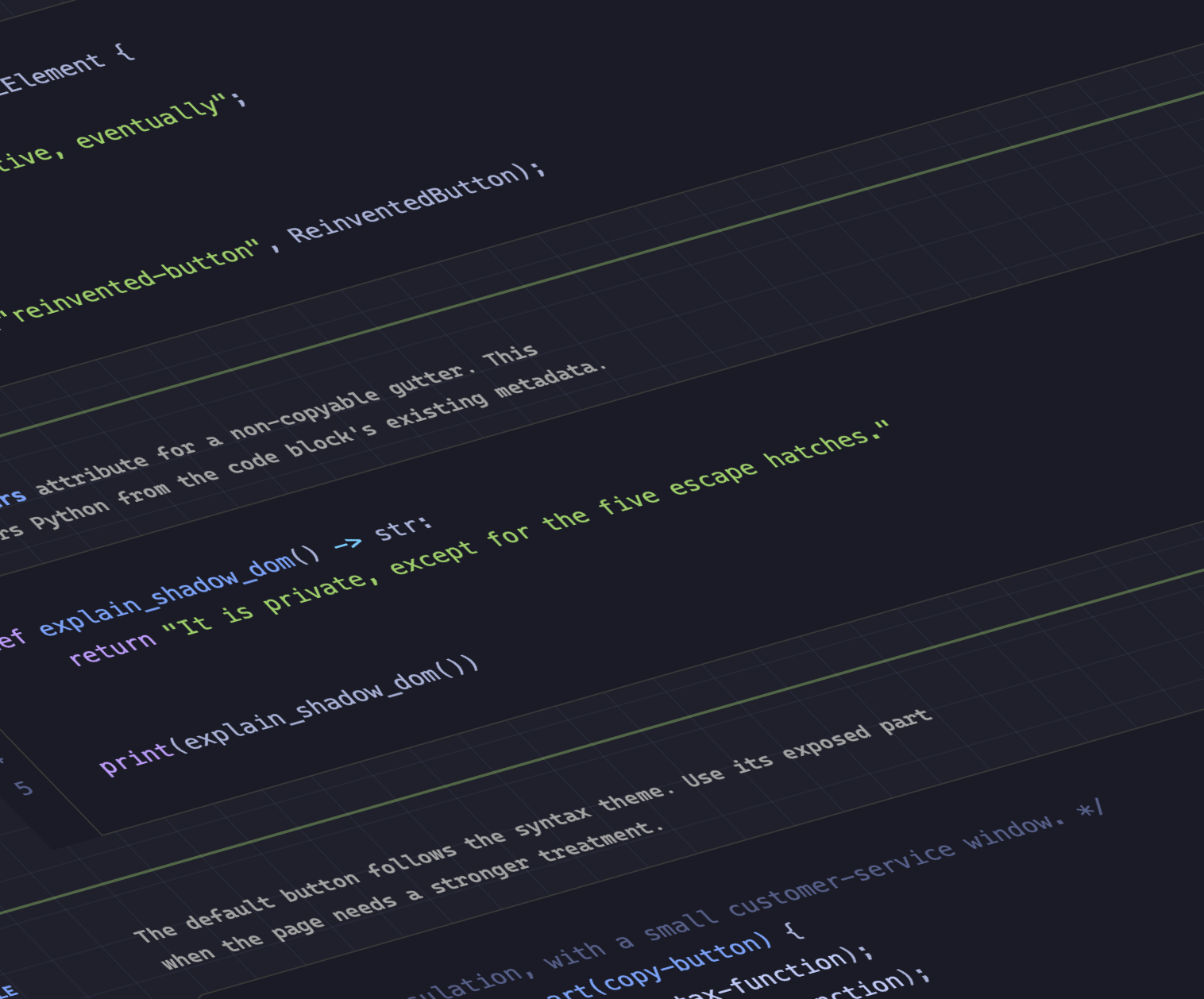
The introduction of the Custom Highlight API has sparked a wave of innovation in text rendering. Dave Rupert’s "MicroLighter" project serves as a practical demonstration of how this API can replace traditional, regex-heavy syntax highlighters. By moving the highlighting logic to the browser’s native text-rendering engine via ::highlight(), MicroLighter achieves significantly higher performance than JavaScript-based alternatives.
This approach is highly efficient because it does not require the DOM to be cluttered with thousands of individual <span> tags to colorize code. Instead, the browser applies styles based on ranges identified within the text nodes. This not only improves the accessibility of the code block but also drastically reduces the memory overhead for large documents, setting a new benchmark for performance-oriented web tools.
Balancing Flexbox and Advanced Feature Detection
The adoption of flex-wrap: balance in Chrome represents a significant step forward for responsive typography and layout design. Similar to text-wrap: balance, this property allows the browser to intelligently distribute flex items across rows to ensure a visually harmonious layout. This eliminates the need for manual media queries or "magic number" widths that often break when content changes dynamically.
Furthermore, the introduction of @supports named-feature() provides a more granular method for feature detection. This function allows developers to query for specific browser behaviors that were previously considered "undetectable," such as the interaction between CSS transforms and anchor positioning. This level of precision allows for more robust polyfilling strategies, ensuring that complex UI components remain functional even when certain advanced features are absent.
Broader Implications and Future Outlook
The cumulative effect of these updates is a trend toward "declarative intelligence" in web development. By standardizing features like flex-wrap: balance, interest invokers, and native syntax highlighting, the web platform is effectively absorbing the functionality of common third-party libraries.
From an architectural standpoint, this shift is beneficial. When the browser engine handles complex logic, the resulting applications are generally more performant, more accessible, and easier to maintain. However, this also places a greater burden on developers to stay informed of the rapid release cycles of browser vendors. As we move into the final quarter of the year, the focus for the development community will likely shift toward reconciling these new capabilities with the realities of cross-browser compatibility.
The industry is currently in a state of rapid prototyping. While features like the class prefix selector and <geolocation> promise to simplify the developer experience, their true value will only be realized once they achieve cross-engine consensus. For now, the integration of these features via progressive enhancement remains the standard, ensuring that modern web applications are both future-proof and accessible to all users. As the web platform continues to mature, the gap between what developers can imagine and what browsers can execute will continue to narrow, signaling a new era of high-performance, native-like web interfaces.
Related posts: